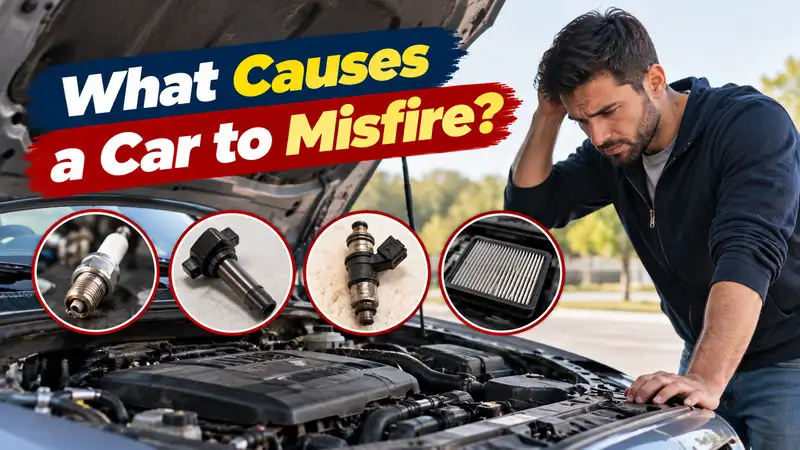
A healthy gasoline engine depends on a precise combination of air, fuel, compression, and ignition. When that balance is interrupted in even one cylinder, combustion can become weak, incomplete, or fail altogether. The result is an engine misfire, a problem that can range from a minor ignition issue to a sign of serious internal engine trouble.
So, what causes a car to misfire? Common causes include worn spark plugs, failing ignition coils, fuel injector problems, vacuum leaks, incorrect air-fuel mixture, low engine compression, timing problems, and certain sensor or engine-control faults.
A misfire can happen intermittently or continuously, and the symptoms may become more noticeable during acceleration, idling, starting, or under heavy engine load.
Finding the cause matters because replacing parts at random can become expensive quickly. A fault code can point toward the affected cylinder or system, but proper diagnosis requires looking at the evidence behind that code. The right testing method can often separate a simple ignition repair from a deeper fuel, air, or mechanical problem.
What Causes A Car To Misfire And How The Engine Is Affected
An engine misfire occurs when one or more cylinders fail to produce the expected combustion event. In a typical four-stroke gasoline engine, the cylinder draws in an air-fuel mixture, compresses it, ignites it with a spark, and then produces power as the burning mixture expands.
The engine control system constantly monitors how the engine is operating. Modern vehicles use information from components such as the crankshaft position sensor, camshaft position sensor, oxygen sensors, mass airflow sensor, manifold pressure sensor, throttle position sensor, and other inputs to control fuel delivery and ignition timing.
When combustion does not occur as expected, the crankshaft can accelerate and decelerate unevenly. The engine computer can detect these changes through crankshaft-speed variations and may store a diagnostic trouble code.
A misfire can therefore be electrical, fuel-related, air-related, mechanical, or control-related. That is why a simple statement such as “misfire means bad spark plugs” is incomplete.
The Four Basic Requirements For Normal Combustion
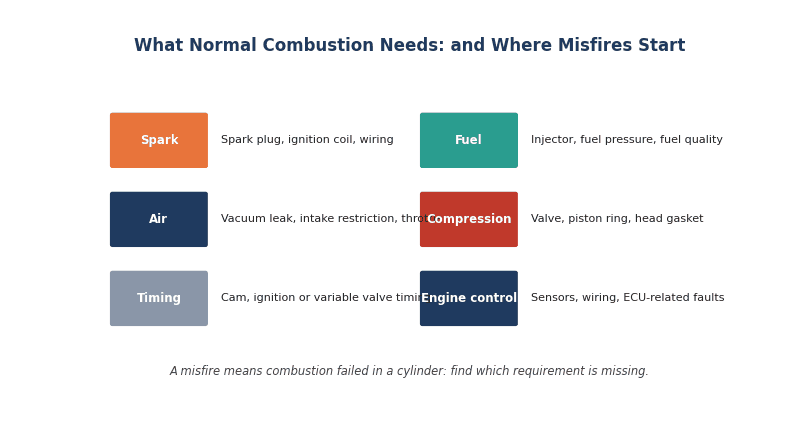
Combustion depends on several conditions being present at approximately the right time. The cylinder needs enough air, the appropriate amount of fuel, sufficient compression, and an ignition event capable of starting combustion.
The ignition system must create a strong spark at the correct point in the combustion cycle. The fuel system must deliver an appropriate quantity of fuel. The intake system must provide the correct amount of air without introducing uncontrolled air through a vacuum leak.
Mechanical components must also seal the cylinder. Piston rings, valves, the cylinder head gasket, and other components all contribute to maintaining compression.
Finally, the engine-control system has to coordinate everything. If fuel injection occurs at the wrong time, ignition timing is incorrect, or valve timing has shifted, the cylinder may fail to produce normal combustion even when the spark plug itself is perfectly good.
This gives a useful diagnostic framework:
| Combustion Requirement | Possible Misfire Source |
|---|---|
| Spark | Spark plug, ignition coil, wiring, ignition control |
| Fuel | Injector, fuel pressure, fuel delivery |
| Air | Vacuum leak, intake restriction, throttle issue |
| Compression | Valve, piston ring, head gasket, cylinder damage |
| Timing | Cam timing, ignition timing, variable valve timing |
| Engine Control | Sensors, wiring, ECU-related faults |
The advantage of this approach is that it prevents the diagnosis from becoming focused on one component before the actual problem has been identified.
Why One Bad Cylinder Can Affect The Whole Engine
A four-cylinder engine does not need all four cylinders to fail before the driver notices a problem. A single weak cylinder can cause noticeable vibration because each combustion event contributes to crankshaft rotation.
At idle, the engine may shake because the crankshaft receives uneven torque pulses. During acceleration, the problem may become more obvious because the engine is under greater load and needs stronger combustion from every cylinder.
A misfire can also affect emissions. Unburned fuel may leave the affected cylinder and enter the exhaust system. The catalytic converter is designed to process exhaust gases, not large quantities of raw fuel. Continued severe misfiring can therefore cause excessive converter temperatures and potentially lead to expensive emissions-system damage.
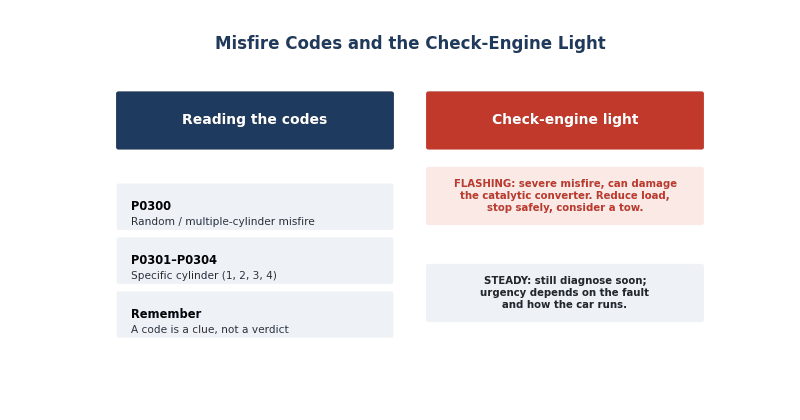
This is one reason a flashing check-engine light should be treated differently from an ordinary steady warning light. A flashing light commonly indicates that the engine computer has detected a severe misfire condition that could damage the catalytic converter under continued operation.
The safest response is to reduce engine load and have the vehicle diagnosed promptly rather than continuing to drive normally.
The Most Common Causes Of Engine Misfires
Ignition faults are among the first areas technicians inspect because they are common, relatively easy to test, and capable of producing both intermittent and persistent misfires.
Spark plugs gradually wear as the electrode is exposed to repeated high-temperature ignition events. The gap can increase, deposits can develop, or the plug can become contaminated by oil or fuel. A worn plug may still produce a spark under some conditions but fail when cylinder pressure rises.
Ignition coils are another frequent source of trouble. Modern engines commonly use an individual coil for each cylinder, although coil-pack designs are also used. A weak coil can sometimes work reasonably well at idle but break down under load when higher ignition voltage is required.
The fuel system presents another group of possibilities. A restricted or malfunctioning injector can deliver too little fuel to one cylinder. Low fuel pressure can affect several cylinders simultaneously. Contaminated fuel can also cause poor combustion.
Air leaks create another important category. A vacuum leak can allow unmetered air into the engine, producing an overly lean mixture. Depending on where the leak occurs, one cylinder or an entire bank of cylinders may be affected.
Worn Spark Plugs And Ignition Coils
Spark plugs are small components, but their job is demanding. The plug must produce a reliable spark while exposed to high pressure, temperature, and combustion byproducts.
A worn plug can increase the voltage required for the ignition system to jump the electrode gap. Under light load, the coil may have enough capacity to fire it. Under acceleration, however, cylinder pressure rises and the ignition system faces a more demanding environment.
That can create a characteristic pattern in which an engine idles reasonably well but begins to stumble when the accelerator is pressed.
Plug condition can also provide clues. Excessive carbon deposits may indicate combustion or mixture problems. Oil fouling can point toward oil entering the combustion chamber. A plug that appears unusually clean compared with the others can sometimes provide useful evidence of a coolant-related problem, although plug appearance alone should not be treated as a final diagnosis.
Ignition coils can fail electrically or thermally. Some become unreliable as they heat up, making the vehicle run normally when cold and misfire after several minutes of operation.
If a scan tool identifies a particular cylinder, a technician may use controlled component-swapping tests where appropriate. If the misfire moves with the suspected coil, that provides stronger evidence that the coil is involved. This is more reliable than replacing every coil simply because one cylinder has a misfire code.
Fuel Injector And Fuel Delivery Problems
Fuel has to reach each cylinder in the correct quantity and at the correct time.
A partially restricted injector may deliver less fuel than expected, creating a lean condition in one cylinder. An injector that sticks or leaks can create the opposite problem. Electrical faults in the injector circuit can also prevent normal operation.
Fuel pressure problems are broader. If the fuel pump is weak, the filter or pickup is restricted, or the pressure regulator has a problem, several cylinders can be affected.
A useful diagnostic clue is whether the misfire affects one cylinder or multiple cylinders. A single-cylinder misfire may point toward that cylinder’s spark plug, ignition coil, injector, compression, or wiring. Multiple-cylinder misfires may suggest a shared fuel, air, ignition, timing, or control problem.
However, this is a diagnostic direction rather than a guarantee. For example, a mechanical timing problem can produce multiple misfires, while an intake leak near one cylinder can create a localized problem.
Fuel quality can also contribute. Contaminated or incorrect fuel can alter combustion and affect multiple cylinders. If symptoms began immediately after refueling, fuel quality becomes more relevant to the investigation.
Vacuum Leaks And Unmetered Air
The engine needs an accurately controlled air-fuel mixture. Modern vehicles measure incoming air through sensors and then adjust fuel delivery accordingly.
A vacuum leak introduces air that the engine computer may not have measured. The resulting mixture can become lean, particularly at idle when manifold vacuum is high.
Common leak points can include intake manifold gaskets, vacuum hoses, PCV-system components, throttle-body seals, and other intake connections. Plastic components can become brittle with age, while rubber hoses can crack.
A vacuum leak can cause rough idle, elevated or unstable idle speed, hesitation, and lean-related diagnostic codes. The engine may sometimes improve as engine speed increases because the effect of a relatively small leak becomes less significant compared with the total amount of air entering the engine.
Smoke testing is one professional method for locating difficult intake leaks. Rather than relying only on visual inspection, a technician introduces a suitable test smoke into the system and observes where it escapes.
This is a good example of why diagnosis is more effective than simply replacing parts. A new spark plug cannot repair a cracked vacuum hose.
Low Compression And Internal Engine Problems
Not every misfire is caused by an external component.
Each cylinder must build sufficient compression for combustion to occur effectively. If a valve does not seal, a piston ring is damaged, a piston has a problem, or a head gasket fails in a way that affects cylinder sealing, compression can fall.
Mechanical misfires often have different characteristics from simple ignition faults. A cylinder may continue to misfire even after the spark plug and ignition coil have been verified.
A compression test provides an initial indication of cylinder sealing. A leak-down test can provide more detailed information by showing where compressed air is escaping.
For example, air heard escaping through the intake can suggest an intake valve sealing problem. Air escaping through the exhaust can point toward an exhaust valve. Air entering the crankcase can suggest piston-ring or cylinder-related leakage. Bubbles in the cooling system can indicate a possible head-gasket or cylinder-head issue, although proper interpretation requires care.
These tests are especially important when an isolated cylinder consistently misfires and ignition and fuel checks do not reveal a fault.
How To Diagnose A Misfiring Car Without Guessing
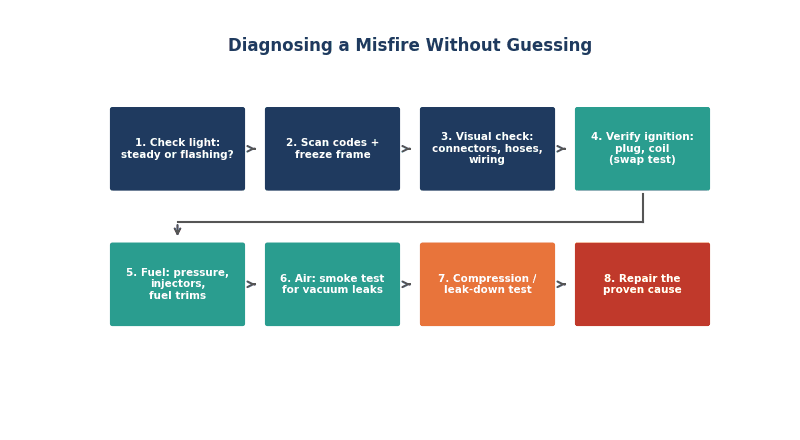
A good diagnosis starts with the symptoms and available evidence.
First, determine whether the check-engine light is on and whether it is steady or flashing. Next, use a suitable scan tool to retrieve diagnostic trouble codes and freeze-frame information where available.
Codes such as P0300 generally indicate random or multiple-cylinder misfire detection, while codes such as P0301, P0302, P0303, and P0304 identify a specific cylinder in many vehicles. The numbering convention follows cylinder identification used by the vehicle manufacturer.
A code should be treated as a clue, not a verdict.
For example, P0302 does not automatically mean the second cylinder’s spark plug must be replaced. The engine computer knows that combustion in that cylinder is abnormal, but it does not necessarily know whether the root cause is spark, fuel, air, compression, or another problem.
Start With The Simplest Evidence
Visual inspection is often underestimated.
Look for disconnected electrical connectors, damaged wiring, cracked intake hoses, loose vacuum lines, oil around ignition components, coolant leaks, and obvious physical damage.
If the vehicle recently received maintenance, inspect anything that may have been disturbed. A connector that was not fully seated, an ignition coil that was not properly installed, or a hose left disconnected can create a problem immediately after service.
Next, inspect the spark plugs if appropriate. Compare the affected cylinder’s plug with the others. Look for unusual wear, cracking, contamination, or an incorrect gap.
If the vehicle uses individual ignition coils and the service procedure permits it, a technician may swap the suspected coil with another cylinder and see whether the misfire follows the coil. This technique is useful because it creates a controlled change while leaving most other variables unchanged.
The same concept can sometimes be applied to other components, but fuel injectors and electrical circuits require greater caution and appropriate testing equipment.
Use Fuel Trims And Sensor Data Carefully
Modern scan tools can provide information beyond trouble codes.
Short-term and long-term fuel trims show how the engine computer is adjusting fuel delivery based on oxygen-sensor feedback. Positive fuel-trim values generally indicate that the computer is adding fuel because it detects a lean tendency. Negative values indicate fuel is being removed because the mixture appears rich.
These values are useful, but they need context. A positive fuel trim at idle that improves substantially at higher engine speed can support a vacuum-leak theory, for example. A fuel-trim problem present across the operating range may point toward fuel delivery, airflow measurement, or another issue.
Sensor data should not be interpreted in isolation. A faulty sensor can produce misleading information, but a sensor code does not automatically prove that the sensor itself has failed.
Technicians often compare expected and actual readings, observe changes under different engine conditions, and combine scan data with physical tests.
That process is more dependable than replacing parts based solely on the name of a trouble code.
Compression And Leak-Down Testing
When ignition and fuel checks do not explain the misfire, mechanical testing becomes increasingly important.
A compression test measures the pressure generated by each cylinder during cranking. The absolute number varies according to engine design, test equipment, throttle position, cranking speed, and other factors. Comparing cylinders on the same engine is often particularly useful.
If one cylinder produces substantially lower compression than the others, additional testing can help identify the cause.
A leak-down test takes the investigation further. The cylinder is positioned appropriately, pressurized with compressed air, and the technician listens for where the air escapes.
The test can reveal problems that a compression test alone cannot clearly identify.
Mechanical diagnosis is particularly important when a misfire remains on the same cylinder after ignition and fuel components have been checked or swapped. Replacing parts repeatedly without checking compression can become expensive while leaving the actual fault untouched.
Symptoms Of A Misfire And When It Becomes Serious
The symptoms of an engine misfire depend on its severity and cause.
A mild intermittent misfire may feel like a brief hesitation or small stumble. A severe misfire can cause the engine to shake noticeably, lose power, produce a flashing check-engine light, or make acceleration difficult.
At idle, a misfire may feel like an uneven vibration. During acceleration, it can feel like the vehicle is jerking or temporarily losing power. Some misfires occur only under load, while others are more noticeable during cold starts.
Fuel economy can also decline because combustion is not occurring efficiently. Exhaust emissions can increase, and in certain cases unburned fuel can enter the exhaust system.
A Flashing Check-Engine Light Needs Prompt Attention
A flashing malfunction indicator lamp should not be treated like a minor dashboard notification.
When the engine computer detects a severe enough misfire, it may flash the light to warn that continued operation could damage the catalytic converter. The exact warning strategy varies by manufacturer, but the risk is significant enough that continued normal driving is not advisable.
If the light flashes while the engine is running roughly, reduce load and stop in a safe location. Avoid hard acceleration and high engine speeds.
If the vehicle must be moved to a repair facility, the safest option may be professional towing depending on the severity of the symptoms.
A steady check-engine light can represent a much wider range of problems. It still deserves diagnosis, but the urgency depends on the specific fault, vehicle behavior, and any other warning signs.
Can You Drive With A Misfire?
A vehicle with a mild, intermittent misfire may still be physically capable of moving, but that does not mean continued driving is a good idea.
Every combustion cycle that fails can send unburned fuel into the exhaust. Under severe conditions, that fuel can overheat the catalytic converter.
A misfire can also reduce engine power unexpectedly. That creates a safety concern when merging, overtaking, climbing hills, or entering traffic.
If the engine is shaking heavily, the check-engine light is flashing, power is significantly reduced, or abnormal noises are present, continued driving should be avoided.
If the light is steady and the vehicle appears to operate normally, arranging diagnosis soon is still sensible. Delaying diagnosis can allow a relatively inexpensive problem to develop into a more costly repair.
The right decision depends on severity rather than the simple presence of a fault code.
Repair Costs And How To Prevent Recurring Misfires
Misfire repair costs vary enormously because the term describes a symptom rather than one specific failed part.
Replacing a single spark plug may be relatively inexpensive, while diagnosing low compression or repairing an internal engine problem can be substantially more expensive.
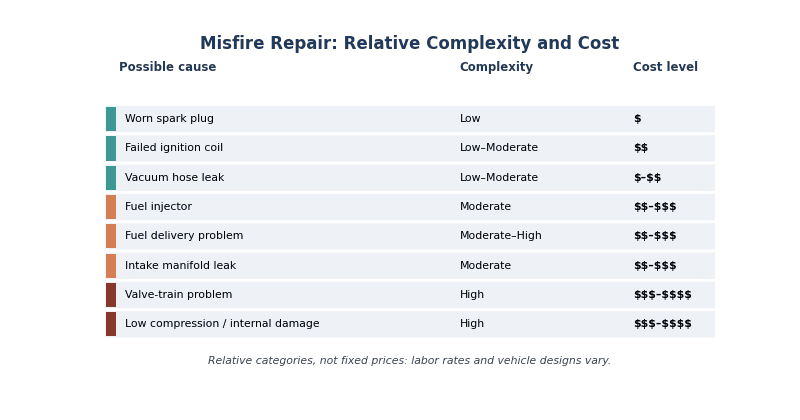
A failed ignition coil may require a moderate repair. An injector can vary considerably depending on the vehicle and accessibility. Vacuum leaks may be inexpensive when caused by a simple hose but considerably more involved when an intake manifold gasket or another difficult-to-access component is responsible.
| Possible Cause | Typical Repair Complexity | Potential Cost Level |
|---|---|---|
| Worn Spark Plug | Low | $ |
| Failed Ignition Coil | Low–Moderate | $$ |
| Vacuum Hose Leak | Low–Moderate | $–$$ |
| Fuel Injector | Moderate | $$–$$$ |
| Fuel Delivery Problem | Moderate–High | $$–$$$ |
| Intake Manifold Leak | Moderate | $$–$$$ |
| Valve-Train Problem | High | $$$–$$$$ |
| Low Compression/Internal Damage | High | $$$–$$$$ |
These are relative categories rather than fixed prices because labor rates and vehicle designs vary significantly.
Preventive Maintenance That Reduces Misfire Risk
Regular maintenance cannot prevent every misfire, but it can reduce the likelihood of several common causes.
Follow the recommended spark plug replacement schedule. Use the correct plug specification and installation torque. Replace air filters when required rather than assuming a filter can last indefinitely.
Inspect intake hoses and vacuum lines during routine service, particularly on older vehicles. Pay attention to oil or coolant leaks around ignition components because contamination can affect electrical components and plug performance.
Use fuel from reputable sources and follow the manufacturer’s fuel requirements. Avoid adding fuel-system cleaners simply because an engine has a misfire code; diagnosis should come first.
When a check-engine light appears, address it rather than repeatedly clearing the code. Clearing the code removes useful diagnostic information without fixing the underlying problem.
Maintenance history also has value. Recording when spark plugs, coils, filters, and other major components were replaced can help technicians identify patterns and prevent unnecessary replacement of parts that are still within their expected service life.
The Most Important Diagnostic Lesson
The biggest mistake with a misfire is assuming the first obvious component is automatically the cause.
A P0301 code tells you that the engine computer has detected abnormal combustion associated with cylinder one. It does not prove that cylinder one’s spark plug is defective.
A rough idle does not automatically mean the engine needs a tune-up. Poor fuel economy does not automatically mean the oxygen sensor has failed. A flashing check-engine light does not tell you which individual part needs replacement.
Good diagnosis works from evidence.
Start with the trouble codes and symptoms. Inspect the basics. Verify ignition. Check fuel delivery. Investigate unmetered air. Test compression when appropriate. Use scan data to support the diagnosis rather than replacing parts based on assumptions.
That approach may take slightly more time at the beginning, but it can prevent the much more expensive cycle of replacing several good components while the actual fault remains unresolved.
A misfire is ultimately a combustion problem, but the reason behind it can be remarkably simple or mechanically complex. The difference is discovered through systematic testing.
What Is The Most Common Cause Of A Car Misfire?
Worn spark plugs and failing ignition coils are common causes, particularly on gasoline engines. However, fuel injectors, vacuum leaks, sensor problems, timing faults, and low compression can also cause misfires. The most common cause for one specific vehicle depends on its engine design, age, mileage, maintenance history, and symptoms.
Can Bad Spark Plugs Cause A Car To Misfire?
Yes. Worn, damaged, incorrectly gapped, or contaminated spark plugs can prevent reliable ignition. A plug may work under light engine load but fail under acceleration when cylinder pressure increases. Spark plugs should be inspected and replaced according to the manufacturer’s specifications rather than replaced automatically whenever a misfire occurs.
Can A Misfire Damage The Engine?
A persistent severe misfire can cause additional problems. Unburned fuel may enter the exhaust and overheat the catalytic converter, while continued abnormal combustion can place additional stress on engine components. A flashing check-engine light combined with severe running problems should be treated as an urgent condition.
Can Low Oil Cause A Misfire?
Low engine oil does not normally cause a conventional ignition misfire by itself, but severely low oil can contribute to problems involving variable valve timing, hydraulic components, or internal engine lubrication. If the oil level is dangerously low, the engine should not simply be driven until the level is corrected and the cause is investigated.
Why Does My Car Misfire Only When Accelerating?
A misfire that appears primarily under acceleration can occur when the ignition system cannot produce a sufficiently strong spark under higher cylinder pressure. Worn spark plugs and weak ignition coils are possibilities, but fuel delivery, boost leaks on turbocharged engines, mixture problems, and mechanical issues can also produce load-related misfires.
Is It Safe To Drive A Car With A Misfire?
It depends on the severity and warning signs. A severe misfire, flashing check-engine light, major power loss, or heavy engine vibration should be treated as urgent and may justify towing the vehicle. Even a mild intermittent misfire should be diagnosed promptly because continued misfiring can damage emissions components and may allow the original problem to become more expensive.