
A frozen car door feels like a locked vault. The handle clicks, the door will not budge, and every instinct says to pull harder. That instinct is the one to ignore.
Most frozen doors are not truly stuck. A thin layer of ice has bonded the rubber seal to the metal frame, and the right move is to break that bond, not tear it.
Force can rip seals, bend handles, and crack plastic trim. Boiling water can crack glass or refreeze into a thicker sheet. A few simple methods avoid all of that.
Here is a practical guide to freeing a stuck door, lock, or handle in a few minutes. You will also learn why doors freeze in the first place, which products help or harm, what to do when the key fob will not respond, and the habits that stop it from happening again. The steps work for most cars, from compact hatchbacks to full-size trucks.
Why Car Doors Freeze Shut In The First Place
How Ice Bonds Rubber To Metal
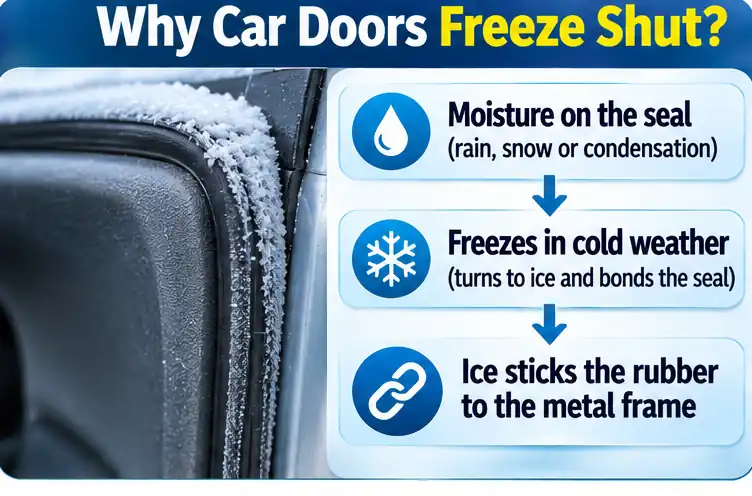
A door seal is designed to keep water out, but it is never perfectly dry. Melting snow, rain, a car wash, or even morning condensation leaves a film of moisture along the seal.
When the temperature falls below freezing, that film turns to ice. Water also expands as it freezes, so it grips the rubber and presses it against the painted frame.
The bond can be surprisingly strong. A thin sheet of ice across a long seal adds up to a lot of holding force, especially on large doors.
A freeze-thaw cycle makes it worse. Warm sun during the day melts snow, then cold nights lock the meltwater in place, which is why doors often stick after a mild afternoon followed by a hard frost.
Three Kinds Of Freeze: Seal, Handle, And Lock
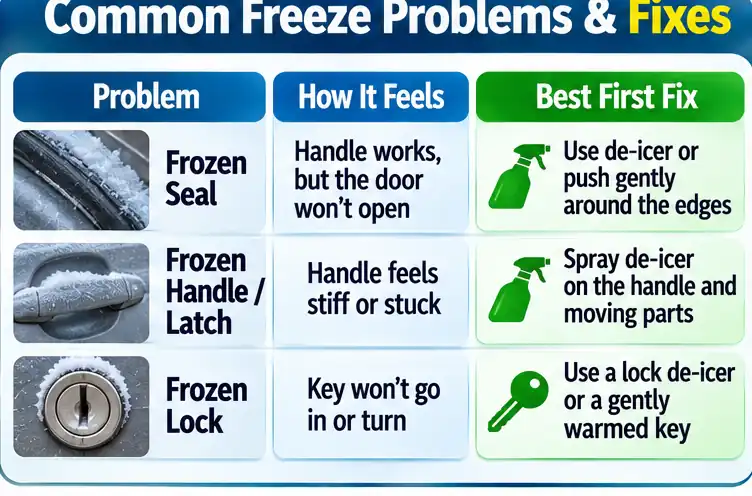
Before you try anything, work out what froze. The fix depends on it.
A frozen seal feels like a firm resistance when you pull the handle. The handle moves, the latch releases, but the door will not swing open.
A frozen handle or latch often feels stiff or gives no movement at all. Water can get inside the handle mechanism and freeze the linkage.
A frozen lock cylinder means the key will not turn or will not slide in. This is more common on older cars with keyed doors.
| Problem | How It Feels | Best First Fix |
| Frozen Seal | Handle works, door will not open | De-icer or gentle pushing |
| Frozen Handle Or Latch | Handle stiff or stuck | De-icer on the handle edges |
| Frozen Lock | Key will not go in or turn | Lock de-icer or a warmed key |
Safe Methods To Open A Frozen Door Right Now
Start With Gentle Pressure And Other Doors
The easiest trick costs nothing. Push firmly on the door with the heel of your hand, working around the edges, to crack the ice bond.
Do not yank the handle. Push in, then pull. The inward push breaks the seal ice and lets the door release.
If one spot does not move, try another. Ice does not form evenly, so one section of the seal may be weaker than another.
Also try the other doors. The passenger side, rear doors, or hatch may be less frozen, depending on where the sun hit the car or how snow collected overnight.
Once you are in, start the engine and turn on the heater so the rest of the doors can thaw from the inside.
De-Icer, Alcohol Mix, And Lukewarm Water
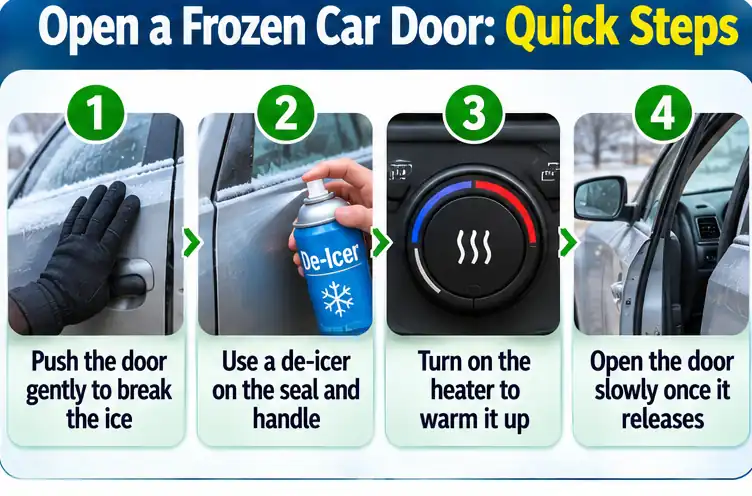
A commercial windshield or lock de-icer is the safest bet. It is made to melt ice fast and is generally gentle on paint and rubber when used as directed.
Spray it along the door edge, around the handle, and into the gap by the seal. Wait a minute or two, then try the door again.
No spray on hand? A mix of about 70 percent isopropyl alcohol and 30 percent water also melts ice, because alcohol lowers the freezing point. Do not use straight alcohol, since it can dull some finishes.
Lukewarm water can work in mild cold. Pour it slowly along the seal, then dry everything right away. In very cold weather, water may just refreeze.
| Method | Works Best When | Watch Out For |
| De-Icer Spray | Any frozen seal or handle | Read label for rubber safety |
| 70/30 Alcohol Mix | No commercial product available | Do not use undiluted |
| Lukewarm Water | Mild frost, thin ice | Refreezing, wet electronics |
| Hot Air | Small patches near handles | Never use open flame |
Heat From The Inside
If you can get into the car through another door, the heater does a lot of work. Set the temperature to warm and aim the vents toward the frozen door.
A few minutes is often enough to soften the bond. Warm cabin air heats the inside of the door panel and the seal from behind.
For small frozen spots, a hair dryer on a low setting can help if you have a safe extension cord. Keep the dryer moving, and keep it away from water and from the paint at close range.
Avoid any device that makes open heat. A lighter, torch, or heat gun can damage paint, melt plastic, and in the worst case start a fire near fuel and wiring.
Fixing A Frozen Lock And Handle
Key Locks That Will Not Turn
A frozen lock cylinder needs a targeted fix. Aerosol lock de-icer is built for this, and it often contains a lubricant to help prevent a repeat.
Spray a short burst into the keyhole, wait a minute, then try the key. Do not force the key, because a snapped key makes the problem far worse.
Some drivers warm the metal key with a lighter or hot water. That can work on older mechanical keys, but hold it with pliers or gloves. Never do this with a key that contains a chip or remote.
Breath is another tiny trick. A gentle puff into the keyhole adds a little warm moisture, but it also adds water, so it is a last resort.
Keyless Fobs, Batteries, And Stuck Handles
A door that will not open is not always ice. Cold drains batteries quickly, and a weak car battery or fob battery can stop the central locking from working.
If the fob does not unlock the door, try the physical key in the door lock. Most fobs hide a small metal key behind a release latch.
A frozen handle can also be a separate issue. Pull gently, and listen for a click. If you hear the latch move but the door stays shut, the seal is the problem.
Spray de-icer around the handle edges, and avoid pouring water into it. Water inside a handle can freeze again quickly and may reach electronics.
If nothing works, call roadside assistance. It is cheaper than a broken handle.
Mistakes That Cause Costly Damage
Hot Water, Flames, And Brute Force
Boiling water is the classic mistake. Cold glass and paint do not like sudden heat. The rapid change in temperature can crack a window or damage the finish.
Hot water also refreezes fast. In very cold weather it can turn into a thicker layer of ice around the seal than before.
Open flames are even worse. A lighter or torch near the door can melt rubber and plastic, damage the paint, and create a fire risk.
Force is the third trap. A frozen seal is stiff and brittle, so hard pulling can tear it. A damaged seal leaks, whistles, and invites rust.
Slow and steady wins here. A minute of patience beats a repair bill.
Products To Avoid On Seals And Paint
Not every spray belongs near rubber. Petroleum-based oils can swell or soften some seals over time, so check the label before using any lubricant.
Silicone-based products are the usual choice for seals because they repel water without breaking down the rubber. Look for ones marked safe for rubber and plastic.
Salt is another no-go. It melts ice, but it also speeds rust and can harm paint.
Do not scrape seals with a metal tool. Even a small tear gives water a new path in, and the problem returns every winter.
Keeping Doors From Freezing Again
A Simple Seal Care Routine
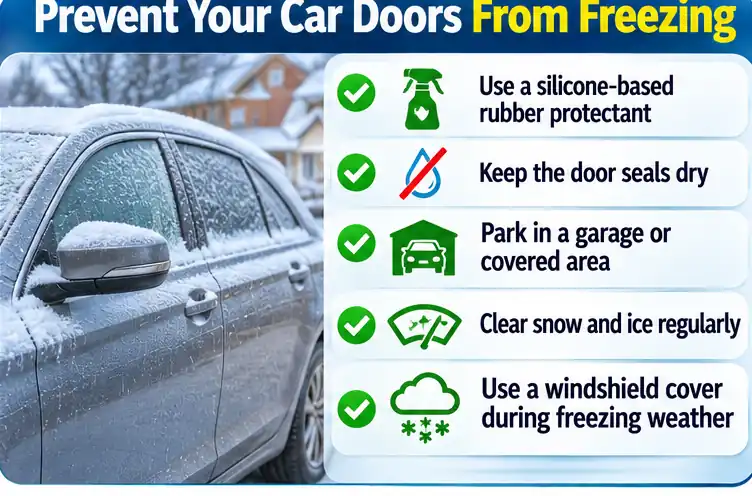
The best fix is prevention. Before winter, clean the door seals with a damp cloth and let them dry, then apply a thin coat of silicone spray or a rubber conditioner.
Wipe off any extra so it does not attract dirt. Repeat every few weeks during freezing weather, since the coating wears off.
Check seals for cracks and flat spots. A worn seal holds more water and freezes faster.
Wipe the door jambs and the edge of the frame too. Dry metal does not grab ice as easily as wet metal.
If you have a lock that sticks, add a drop of lock lubricant once a season to keep moisture out.
Daily Habits That Help
Small habits matter more than any product. After a car wash in cold weather, open each door and dry the seals with a towel before parking.
Avoid washing the car right before a freeze. The water has nowhere to go and sits in every crevice.
Keep a can of de-icer in your coat pocket, bag, or at home by the front door. If it sits in the glovebox, you cannot reach it when the car is frozen shut.
If you can, park under cover or in a garage. Facing the car so the morning sun hits the doors helps a little too.
A quick shake of snow off the roof before you open the door keeps melting snow from dripping into the seals.
Questions people ask most often:
How do I open a frozen car door fast?
Push firmly on the door to crack the ice, then spray de-icer along the seal and handle. Wait a minute and try again. If you can enter through another door, start the engine and run the heater to thaw the rest.
Can I use hot water on a frozen car door?
It is not a good idea. Hot or boiling water can crack cold glass, damage paint, and refreeze into thicker ice. Lukewarm water poured slowly and dried right away is a safer choice in mild cold.
What can I use if I do not have de-icer?
A mix of about 70 percent isopropyl alcohol and 30 percent water works well. A hair dryer on low heat or warm air from the car heater can also help. Avoid open flames and straight alcohol.
How do I unlock a frozen car door lock?
Use a lock de-icer spray and wait a minute before turning the key. A warmed metal key can help on older cars, but do not heat a key with a chip or remote, and never force it.
Will silicone spray stop my doors from freezing?
It helps a lot. Silicone repels water, so less moisture sticks to the seal. Apply a thin coat to clean, dry rubber every few weeks in winter, and wipe off any excess.
Why does my car door freeze even without snow?
Moisture from rain, car washes, melting frost, or condensation can collect along the seal. When the temperature drops below freezing, that thin film of water turns to ice and bonds the rubber to the frame.