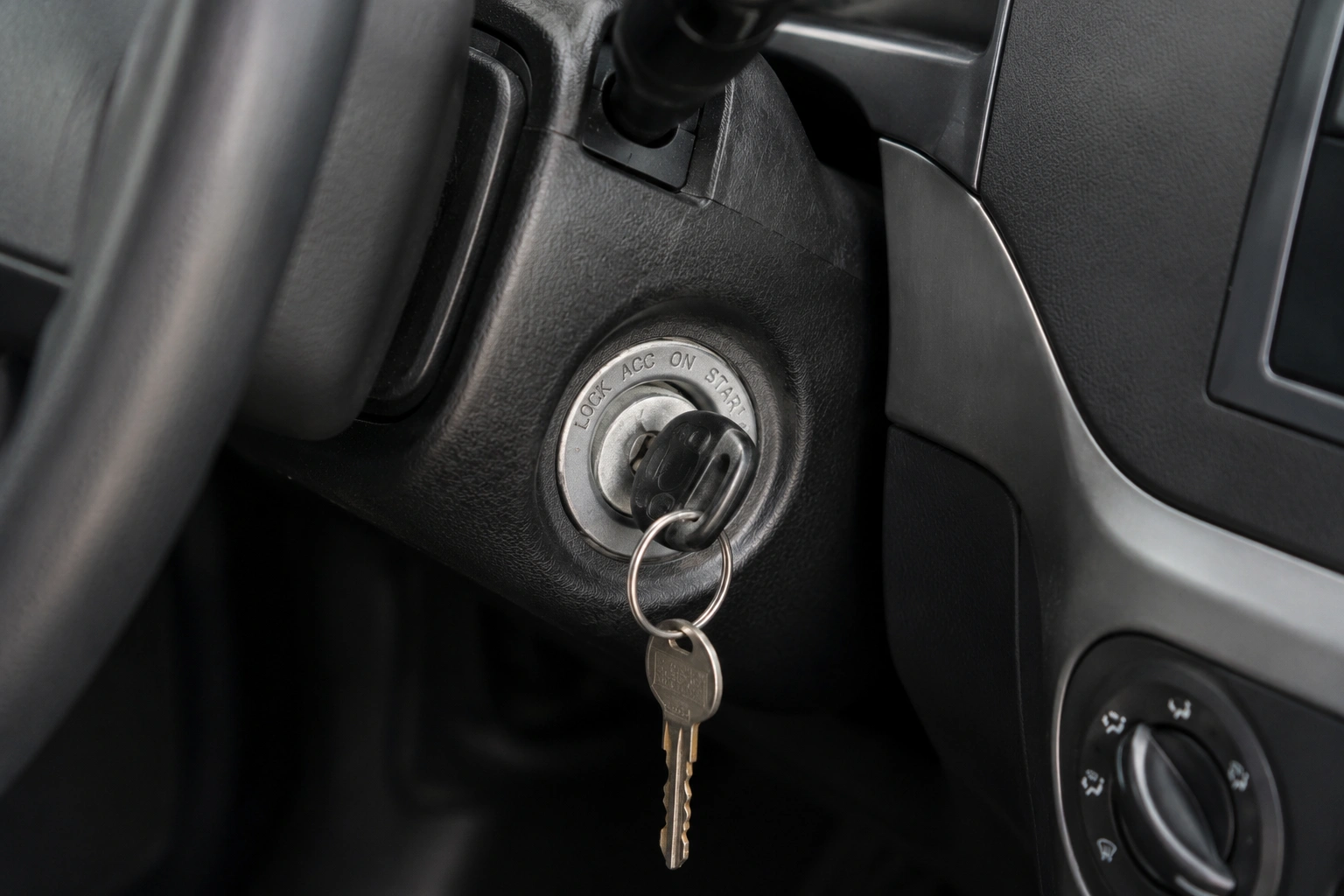
Key ignitions have been around as long as cars themselves. For decades, the act of sliding a key into a slot and turning it was just part of the ritual of getting somewhere.
Then push-button start arrived, spread quickly through every price bracket, and suddenly the traditional ignition began feeling like a relic. But here is what most people do not realize — the traditional key start has not disappeared.
In 2026, a meaningful number of new vehicles still offer it, mostly on base and near-base trims, and they attract a very specific kind of buyer: someone who values simplicity, lower cost, and the absence of tech dependency.
Whether the preference comes from mechanical trust, concerns about keyless relay theft, or just personal habit, there is a real and growing market for this.
This guide covers exactly which 2026 vehicles still offer key ignition, what each one delivers, and which is worth your money.
Note
Data and specifications referenced throughout this content are sourced from Edmunds, Kelley Blue Book, Cars.com, U.S. News & World Report, and brand official sites including Toyota, Ford, Honda, and Hyundai USA.
All pricing reflects published MSRP at the time of research and may vary by region, dealer, and availability.
Why Traditional Key Ignition Still Has A Place In 2026
The automotive industry has been moving toward keyless access and push-button start for well over a decade, and by 2026, the feature has become standard on nearly every new mid-range and above vehicle sold in the United States.
Yet the traditional key ignition has not been retired entirely, and the reasons it survives are actually quite practical.
The core appeal is straightforward: a physical key operates independently of any battery, fob signal, or wireless communication. It does not require the key fob battery to be working. It does not need a Bluetooth or radio frequency connection. It does not rely on proximity sensors or any software to function.
You insert the key, turn it, and the engine starts. That simplicity is genuinely valuable in certain use cases — particularly for older drivers who are not comfortable with evolving in-car technology, for buyers on tight budgets who want to keep ownership costs low, and for fleet or commercial applications where vehicle security and durability take priority over convenience.
There is also the theft angle. Relay attacks — where thieves use signal amplifiers to clone a key fob’s signal from outside a home — have become a real concern for owners of keyless entry vehicles. A physical key cannot be cloned this way.
The traditional ignition cylinder requires the actual, physical key to be present and turned. For buyers in areas with higher vehicle theft rates, or for those who have read about relay theft and taken it seriously, a conventional key-start vehicle removes that particular vulnerability entirely.
The Trim-Level Reality — Where Key Ignitions Actually Live
Before getting into specific models, it helps to set accurate expectations. In nearly every case, traditional key ignition in a 2026 vehicle means you are looking at the base or entry-level trim of that model.
Manufacturers have adopted a tiered approach: key ignition at the bottom, push-button start somewhere in the middle or top of the range. This creates a consistent pricing pattern — if you want to spend the least possible on a given model, the key ignition version is often the cheapest entry point.
This also means that choosing key ignition typically involves some trade-offs compared to higher trims. You may get steel wheels instead of alloy, cloth upholstery instead of something nicer, and a smaller or less feature-rich infotainment setup.
None of those trade-offs are deal-breakers for the right buyer, but they are worth knowing going in. A few models buck this pattern slightly — there are some where key ignition appears on more than just the base trim — and those cases are noted below.
It is also worth mentioning that the term “key ignition” in modern vehicles does not mean the same thing it did in 1995.
Current key-start cars still use transponder keys — a chip embedded in the key head communicates with the car’s immobilizer system, and without the correct chip code, the engine will not start even if someone inserts a physically identical-looking key. So the security is not as primitive as it might sound.
The 2026 Cars That Still Offer Traditional Key Ignition
1. 2026 Toyota Corolla LE
- Price: Starting At $24,420
The Toyota Corolla needs no introduction. It has been one of the best-selling compact sedans in America for decades, and in 2026, the base LE trim remains one of the few new compact cars that still uses a traditional key ignition rather than push-button start.
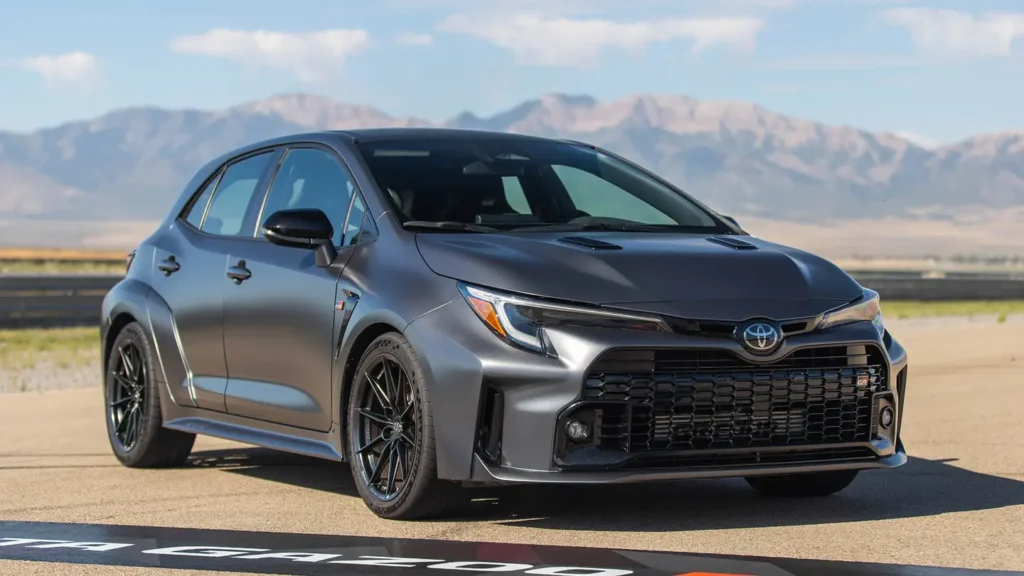
The LE starts at $23,920 including the $1,195 destination charge, which makes it one of the most affordable new sedans on the market with a full safety suite included.
The 2026 Corolla LE is powered by a 2.0-liter four-cylinder engine producing 169 horsepower and 151 lb-ft of torque, paired to a continuously variable automatic transmission. Fuel economy is rated at 32 city and 41 highway by the EPA.
The interior in the LE trim is straightforward — manually adjustable cloth seats, a six-speaker audio system, and an eight-inch touchscreen with wireless Apple CarPlay and Android Auto standard.
For 2026, Toyota added blind spot monitoring and rear cross-traffic alert to every Corolla trim including the LE, which is a meaningful safety upgrade over the previous year’s base model.
Toyota Safety Sense 3.0 is also standard across the board, covering automatic emergency braking, lane departure steering assist, adaptive cruise control, and automatic high-beam assist.
What makes the Corolla LE’s key ignition particularly noteworthy is the reliability package surrounding it. RepairPal ranks the Corolla first out of 46 compact cars in its reliability scoring.
The combination of a proven engine, a CVT that Toyota has refined over many years, and the elimination of push-button electronics means the ownership proposition is about as low-drama as it gets in the new car market.
The key ignition is not the only reason to buy a Corolla LE, but it is a natural fit for the car’s overall character — uncomplicated, dependable, and thoughtfully priced.
2. 2025 Nissan Versa S
- Price: Starting At $18,585
The Nissan Versa has long held the title of one of the least expensive new cars sold in the United States, and the 2025 model continues that tradition. The base S trim is expected to start around $18,500 before taxes and fees, making it the most budget-accessible new vehicle on this list.
The key ignition is standard on the S trim, while the upper SV and SR trims move to push-button start systems. Under the hood is a 1.6-liter four-cylinder engine making 122 horsepower and 114 lb-ft of torque, paired with Nissan’s Xtronic CVT for 2025.
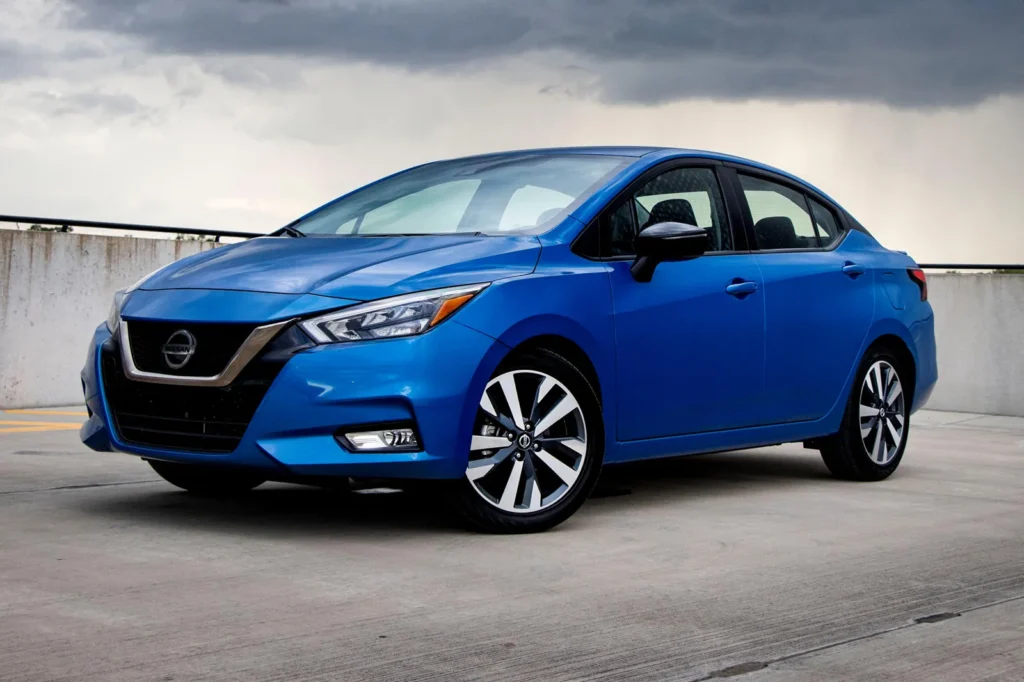
Nissan dropped the five-speed manual transmission for the new model year, meaning all Versas are now CVT automatics. Fuel economy is expected to hold near 32 city and 40 highway, making this one of the more efficient non-hybrid sedans in the segment.
Standard safety equipment includes forward and reverse automatic emergency braking, pedestrian detection, lane departure warning, high beam assist, and rear parking sensors — a solid base for a car at this price point.
The base Versa S is genuinely stripped down by modern standards, lacking Apple CarPlay and Android Auto in its base form and rolling on 15-inch steel wheels. But for buyers whose priority is the lowest possible cost of entry into a new, warranty-backed vehicle with modern safety technology, it is difficult to beat.
The key ignition here is part of a broader philosophy of keeping every system as simple and maintenance-friendly as possible, which suits the Versa’s role as an urban runabout and first-time buyer’s car perfectly.
3. 2026 Toyota Corolla Hatchback SE
- Price: Starting At $26,860
Worth separating from the sedan because the body style changes the use case meaningfully, the 2026 Toyota Corolla Hatchback is available in SE, XSE, and FX Edition trims, with pricing starting at $26,860.
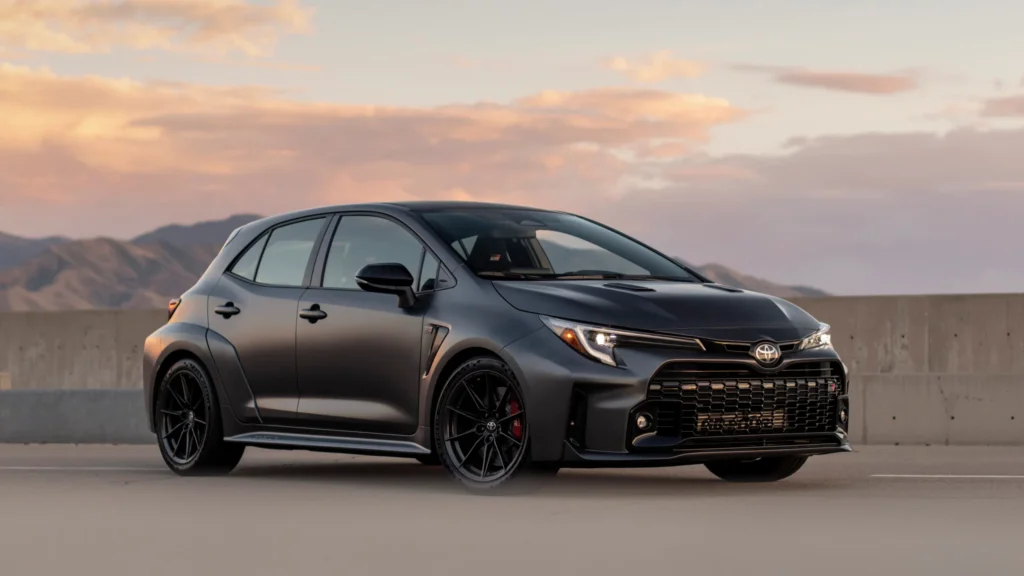
The SE trim uses a key ignition while the XSE moves to a push-button start system — so if the hatchback body appeals to you and you want the traditional key, the SE is the one to target.
The Corolla Hatchback SE carries the same 2.0-liter four-cylinder engine and CVT as the sedan, but adds 18-inch aluminum wheels, sport seats, a leather-wrapped steering wheel, and LED signature lighting as standard.
Rear cargo space measures 17.8 cubic feet behind the seats, which is more useful than the sedan’s trunk for anyone hauling gear, groceries, or equipment regularly.
The sport-tuned suspension on the SE provides a slightly firmer ride than the base LE sedan, which is either a benefit or a trade-off depending on what kind of roads are common in your area. All of Toyota Safety Sense 3.0 is included, along with wireless Apple CarPlay and Android Auto.
For buyers who want a practical, hatchback-bodied car with genuine Toyota reliability and the simplicity of a key start, the Corolla Hatchback SE sits in a very reasonable value position.
You give up the moonroof, heated seats, and wireless charging of the XSE, but you save approximately $2,600 off the top and retain every safety and tech feature that actually matters day to day.
4. 2026 Ford Maverick XL
- Price: Starting At $29,990
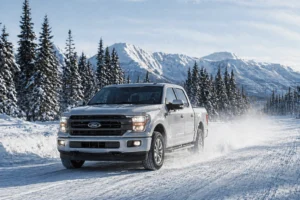
The Ford Maverick XL is the entry point into America’s most popular compact pickup truck, and it is one of the only new trucks in 2026 where you can still get a traditional key ignition.
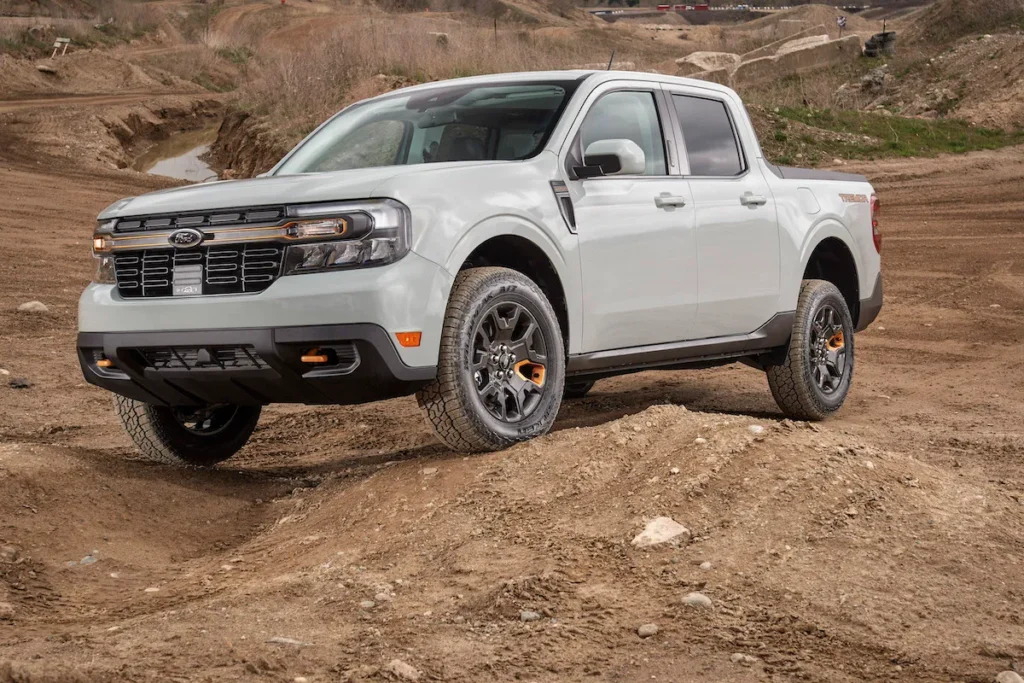
The XLT trim and above add keyless entry and push-button start as standard features, so the key ignition experience lives exclusively on the XL. The XL starts at $29,990 with the standard 2.5-liter hybrid powertrain.
That hybrid powertrain is one of the most compelling parts of the whole package. The 2.5-liter four-cylinder paired with an electric motor produces a combined 191 horsepower and routes it through a CVT to the front wheels.
EPA fuel economy is rated at 42 city and 35 highway — remarkable for a pickup truck, and one of the main reasons the Maverick has been consistently one of the faster-selling vehicles at Ford dealerships.
If you step up to the EcoBoost 2.0-liter turbocharged engine option, you get 250 horsepower and 280 lb-ft of torque paired to an eight-speed automatic, though with lower fuel economy of around 23 to 26 mpg combined.
The XL’s interior is basic — cloth seats, manual front adjustments, a 13.2-inch touchscreen with wireless Apple CarPlay and Android Auto, and an eight-inch digital instrument cluster. What it lacks in comfort features, it makes up for in truck functionality.
The bed measures 4 feet 5 inches long and can handle a standard 4×8 sheet of plywood when the tailgate is down. Standard safety technology includes forward collision warning, automatic emergency braking, lane departure steering assist, and automatic high beams.
For buyers who need a practical, work-capable vehicle without the complexity or cost of a fully equipped truck, the Maverick XL with its key ignition and hybrid efficiency is a remarkable piece of value in the 2026 market.
5. 2026 Subaru Impreza Base Trim
- Price: Starting At $27,790
The 2026 Subaru Impreza is one of only a handful of compact cars that still comes with standard all-wheel drive on every trim, making it a uniquely practical option for buyers in regions with harsh winters or unpredictable weather.
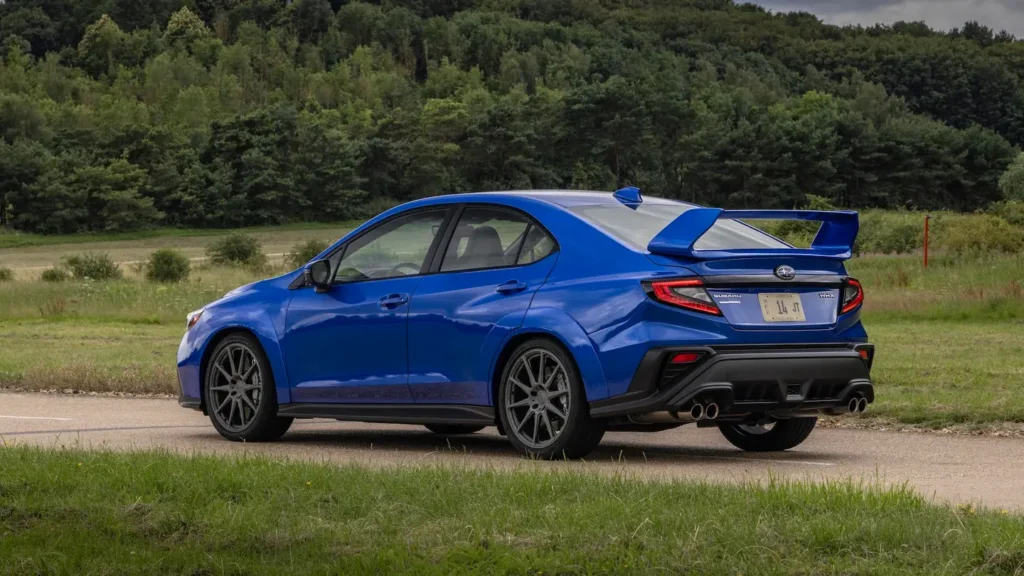
The base trim of the Impreza — now the Sport trim after the previous base was discontinued for 2026 — starts around $27,790 and retains a conventional key ignition. Higher trims move to push-button start as part of their expanded feature sets.
The Impreza is powered by a 2.5-liter naturally aspirated four-cylinder engine producing 182 horsepower. It is paired with a CVT automatic transmission, and AWD is standard rather than optional — a meaningful differentiator from competitors like the Toyota Corolla or Honda Civic where AWD is either unavailable or costs extra.
Fuel economy comes in at approximately 29 mpg combined, which is lower than the Corolla or Civic but reasonable given the added mechanical complexity of the all-wheel-drive system. Cargo space in the hatchback body style reaches 20.8 cubic feet behind the rear seats, which is genuinely useful.
For buyers who prioritize all-weather capability and want the security of knowing the car can handle slippery roads without switching into a special mode or waiting for a system to engage, the Impreza’s permanent AWD is a real and meaningful advantage. The key ignition on the base trim keeps the price accessible while preserving all of the mechanical simplicity that makes Subaru’s AWD system so reliable over time.
2026 Key Ignition Cars At A Glance
| Vehicle | Starting MSRP | Engine | MPG (Combined) | Key Ignition Trim | Drivetrain |
| Toyota Corolla LE Sedan | $24,420 | 2.0L 4-cyl, 169 hp | 35 mpg | LE (Base) | FWD |
| Nissan Versa S | ~$18,585 | 1.6L 4-cyl, 122 hp | 35 mpg | S (Base) | FWD |
| Toyota Corolla Hatchback SE | $26,860 | 2.0L 4-cyl, 169 hp | 34 mpg | SE (Base Hatch) | FWD |
| Ford Maverick XL Hybrid | $29,990 | 2.5L Hybrid, 191 hp | 38 mpg | XL (Base) | FWD/AWD |
| Subaru Impreza Sport | ~$27,790 | 2.5L 4-cyl, 182 hp | 29 mpg | Sport (Base) | AWD |
Pricing includes destination charges where available. Always confirm with your local dealer as pricing changes.
Trim-By-Trim Breakdown — Key Vs. Push-Button By Model
| Model | Key Ignition Trim(s) | Push-Button Start Trim(s) |
| 2026 Toyota Corolla Sedan | LE | SE, XSE |
| 2026 Toyota Corolla Hatchback | SE | XSE, FX Edition |
| 2026 Nissan Versa | S | SV, SR |
| 2026 Ford Maverick | XL | XLT, Lobo, Lariat, Tremor |
| 2026 Subaru Impreza | Sport | RS |
What To Consider Before Buying A Car With Key Ignition
Choosing a key ignition vehicle in 2026 is not just about nostalgia or personal preference — there are concrete practical and financial reasons to make the call, and there are also a few things to be aware of before committing.
Total Cost Of Ownership Is Often Lower
The base trims that come with key ignition are usually meaningfully less expensive than their push-button counterparts — sometimes by $1,500 to $2,500 for just the ignition-related upgrade package.
That savings compounds over time. Lower purchase price means lower taxes and registration fees. Lower purchase price means a smaller financed amount, which means less interest paid over a loan term.
And since these base trims tend to have fewer electronic systems overall, the potential repair cost list is shorter. A key ignition cylinder is one of the simplest mechanical parts in a car, and a replacement typically costs a few hundred dollars at most — a fraction of what a push-button start system’s electronic components can cost if they fail out of warranty.
Insurance rates for base trims are also generally lower, both because the purchase value is lower and because base trims tend to have fewer expensive components that would cost money to repair or replace after an accident.
For a first-time buyer, a recent graduate, or anyone on a tight monthly budget, these incremental savings matter over the full course of ownership.
The Transponder Key Is Modern — Do Not Confuse It With An Old-Fashioned Key
One of the most common misconceptions about modern key-start vehicles is that a physical key means less security. That has not been true for quite some time. Every key ignition vehicle on this list uses a transponder chip embedded in the key.
The car’s immobilizer reads this chip every time you turn the key, and if the chip code does not match what the system expects, the engine will not run — period. The key can be physically duplicated at a hardware store, but that copy will not start the car. It takes a dealer or certified locksmith with programming equipment to create a fully functional replacement key.
The physical key also eliminates the relay attack vulnerability that has become a genuine concern for push-button start car owners. Relay theft requires capturing and amplifying the signal from a key fob to trick the car into thinking the fob is nearby.
A physical key, which requires no wireless signal, cannot be attacked this way. This is not a theoretical concern — relay theft claims are a real category in auto insurance claims in major metropolitan areas.
Key Replacement And Spare Key Costs
One genuine area where key ignition can be slightly more expensive than a basic fob setup is in key replacement. Because the key contains a transponder chip, getting a spare or replacement cut and programmed requires more than a trip to the key kiosk at a hardware store.
A dealer will typically charge anywhere from $75 to $200 to supply and program a new key, depending on the make and model. Independent locksmiths who specialize in automotive transponder programming can often do the same job for less.
The recommendation here is simple: get a spare key made immediately after purchasing the vehicle and keep it somewhere safe.
Losing the only key to a transponder-equipped car and paying for emergency programming is considerably more expensive than proactively having a backup cut when you first buy the car.
Key Ignition Vs. Push-Button Start — A Practical Comparison
| Feature | Traditional Key Ignition | Push-Button Start |
| Starting Method | Physical key inserted and turned | Key fob in proximity, button pressed |
| Works Without Fob Battery | Yes — key is physical | No — fob must have a functioning battery |
| Vulnerable To Relay Theft | No | Yes, in some cases |
| Transponder Security | Yes (modern vehicles) | Yes |
| Replacement Cost If Lost | $75–$200 typically | $200–$500+ depending on model |
| Entry-Level Price Impact | Lower overall trim cost | Usually tied to higher trim levels |
| Convenience | Requires key insertion | Faster, hands-free access |
| Common In Fleet/Commercial Use | Yes | Less common |
Who Should Buy A Key Ignition Car In 2026?
The honest answer is that key ignition vehicles in 2026 are best suited for a specific type of buyer, and if you fall into one of these categories, the value proposition is genuinely strong.
First-time buyers and younger drivers purchasing their first vehicle on a limited budget benefit the most from the lower base pricing that comes with these trims.
A new Toyota Corolla LE or Nissan Versa S offers modern safety technology, manufacturer warranty coverage, and strong long-term reliability at a price point that is meaningfully more accessible than any push-button start trim in the same lineup.
Older drivers or those less comfortable with evolving automotive technology often prefer the mechanical familiarity of a key start. There is nothing to forget, nothing to pair, no fob battery to monitor.
You carry a key, you use the key, the car starts. That uncomplicated interaction has genuine value for drivers who have been using this system for decades and see no practical benefit in changing it.
Fleet managers and small business owners who maintain multiple vehicles frequently prefer key ignition for operational simplicity.
Replacement keys are straightforward to manage, vehicles are easier for multiple employees to operate consistently, and there is less exposure to software-related issues that can affect more complex keyless systems.
The Ford Maverick XL, in particular, serves this audience well as a capable, fuel-efficient work truck with a key ignition at a price that keeps total fleet costs manageable.
Finally, drivers in areas with documented relay theft patterns or higher-than-average vehicle theft rates may find the absence of a wireless key signal a genuinely worthwhile security trade-off.
A car that cannot be relay-attacked is simply safer in those environments, and that peace of mind has real value.
Frequently Asked Questions
Are there any new 2026 cars with traditional key ignition?
Yes. Several 2026 vehicles still offer key ignition on their base trims, including the Toyota Corolla LE sedan (starting at $23,920), the Nissan Versa S (estimated around $19,500), the Toyota Corolla Hatchback SE ($25,375), the Ford Maverick XL ($28,145), and the Subaru Impreza Sport (around $26,795). The feature is primarily found on entry-level trims, with higher trims in each lineup using push-button start systems.
Is key ignition less secure than push-button start in 2026?
Not necessarily. Modern key-start vehicles use transponder chips embedded in the key that must communicate with the car’s immobilizer for the engine to run. A duplicate key cut without the chip will not start the car. In some ways, key ignition is more secure against relay attacks — a theft method where criminals amplify a keyless fob’s signal to steal the car without the actual key present. That type of attack does not work on traditional key-start systems.
Which 2026 car with key ignition has the best fuel economy?
The Ford Maverick XL with the hybrid powertrain gets the most notable fuel economy numbers at 42 city and 35 highway despite being a pickup truck. Among sedans, the Toyota Corolla LE and Nissan Versa are both rated around 35 mpg combined, making either a strong choice for buyers focused on fuel costs.
Can you add push-button start to a car that came with key ignition?
Aftermarket push-button start kits exist, but fitting one to a vehicle that was not designed for it requires significant wiring work and raises reliability and warranty concerns. It is generally not recommended. If push-button start matters to you, the cleaner solution is to simply choose a higher trim of the same model that includes it from the factory.
Do dealerships still stock key ignition vehicles in 2026?
Yes, though availability depends on the model and trim. Base trims that carry key ignition are sometimes less commonly stocked on dealer lots because dealers typically prefer to carry higher-margin, better-equipped models. It may require ordering through a dealer or checking multiple dealerships’ inventories to find a specific base trim with key ignition in stock.
Is it harder to get a spare key made for a 2026 key ignition vehicle?
It takes slightly more effort than duplicating a simple house key, because the transponder chip in the key must be programmed to match the vehicle’s immobilizer system. Dealers and certified automotive locksmiths can handle this. Costs typically range from $75 to $200 depending on the model. Getting a spare made shortly after purchase is the smart move.
Are key ignition cars cheaper to insure?
Generally, yes — base trims are usually less expensive to insure than higher trims of the same model, partly because the vehicle value is lower and partly because there are fewer expensive components to repair. The key ignition itself is not the primary factor in insurance pricing, but the overall lower trim level and vehicle value typically result in lower premiums.
Will traditional key ignition disappear completely from the new car market?
It is heading that direction, but slowly. The 2026 model year still has a meaningful number of base trim options with key ignition, particularly from Toyota, Nissan, Ford, and Subaru. As average vehicle prices rise and manufacturers continue to push features upmarket, key ignition will become rarer — but it has not gone away yet, and for buyers who want it, the 2026 options covered here represent solid choices.