Automotive design has always moved in cycles, but what is happening in 2026 is not just a trend — it is a full-scale shift in what American buyers actually want.
Somewhere between the decade of aerodynamic blobs and wind-tunnel-optimized swoops, people started missing the honest, upright proportions of a proper boxy vehicle. The kind that looks like it was designed with purpose rather than just to reduce drag.
Flat hoods, vertical windshields, squared-off rear ends, and slab sides that make no apologies for what they are — these shapes are back, and they are selling at a pace that has caught more than a few industry analysts off guard.
The reasons are practical as much as aesthetic. A square body means more interior volume for the same footprint. Better sightlines from that upright greenhouse. More usable cargo space from a vertical tailgate.
And a visual presence on the road that rounded crossovers simply cannot replicate. This guide covers the best square and boxy vehicles available in the USA in 2026, with real pricing, honest specs, and clear guidance on who each one actually suits.
Note
Specifications, pricing, and feature details referenced across this guide are cross verified from Edmunds, Kelley Blue Book, U.S. News & World Report, Cars.com, CarGurus, and official manufacturer websites including Toyota, Ford, Jeep, Honda, and Hyundai USA.
All figures reflect the 2026 model year and are subject to change without notice.
Why The Boxy Vehicle Is Dominating The 2026 Market
The return of angular, squared-off vehicle design has been building for a few years, but 2026 is the model year where it has reached full momentum. Automotive design is cyclical — for years, engineers chased the wind, smoothing out every corner to reduce drag coefficients, and curves ruled the road.
But in 2026, the ruler has returned to the drafting table, and the boxy SUV is back louder, squarer, and more capable than ever before.
Three distinct forces are driving this. First, there is nostalgia from a generation of buyers who grew up watching parents navigate in Land Cruisers and Defenders, and who now have real purchasing power.
Second, there is a genuine backlash against the homogenous look that has overtaken the market. When every crossover from every brand starts looking nearly identical from the side profile, something deliberately angular stands out — and standing out has value.
Third, and most importantly, the functional case for a square body is legitimately strong. The upright design provides the interior with more usable cabin space, better headroom, and greater vertical cargo capacity than swoopy SUVs. The upright pillars and flat glass panes also improve outward visibility and give an open feel to the cabin.
What Makes A Vehicle Truly Square — Design Elements That Define The Category
Not every vehicle with a tall roofline qualifies as a genuinely boxy design. True square proportions require a specific set of characteristics working together. The hood should be flat or nearly flat rather than arching upward toward a high cowl.
The windshield should be upright with a steep rake angle, pushing visibility forward and creating that commanding view of the road ahead. The A-pillars, B-pillars, and C-pillars should be relatively straight and vertical rather than slanted dramatically inward.
The rear end should be squared off with a mostly vertical tailgate, maximizing cargo access and interior volume. Fender lines should be defined by crisp creases rather than soft, flowing curves.
When all of these elements come together, the result is a vehicle that looks deliberately built for function — which, historically, is exactly what these proportions emerged from.
Military vehicles, commercial trucks, and early off-road utility vehicles were all boxes because flat panels were easier to manufacture, easier to repair in the field, and made the most of available interior space.
The modern boxy SUV carries that DNA into a contemporary package with creature comforts, advanced technology, and refined powertrains that the originals never offered. That combination — utilitarian form with modern content — is what has made the category resonate so powerfully with today’s buyers.
The Best Square And Boxy Cars You Can Buy In 2026
1. 2026 Jeep Wrangler
No list of boxy vehicles in any year is complete without the Jeep Wrangler, and the 2026 model continues to make the case for why this shape has endured for decades.
The Jeep Wrangler is a boxy SUV that can be converted to a doorless convertible — it is instantly recognizable, uniquely capable, and unlike anything else on the road.
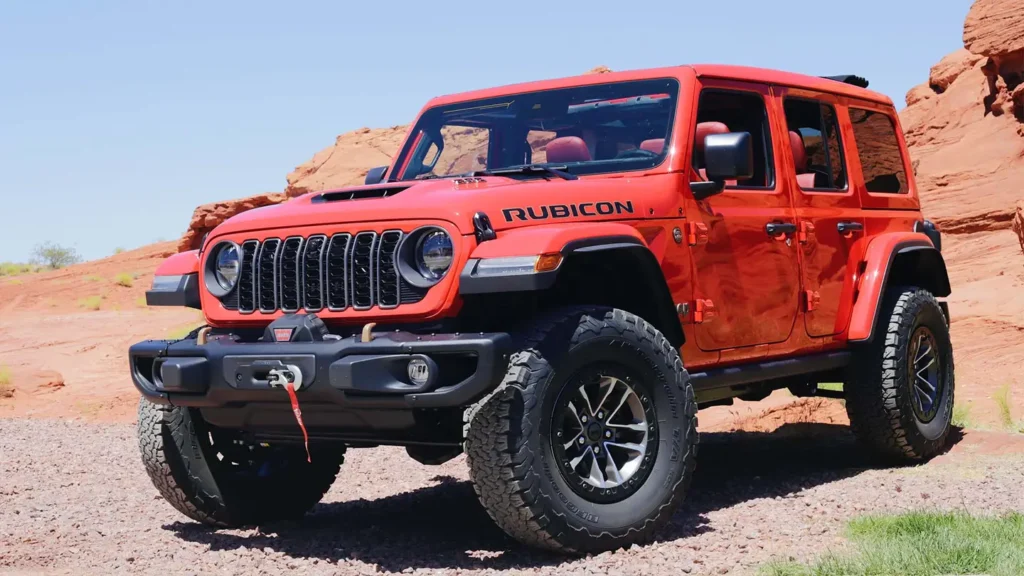
For 2026, Jeep has added new special editions, updated door hinges, and newly available steel bumpers, along with a revised color palette that includes some sharp new choices.
The 2026 Jeep Wrangler is available in two- and four-door body styles with a choice of three engines: a 285-horsepower V6, a 270-horsepower turbocharged four-cylinder, or a 470-horsepower V8.
Buyers can also choose between a six-speed manual transmission or an eight-speed automatic. The plug-in hybrid Wrangler 4xe continues in the lineup, offering electric torque delivery that is particularly effective for low-speed trail work.
The 4xe badge has been one of Jeep’s strongest sellers, attracting buyers who want the off-road capability and boxy character of the Wrangler without paying the full fuel cost of the traditional gas engines on daily commutes.
The Wrangler’s compromises are well documented and have not fundamentally changed. Highway noise, firm ride quality from the solid front axle, and fuel economy that lags behind most competitors are the known trade-offs.
But for the buyer whose priority is genuine off-road capability delivered in an unmistakably square package, no vehicle in the American market has a longer or more proven track record.
The removable doors and roof — both soft top and hardtop options — remain unique in the segment and give the Wrangler a character that no amount of aerodynamic styling on a competitor can replicate.
2. 2026 Ford Bronco
The 2026 Ford Bronco’s starting price of around $40,000 is reasonable considering the extensive standard equipment, advanced safety features, and from-the-factory off-road capability.
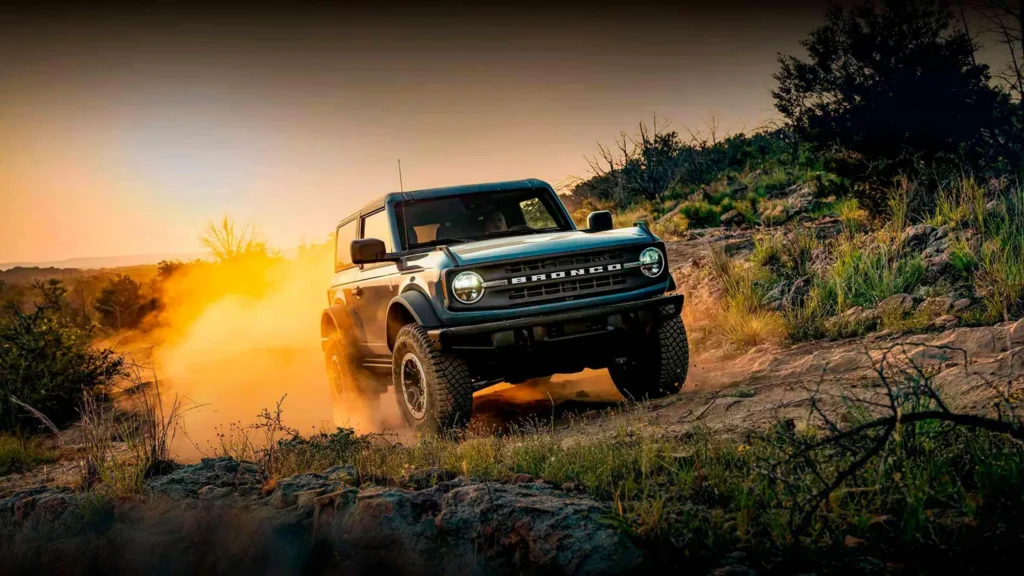
The Bronco comes in seven trims for 2026 — Base, Big Bend, Outer Banks, Heritage Edition, Badlands, Stroppe Special Edition, and the flagship Raptor — giving buyers a genuinely wide range of capability and price points to choose from without losing the core boxy identity that defines the vehicle.
The Ford Bronco nails the classic boxy SUV assignment with its squared-off shape, round headlamps, and wide grille, plus the option to remove the doors and choose a soft top, hard top, or both for a true open-air experience.
It is also a real off-roader — not just a rugged-looking commuter — with standard 4WD and available upgrades like the Sasquatch package with 35-inch all-terrain tires and locking front and rear differentials.
The standard turbocharged 2.3-liter four-cylinder makes 300 horsepower, and the optional twin-turbo V6 pushes that to 330 horsepower — a meaningful step up for buyers who tow regularly or simply want the extra confidence on steep terrain.
The Bronco is more comfortable on pavement than an equivalent Jeep Wrangler — a meaningful advantage for buyers who will split time between trail use and daily pavement driving. The independent front suspension gives it more composed highway manners than the Wrangler’s solid front axle setup, though both vehicles are distinctly truck-like compared to crossover alternatives.
Cargo space on the four-door measures 35.6 cubic feet behind the rear seat, expanding to 77.6 with the rear seat folded. One clever detail unique to the Bronco: the cowl-mounted side mirrors stay on the vehicle when the doors come off, solving an inconvenience that Wrangler owners have accepted for years.
3. 2026 Toyota 4Runner
The Toyota 4Runner returned to a thoroughly redesigned platform for 2025, and the 2026 model carries forward that fresh foundation with full confidence. The 2026 Toyota 4Runner has a starting sticker price of $43,565, with the range-topping Limited kicking off at $58,195.
It is priced slightly above the four-door Wrangler and Bronco at the base level, but it brings more interior space, a more refined daily character, and Toyota’s legendary long-term reliability reputation to the equation.
The 4Runner shares its platform with the Lexus GX and Toyota Land Cruiser, and its boxy body can house two or three rows of seats along with plenty of tech features.
The cabin features an eight-inch display, an available 14-speaker JBL audio system, and wireless Android Auto and Apple CarPlay. Safety is handled by Toyota Safety Sense 3.0, which includes automatic emergency braking, lane-centering, and adaptive cruise control.
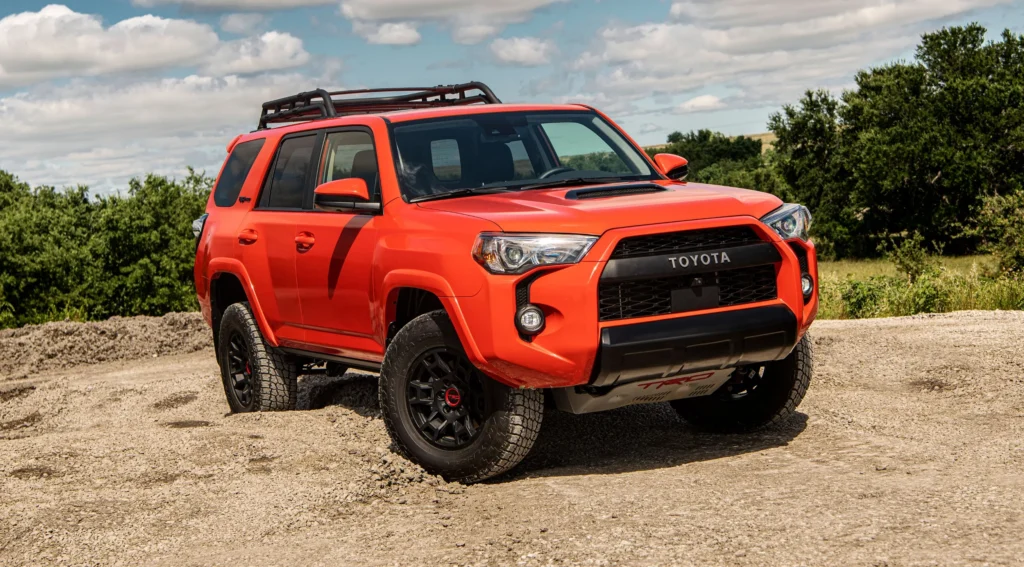
Cargo space behind the rear seat measures 48.4 cubic feet, which outpaces the Wrangler, Bronco, and Toyota Land Cruiser — a significant advantage for families who need both off-road capability and genuine hauling room.
The Toyota 4Runner has the best resale value of any new SUV, earning Kelley Blue Book’s Best Resale Value Award. That matters more than it might appear on the surface.
A vehicle that holds its value well is one where the total cost of ownership over five years looks dramatically different from a vehicle that depreciates quickly.
For buyers who typically keep a vehicle for four to six years before trading, the 4Runner’s residual value effectively offsets some of its higher initial purchase price compared to Jeep and Ford alternatives.
4. 2026 Honda Passport
The 2026 Honda Passport represents one of the most significant individual redesigns in the boxy SUV category for this model year. Honda went fully committed to angular styling in a way the previous Passport never did.
Redesigned for 2026, the Honda Passport leans hard into the boxy, outdoorsy SUV look with a flatter hood, an abrupt lower bumper for better approach angles, and a long 113.6-inch wheelbase that gives it big proportions on the road. Every trim wears 18-inch wheels and comes standard with Honda’s i-VTM4 AWD plus seven drive modes, including Trail and Tow.
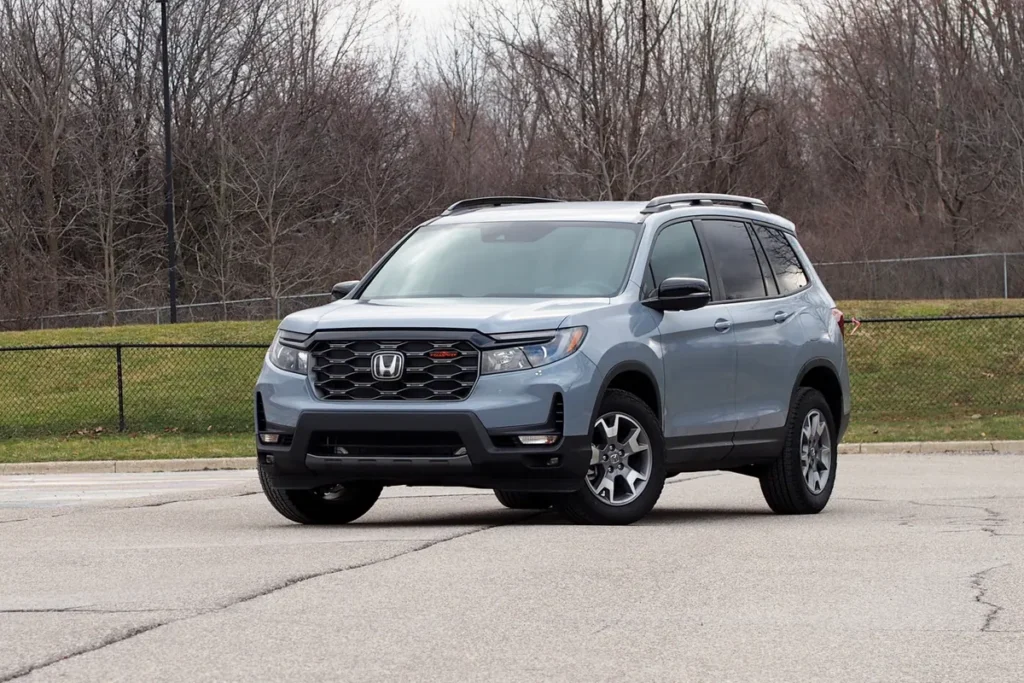
Power comes from a naturally aspirated 3.5-liter V6 making 285 horsepower and 262 lb-ft of torque, paired with a 10-speed automatic transmission, with towing rated at up to 5,000 pounds.
The squared-off shape delivers real interior dividends. The boxier design allows for increased cargo capacity, now offering over 100 cubic feet of space with the rear seats folded — well up from the 77.7 cubic feet in the second-generation Passport.
That is a substantial gain driven almost entirely by the more vertical rear end and taller roofline, proving the functional value of the boxy design language in concrete terms.
As one of the few mid-size SUVs to still use a naturally aspirated V6 engine, the Passport has a unique advantage in a segment where turbocharged four-cylinders have become the default powertrain.
For buyers who value the character and smoothness of a larger displacement engine over peak efficiency numbers, the V6 Passport is a distinctive choice.
5. 2026 Hyundai Ioniq 5
The Hyundai Ioniq 5 is proof that the boxy aesthetic is not the exclusive territory of traditional off-road vehicles and body-on-frame SUVs. It is one of the most striking electric vehicles on the American market, and its angular, retro-futuristic design has earned it consistent recognition as one of the best-looking EVs available.
Its quad square headlights and charismatic pixel taillights make it both forward-looking and classically inspired — a design philosophy that reads as genuinely original rather than chasing any established template.
The 2026 Hyundai Ioniq 5 SE starts at $35,000 for the standard-range rear-wheel-drive configuration — a meaningful price reduction from the 2025 model year as Hyundai adjusted pricing to remain competitive following changes to the federal EV tax credit landscape.
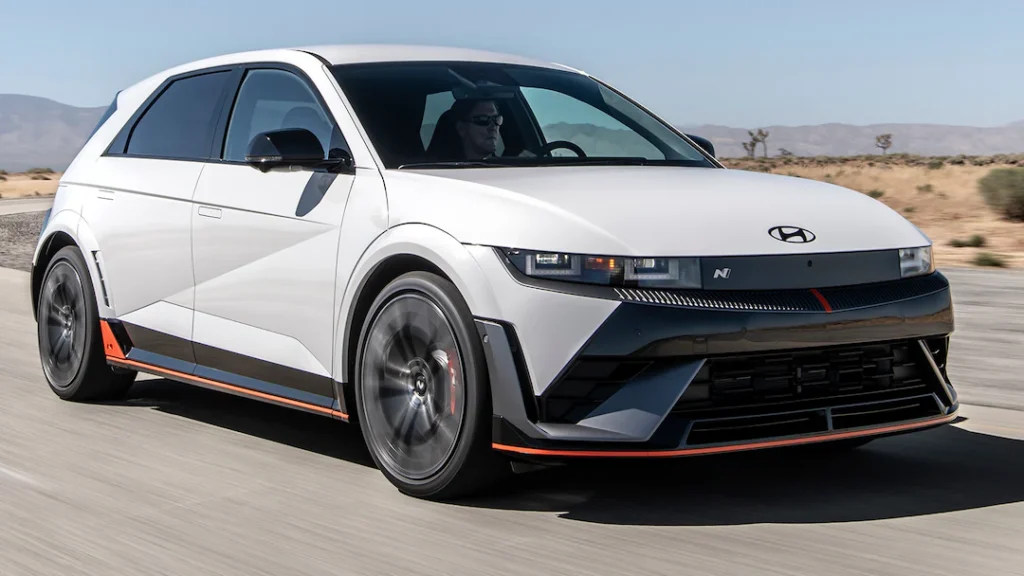
The 2026 Ioniq 5 SE Standard Range has a single 168-horsepower electric motor with 258 lb-ft of torque driving the rear wheels. Standard equipment across all trims includes forward collision warning, automatic emergency braking, adaptive cruise control, lane-centering steering, front and rear parking sensors, blind spot monitors, and rear cross-traffic alert.
DC fast charging from 10 to 80 percent takes approximately 20 minutes at a high-power charger — competitive by any standard in the current EV market.
The interior benefits directly from the boxy proportions, with a flat floor enabled by the vehicle’s dedicated EV platform that would not be possible in a converted gas-car architecture.
Rear passenger legroom is genuinely generous, and the square roofline means full-sized adults sit comfortably without the headroom compromises that plague lower, more aerodynamic EV designs.
6. 2026 Hyundai Santa Fe
The Santa Fe made waves when it was redesigned with the sharply angular, almost Defender-inspired profile it now wears, and the current Santa Fe is a complete departure from its predecessor, trading soft curves for an upright profile.
It is once again a three-row SUV, offering versatility and value for families with a thoughtful approach to tech and storage solutions. The Santa Fe leans hard into the squared-off look with a flat hood, blocky profile, and distinctive pixel-style H lighting — the result is a roomy cabin and a large cargo opening, making it a strong choice for families.
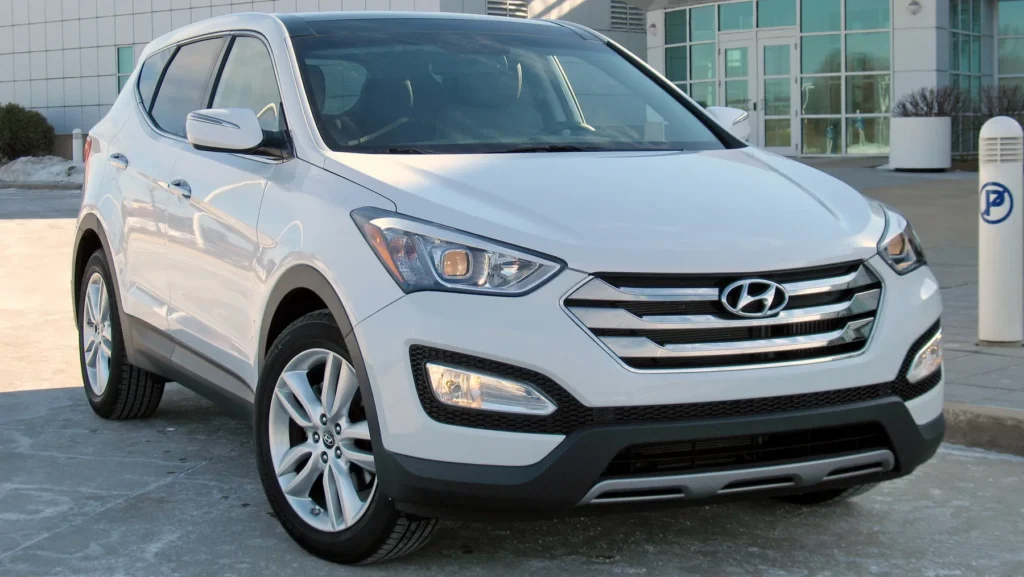
Pricing for the 2026 Santa Fe begins in the low-to-mid $30,000 range and moves into the mid-$40,000s for the fully equipped hybrid and plug-in hybrid trims.
The PHEV version offers meaningful electric range for daily use while retaining full utility for longer trips — a practical combination that has proven popular with buyers who want to reduce fuel costs without committing entirely to a battery-only vehicle.
2026 Square And Boxy Vehicle Comparison Table
| Vehicle | Starting MSRP | Engine | Horsepower | Key Boxy Feature | Best For |
| Jeep Wrangler | ~$35,000 | 2.0L Turbo / 3.6L V6 / 6.4L V8 | 270–470 hp | Removable doors & roof | Pure off-road enthusiasts |
| Ford Bronco | ~$40,000 | 2.3L Turbo-4 / 2.7L Turbo-V6 | 300–330 hp | Cowl-mounted mirrors, GOAT modes | Trail + daily balance |
| Toyota 4Runner | $43,565 | 2.4L Turbo / Turbo Hybrid | 278–326 hp | Best resale value; 48.4 cu-ft cargo | Families, long-term ownership |
| Honda Passport | ~$42,000 | 3.5L V6 | 285 hp | 100+ cu-ft cargo, standard AWD | Outdoor-lifestyle families |
| Hyundai Ioniq 5 | $35,000 | Electric (RWD/AWD) | 168–422 hp | Retro boxy EV design, flat floor | EV buyers wanting bold style |
| Hyundai Santa Fe | ~$33,000 | 2.5L / Hybrid / PHEV | 191–277 hp | Pixel H-lighting, 3-row available | Family buyers, value priority |
Pricing is approximate MSRP before taxes, fees, and destination. Verify current pricing at your local dealer.
Practical Advantages Of A Square Body — What The Numbers Actually Say
Beyond the visual appeal, the case for a square vehicle in 2026 comes down to measurable advantages in areas that affect real-world ownership. Cargo capacity is the most straightforward.
Compare the internal cargo volumes of comparably sized boxy versus aerodynamic crossovers and the square vehicles consistently deliver more usable space for the same overall vehicle footprint.
The vertical rear end means a wider cargo opening and a lower load floor relative to roof height, making loading and unloading bulky items meaningfully easier.
Headroom is another area where boxy vehicles consistently outperform their sloped-roof counterparts. Taller passengers and rear-seat passengers in child safety seats both benefit from the additional vertical space that an upright roofline creates.
This is not abstract — it is the difference between a comfortable long road trip and an increasingly uncomfortable one for anyone over six feet tall sitting in the second row.
Outward Visibility And The Case For Upright Glass
One of the more underappreciated advantages of a boxy vehicle is sightlines. Upright A-pillars, a steeper windshield angle, and a taller hood line all contribute to a view of the road that more aerodynamic designs sacrifice in the name of a cleaner exterior profile.
In urban environments, where reading cross-traffic, spotting pedestrians, and judging tight parking gaps are constant tasks, the improved outward visibility of a properly boxy vehicle is a genuine safety and convenience advantage.
It is also more comfortable over long distances — the commanding seating position and clear glass area reduce the visual fatigue that comes from peering over a low-slung hood or squinting past thick A-pillars.
Trail and off-road use makes this even more pronounced. Seeing the terrain immediately in front of the vehicle is critical when navigating obstacles.
The Wrangler’s squared-off hood with its flat, slightly depressed cowl allows the driver to see the front corners of the vehicle clearly — a detail that experienced off-road drivers cite as one of the Wrangler’s most practically useful traits. The Bronco’s trail sight cutouts on the front fenders serve the same purpose with a clever design touch.
Resale Value And Long-Term Cost Of Ownership
Boxy vehicles, particularly the most iconic ones, tend to hold their value exceptionally well compared to the broader new vehicle market. The Toyota 4Runner’s best-in-class resale value award is the most dramatic example, but the trend extends across the segment.
Jeep Wranglers have historically been among the top-performing vehicles in terms of residual value retention in the entire American market.
The combination of strong demand, a loyal ownership community, and the sense that these vehicles are built to last contributes to a resale market that works in the original buyer’s favor.
For a buyer financing a vehicle over 60 months, the total cost of ownership calculation changes significantly when the projected trade-in or resale value is higher.
A vehicle that costs $43,000 new but retains $28,000 of that value after five years has a very different effective cost than a $37,000 vehicle that is worth $15,000 at the same point. Buyers who focus only on purchase price and monthly payment without accounting for depreciation are missing a meaningful piece of the financial picture.
Who Should Buy A Boxy Vehicle In 2026 — And Who Should Not
The boxy segment in 2026 is broad enough to accommodate a genuine range of buyers, but it is not the right answer for everyone. Understanding where these vehicles deliver clear value — and where they do not — saves both money and frustration.
Buyers who will benefit most from a square vehicle in 2026 are those who need maximum interior volume from a reasonably sized footprint, who value commanding sightlines and a high seating position, who plan to use the vehicle for camping, overlanding, or trail use, who tow trailers or carry gear regularly, or who simply want their vehicle to look different from the sea of identical crossovers at every parking lot.
The boxy segment serves all of those needs well, and the 2026 options available cover a wide enough price range — from $33,000 to well over $60,000 — that there is a realistic entry point for most serious buyers.
Buyers who will find boxy vehicles frustrating are those who prioritize fuel economy above most other factors, who do all their driving on highways at high speed where aerodynamic drag becomes a real fuel cost, who need the absolute lowest monthly payment and cannot move above entry-level crossover pricing, or who find the firmer ride quality and higher noise levels of body-on-frame vehicles uncomfortable over long distances.
The Ford Bronco and Toyota 4Runner have both made meaningful strides in on-road refinement, but neither will ever be mistaken for a luxury crossover at highway cruise.
Quick Reference: 2026 Boxy Vehicle By Use Case
| Use Case | Best Pick | Why |
| Pure Off-Road Performance | Jeep Wrangler Rubicon | Solid axles, lockers, removable doors — nothing matches it |
| Trail + Daily Balance | Ford Bronco Badlands | IFS for pavement, serious hardware for trails |
| Family With Maximum Cargo | Toyota 4Runner | 48.4 cu-ft cargo, 3-row option, best resale value |
| EV Buyer Wanting Bold Style | Hyundai Ioniq 5 | Boxy retro-EV design, $35K starting, fast charging |
| Family Budget Under $40K | Hyundai Santa Fe | Pixel design, 3-row option, hybrid availability |
| AWD Outdoor-Lifestyle Buyers | Honda Passport | Standard AWD, 285hp V6, 100+ cu-ft cargo |
Frequently Asked Questions
What is considered a square or boxy car?
A boxy or square car is any vehicle whose exterior design is defined by upright, flat surfaces, sharp creases, and angular proportions rather than smooth curves and aerodynamic lines.
Key characteristics include a flat hood, vertical windshield, upright A and C pillars, and a squared-off rear end. In 2026, this design language is most common among off-road SUVs and select electric vehicles designed to maximize interior volume.
Are boxy cars less fuel-efficient than rounded ones?
Generally, yes — a flat, vertical surface creates more aerodynamic drag than a curved one, which means engines have to work harder at highway speeds. However, the difference in real-world fuel cost is often smaller than people expect.
At city driving speeds, aerodynamic drag is a minor factor and overall vehicle weight and engine efficiency matter more. Where the gap is most noticeable is sustained highway driving above 65 mph.
Buyers who do the majority of their driving in city and suburban environments will see less of a fuel economy penalty from a square body than highway-heavy drivers.
Is the Jeep Wrangler still the best boxy SUV in 2026?
The Wrangler remains the benchmark for pure off-road capability and iconic square proportions, and the addition of special editions for 2026 has expanded its appeal further. However, calling it the best overall depends on priorities.
For off-road use, it is still the reference point. For daily comfort, cargo space, and on-road refinement, the Toyota 4Runner and Honda Passport have made bigger strides. For buyers who want a boxy EV, the Hyundai Ioniq 5 is in a completely different category.
The Wrangler is the best at what it specifically does — it is not necessarily the right choice for every buyer who wants a square vehicle.
Why are boxy cars coming back in 2026?
Three factors are driving this comeback. First, nostalgia — buyers who grew up watching their parents navigate with Land Cruisers and Defenders are now in the market with serious cash.
Second, an anti-blob design backlash — buyers are tired of everything looking the same, and a boxy SUV stands out. Third, and most significant, functional aesthetics — boxy shapes offer more interior volume, better visibility, and a perception of durability that rounded SUVs cannot match.
Which boxy vehicle has the best resale value in 2026?
The Toyota 4Runner has the best resale value of any new SUV according to Kelley Blue Book’s Best Resale Value Award. The Jeep Wrangler has also historically held value exceptionally well compared to the broader market.
Both vehicles benefit from strong enthusiast demand in the used market and a loyal ownership community that keeps prices elevated relative to comparable alternatives.
Can I use a boxy SUV as a daily vehicle in the city?
Yes, and many owners do. The main challenges in dense urban environments are the larger footprint of body-on-frame boxy SUVs — the Wrangler, Bronco, and 4Runner are all longer and wider than most compact crossovers — and the tighter turning radius of some configurations.
Parking in narrow urban garages can require more maneuvering. On the positive side, the elevated seating position, strong sightlines, and high ground clearance all make these vehicles more capable of handling poor urban road conditions, potholes, and seasonal weather events than lower, softer crossovers.
Is the Hyundai Ioniq 5 a real boxy car or just styled to look like one?
The Ioniq 5’s boxy design is genuine and structural rather than just a surface styling treatment. The flat hood, upright windshield, near-vertical rear end, and sharp body creases are actual proportional choices that affect the interior volume and packaging of the vehicle.
The flat floor, which is one of the Ioniq 5’s standout interior features, is made possible partly because the dedicated EV platform allows the battery to sit completely flat underfloor, and the boxy exterior proportions maximize the usable interior volume above it. It is a case where the aesthetic and the engineering work in the same direction.