Apple first showed off its reimagined CarPlay back in June 2022. It took nearly three years to reach a single production car, and more than a year after that debut, it still lives inside exactly one brand’s showroom.
That brand is Aston Martin, and the slow rollout says a lot about how nervous automakers are about handing Apple their entire dashboard.
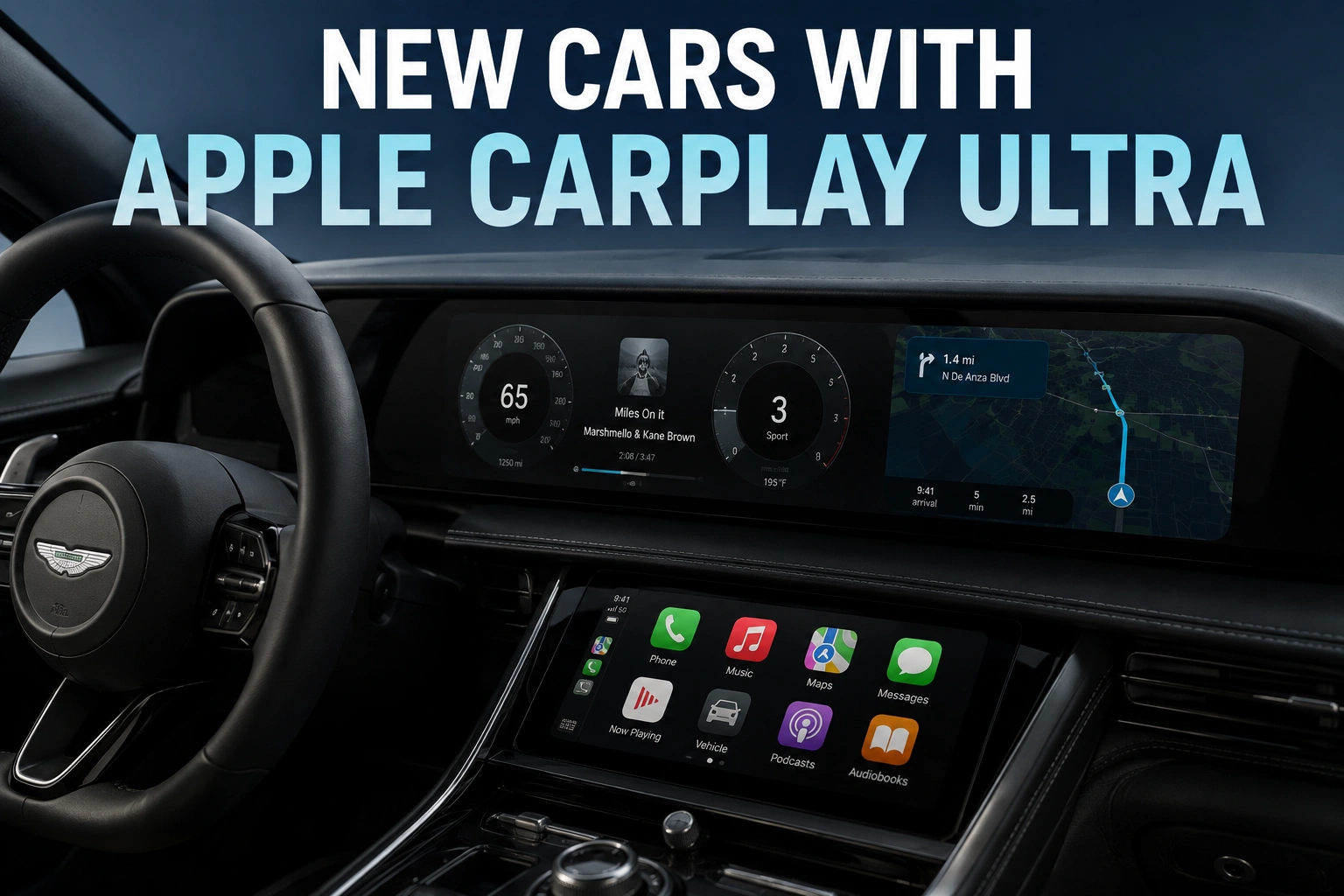
CarPlay Ultra is not the wireless CarPlay already sitting in millions of cars today. It takes over the instrument cluster too, rendering the speedometer, fuel gauge, and climate controls through Apple’s own software.
Nine cars anchor this story in 2026, some shipping the tech right now and others confirmed or strongly expected to add it before the year is out.
A handful of major brands have also walked away entirely, which matters just as much if you’re shopping with this feature in mind.
What Apple CarPlay Ultra Actually Changes
Standard wireless CarPlay, the version most new cars already have, mirrors your iPhone’s apps onto the center touchscreen. Everything else, the gauges, climate system, and drive modes, stays on the automaker’s own software.
CarPlay Ultra removes that boundary entirely. Apple’s interface spreads across every screen in the cabin, including the digital instrument cluster directly behind the steering wheel.
Speed, rpm, fuel level, and tire pressure all render through Apple’s own graphics. Climate control, parking cameras, and drive mode selection move into CarPlay’s menus too, pulled live from the car’s internal data network.
Apple builds a custom visual theme for each automaker rather than shipping one generic look, so an Aston Martin’s version reads differently on screen than a future Porsche or Hyundai implementation would.
You need an iPhone 12 or later running iOS 18.5 or newer, connected wirelessly. There is no wired option and no way to retrofit an older car with genuine CarPlay Ultra.
That last point trips people up constantly. No dongle, adapter, or aftermarket head unit currently on the market delivers real CarPlay Ultra, only cosmetic imitations of it.
Automaker resistance largely comes down to control. Handing Apple the instrument cluster means losing a piece of brand identity, plus any future subscription revenue tied to in-car software features.
Thirteen brands have formally committed to CarPlay Ultra as of mid-2026, though commitment and shipping product remain two very different things, as the table below makes clear.
| Brand | Current Status | Expected Timing |
| Aston Martin | Shipping today | Available now in the US and Canada |
| Hyundai | Committed | Expected H2 2026, Ioniq 3 rumored first |
| Porsche | Committed | No confirmed date yet |
| Kia | Committed | No specific model named yet |
| Genesis | Committed | No specific model named yet |
| Honda, Acura | Committed since 2022 | No recent update |
| Nissan, Infiniti | Committed since 2022 | No recent update |
| Jaguar, Land Rover | Committed since 2022 | No recent update |
| Ford, Lincoln | Reportedly wavering | Still deliberating |
| Audi, Mercedes-Benz, BMW | Declined | Not offering CarPlay Ultra |
| Volvo, Polestar, Renault | Declined | Not offering CarPlay Ultra |
| GM: Chevrolet, Cadillac, GMC | Declined | Dropped standard CarPlay too |
Aston Martin Is The Only Brand Shipping It Today
Every current-generation Aston Martin built on the brand’s latest infotainment platform now includes CarPlay Ultra as standard equipment, not a paid option.
That covers four core nameplates, spanning from the brand’s most attainable sports car to its flagship grand tourer.
Existing owners with 2024-or-newer models can often add it through a dealership software update, provided the car already has the required hardware.
1. Aston Martin DB12
Aston Martin calls the DB12 the world’s first Super Tourer, and it was also the very first production car anywhere to ship with CarPlay Ultra.
A hand-built 4.0-liter twin-turbo V8 sends 671 horsepower to the rear wheels through a ZF eight-speed automatic, with the sportier DB12 S bumping that to 690 horsepower.
Zero to 60 mph takes 3.6 seconds, and top speed lands at 202 mph, figures that put it firmly among proper supercars rather than mere grand tourers.
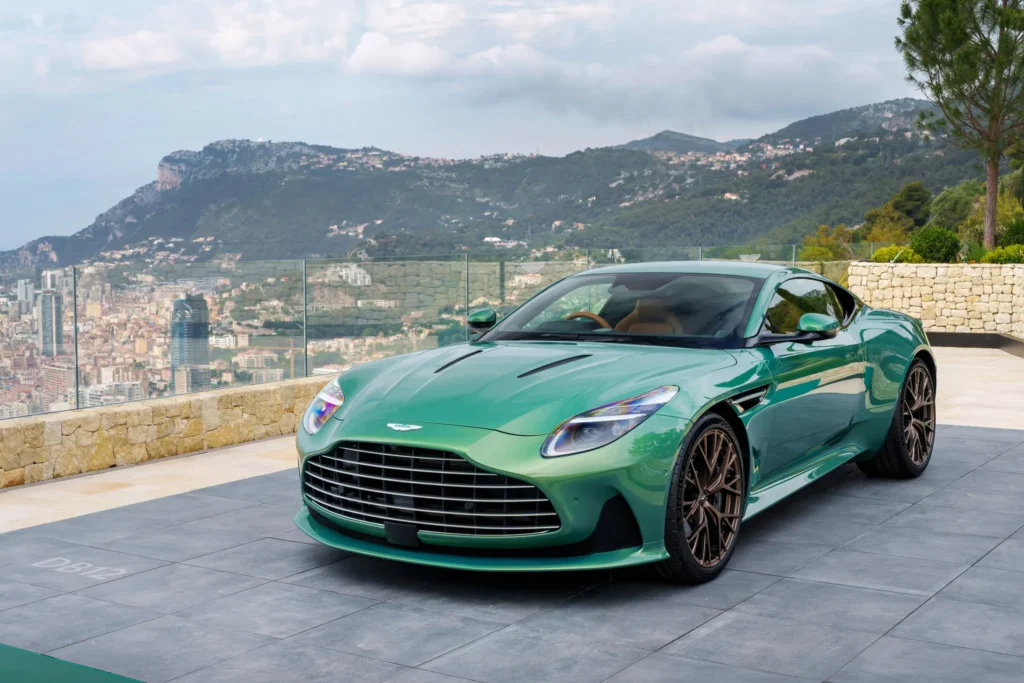
Pricing starts near $253,000 before options, available as a coupe or the open-top Volante.
Inside, CarPlay Ultra takes over both the central touchscreen and the digital instrument cluster, rendering the speedometer, tachometer, and climate readouts in Apple’s own visual language rather than Aston’s.
The rollout applies across the whole lineup now, including the limited-run Goldfinger Edition and the Volante 60th Anniversary model.
2. Aston Martin DBX707
The DBX707 is Aston Martin’s only SUV, and it doubles as the brand’s best-selling model by volume.
Its name comes from the 707 metric horsepower, about 697 hp, produced by a 4.0-liter twin-turbo V8, sent to all four wheels through a nine-speed automatic with a wet clutch.
That setup pushes the DBX707 from 0 to 62 mph in 3.3 seconds, remarkably quick for a five-seat SUV with real cargo space and rear-seat comfort.
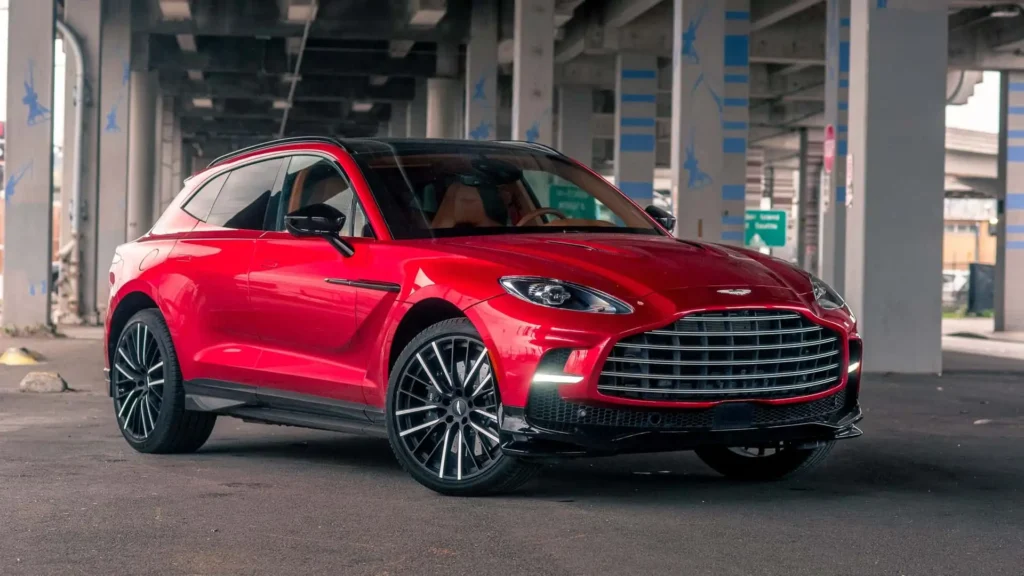
Money changes hands from about $253,000 here, positioning it against the Lamborghini Urus and Ferrari Purosangue rather than mainstream luxury SUVs.
CarPlay Ultra arrived here alongside the DB12, giving families who actually use the back seats and cargo area the same full-cabin Apple takeover as the two-door cars.
Skid plates, adjustable air suspension, and genuine off-road drive modes mean it can leave the pavement too, unusual for a vehicle this fast.
3. Aston Martin Vantage
Vantage is Aston Martin’s answer to the Porsche 911, and it opens at $211,000, the least expensive way into CarPlay Ultra ownership today.
The same 4.0-liter twin-turbo V8 sits up front, tuned to 656 horsepower in standard form and 670 to 690 horsepower in the newer Vantage S introduced for 2026.
Rear-wheel drive and an eight-speed automatic send power down, with a 0-60 mph sprint of roughly 3.5 seconds and a 202 mph top speed on the S variant.
Coupe and Roadster body styles are both available, so buyers who want open-top motoring don’t have to give up the cabin tech.
CarPlay Ultra runs across both the driver display and center screen here exactly as it does in pricier models, since Aston Martin treats it as standard equipment rather than an upsell.
That makes Vantage the practical choice for anyone shopping this technology specifically rather than the badge.
4. Aston Martin Vanquish
Sitting above the DB12 in Aston Martin’s lineup, the Vanquish pairs a 5.2-liter twin-turbo V12 with 824 horsepower, making it the most powerful non-hybrid Aston currently sold.
Rear-wheel drive and an eight-speed automatic transmission handle that output, a refreshingly old-school approach compared to the hybrid systems many rivals now use for this kind of power.
The coupe commands $429,000 to start, and the open-top Volante convertible runs meaningfully higher once options are added.
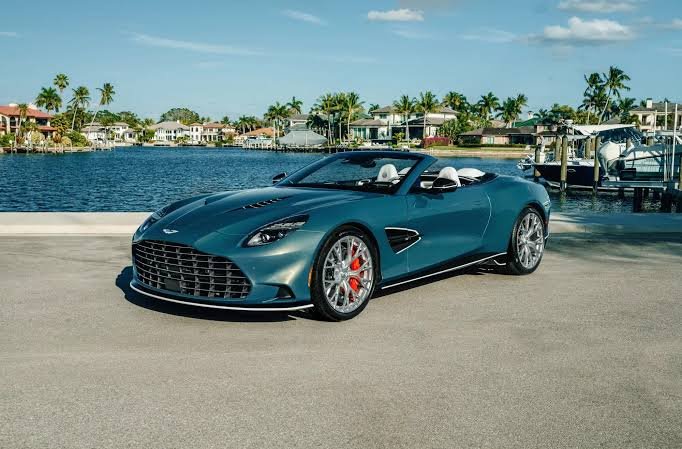
Despite the six-figure price gap between Vanquish and Vantage, the CarPlay Ultra experience itself is identical across both, since Apple builds one bespoke Aston Martin theme rather than tiering the software by trim.
That consistency is worth noting: buyers aren’t paying extra for a better version of the tech, only for the car wrapped around it.
Zero to 60 mph arrives in well under 3.5 seconds, with a top speed north of 214 mph depending on configuration.
The Next Cars Confirmed For Later In 2026
Beyond Aston Martin, three vehicles carry the clearest signals that CarPlay Ultra is actually coming, backed by specific reporting rather than a brand’s general promise from years ago.
Two are already on sale today with standard CarPlay, waiting on a software and hardware push to switch on the fuller experience.
None of the three ships with the feature as of this writing, but each has a more concrete path toward it than the rest of the committed-brands list.
5. Hyundai Ioniq 3
Bloomberg reporter Mark Gurman has said a major Hyundai or Kia model will ship with CarPlay Ultra in the second half of 2026, and the compact Ioniq 3 is the name that keeps surfacing.
Built as a small electric hatchback with crossover-style styling, it sits between the tiny Inster and the larger Ioniq 5 in Hyundai’s European lineup.
A 42.2-kWh standard battery delivers roughly 213 miles of WLTP range, while an optional 61-kWh pack stretches that to about 308 miles.
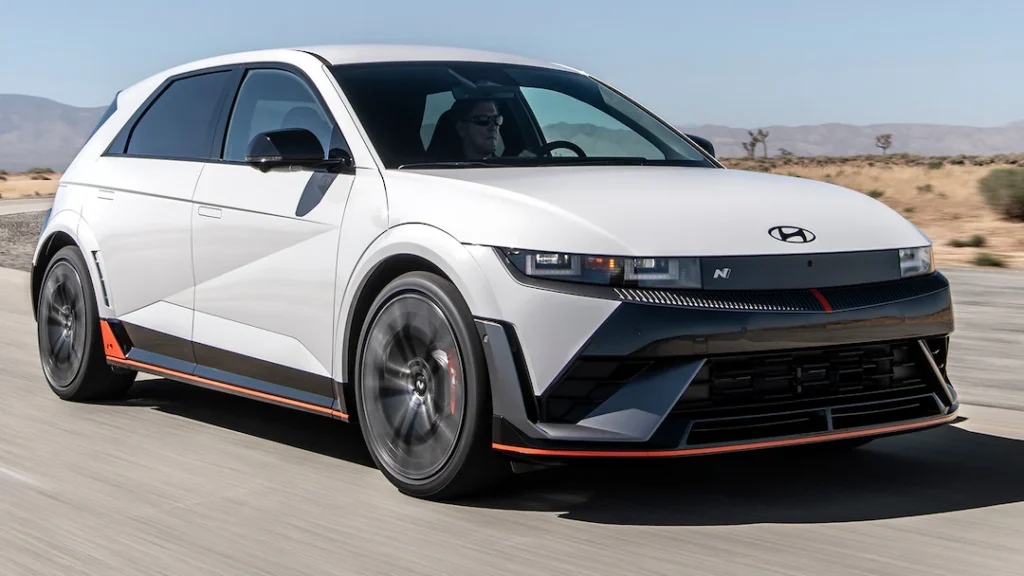
Pricing is expected to start under £25,000, or roughly $30,000 to $33,500, arriving at European dealers in autumn 2026.
Worth knowing upfront: Hyundai has not confirmed a US launch for the Ioniq 3, and current reporting suggests American buyers will likely miss out on this particular model entirely.
If the CarPlay Ultra rumor holds, it would still matter globally, since it marks the first time this technology reaches a genuinely affordable, mass-market price point rather than six-figure luxury metal.
6. Porsche Taycan
Porsche was actually named alongside Aston Martin back in December 2023 as a launch partner for next-generation CarPlay, then went quiet for nearly two years.
As recently as July 2026, Porsche reaffirmed its commitment to CarPlay Ultra without naming a specific model or date, exactly where things stood as this guide was written.
A base rear-drive Sedan opens at $80,300, while the range-topping Turbo GT with the Weissach package reaches close to $243,700.
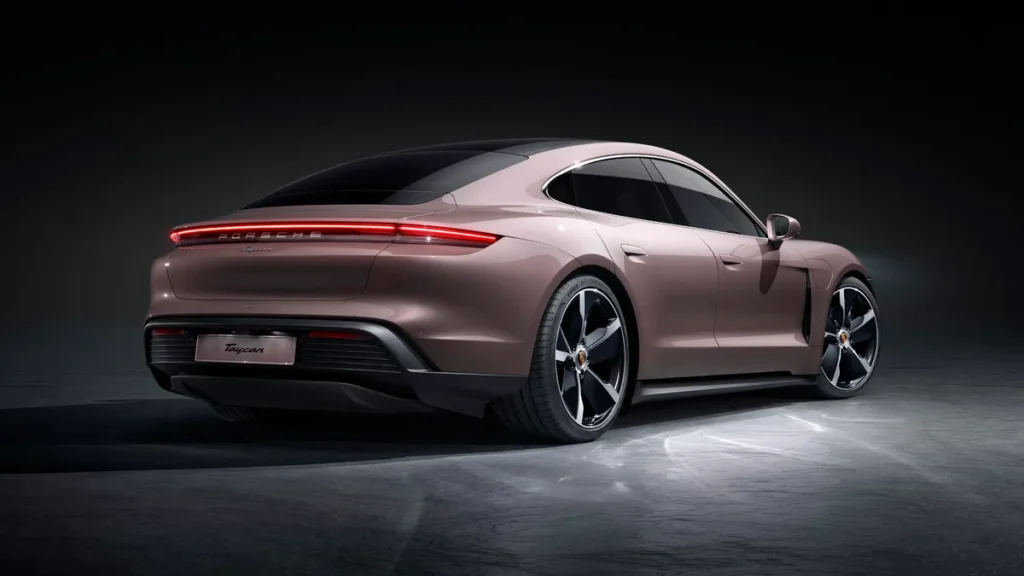
Output spans from a comfortable daily-driver tune up to 1,019 horsepower on the fastest variant, with EPA range topping out near 318 miles depending on configuration.
Porsche’s own Communication Management software is well regarded already, which may explain the hesitation: handing Apple the instrument cluster means giving up a perfectly good in-house product.
Sport Sedan, Sport Turismo, and Cross Turismo body styles are all available, so a future CarPlay Ultra rollout would likely span the whole range rather than a single trim.
7. Porsche Macan Electric
Porsche’s compact electric SUV sells in far higher numbers than the Taycan, which makes it the more interesting candidate if CarPlay Ultra ever reaches a specific Porsche model.
Built on the Premium Platform Electric architecture, figures open at $80,300 and climb to $112,700 for the range-topping Macan Turbo Electric.
The Macan 4 trim pairs all-wheel drive with 402 horsepower and more than 320 miles of range for just over $84,000, a genuinely strong value inside the Porsche lineup.
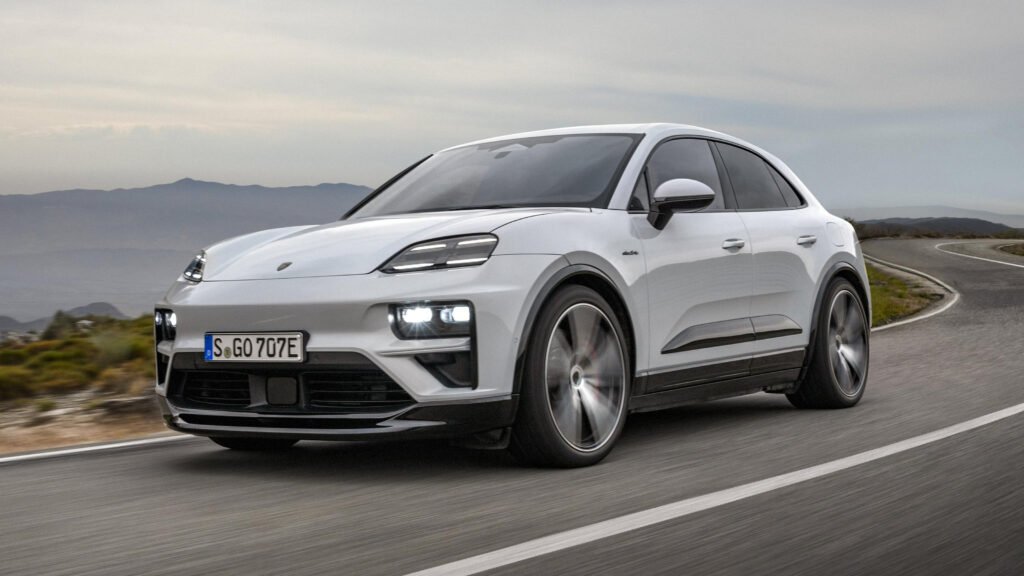
A new GTS trim joins for 2026, slotting between the 4S and Turbo with an electronically controlled rear differential and sport-tuned suspension as standard.
Air suspension comes standard across the entire range, and the 270-kW charging architecture keeps stops reasonably short on longer trips.
Nothing about CarPlay Ultra timing is confirmed for the Macan specifically, but its sales volume makes it a logical first move if Porsche wants maximum visibility for the feature.
Brands Committed Without A Named Model Yet
Kia and Genesis both appear on Apple’s list of committed automakers, alongside their corporate sibling Hyundai, yet neither has named a specific model or release window.
Educated guessing is still useful here since both companies typically debut new technology on their most image-conscious models first, not their cheapest ones.
The two vehicles below represent reasonable candidates based on current product strategy, not confirmed CarPlay Ultra recipients.
8. Kia EV9
Kia is one of thirteen brands Apple lists as committed to CarPlay Ultra, but the company has not named which model gets it first.
If Kia follows Hyundai’s playbook and debuts the tech on a flagship, the three-row EV9 is the obvious showcase, given its size, tech focus, and family-hauling role.
Pricing today spans $56,395 to $73,395 across five trims, from the single-motor Light RWD to the dual-motor Land AWD.
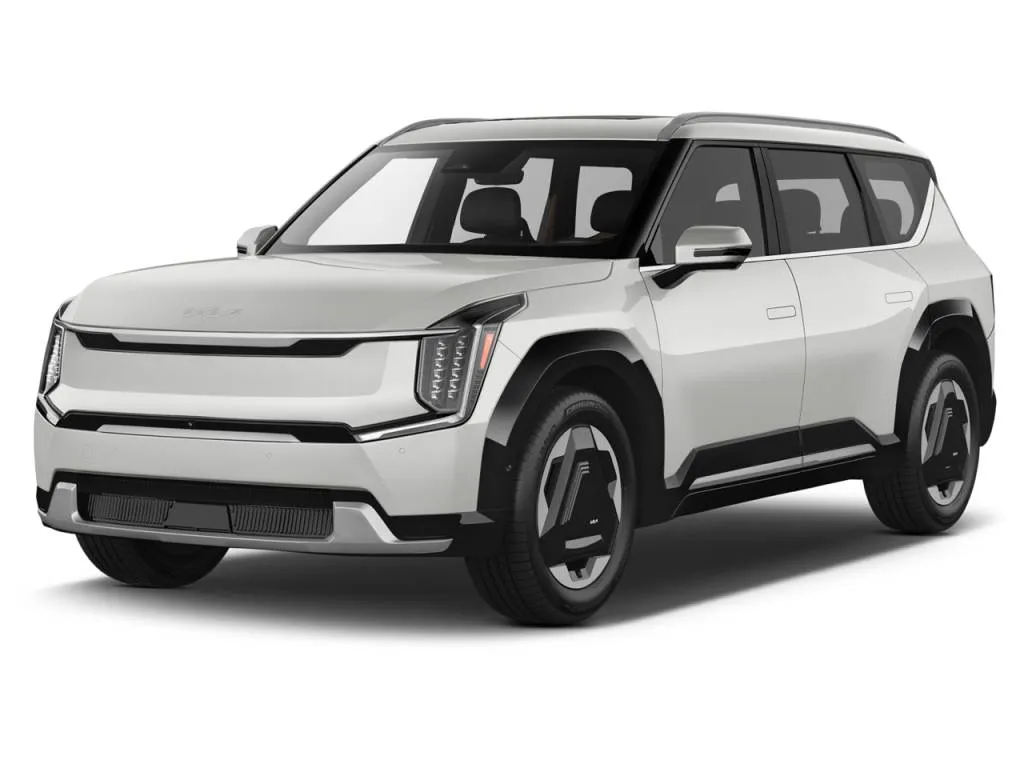
Dual-motor versions produce up to 379 horsepower and 516 pound-feet of torque, with EPA range reaching 336 miles on the most efficient configuration.
Cargo space totals 81.7 cubic feet with the rear rows folded, and towing capacity reaches 5,000 pounds, solid figures for a three-row electric SUV.
Every 2026 EV9 already ships with a 12.3-inch touchscreen, a matching digital instrument cluster, and standard wireless CarPlay, so the hardware foundation for a future Ultra upgrade already looks largely in place.
9. Genesis GV60
Genesis sits alongside Hyundai and Kia on Apple’s committed-brands list, and its compact GV60 is arguably the brand’s most tech-forward model today.
A curved 27-inch display already spans the instrument cluster and center screen, a layout that would translate naturally if CarPlay Ultra arrives here.
The 2026 model gained a larger 84-kWh battery, pushing rear-wheel-drive range to an EPA-estimated 306 miles, with all-wheel-drive versions landing closer to 282 miles.
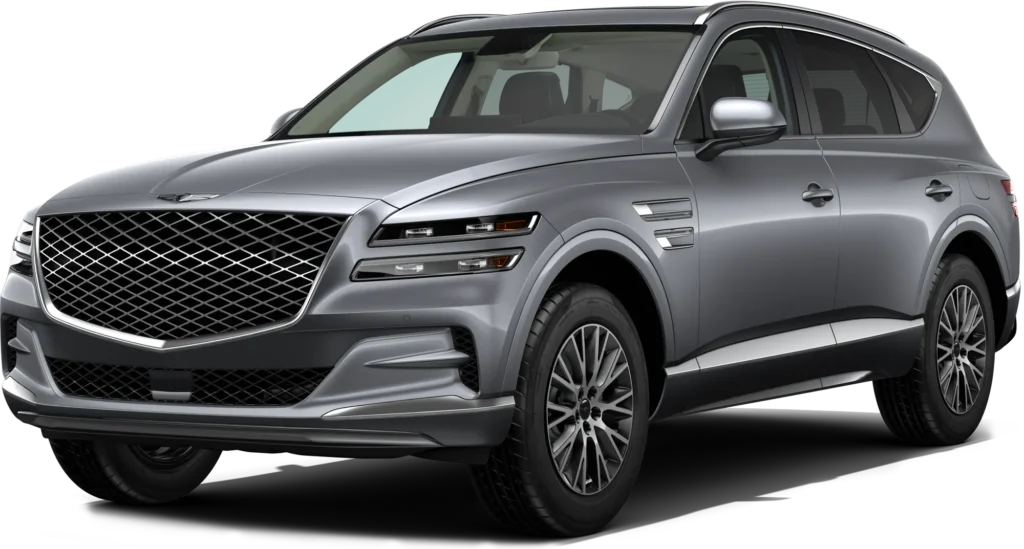
Pricing runs from $52,525 for the base RWD trim to $71,875 for the quickest Performance AWD, which makes 429 horsepower and 516 pound-feet of torque.
Fast charging from 10 to 80 percent takes about 18 minutes on a suitable DC charger, aided by an 800-volt architecture shared across Hyundai Motor Group’s electric lineup.
No timeline exists yet for CarPlay Ultra specifically reaching Genesis, but the GV60’s existing screen hardware and Hyundai Group ties make it a sensible internal candidate.
What This Means For Your Next Car Purchase
Shopping specifically for CarPlay Ultra in 2026 means accepting a narrow reality: unless an Aston Martin fits the budget, the feature is not available to buy today.
Hyundai’s Ioniq 3 offers the clearest near-term path, though it launches in Europe first with no confirmed US arrival.
Porsche, Kia, and Genesis owners have a longer wait ahead, since none of the three has attached the feature to a specific nameplate or release window yet.
Buyers who want the closest thing available now without an Aston Martin budget should focus on the underlying hardware instead.
Cars already running large, modern digital instrument clusters, like the Taycan, EV9, and GV60, are best positioned for a future update if their brands do commit to a specific model.
Standard wireless CarPlay remains genuinely excellent and is not going anywhere regardless of how the Ultra rollout plays out. Skipping a car over the absence of Ultra alone is rarely worth it in 2026.
The table below lines up all nine cars from this guide by price, powertrain, and current status.
| Car | Starting Price | Powertrain | CarPlay Ultra Status |
| Aston Martin DB12 | $253,000 | 4.0L Twin-Turbo V8, 671 HP | Available now |
| Aston Martin DBX707 | $253,000 | 4.0L Twin-Turbo V8, 697 HP | Available now |
| Aston Martin Vantage | $211,000 | 4.0L Twin-Turbo V8, 656 HP | Available now |
| Aston Martin Vanquish | $429,000 | 5.2L Twin-Turbo V12, 824 HP | Available now |
| Hyundai Ioniq 3 | ~$30,000 (Europe) | Single Or Dual Electric Motor | Rumored for late 2026 |
| Porsche Taycan | $80,300 | Electric, Up To 1,019 HP | Committed, no date |
| Porsche Macan Electric | $80,300 | Electric, Up To 402+ HP | Committed, no date |
| Kia EV9 | $56,395 | Electric, Up To 379 HP | Brand committed only |
| Genesis GV60 | $52,525 | Electric, Up To 429 HP | Brand committed only |
Brands that declined entirely, including Audi, Mercedes-Benz, BMW, and Volvo, are betting that buyers care more about their own proprietary software than an Apple-run dashboard.
Whether that bet pays off will likely take another two or three model years to know for certain.
A few quick questions worth answering before you buy:
What is the actual difference between CarPlay Ultra and standard CarPlay?
Standard CarPlay only projects apps onto the center touchscreen. CarPlay Ultra takes over every screen in the cabin, including the instrument cluster, so the speedometer, fuel gauge, climate controls, and drive modes all run through Apple’s interface instead of the automaker’s own software.
Which cars actually have CarPlay Ultra right now, in 2026?
Only Aston Martin offers it today, across the DB12, DBX707, Vantage, and Vanquish. Hyundai, Kia, Genesis, and Porsche have committed to adding it, with a mainstream Hyundai or Kia model expected in the second half of the year.
Can I add CarPlay Ultra to my current car with an aftermarket kit?
No. CarPlay Ultra needs infotainment hardware and software built into the car at the factory. There is no dongle, adapter, or software hack that turns standard CarPlay into genuine CarPlay Ultra on an existing vehicle.
Why did BMW, Mercedes-Benz, and Audi refuse to offer CarPlay Ultra?
These brands cite control over their own dashboard experience, customer data, and connected-service subscription revenue. Handing Apple the instrument cluster and climate controls means giving up a piece of the in-car software business they would rather own themselves.
What iPhone do I need to use CarPlay Ultra?
You need an iPhone 12 or newer running iOS 18.5 or later, paired wirelessly with a compatible vehicle. Older iPhones and wired-only setups are not supported for the full CarPlay Ultra experience.
Will Android Auto get a similar upgrade to compete with CarPlay Ultra?
Google has discussed a similarly deep version of Android Auto for years without a firm production timeline. Most automakers building their own in-house software, including GM and Mercedes-Benz, are investing in proprietary systems rather than handing either company full dashboard control.