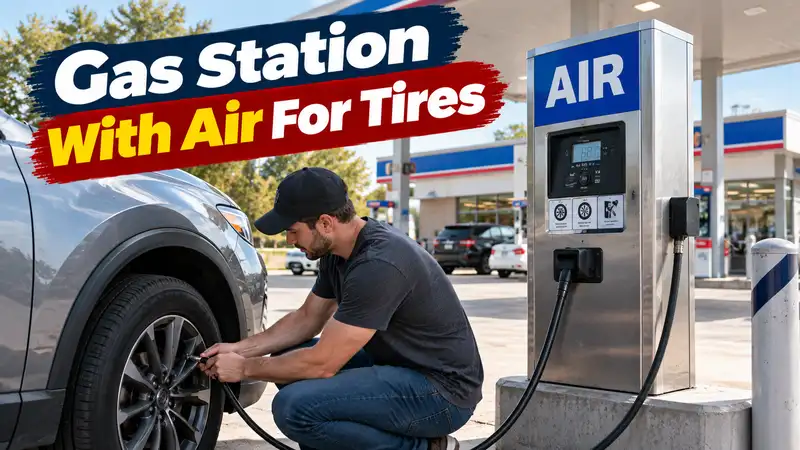
Finding a gas station with air for tires can be one of the easiest ways to maintain proper tire pressure without making a separate trip to a tire shop. Many fuel stations have an air compressor near the pumps, and some provide it free while others require a small payment.
The equipment can range from basic coin-operated inflators to digital machines that allow you to enter a target pressure and automatically stop when the tire reaches it.
Proper inflation is more important than simply avoiding a flat tire. Tire pressure affects braking, steering response, tread wear, fuel economy, ride comfort, and the amount of heat generated inside the tire. Even a small pressure loss can change how a vehicle behaves, particularly during highway travel.
Knowing where to find an air pump, how to use it correctly, what pressure to select, and how to recognize a faulty inflator can make a routine fuel stop much more useful. The right procedure is simple, but a few details matter.
How To Find A Gas Station With Air For Tires
Most drivers look for tire air when the pressure warning light comes on, when a tire appears slightly low, or before a long road trip. Gas stations are convenient because they are widely distributed and usually have equipment designed specifically for adding air to passenger vehicles.
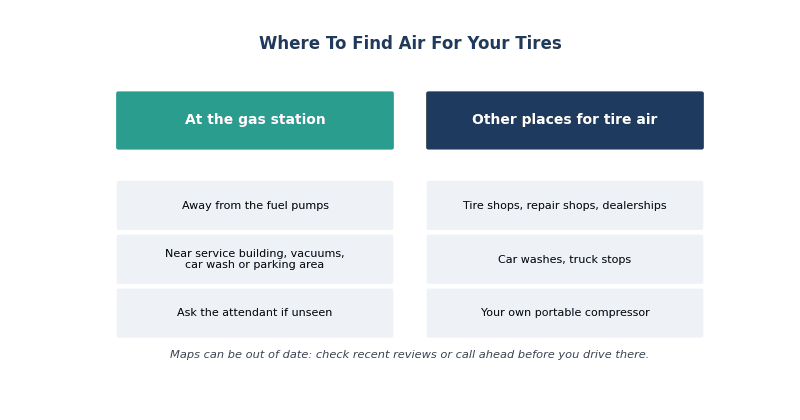
However, not every station has an air compressor, and availability can vary even between stations operated by the same fuel brand. Some locations have machines beside the main building, while others place the compressor near the car wash or at the edge of the parking area.
A useful approach is to check the station before driving there if you specifically need an air pump. Online maps and local business listings often show whether a station offers tire inflation, although this information is not always current. A quick phone call can be worthwhile when accurate availability matters.
Where The Air Machine Is Usually Located
The tire inflator is commonly positioned away from the gasoline pumps so vehicles can pull alongside it without blocking fuel lanes. Look around the perimeter of the station, particularly near the service building, vacuum cleaners, car wash entrance, or designated parking area.
Some machines are mounted directly to a wall or metal post, while others are standalone units with a long hose. Digital versions usually have a display where you select the desired pressure before connecting the nozzle.
If you cannot immediately see the compressor, ask the station attendant. Some locations keep the equipment behind the building or activate it from inside the store.
The hose should be long enough to reach all four tires without moving the vehicle repeatedly. If the machine is positioned awkwardly, make sure the hose does not cross a traffic lane where another vehicle could drive over it.
Free Air Versus Paid Air
Whether tire inflation costs money depends on the station and local regulations.
Some stations offer free compressed air as a customer convenience. Others use coin-operated or card-operated machines and charge a small fee for a timed inflation cycle.
A paid machine is not necessarily better than a free one. What matters more is whether the equipment is functioning correctly, the pressure gauge is reasonably accurate, and the hose and fittings are in good condition.
Some modern digital inflators allow you to enter the target pressure. Once the tire reaches that setting, the machine automatically stops or switches to a monitoring mode. This is generally easier for inexperienced drivers because it reduces the chance of accidentally overinflating the tire.
Use Maps And Local Search Carefully
Searching for phrases such as “gas station with air for tires near me” can identify nearby stations, but search results should be treated as a starting point rather than a guarantee.
Business information can become outdated. A station may have removed an old air machine, replaced it with a different system, or temporarily taken it out of service.
When checking a station online, look for recent customer comments or photographs that specifically mention the tire inflator. If the information is several years old, confirmation from the station is preferable.
For urgent situations, it is also useful to search for tire shops, automotive service centers, convenience stores, and truck stops. Some locations offer compressed air even when they are not primarily known for tire services.
Gas Stations Are Not The Only Place To Find Tire Air
A fuel station is convenient, but it is not the only option.
Many tire retailers have compressed-air equipment available for customers. Automotive repair shops, dealerships, car washes, truck stops, and some fleet-service locations may also have air compressors.
Certain parking facilities and roadside service locations provide inflation equipment as well.
If you frequently need to adjust tire pressure, keeping a reliable portable compressor in the vehicle can be more convenient than searching for an available gas station every time. A 12-volt or battery-powered inflator can be particularly useful for maintaining pressure between professional inspections.
How To Use A Gas Station Tire Air Pump Correctly
Using a gas station compressor is straightforward, but checking the pressure before adding air is the most important step. The target number should come from the vehicle manufacturer’s recommended tire-pressure specification rather than from the tire’s maximum-pressure marking.
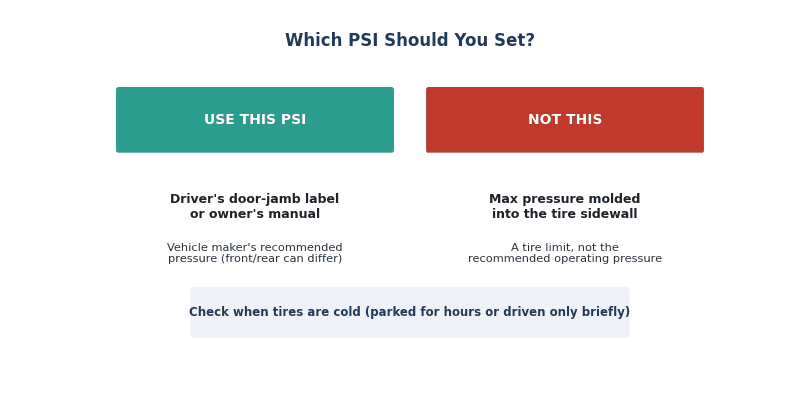
The recommended pressure is usually found on the driver’s-side door-jamb label. Depending on the vehicle, it may also appear in the owner’s manual or another manufacturer-provided location.
Do not automatically use the number molded into the tire sidewall. That figure generally represents a tire-related maximum specification rather than the recommended operating pressure for a particular vehicle.
Check Tire Pressure Before Adding Air
Ideally, measure tire pressure when the tires are cold.
“Cold” generally means the vehicle has been parked for several hours or has been driven only a short distance. Driving heats the tire and raises its internal pressure. If you adjust a hot tire based on the cold specification, you may remove or add the wrong amount of air.
A good routine is to check the pressure in the morning before a long drive.
Remove the valve-cap from the tire, press the pressure gauge firmly onto the valve stem, and read the measurement. If the gauge does not seal properly, you may hear air escaping and receive an inaccurate reading.
Check all four tires rather than assuming they have lost pressure equally. The front and rear tires may have different recommended pressures, especially when the vehicle is heavily loaded.
Set The Correct Pressure On A Digital Inflator
If the gas station uses an automatic digital compressor, enter the recommended pressure shown on the vehicle’s door-jamb label.
For example, if the vehicle specifies 35 PSI for a particular tire, set the machine to 35 PSI.
Connect the hose securely to the valve stem. Many machines produce a short burst of air before settling into the inflation cycle. This is normal.
Once the desired pressure is reached, the machine should stop automatically or alert you that the target has been achieved.
Even with an automatic system, it is wise to verify the final pressure with a separate quality tire gauge if you have one. Gas-station equipment can become worn or improperly calibrated.
Using A Manual Air Compressor
Older or simpler machines may not automatically regulate pressure.
With these systems, connect the nozzle firmly and add air in short intervals. Remove the nozzle and check the pressure after each interval.
Avoid holding the compressor on the valve for a long period without checking the reading. Large compressors can add pressure surprisingly quickly.
If you accidentally exceed the recommended pressure, use the small center pin inside the valve stem to release air carefully. Some pressure gauges have a built-in release button that makes this easier.
After adjusting the pressure, replace the valve cap. The cap helps protect the valve core from dirt and moisture and provides an additional layer of protection against contamination.
A Simple Tire Inflation Procedure
| Step | What To Do |
|---|---|
| 1 | Park safely beside the air machine |
| 2 | Check the manufacturer’s recommended PSI |
| 3 | Remove the valve cap |
| 4 | Measure the existing pressure |
| 5 | Set the digital inflator if available |
| 6 | Connect the air hose securely |
| 7 | Add air gradually |
| 8 | Recheck the pressure |
| 9 | Replace the valve cap |
| 10 | Repeat for the remaining tires |
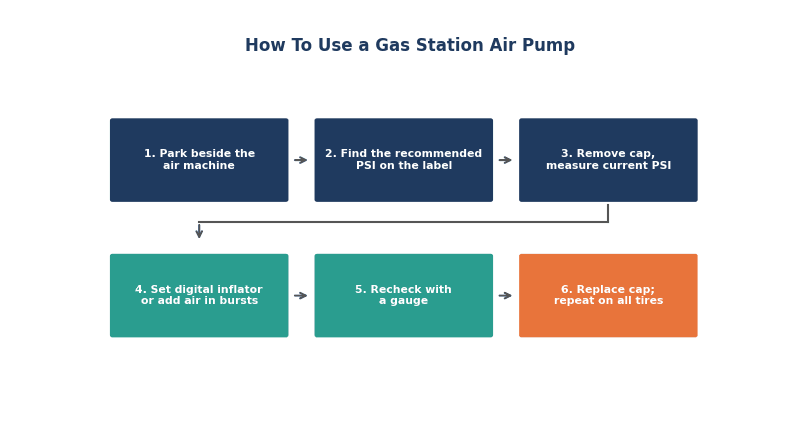
Taking a few extra minutes to check every tire is worthwhile. A vehicle can feel normal even when one tire is significantly below its recommended pressure.
Why Correct Tire Pressure Matters
Tire pressure is not simply a maintenance number printed on a sticker. It determines how the tire supports the vehicle and how its tread contacts the road.
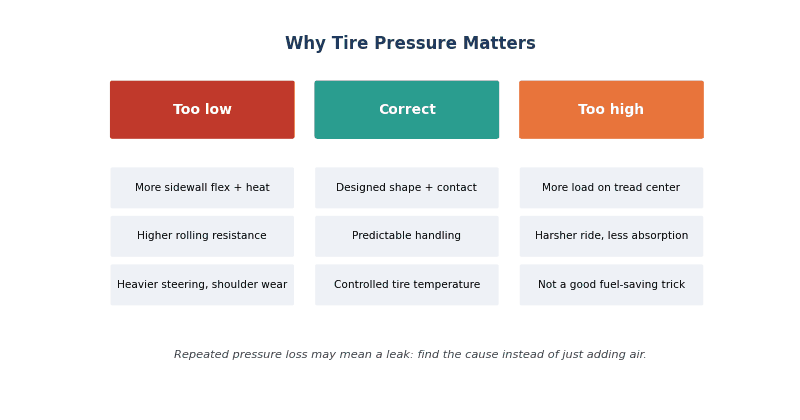
When pressure is too low, the tire’s sidewalls flex more than intended. This creates additional heat and resistance. When pressure is too high, the center portion of the tread can carry more of the load while reducing the tire’s intended contact characteristics.
Neither condition is ideal.
The correct pressure allows the tire to operate within the range intended by the vehicle and tire manufacturers.
Low Tire Pressure Can Cause Several Problems
An underinflated tire has increased rolling resistance. The engine must provide more energy to move the vehicle, which can contribute to reduced fuel economy.
Low pressure can also make the steering feel heavier and cause the vehicle to respond differently during cornering. The tire flexes more, generating additional heat as it rotates.
Heat is particularly important because excessive tire temperature can contribute to tire damage when combined with severe underinflation, heavy loading, high speeds, or other unfavorable conditions.
Underinflation also accelerates shoulder wear. If a tire repeatedly loses air, simply adding air at a gas station does not solve the underlying problem.
A puncture, damaged valve stem, leaking bead, or wheel problem may be responsible.
Overinflation Is Not A Good Fuel-Saving Strategy
Some drivers intentionally add extra air because they believe higher pressure will improve fuel economy.
There can be a small reduction in rolling resistance at higher pressures, but deliberately exceeding the manufacturer’s recommended pressure is not a sound general maintenance strategy.
Excess pressure can change tire behavior, ride quality, and tread contact. It may also increase the severity of some impacts because the tire has less ability to absorb road irregularities.
The goal should not be the highest possible pressure. The goal is the correct pressure for the vehicle, tire, load, and conditions specified by the manufacturer.
Tire Pressure Changes With Temperature
Air pressure changes as temperature changes.
A tire can show a lower reading on a cold morning and a higher reading after several miles of driving. This does not necessarily mean the tire has gained or lost air.
For that reason, pressure comparisons are most useful when measurements are taken under similar conditions.
During winter, the pressure may fall as temperatures drop. During hot weather, the pressure can increase as the tire warms.
This is one reason seasonal pressure checks are important.
The Tire Pressure Monitoring System Is Helpful, But Not A Replacement For Checks
Modern vehicles often have a TPMS that alerts the driver when tire pressure drops below a specified threshold.
The warning system is valuable, but it should not be treated as a substitute for regular manual inspection.
TPMS thresholds are generally designed to warn the driver about a significant pressure deviation. A tire can be noticeably different from the recommended pressure before the warning system becomes useful for routine maintenance.
Checking pressure manually once a month and before long trips remains a good habit.
Choosing The Right Air Pump And Handling Problems
Not every gas-station air machine is in perfect condition. Hoses can develop leaks, pressure gauges can become inaccurate, and connectors can wear out from constant public use.
Knowing what to look for can prevent frustration and help you avoid making a tire-pressure problem worse.
A good inflator should have an intact hose, secure nozzle, readable gauge or display, and a compressor that operates normally.
If the machine looks damaged or the pressure reading changes dramatically without adding or removing air, use another source.
How To Tell If The Air Machine Is Working
Before connecting the hose, inspect the equipment.
Check whether the display turns on, whether the hose is intact, and whether the nozzle appears damaged. If the machine requires payment, follow the instructions and make sure the inflation cycle actually starts.
Connect the nozzle firmly to the valve. A poor seal can produce a loud hissing sound and make the machine appear ineffective.
If air escapes around the valve connection rather than entering the tire, reposition the nozzle.
Some older compressors operate slowly. That does not necessarily mean they are defective, but a machine that takes an unusually long time to add a small amount of pressure may have a leak or compressor problem.
What To Do If A Tire Keeps Losing Air
Repeated pressure loss deserves investigation.
A tire that loses a small amount of pressure over a long period can simply be experiencing normal permeation, but a tire that repeatedly requires inflation may have a leak.
Common causes include:
- Nail or screw punctures
- Damaged valve cores
- Cracked valve stems
- Bead leaks
- Wheel damage
- Corrosion around the rim
- Tire sidewall damage
A tire shop can inspect the tire and locate a slow leak using appropriate diagnostic methods.
Do not repeatedly inflate a severely damaged tire and continue driving without inspection.
When A Gas Station Air Pump Is Not Enough
A public air compressor is useful for normal pressure adjustments. It is not a replacement for professional tire service.
Seek professional assistance when a tire has a visible bulge, deep cut, exposed internal material, significant sidewall damage, repeated pressure loss, or severe tread damage.
Likewise, if the tire is completely flat and has been driven for any meaningful distance, internal damage may have occurred even if the exterior looks acceptable.
A tire technician can determine whether the tire is repairable or needs replacement.
Keep Your Own Tire Gauge In The Vehicle
A personal digital or analog tire gauge is one of the simplest tools worth carrying.
It allows you to compare readings from different air machines and gives you a consistent reference point.
A compact portable inflator provides even more independence. It cannot replace a proper repair for a damaged tire, but it can restore pressure when a tire is slightly low and a service station is unavailable.
For drivers who frequently travel long distances, a gauge and portable compressor are practical additions to an emergency kit.
Gas Station Tire Air Costs, Maintenance Habits And Smart Practices
The cost of using an air machine varies widely. Some stations provide it as a free service, while others charge for a set period of compressor operation.
Because the service is inexpensive compared with the potential consequences of severely incorrect tire pressure, cost should not discourage regular checks.
The more important issue is developing a consistent maintenance routine.
How Often Should You Check Tire Pressure?
A monthly check is a useful baseline for many drivers.
Pressure should also be checked before long road trips, after significant temperature changes, when the vehicle has been sitting for an extended period, and whenever a tire appears visually different.
Drivers who carry heavy loads, tow trailers, frequently travel on rough roads, or use specialized tires may need more frequent inspections.
Visual inspection is useful but cannot reliably identify a small pressure difference. A tire can look normal while being several PSI below its recommended pressure.
What Should You Carry For Tire Emergencies?
A compact roadside tire kit does not need to be complicated.
A practical setup can include:
| Item | Purpose |
|---|---|
| Tire Pressure Gauge | Measures actual PSI |
| Portable Air Compressor | Adds air without a station |
| Valve Caps | Protect valve stems |
| Tire Repair Kit | Temporary assistance for suitable punctures |
| Flashlight | Helps with nighttime inspections |
| Work Gloves | Protects hands during roadside work |
| Vehicle Manual | Provides manufacturer specifications |
A spare tire and properly functioning jack remain important where the vehicle is equipped for them.
A puncture repair kit should not be considered a substitute for professional inspection. It is primarily an emergency tool for appropriate tread-area punctures.
Don’t Trust A Tire’s Appearance Alone
A common mistake is assuming that a tire is properly inflated because it looks round.
Modern radial tires are designed to carry weight while maintaining their shape, so a substantial pressure loss may not be visually obvious.
The best method is to use a gauge.
This is especially important with larger tires, low-profile tires, and vehicles carrying substantial loads. Visual inspection should be considered an additional check rather than a measurement method.
Check All Tires, Including The Spare
The spare tire is often forgotten because it does not regularly touch the road.
A spare that has been sitting for months or years can gradually lose pressure. Discovering that problem during an actual roadside emergency is the worst possible time.
Check the spare according to the vehicle manufacturer’s recommendation.
Some temporary spare tires require significantly higher pressure than normal passenger tires, so never assume the spare should have the same PSI as the four tires currently installed on the vehicle.
A Useful Long-Term Tire Maintenance Routine
A simple routine can prevent many avoidable problems.
Check pressure monthly, inspect tread condition, look for visible damage, and pay attention to unusual vibration or steering changes.
Rotate tires according to the vehicle and tire manufacturer’s recommendations when applicable. Maintain proper wheel alignment and replace tires before tread depth or condition becomes unsafe.
The objective is not merely to avoid the TPMS warning light. Proper tire maintenance protects the tire itself and helps the vehicle perform as intended.
Final Thoughts
A gas station with air for tires is one of the most convenient places to make a quick tire-pressure adjustment. The equipment is often easy to use, and many stations offer it free or for a small charge.
The important part is using the compressor correctly. Always start with the manufacturer’s recommended PSI, check pressure when the tires are reasonably cold, measure every tire, and verify the result rather than guessing from appearance.
A public air pump is excellent for routine inflation, but it cannot fix a puncture, damaged valve, bent wheel, or deteriorated tire. If one tire repeatedly loses pressure, find the cause instead of repeatedly adding air.
Good tire maintenance is a small task with significant benefits. Correct pressure supports proper tread contact, reduces unnecessary rolling resistance, helps control tire temperature, and contributes to predictable handling. A few minutes at a gas station can therefore be much more valuable than simply adding fuel to the tank.
How Can I Find A Gas Station With Air For Tires Near Me?
Search online maps for nearby gas stations and specifically check listings or recent reviews for tire-air availability. Because equipment can be removed or taken out of service, calling the station before traveling there is the most reliable way to confirm that an air compressor is available.
Is Air At Gas Stations Free?
It depends on the location. Some gas stations provide free compressed air, while others operate coin-operated or digital machines that require payment. The availability and price can vary between individual locations, even when the stations operate under the same brand.
What PSI Should I Put In My Car Tires At A Gas Station?
Use the tire pressure listed on the vehicle manufacturer’s door-jamb label or in the owner’s manual. Do not automatically use the maximum PSI printed on the tire sidewall. The manufacturer’s recommended pressure is selected for the specific vehicle’s weight, suspension, handling characteristics, and tire specification.
Should I Put Air In My Tires When They Are Hot?
It is preferable to check and adjust tire pressure when the tires are cold or have been driven only a short distance. Heat generated during driving temporarily raises tire pressure. If you check a hot tire, the reading may be higher than its cold pressure, making accurate adjustment more difficult.
Can I Use A Gas Station Air Pump For A Completely Flat Tire?
You may be able to add air, but a completely flat tire requires caution. If the tire has been driven while severely underinflated, its internal structure may have been damaged. A visible sidewall problem, severe puncture, bulge, or repeated air loss requires professional tire inspection rather than simply refilling it.
How Often Should I Check My Tire Pressure?
Checking pressure about once a month is a practical routine for many vehicles. You should also check it before long trips and after significant temperature changes. If a tire repeatedly loses pressure, have it inspected because regular inflation should not be used to hide an unresolved leak.