

Beauty in a car is never an accident. It is the result of someone — a designer, an aeronautical engineer, a sculptor who happened to work in aluminum — making decisions so precisely right that the finished object stops people mid-step and holds them there. That is different from a car that merely looks expensive or aggressive.
The vehicles covered here achieved something rarer: a proportion, a line, a silhouette that worked on every level simultaneously — as aerodynamic form, as emotional statement, as pure visual art that needs no explanation in any language.
Some were built for Le Mans. Some were built to turn Paris boulevards into temporary museums. A few were built by engineers who told nobody, developing their ideas in secret until the finished shape revealed itself.
All of them earned their place in history not through marketing but through the honesty of what they looked like the moment the covers came off.
What Makes A Car Truly Beautiful
The Elements That Separate Iconic Design From Ordinary Styling
Automotive beauty is not purely subjective, despite what the phrase “beauty is in the eye of the beholder” implies. Research by automotive historians and design institutions identifies consistent structural principles that appear in every car widely acknowledged as beautiful: correct proportion between wheelbase and body height, a cohesive relationship between shut lines and panel surfaces, and a design logic that lets the eye travel continuously without interruption.
Malcolm Sayer, who designed the Jaguar E-Type, was not a conventional car stylist. He was an aeronautical engineer who had worked at the Bristol Aeroplane Company, and he approached a car body the way an aircraft engineer approaches a wing — through mathematical equations rather than intuition.
Every curve of the E-Type has a precise aerodynamic justification. The result is a car that looks aerodynamically inevitable rather than designed, which is precisely why it has never dated.
The Italian coachbuilding houses that defined automotive aesthetics from the 1930s through the 1960s — Pininfarina, Bertone, Zagato, Touring Superleggera, Ghia — operated on a different principle: the sculptural one. Their designers worked in clay and aluminum with the spatial intuition of artists, and their best work has the quality of Italian Renaissance sculpture: nothing could be added or removed without diminishing the whole. That dual heritage — mathematical aerodynamics meeting hand-beaten Italian craft — produced most of the cars on this list.
Why Design Reached Its Peak Between The 1930s And 1970s
Multiple automotive historians have observed that design quality peaked somewhere between pre-war France and early 1970s Italy. The explanation is economic as much as artistic: before corporate homologation requirements, safety regulations, and wind tunnel optimisation through computer modelling, designers had genuine freedom to follow visual logic rather than regulatory compromise.
Modern cars are extraordinary in many ways — safer, faster, more efficient — but few of them stop strangers in the street the way a 1961 Jaguar E-Type or a 1936 Bugatti Type 57 still does today. The reason is that contemporary cars are designed by committee, with dozens of stakeholders influencing each surface.
The great cars of the mid-20th century were frequently the vision of a single individual, sometimes working against the wishes of management, who had absolute conviction in what they were creating.
The Best Looking Cars Of All Time
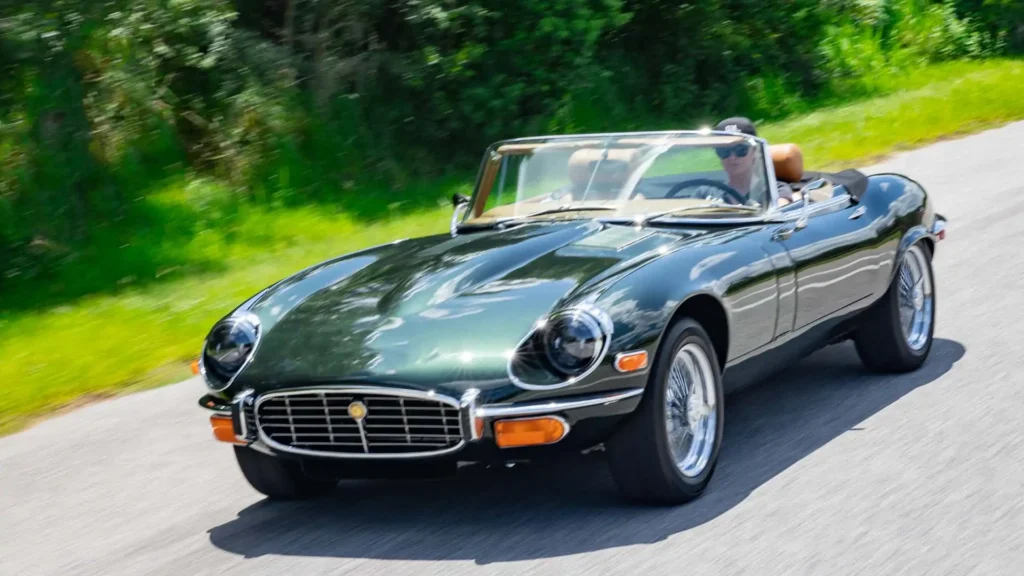
1. Jaguar E-Type (1961–1975)
- Production Years: 1961–1975
- Series: Series 1 (1961–1968), Series 2 (1968–1971), Series 3 (1971–1975)
- Engine (Series 1): 3.8L twin-cam straight-six (265 bhp); later 4.2L straight-six (265 bhp)
- Engine (Series 3): 5.3L V12 (272 bhp)
- Top Speed: 150 mph (Series 1, as tested)
- 0–60 mph: Approximately 6.4 seconds
- Original Launch Price: £2,097 (1961) — equivalent to a well-equipped family saloon
- Total Production: Approximately 73,000 across all series
- Designer: Malcolm Sayer (aeronautical engineer, Bristol Aeroplane Company)
- Current Auction Values: Series 1 roadsters: $200,000–$500,000+; Lightweight Competition: $7+ million
When Enzo Ferrari saw the E-Type at the 1961 Geneva Motor Show, he said it was “the most beautiful car ever made.” Ferrari was not a man who handed out compliments easily, particularly to British competitors, which makes the remark either the most significant endorsement in automotive history or the most expensive compliment ever paid — because it ensured the E-Type’s immortality in every subsequent conversation about beautiful cars.
The Series 1, which ran from 1961 to 1968, is the definitive version. The plexiglass-covered headlights are essential to the front end’s visual coherence; when the Series 2 removed them to satisfy American regulations, something irreplaceable was lost.
The bonnet is preposterously long — almost indecently so — and it is precisely that excess of length that gives the car its predatory, forward-lunging stance. Sayer’s mathematical approach meant that every curve had a specific aerodynamic function, but the extraordinary thing is that the aerodynamic optimum and the visual perfection landed in the same place simultaneously.
The Museum of Modern Art in New York added the E-Type to its permanent design collection in 1996. That distinction — shared by fewer than a handful of automobiles — reflects how fully the E-Type transcends automotive history and becomes cultural history. The Daily Telegraph placed it first on its list of the world’s 100 most beautiful cars in 2008, a position it has held in most subsequent surveys.
| Series | Years | Engine | Power | Key Change |
| Series 1 | 1961–1968 | 3.8L / 4.2L I6 | 265 bhp | Plexiglass headlight covers, cleanest design |
| Series 2 | 1968–1971 | 4.2L I6 | 245 bhp | Open headlights, US compliance changes |
| Series 3 | 1971–1975 | 5.3L V12 | 272 bhp | V12 engine, wider body, longer wheelbase |
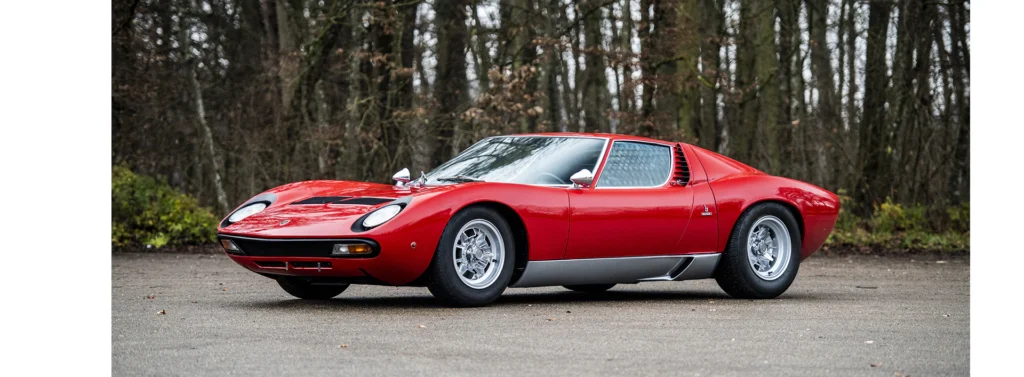
2. Lamborghini Miura (1966–1973)
- Production Years: 1966–1973
- Engine: 3.9L transversely mounted V12 (350 bhp P400; 385 bhp SV)
- Top Speed: 172 mph (P400 SV)
- 0–60 mph: Approximately 6.7 seconds
- Original Price: Approximately $20,000 (1966) — roughly $190,000 in today’s money
- Total Production: 764 across all variants (P400, P400 S, P400 SV)
- Designer: Marcello Gandini at Bertone
- Body Material: Steel monocoque, aluminum body panels
- Development Context: Designed in secret by Gian Paolo Dallara, Paolo Stanzani, and Bob Wallace without Ferruccio Lamborghini’s knowledge
The Miura’s origin story is as extraordinary as its appearance. Three young engineers at Lamborghini — Gian Paolo Dallara, Paolo Stanzani, and test driver Bob Wallace — developed the car’s radical mid-engine chassis in their own time, without the knowledge or authorisation of company founder Ferruccio Lamborghini.
They showed it as a rolling chassis at the 1965 Turin Motor Show, without bodywork, and it generated so much public interest that Lamborghini had no choice but to proceed. Bertone’s Marcello Gandini then designed the body in four months, delivering one of the most harmonious automotive shapes ever created.
The result was the world’s first mid-engined production supercar — a concept that seems obvious now but had never been achieved at scale before the Miura. The transversely mounted V12 behind the driver created an extraordinarily low centre of gravity and allowed Gandini to design a body of impossibly flat, wide proportions.
The swept-up B-pillars, the eyelash-like grille surrounds at the front, the NACA ducts on the rear flanks, and the perfectly resolved tail section created a silhouette that still appears on virtually every “most beautiful cars” list published anywhere in the world.
Classic Driver describes it as “fast, dynamic, exclusive and utterly beautiful from every possible angle — a design that has stood the test of time and remains one of the most influential cars ever to go on sale.”
The P400 SV of 1971, with its wider rear arches and separate lubrication for the engine and gearbox, is considered the mechanically finest. The P400 of 1966, however, remains the most visually pure.
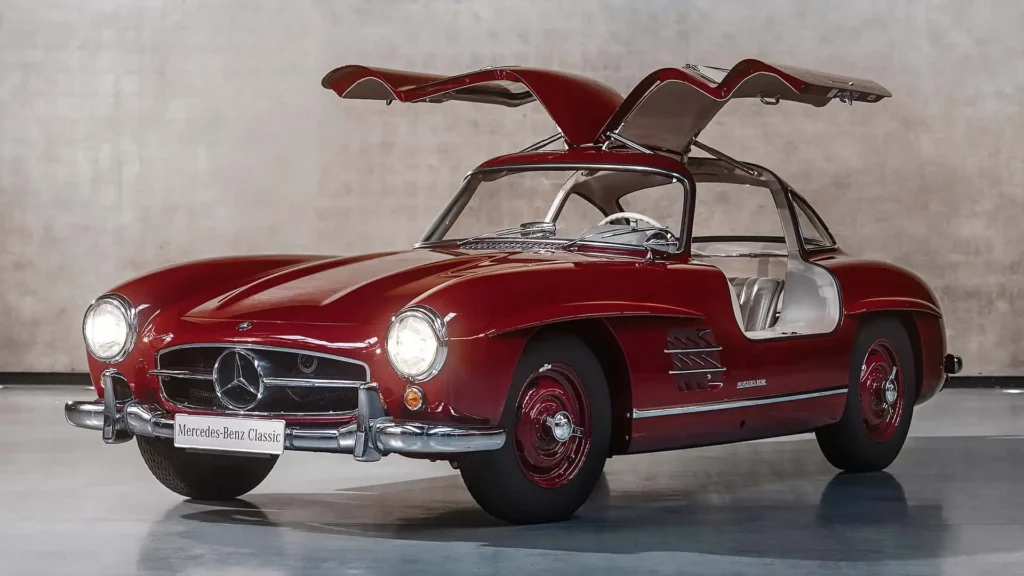
3. Mercedes-Benz 300 SL Gullwing (1954–1957)
- Production Years: 1954–1957 (Gullwing coupe); 1957–1963 (Roadster)
- Engine: 3.0L M198 inline-six with mechanical fuel injection (215 hp)
- Top Speed: 165 mph (160 mph in standard roadster)
- 0–60 mph: Approximately 8.8 seconds
- Original Price: $6,820 (US, 1954) — among the most expensive cars on the American market
- Total Production: 1,400 Gullwing coupes; 1,858 Roadsters
- Designer: Rudolf Uhlenhaut and Friedrich Geiger
- Voted: Sports Car of the Century in 1999 by a panel of 130 automotive journalists
- Current Auction Values: Well-preserved examples regularly reach $1.5 million–$2 million+
The 300 SL’s gullwing doors were not a design choice — they were an engineering inevitability. The tubular spaceframe chassis that gave the car its extraordinary structural rigidity also ran deep sills along the base of each door, making conventional side-opening doors impossible to engineer.
The solution was doors that hinged at the roof, swinging upward — and what began as a structural workaround became the most recognisable design feature of the entire 1950s automotive era.
First shown at the February 1954 International Motor Sports Show in New York to immediate rapturous reception, the 300 SL was the first production car to use direct petrol fuel injection — a technology borrowed from the Messerschmitt aircraft engine division.
This made it one of the fastest road cars in the world at launch, with a top speed that most race cars could not match. The body itself, with its low slung profile, flared wheel arches, and the gentle downward sweep from roof to tail, achieved the appearance of being in motion even when stationary.
Classic Driver described it as a combination of “technical proficiency with a masterclass in design” that “shines brighter than almost anything else.”
The 300 SL’s dual legacy — fastest production car of its era, and most beautiful German car ever built — is unique in automotive history. It won the Sports Car of the Century title in 1999 from a panel of 130 international automotive journalists.
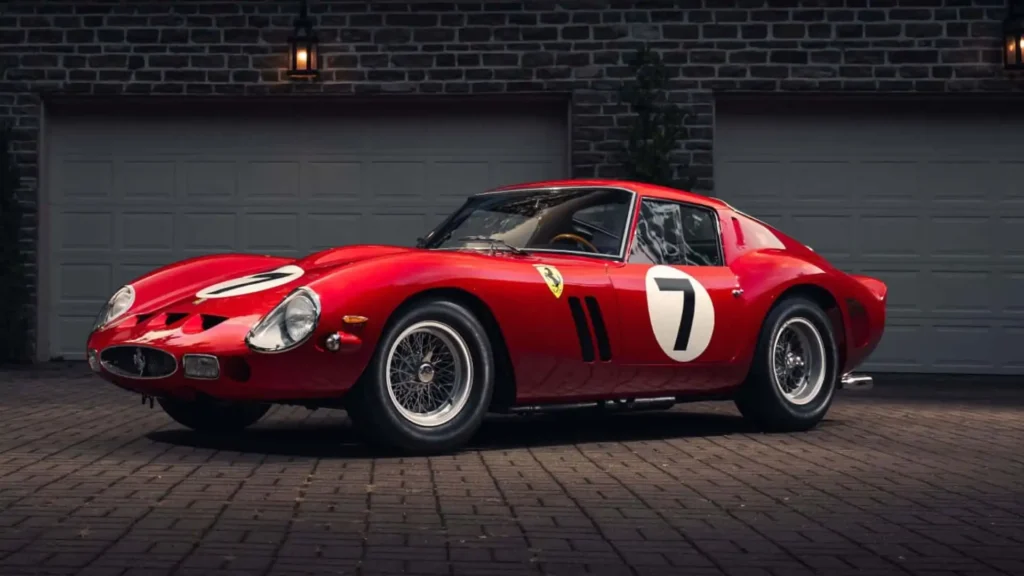
4. Ferrari 250 GTO (1962–1964)
- Production Years: 1962–1964
- Engine: 3.0L Tipo 168/62 V12 (302 hp)
- Top Speed: 174 mph
- 0–60 mph: Approximately 6.1 seconds
- Original Price: $18,000 (1963) — available only to vetted customers by invitation
- Total Production: 36 units (the rarest and most valuable car in existence)
- Designer: Giotto Bizzarrini, with body development by Maranello’s workshop
- Current Auction Record: $70 million (private sale, 2018)
- Racing Record: Three consecutive GT class wins at Le Mans (1962, 1963, 1964); GT category World Champion 1962 and 1964
The Ferrari 250 GTO is simultaneously the most beautiful, the most valuable, and the most contested car in automotive history. Only 36 were built, and Ferrari never renumbered or reclassified them, meaning every original 250 GTO has been accounted for. In 2018, a pristine example changed hands privately for a reported $70 million — the highest price ever paid for a car.
That figure would be staggering for a mere investment vehicle; the 250 GTO commands it because it earns it on every level — racing heritage, rarity, and an appearance that automotive writers have consistently run out of adjectives trying to describe.
The long bonnet with its triple nosecone vents, the Kamm tail cut-off at the rear, the perfectly shaped cockpit section, and the subtle aerodynamic ducting integrated throughout the body create a vehicle that looks aerodynamically inevitable and visually magnificent at the same time.
Enzo Ferrari himself reportedly called it “the most beautiful car I have ever made,” though the 250 GTO was actually developed primarily by engineer Giotto Bizzarrini. The proportions are so correct — the relationship between the cabin and bonnet, between the wheel arches and the body sides — that the car looks perfect regardless of which angle it is photographed from, which is extraordinarily rare.
5. Bugatti Type 57 SC Atlantic (1936–1940)
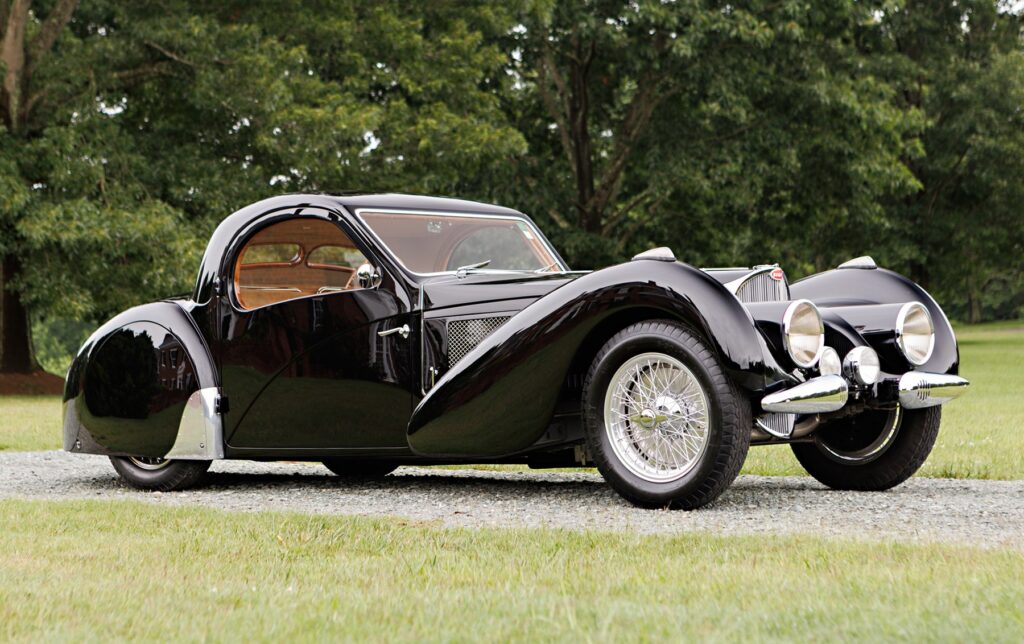
- Production Years: 1936–1940
- Engine: 3.3L supercharged straight-eight (230 hp in SC form)
- Top Speed: Approximately 130 mph
- Total Production: 4 units (the rarest car on this list)
- Designer: Jean Bugatti (son of founder Ettore Bugatti)
- Current Value: One example sold for $36 million in the 2010s — the highest price ever paid at auction for a pre-war car; another is considered priceless
- Body Material: Aircraft-grade Duralumin (aluminum alloy); riveted construction with a central spine
The Bugatti Type 57 SC Atlantic is art deco automotive beauty taken to a logical extreme that nobody has subsequently matched. Jean Bugatti, the founder’s son and the company’s chief designer, created a body that reads as pure sculpture — the dramatically curved fenders, the riveted dorsal fin running the full length of the car from nose to tail, the teardrop passenger compartment that sits within the body rather than upon it, and the overall shape that looks simultaneously organic and mechanical.
The riveted spine was a structural necessity: the Duralumin aircraft alloy Jean Bugatti used was too hard to weld without distorting, so the panels were riveted together using techniques borrowed from aircraft fuselage construction.
The visual result — that prominent central seam — became the Atlantic’s most celebrated design element. Four were built across the car’s production life: two survive intact, one was destroyed during World War II transport, and one remains unaccounted for.
The Gentleman’s Journal described it as “not just a car, but a monument to pre-war Europe” and “art deco on four wheels.” No other description comes closer.
6. Porsche 911 (1964–Present)
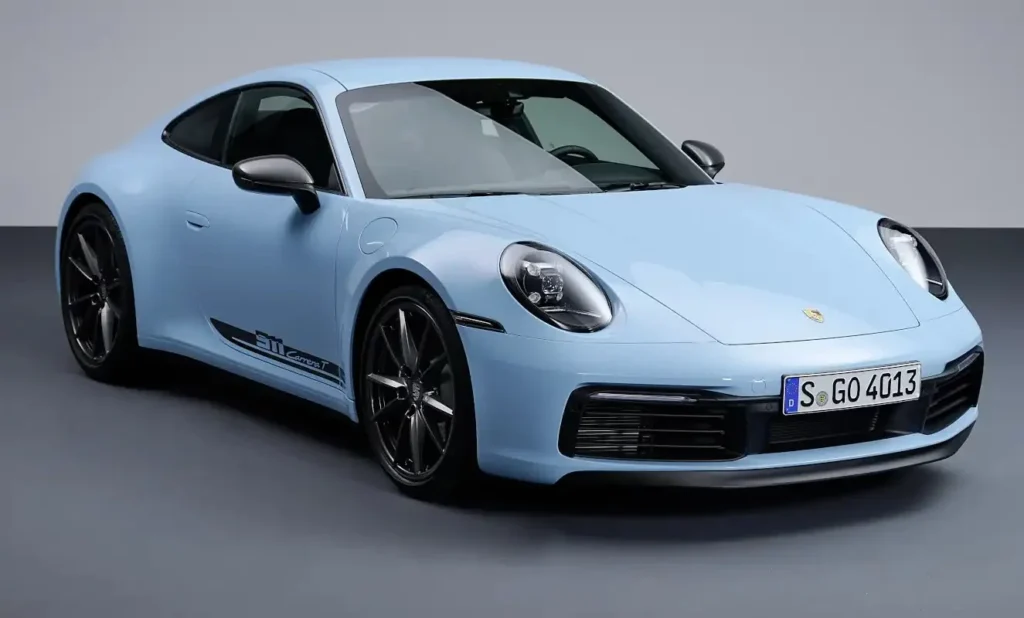
- Production Years: 1964–present (continuous, multiple generations)
- Original Engine: 2.0L air-cooled flat-six (130 hp, 1964)
- Current Engine (Turbo S): 3.8L twin-turbocharged flat-six (650 hp, 2024)
- Original Price: DM 21,900 (Germany, 1964) — approximately $5,500 USD at the time
- Current Price Range: $116,100 (Carrera base, 2024) to $222,600 (Turbo S, 2024)
- Designer: Ferdinand Alexander “Butzi” Porsche (original 901/911 concept)
- Total Production: Over 1.1 million across all generations
- Design Achievement: The only production car whose basic silhouette has remained recognisable across 60 continuous years of incremental evolution
The Porsche 911 is the most enduring design in automotive history, and the reason it belongs on a list of the most beautiful cars ever made is different from why the Jaguar E-Type or the Ferrari 250 GTO belong here. Those cars achieved aesthetic perfection in their moment and froze there.
The 911 achieved something rarer: a design that evolved continuously without ever losing its essential identity, becoming more refined with each generation while remaining immediately identifiable as itself.
Butzi Porsche’s original 901 design, shown at the 1963 Frankfurt Motor Show, established the now-unmistakable profile: the rounded rear overhanging the rear-mounted flat-six, the sweeping roofline that barely rises before descending again, the round headlights flanking a simple oval front apron.
That vocabulary has survived 60 years of safety regulations, aerodynamic requirements, wider track dimensions, and technological evolution. Classic Driver observes that the 911 “turns non-car lovers into enthusiasts in an instant” — a quality that only the most genuinely beautiful objects possess.
Porsche has never attempted to replace the 911 with something fundamentally different, which is simultaneously a commercial decision and an admission that the original design solved something so completely that no redesign could improve upon the solution.
7. Aston Martin DB5 (1963–1965)
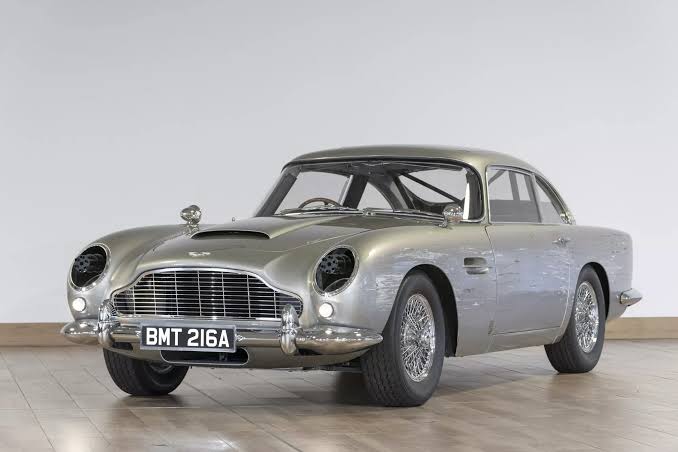
- Production Years: 1963–1965
- Engine: 4.0L twin-cam straight-six (282 bhp)
- Top Speed: 148 mph
- 0–60 mph: Approximately 7.1 seconds
- Original Price: £4,175 (UK, 1963) — roughly £100,000 in modern equivalent
- Total Production: 1,059 units
- Designer: Carrozzeria Touring Superleggera (Milan), with in-house Aston Martin modifications
- James Bond Connection: Appeared in Goldfinger (1964), Thunderball (1965), multiple subsequent films
- Current Auction Values: £700,000–£1.5 million for standard cars; Bond-specification examples reach multiples of that
The Aston Martin DB5 is one of the few cars in history where the association with popular culture — specifically with James Bond — actually understates rather than overstates the vehicle’s intrinsic quality. Before Sean Connery drove one into cinematic immortality in Goldfinger (1964), the DB5 was already regarded as one of the finest expressions of British grand touring elegance.
The Bond connection made it famous globally; the design itself ensures it remains beautiful without the context.
Carrozzeria Touring Superleggera in Milan created the body using their patented Superleggera construction method — thin aluminum panels formed over a framework of small-diameter steel tubes, producing a structure lighter than conventional steel bodywork with superior rigidity.
The proportions are restrained in a way that Italian coachwork of the period rarely was: the grille is vertical rather than swept back, the wing line carries its chrome strip with precision rather than flourish, and the overall impression is of sophisticated understatement rather than Italian drama.
The DB5 is the car that defined what a British grand tourer should look like — a definition so complete that it influenced Aston Martin’s design language for the next two decades, and arguably still does.
8. Alfa Romeo 33 Stradale (1967–1969)
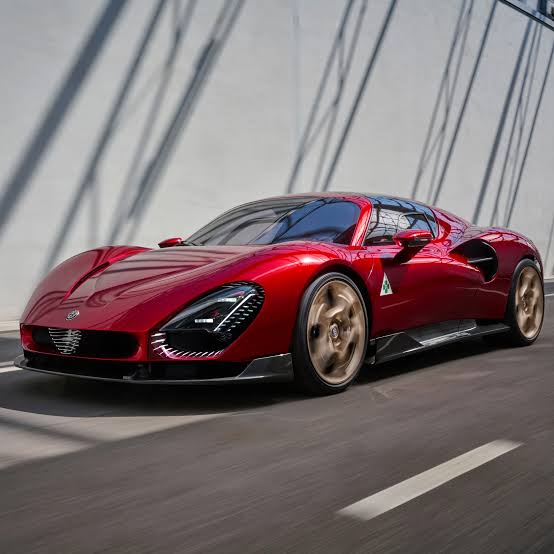
- Production Years: 1967–1969
- Engine: 2.0L twin-cam V8 (230 hp at 8,800 rpm)
- Top Speed: Approximately 160 mph
- 0–60 mph: Approximately 5.5 seconds
- Original Price: Approximately 10 million Italian lire (roughly $16,000 in 1967) — more expensive than a Ferrari 330 GTS at the time
- Total Production: 18 units
- Designer: Franco Scaglione (body); based on the racing Tipo 33 chassis by Carlo Chiti
- Current Value: Examples rarely come to market; last known private sale exceeded $15 million
The Alfa Romeo 33 Stradale produced only 18 examples, making it one of the rarest cars ever put into production, and every one of them is a masterwork. Franco Scaglione’s body — developed over the racing Tipo 33 chassis that Alfa Romeo was using for sports prototype competition — achieved a compound-curved form that looks impossible to have been designed rather than grown.
The front end resolves into a continuous arc from one headlight surround to the other with no interruption; the doors hinge upward at the front rather than the roof; the rear haunches swell outward and then tuck sharply inward above a tail that seems to sharpen as it extends.
AutoGuide describes the 33 Stradale as having “curves that were shaped as much by airflow as they were by Italian intuition” and notes that Enzo Ferrari himself called it “the most beautiful car ever made” — the same accolade he gave the E-Type six years earlier, which perhaps suggests the limits of even his capacity for beauty.
The 33 Stradale also holds the distinction of being among the first cars to use butterfly doors in a production vehicle, making it a technical innovator as well as an aesthetic one. At 18 units, it remains Alfa Romeo’s rarest and most precious road car.
9. Citroën DS (1955–1975)
- Production Years: 1955–1975
- Engine Options: 1.9L – 2.35L inline-four (various outputs from 65 hp to 141 hp DS 23i)
- Top Speed: 117 mph (DS 23 injection, top spec)
- Original Price: 750,000 French francs (base, 1955) — competitive with contemporary Peugeot and Renault products
- Total Production: Approximately 1.5 million across 20 years
- Designer: Flaminio Bertoni (body); André Lefèbvre (engineering)
- Suspension: Self-levelling hydropneumatic — a system so advanced it influenced Mercedes-Benz, Rolls-Royce, and every subsequent air suspension system
- Design Award: Voted the most beautiful car of all time by a panel at the 2000 Car of the Century competition
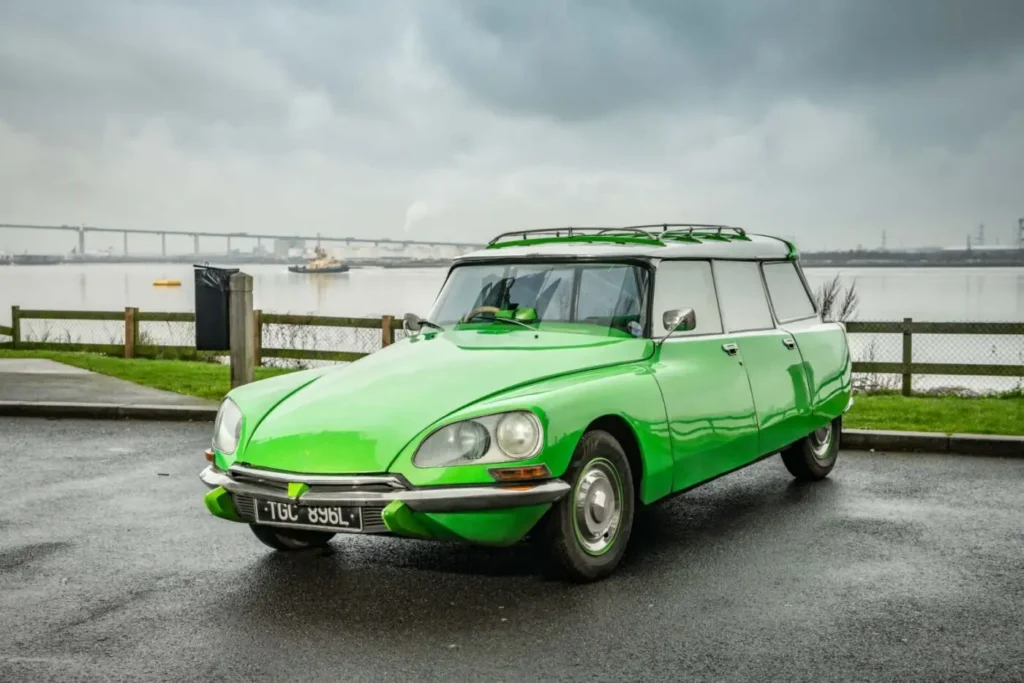
The Citroën DS arrived at the 1955 Paris Motor Show and caused an effect documented by semiotician Roland Barthes, who wrote an essay comparing it to a Gothic cathedral — “an object fallen from the sky” that had no relationship to any existing design logic.
He was right. The DS looked like it had arrived from 1980 in 1955, with its aerodynamic body, hidden rear wheels, minimal chrome decoration, and hydropneumatic suspension system that adjusted ride height automatically and kept the car level regardless of road surface irregularities.
The body, sculpted by Flaminio Bertoni — an Italian sculptor who had taught himself car design — was aerodynamically efficient to a degree unusual for the period, and its profile, with the long bonnet tapering to a narrow nose and the fastback roof sweeping to a sharp tail, has aged better than almost any other design of its era.
The DS was voted the most beautiful car of all time by a 1999 jury at the Car of the Century competition, placing it ahead of every Ferrari, Lamborghini, and Jaguar on this list. That verdict remains controversial — the DS’s beauty is angular and intellectual rather than sensuous — but it reflects genuine design achievement of the first order.
10. McLaren F1 (1992–1998)
- Production Years: 1992–1998
- Engine: 6.1L BMW S70/2 naturally aspirated V12 (627 hp)
- Top Speed: 240.1 mph (verified, 1998 — world’s fastest production car until 2005)
- 0–60 mph: 3.2 seconds
- Original Price: £540,000 (UK, 1992) — approximately £1.3 million in today’s money
- Total Production: 106 units (including race variants; 64 standard road cars)
- Designer: Peter Stevens (exterior); Gordon Murray (complete engineering concept)
- Engine Gold Detail: The engine bay walls are lined with 24-carat gold foil for heat dissipation — a practical application of precious metal
- Current Auction Values: £18 million–£22 million+
The McLaren F1 is the only car on this list that was simultaneously the world’s most beautiful, most technologically advanced, and fastest production vehicle at the time of its manufacture — and that combination has never been replicated.
Gordon Murray, the South African engineer who designed the Brabham and McLaren Formula 1 cars that won the World Championship multiple times, approached the F1 as a private project: the car he had always imagined building without any commercial compromise.
The result was a vehicle with a central driving position flanked by two passenger seats — no other production road car before or since has used this configuration. Every component was chosen for weight: the body panels are carbon fibre, the chassis is a carbon fibre monocoque, even the tools supplied with the car are titanium to reduce the mass of the toolkit.
The BMW V12 engine bay is lined with 24-carat gold foil because gold is the most thermally reflective material available — an extraordinary engineering solution that also happens to be spectacular when the engine cover is lifted.
Peter Stevens’ exterior is a masterwork of resolved, undecorated aerodynamic form — no wings, no dramatic scoops, just pure organic surfaces that channel air with mathematical efficiency.
The McLaren F1 held the production car top speed record for ten years, from its 240 mph verification in 1998 until the Bugatti Veyron’s arrival in 2005, and SuperCars.net has rated it “the greatest supercar ever” in most of its surveys.
At A Glance: The Most Beautiful Cars Of All Time
| Car | Years | Designer | Production | Key Beauty Element |
| Jaguar E-Type | 1961–1975 | Malcolm Sayer | ~73,000 | Mathematically perfect aerodynamic form |
| Lamborghini Miura | 1966–1973 | Marcello Gandini | 764 | Original supercar; impossibly resolved transverse V12 layout |
| Mercedes 300 SL Gullwing | 1954–1957 | Uhlenhaut/Geiger | 1,400 | Sports Car of the Century; necessity-born gullwing doors |
| Ferrari 250 GTO | 1962–1964 | Bizzarrini | 36 | Rarest; $70M; perfect proportion from every angle |
| Bugatti Type 57 SC Atlantic | 1936–1940 | Jean Bugatti | 4 | Art deco peak; riveted Duralumin construction |
| Porsche 911 | 1964–present | F.A. Porsche | 1.1M+ | 60 years unchanged silhouette; only continuous design |
| Aston Martin DB5 | 1963–1965 | Touring Superleggera | 1,059 | British GT benchmark; Superleggera aluminum construction |
| Alfa Romeo 33 Stradale | 1967–1969 | Franco Scaglione | 18 | Rarest production Alfa; compound curves; butterfly doors |
| Citroën DS | 1955–1975 | Flaminio Bertoni | ~1.5M | Car of the Century winner; 20 years ahead of its time |
| McLaren F1 | 1992–1998 | Gordon Murray/Stevens | 106 | World’s fastest + most beautiful; gold-lined engine bay |
FAQs
What is the most beautiful car of all time?
The Jaguar E-Type is the most widely cited answer across automotive surveys, design publications, and expert panels. The Daily Telegraph placed it first on its 100 most beautiful cars list in 2008, the Museum of Modern Art added it to its permanent collection in 1996, and Enzo Ferrari famously called it “the most beautiful car ever made” at its 1961 Geneva Motor Show debut. In the 1999 Car of the Century competition, however, the Citroën DS was voted most beautiful by the design jury — reflecting how different criteria can produce different answers to the same question.
What made the Ferrari 250 GTO so beautiful?
The 250 GTO’s beauty comes from the precise correctness of its proportions — the relationship between bonnet length, cabin height, and tail treatment achieves a balance that looks right from every angle simultaneously. The three nosecone vents, Kamm tail, and subtle aerodynamic surfacing were all functional racing requirements that also happened to resolve into a visually perfect whole. Engineer Giotto Bizzarrini developed the car’s body in a wind tunnel at the University of Pisa, which is why the GTO looks aerodynamically inevitable rather than aesthetically contrived.
Who designed the Jaguar E-Type?
The Jaguar E-Type was designed by Malcolm Sayer, an aeronautical engineer who had previously worked at the Bristol Aeroplane Company. Sayer approached automotive bodywork as an aeronautical engineering problem, defining every curve through mathematical equations rather than aesthetic intuition. He had already designed the Le Mans-winning C-Type and D-Type racing Jaguars before the E-Type. Sayer died in 1970 before the E-Type’s production run ended, but the car he created endured another five years and has never diminished in cultural status since.
Why is the Bugatti Type 57 Atlantic so rare?
Only four Bugatti Type 57 SC Atlantics were built between 1936 and 1940. The body was constructed from Duralumin — a high-strength aircraft aluminum alloy — which was too hard to weld without distortion, so the panels were riveted together using aircraft fuselage techniques. This produced the signature dorsal fin seam that runs the full length of the car. One Atlantic was destroyed during World War II transit to safety, one remains unaccounted for, and two survive in private collections. The Rothschild family’s example sold for $36 million in the 2010s.
What makes the Porsche 911 design unique?
The Porsche 911 is the only production car whose essential silhouette has remained continuously recognisable across six decades of model evolution without a fundamental redesign. Ferdinand Alexander “Butzi” Porsche’s original 1964 design established a vocabulary — the rear engine overhang, the swept roofline, the round headlights flanking a simple front apron — that every subsequent 911 generation has maintained while growing in every measured dimension. No other production car has sustained this level of design continuity while also continuously evolving in performance and technology.
Is the Lamborghini Miura the first supercar?
The Lamborghini Miura is broadly credited as the first mid-engined production supercar — the first road car to combine a transversely mounted engine behind the driver’s seat with a true supercar performance envelope in a body designed for road use. It was developed in secret by three Lamborghini engineers without the founder’s knowledge, shown as a bare rolling chassis at the 1965 Turin Motor Show, and then bodied by Marcello Gandini at Bertone in just four months for the 1966 Geneva Motor Show. The body is considered Gandini’s finest work.
What is the McLaren F1’s engine bay gold lining?
The McLaren F1’s engine bay is lined with 24-carat gold foil — applied to the inner surfaces of the engine compartment around the BMW V12. Gold is the most thermally reflective non-radioactive material available, and Gordon Murray specified it to reflect engine heat away from the carbon fibre chassis rather than using heavier conventional heat shielding. The gold lining is a purely functional engineering choice that also happens to be visually extraordinary when the engine cover is lifted. Approximately 25 grams of gold are used per car.
How much is the Alfa Romeo 33 Stradale worth today?
The Alfa Romeo 33 Stradale is one of the rarest cars in existence at 18 production units, and examples almost never appear on the open market. The last documented private sale exceeded $15 million for a well-preserved example. In 2022, Alfa Romeo launched a new modern 33 Stradale — also limited to 33 units — as a tribute to the original, using a twin-turbocharged V6 or an optional battery-electric powertrain. The original 1967–1969 cars remain in private collections and occasionally appear at concours events such as the Villa d’Este Concorso d’Eleganza.
Did the Citroën DS really win a Car of the Century award?
Yes. At the Car of the Century competition held in 1999 to mark the approaching end of the 20th century, the Citroën DS was voted the most beautiful car of all time by the design panel, and it finished 18th overall in the main Car of the Century rankings (which included every criterion, not just beauty). Roland Barthes, the French philosopher and semiotician, wrote an essay about the DS in 1957 comparing it to a Gothic cathedral — describing it as “an object fallen from the sky” that bore no relationship to any existing design convention. That essay, published in Mythologies, remains one of the most celebrated pieces of writing about any consumer object.
What is the rarest car on this list?
The Bugatti Type 57 SC Atlantic, with only two surviving examples (and four believed built), is the rarest. Among cars still regularly appearing at auction and in public, the Ferrari 250 GTO (36 units) and Alfa Romeo 33 Stradale (18 units) are the most restricted. The McLaren F1, at 106 total units including all racing variants, is the most recent production car on this list with a total production under 200 units.