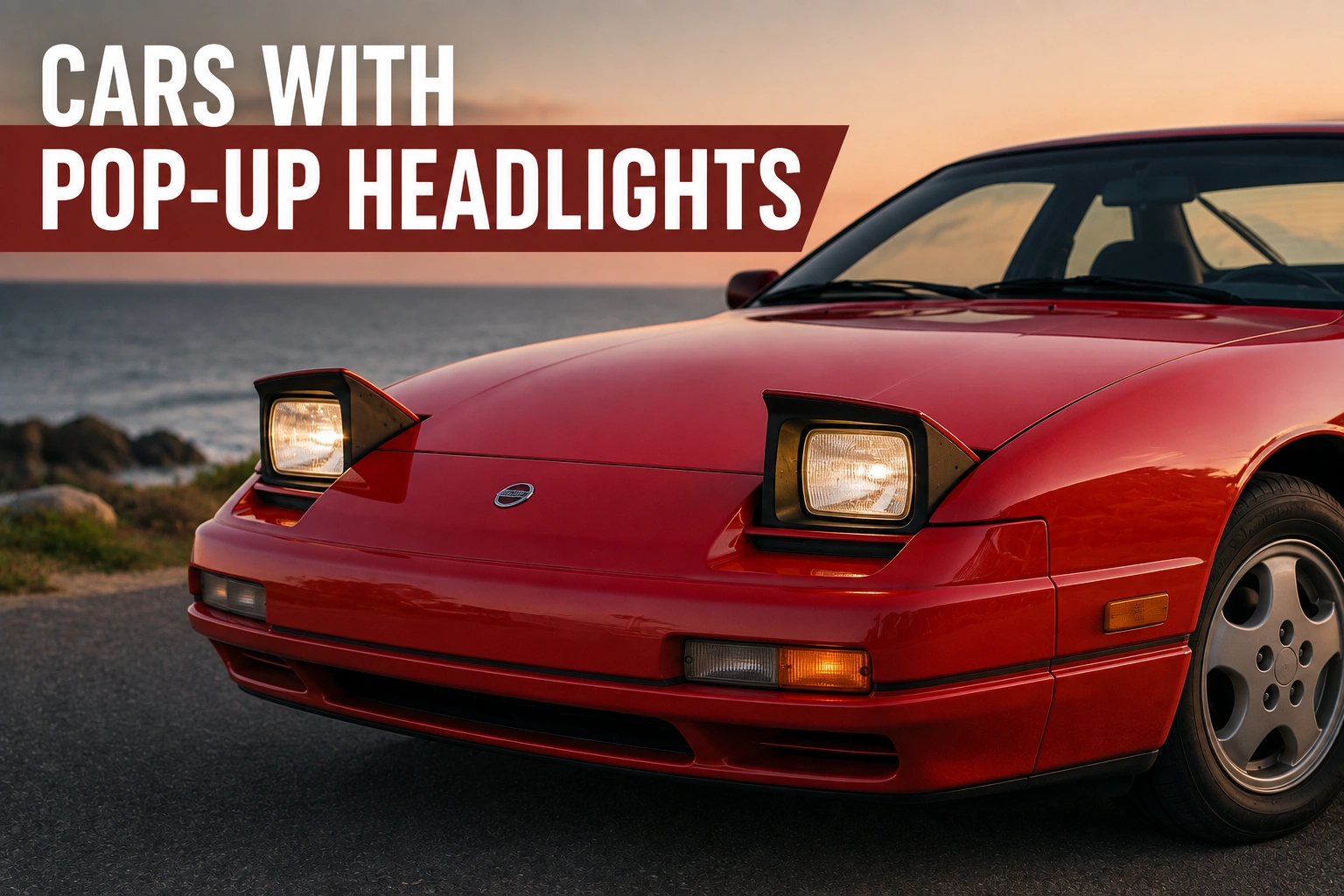
A neighbor down my street still parks his 1993 Mazda RX-7 outside every clear weekend, and there’s a ritual to it. He flips the headlight switch just to watch both lamps rise together with that satisfying mechanical whir before he even starts the engine.
That small piece of theater disappeared from new cars decades ago, but it hasn’t disappeared from memory. Pop-up headlights gave designers a blank canvas for a low, wedge-shaped nose during the day, then revealed a completely different face once the sun went down.
Pedestrian safety rules ended the format for good after 2004, yet the cars that carried it still turn heads at every cruise night and cars-and-coffee meetup.
This guide walks through nine machines that made retractable headlights unforgettable, along with what they’re actually worth on today’s collector market.
Why Pop-Up Headlights Disappeared From New Cars
Aerodynamics drove much of the original appeal, since a smooth, sloped nose without bulky lamp housings cut drag noticeably better than fixed headlights mounted flush into the bodywork.
Federal regulations in the 1940s through 1970s actually required round or rectangular sealed-beam headlights of a specific size, and hiding them behind a flap let designers dodge that restriction entirely.
European pedestrian-impact standards introduced in the early 2000s finally closed the loophole, since a raised, rigid mechanism posed a greater injury risk in a low-speed collision with a person.
The last new cars sold in the US with pop-up headlights left showrooms in 2004, when both the Chevrolet Corvette and Lotus Esprit ended production runs that had carried the feature for decades.
How The Mechanism Actually Worked
Most systems relied on a small electric motor and a vacuum-assisted linkage, raising the headlight housing from a hidden pocket in the front fascia within roughly one second.
Manual backup mechanisms existed on many models, letting owners crank the headlights up by hand if the motor failed, a detail that saved plenty of stranded drivers on cold mornings.
Reliability varied wildly between manufacturers, and mismatched or sticking headlights, where one lamp rises faster than the other, remain one of the most common complaints among owners today.
Some designs, like the Porsche 928 and Buick Riviera, used a rotating or sliding mechanism instead of a straight vertical pop-up, technically qualifying as retractable rather than true pop-up hardware.
The 9 Best Cars With Pop-Up Headlights
1. Mazda MX-5 Miata
Few cars capture the pure joy of pop-up headlights quite like the original Miata, whose lamps gave the car a cheerful, almost cartoonish expression when raised.
A naturally aspirated 1.6-liter inline-four producing 116 horsepower powered early models, while a 1.8-liter update later in the run bumped output to 128 horsepower.
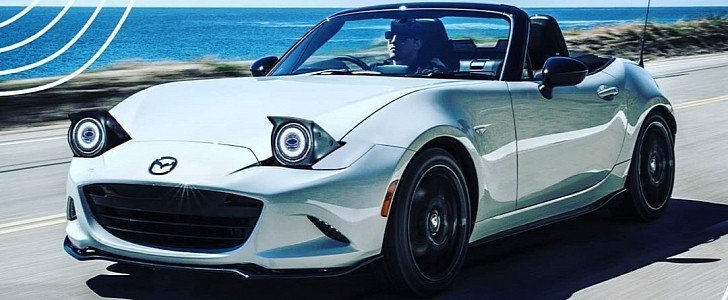
Lightweight construction and a rear-wheel-drive chassis inspired directly by the Lotus Elan made the Miata genuinely fun at legal speeds, not just impressive on a spec sheet.
| Spec | Detail |
| Engine | 1.6L/1.8L Inline-4 |
| Horsepower | 116-128 hp |
| Production Years | 1989-1997 |
| Current Market Range | $8,000-$20,000 |
Parts remain plentiful and affordable, making the NA Miata the most practical daily driver on this entire list for anyone chasing that pop-up headlight charm.
2. Mazda RX-7 FD
The third-generation RX-7 wrapped a genuinely exotic rotary engine inside curvy, timeless bodywork that still looks modern more than three decades after launch.
Twin sequential turbochargers fed the 13B-REW rotary engine, producing between 255 and 280 horsepower depending on the specific Japanese-market series and year.
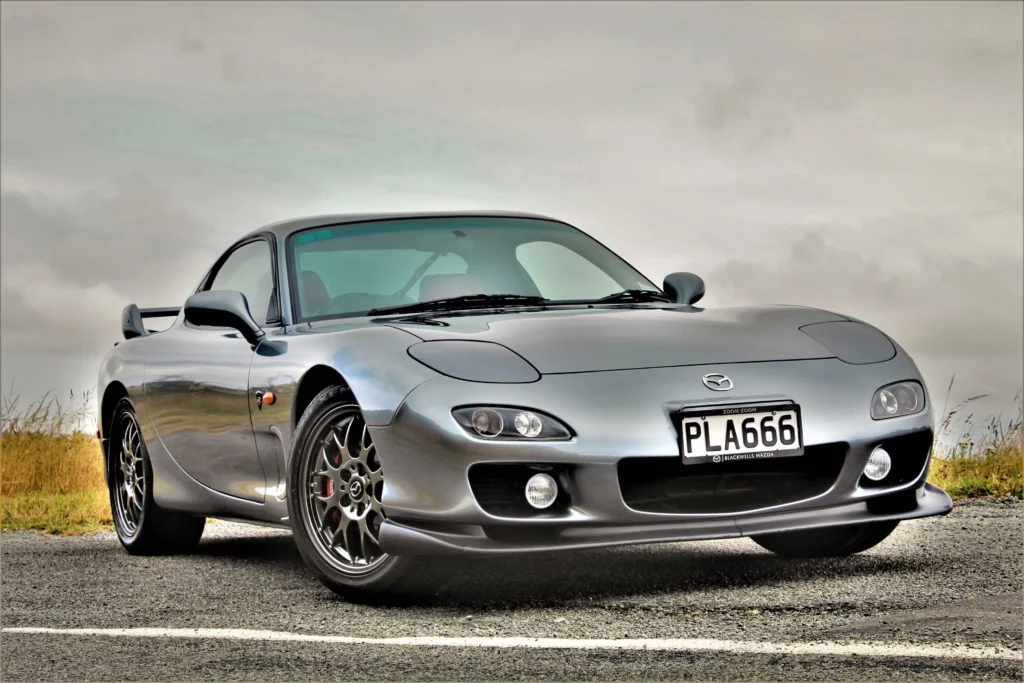
Only around 13,879 units reached the US market between 1993 and 1995, a scarcity that has pushed prices sharply upward over the past several years.
| Spec | Detail |
| Engine | 1.3L Twin-Turbo Rotary |
| Horsepower | 255-280 hp |
| US Production | 1993-1995 |
| Current Market Range | $40,000-$90,000+ |
Clean, unmodified examples now regularly cross auction blocks well into six figures, a dramatic climb from the sub-$20,000 prices these cars carried just a decade ago.
3. Toyota Supra MK3
Before the MK4 Supra became a household name, the third-generation A70 quietly built a reputation as a genuinely capable grand tourer with sharp, angular styling.
A turbocharged 3.0-liter inline-six, the 7M-GTE, produced 232 horsepower in later Turbo trims, paired with a 5-speed manual and a surprisingly composed chassis for the era.
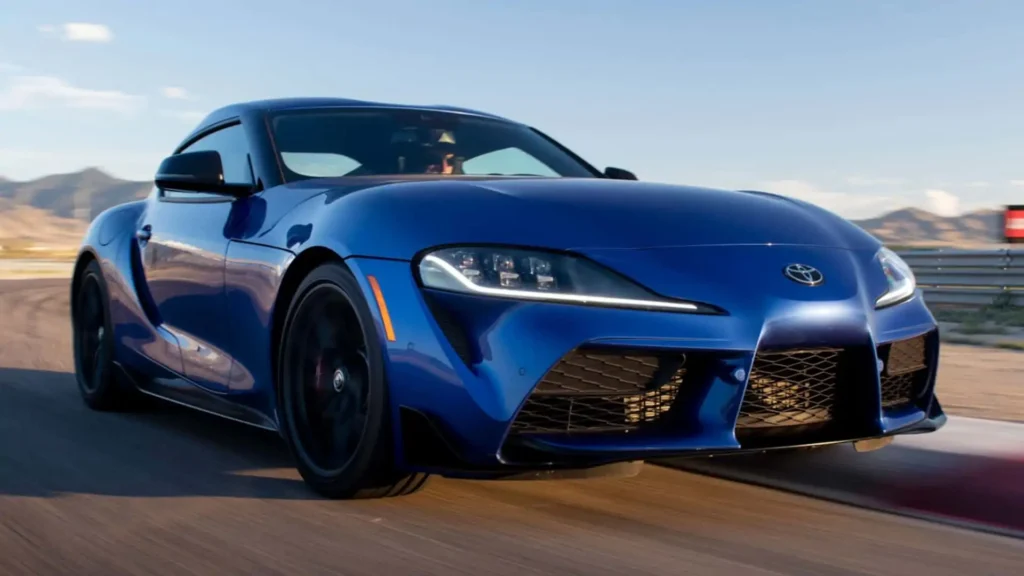
Pop-up headlights on the Supra MK3 sat flush and low, contributing to a drag coefficient that beat many contemporary sports cars despite the car’s substantial curb weight.
| Spec | Detail |
| Engine | 3.0L Turbo Inline-6 |
| Horsepower | 200-232 hp |
| Production Years | 1986-1992 |
| Current Market Range | $20,000-$45,000 |
Values remain well below the MK4’s stratospheric prices, making the MK3 an appealing entry point into Toyota’s turbocharged inline-six heritage without a six-figure budget.
4. Chevrolet Corvette C4
The fourth-generation Corvette carried pop-up headlights through its entire production run, right up until the format’s final American send-off in 2004 alongside the Lotus Esprit.
A 5.7-liter small-block V8 anchored most trims, with output climbing from 245 horsepower on early models to 300 horsepower on later ZR-1 and LT1-equipped variants.
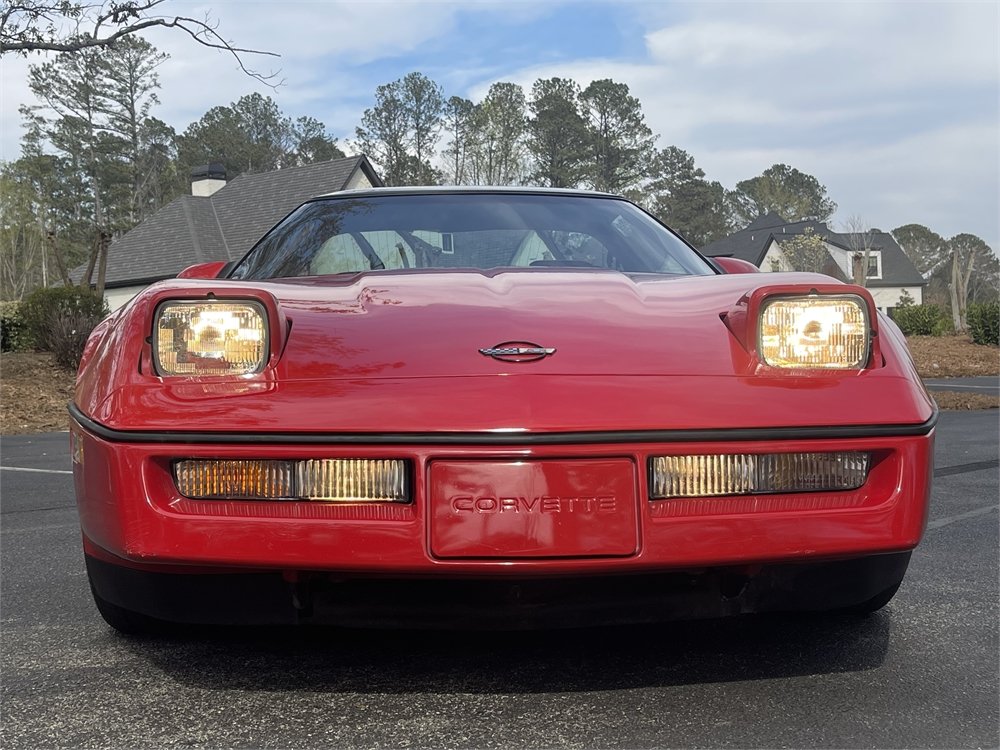
Each side used a single rectangular pop-up unit, distinct from the paired round lamps found on many Japanese rivals, giving the C4 a more aggressive, angular face.
| Spec | Detail |
| Engine | 5.7L V8 |
| Horsepower | 245-300 hp (ZR-1: 375 hp) |
| Production Years | 1984-1996 |
| Current Market Range | $10,000-$25,000 |
Electrical gremlins remain a known weak point on the C4, so buyers should test the pop-up motors thoroughly before signing any purchase paperwork.
5. Nissan 300ZX
Nissan’s Z32-generation 300ZX combined pop-up headlights with genuinely advanced engineering, including four-wheel steering on select trims well ahead of most rivals in its class.
The twin-turbocharged VG30DETT V6 produced 300 horsepower, a genuinely potent figure for the early 1990s that put the 300ZX firmly among the era’s quickest Japanese sports cars.
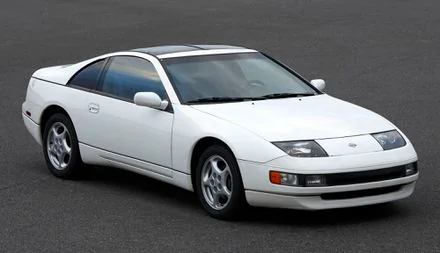
Its smooth, organic bodywork aged remarkably well, and the pop-up headlights integrated cleanly into the nose without the boxy awkwardness some rivals struggled to avoid.
| Spec | Detail |
| Engine | 3.0L Twin-Turbo V6 |
| Horsepower | 222-300 hp |
| Production Years | 1990-1996 |
| Current Market Range | $15,000-$40,000 |
Turbo models command a substantial premium over naturally aspirated versions, and clean, unmodified examples have grown noticeably harder to find in recent years.
6. Porsche 928
Porsche originally intended the 928 to eventually replace the rear-engined 911, giving it a front-mounted V8 and genuinely different character from the rest of the lineup.
Output ranged from 240 horsepower on early models to 350 horsepower on the later 928 GTS, paired with either a manual gearbox or a Mercedes-sourced automatic transmission.
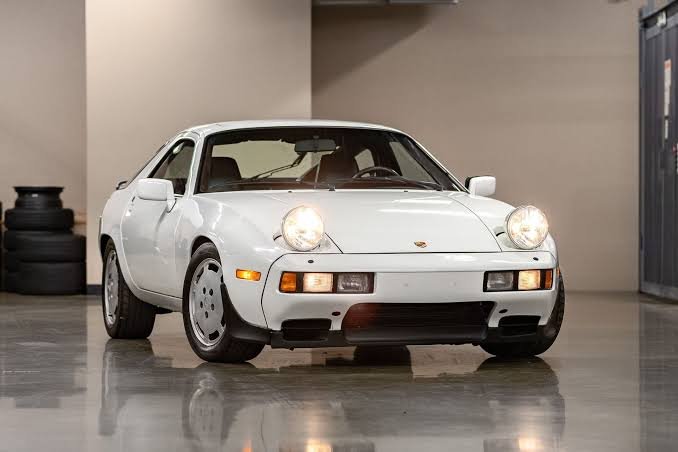
Rather than rising vertically, the 928’s headlights rotated up and out of a recessed housing, a distinctive mechanism that separates it visually from most pop-up rivals.
| Spec | Detail |
| Engine | 4.5L-5.4L V8 |
| Horsepower | 240-350 hp |
| Production Years | 1978-1995 |
| Current Market Range | $20,000-$55,000 |
Maintenance costs run higher than most cars on this list, but the 928 remains one of the more underrated grand tourers of its generation among serious Porsche enthusiasts.
7. Lotus Esprit
Made famous by Roger Moore’s underwater submarine car in a 1977 Bond film, the Esprit carried its dramatic wedge silhouette all the way through to its final year in 2004.
Various engines powered the Esprit over its long production run, with later turbocharged four-cylinder models producing up to 264 horsepower in a lightweight, fiberglass-bodied chassis.
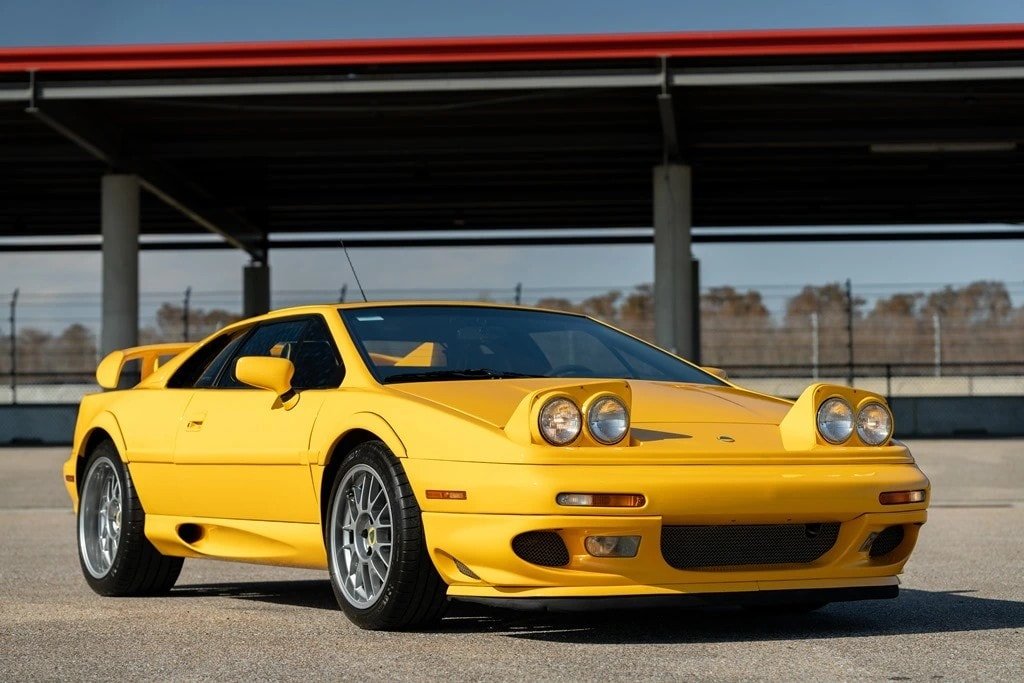
Alongside the Corvette, the Esprit holds the distinction of being one of the very last new cars sold with pop-up headlights before pedestrian-safety regulations ended the format entirely.
| Spec | Detail |
| Engine | 2.2L Turbo Inline-4 |
| Horsepower | 215-264 hp |
| Production Years | 1976-2004 |
| Current Market Range | $30,000-$65,000 |
Parts sourcing can prove challenging given Lotus’s relatively low production volumes, so a strong ownership community and documented service history matter enormously when buying one.
8. Ferrari Testarossa
Few silhouettes from the 1980s remain as instantly recognizable as the Testarossa’s side strakes and low, wide nose housing a pair of hidden headlight units.
A naturally aspirated 4.9-liter flat-12 engine produced around 390 horsepower, sending power through a 5-speed manual gearbox to the rear wheels in classic Ferrari fashion.
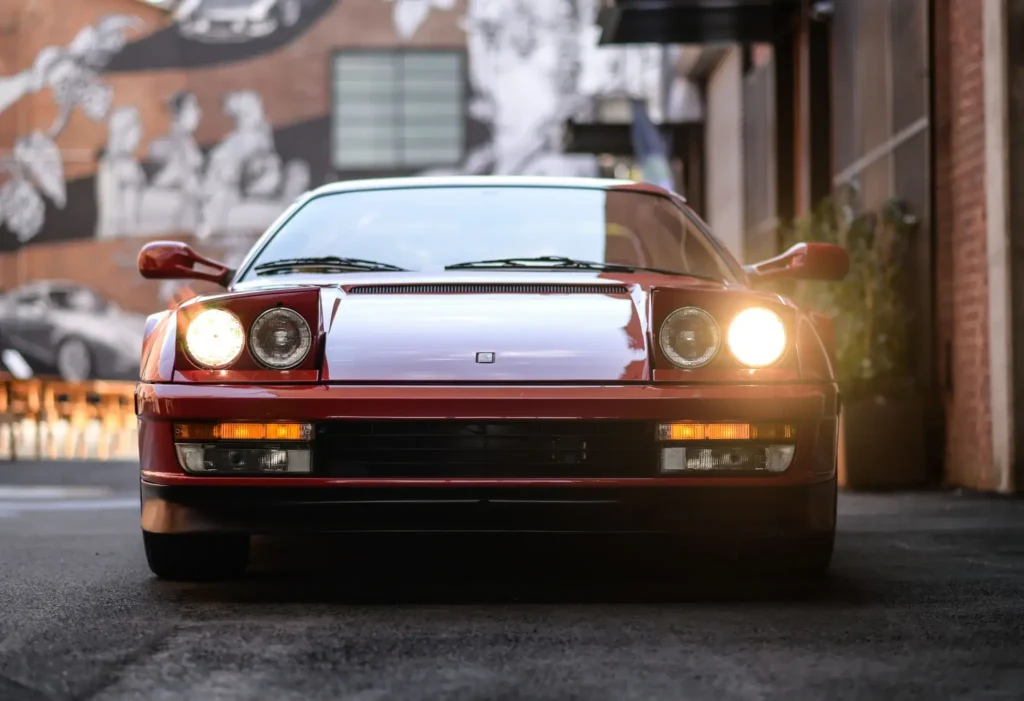
Popularized by its starring role in a well-known 1980s television series, the Testarossa remains one of the most photographed and instantly identifiable Ferraris ever built.
| Spec | Detail |
| Engine | 4.9L Flat-12 |
| Horsepower | 390 hp |
| Production Years | 1984-1996 |
| Current Market Range | $150,000-$220,000 |
Values have climbed steadily as an entire generation of buyers who grew up admiring the Testarossa on posters and in video games now has the means to actually own one.
9. Lamborghini Countach
Designed by Marcello Gandini, the same mind behind countless wedge-shaped classics of the era, the Countach turned pop-up headlights into an aggressive styling statement rather than a subtle detail.
Later 5000 QV and Anniversary editions used a 5.2-liter V12 producing around 455 horsepower, propelling the Countach to a top speed exceeding 180 mph in period testing.
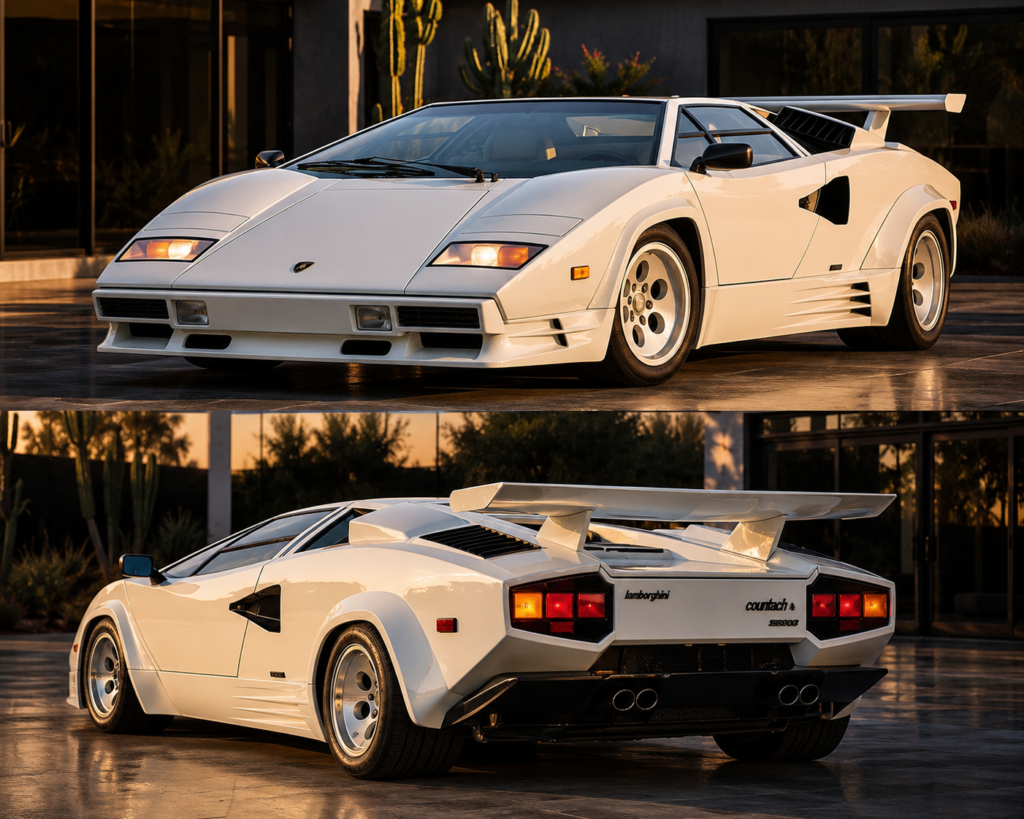
Scissor doors paired with the raised headlights created one of the most dramatic reveal sequences in automotive history, a combination few other supercars have matched since.
| Spec | Detail |
| Engine | 5.2L V12 |
| Horsepower | 375-455 hp |
| Production Years | 1974-1990 |
| Current Market Range | $400,000-$800,000+ |
Rarity and cultural cachet keep Countach prices firmly in exotic territory, positioning it as the aspirational endpoint for anyone building a pop-up headlight collection.
Comparing All Nine Models At A Glance
| Car | Engine | Horsepower | Current Market Range |
| Mazda MX-5 Miata NA | 1.6L/1.8L I4 | 116-128 hp | $8,000-$20,000 |
| Mazda RX-7 FD | 1.3L Twin-Turbo Rotary | 255-280 hp | $40,000-$90,000+ |
| Toyota Supra MK3 | 3.0L Turbo I6 | 200-232 hp | $20,000-$45,000 |
| Chevrolet Corvette C4 | 5.7L V8 | 245-375 hp | $10,000-$25,000 |
| Nissan 300ZX | 3.0L Twin-Turbo V6 | 222-300 hp | $15,000-$40,000 |
| Porsche 928 | 4.5-5.4L V8 | 240-350 hp | $20,000-$55,000 |
| Lotus Esprit | 2.2L Turbo I4 | 215-264 hp | $30,000-$65,000 |
| Ferrari Testarossa | 4.9L Flat-12 | 390 hp | $150,000-$220,000 |
| Lamborghini Countach | 5.2L V12 | 375-455 hp | $400,000-$800,000+ |
What To Check Before Buying A Pop-Up Headlight Classic
Test both headlights together multiple times, watching closely for uneven rise speed, grinding noises, or one lamp sticking partway up during operation.
Inspect the relay and fuse box dedicated to the headlight motors, since corrosion and brittle wiring insulation cause the majority of pop-up electrical failures on older cars.
Ask for documentation on any prior accident repair near the front fascia, since collision damage often bends the mounting brackets that keep both headlights aligned correctly.
Budget for specialist mechanics familiar with the specific mechanism, since general repair shops often lack experience with vacuum-assisted or motor-driven pop-up systems from this era.
Frequently Asked Questions
Why did automakers stop making cars with pop-up headlights?
European pedestrian-safety regulations introduced in the early 2000s made rigid, raised headlight mechanisms a legal liability, ending the format entirely after the 2004 Corvette and Lotus Esprit.
What was the last new car sold with pop-up headlights in the United States?
Both the Chevrolet Corvette C5 and the Lotus Esprit ended production in 2004, marking the final year American buyers could purchase a new car equipped with the feature.
Are pop-up headlights reliable on older collector cars?
Reliability varies by model, but corroded relays, brittle wiring, and worn motors are common issues, so testing the mechanism thoroughly before purchase remains essential regardless of the specific car.
Which car with pop-up headlights offers the best value today?
The Mazda MX-5 Miata NA remains the most affordable and practical option, combining low running costs with strong parts availability and a genuinely enjoyable driving character.
Do pop-up headlights affect a car’s insurance or repair costs?
Yes, replacement motors and mechanism components often cost more than fixed headlight assemblies, and specialist labor for diagnosis can add noticeably to routine repair bills.
Will pop-up headlights ever return to new production cars?
Unlikely under current global pedestrian-safety standards, though some manufacturers have experimented with restomod projects that reintroduce the mechanism using modern LED hardware on classic platforms.