
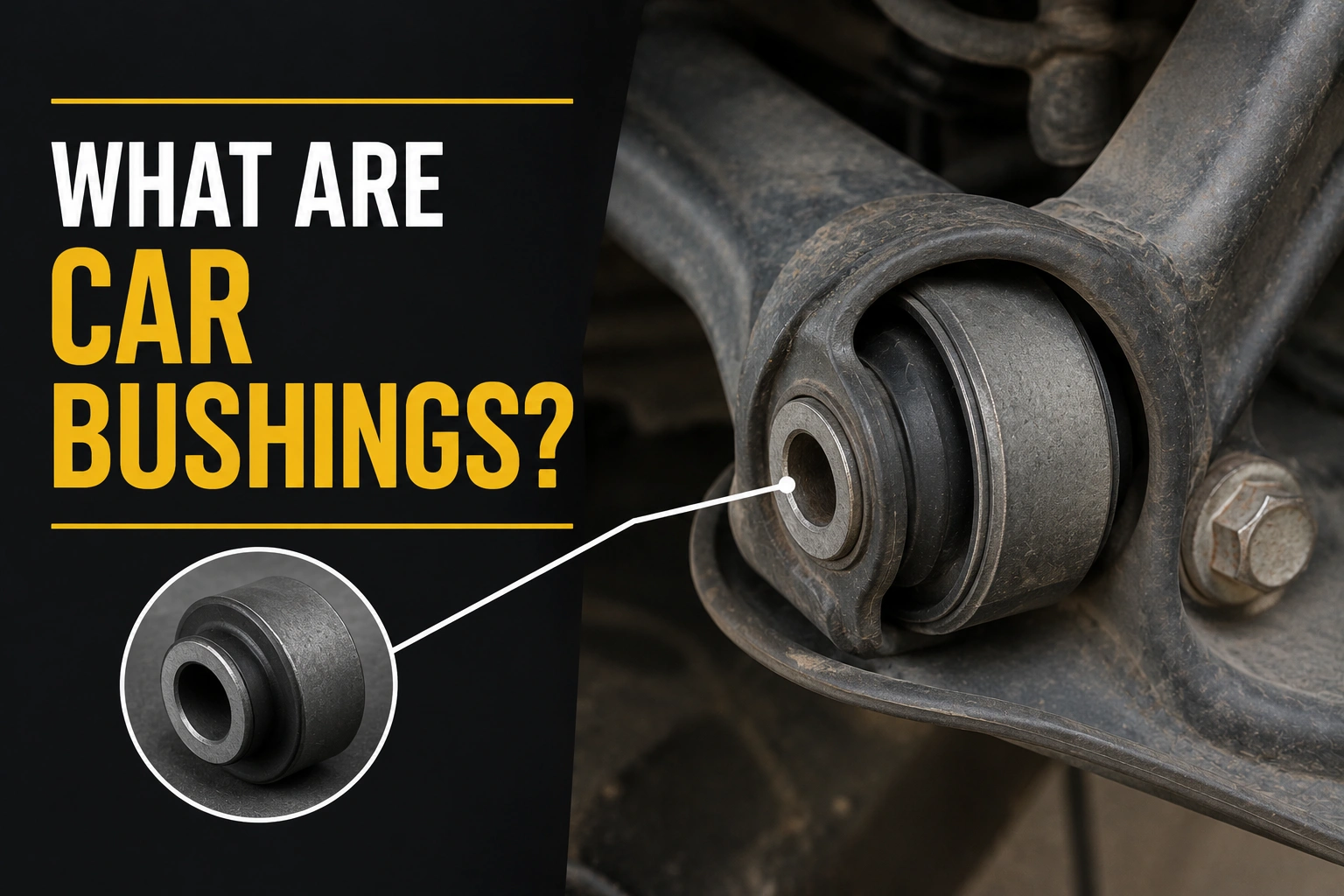
Bushings rarely get any credit under the hood, yet almost every moving part of a car’s suspension depends on them. Tucked inside control arms, sway bars, and subframes, these small rubber and polyurethane components quietly cushion metal parts from grinding against each other.
Every bump the wheels absorb, and every corner the chassis leans into, passes through a bushing before it reaches the driver. Without them, a car would rattle constantly and feel loose at any real speed.
Bushings look unremarkable next to shocks, struts, or brakes, yet they shape ride comfort, steering precision, and tire wear more than most owners ever realize.
Knowing what these parts do, the materials used to build them, and the warning signs when they wear out helps catch a suspension problem early, long before it grows into a bigger repair bill or a failed inspection.
What Are Car Bushings And Why Do They Matter
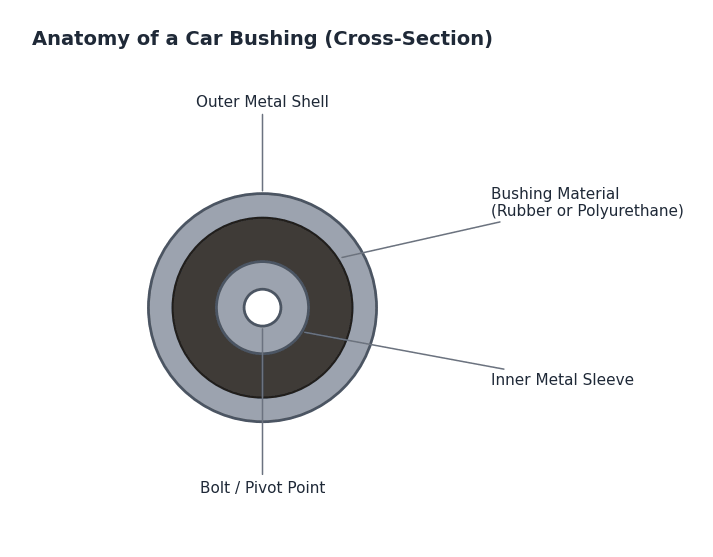
A bushing is a small cushion, usually made of rubber or polyurethane, fitted between two metal parts of a vehicle. Its job is to absorb shock, reduce friction, and dampen vibration.
Most bushings live inside the suspension and steering system. They sit at pivot points where a part needs to move slightly but should never touch bare metal against metal.
Picture a control arm bolted directly to the frame with no cushioning at all. Every pothole would send a harsh jolt straight into the cabin, and the metal would wear itself down fast.
A bushing solves that problem. It flexes just enough to let the suspension move through its range, while keeping noise, vibration, and harshness away from the passenger compartment.
Beyond comfort, bushings also control geometry. They keep control arms, sway bars, and subframes positioned correctly, which affects how predictably a car steers and how evenly its tires wear over time.
Engineers rate bushing firmness on a durometer scale, the same kind of measurement used for tire compounds. A softer durometer bushing soaks up more vibration, while a firmer one holds its shape under load but lets more noise through.
Bushings Versus Bearings And Mounts
Bushings often get confused with bearings, though the two parts do different jobs entirely. A bearing allows continuous rotation, like a wheel spinning freely around an axle.
A bushing, by contrast, allows limited, pivoting movement. Control arms swing up and down a few inches rather than spinning in full circles, so a bushing suits that motion better than a bearing ever could.
Engine and transmission mounts also rely on bushing technology. Rubber or hydraulic mounts hold the drivetrain to the frame while damping the vibration a running engine naturally produces.
Sway bar bushings and end links work on a similar principle. They let the anti-roll bar twist slightly during cornering while stopping it from banging against the chassis.
Every one of these parts shares a common purpose: keeping metal components from touching directly while still allowing controlled movement. That distinction matters when diagnosing a noise, since a worn bearing and a worn bushing produce noticeably different symptoms.
Types Of Car Bushings And Their Materials
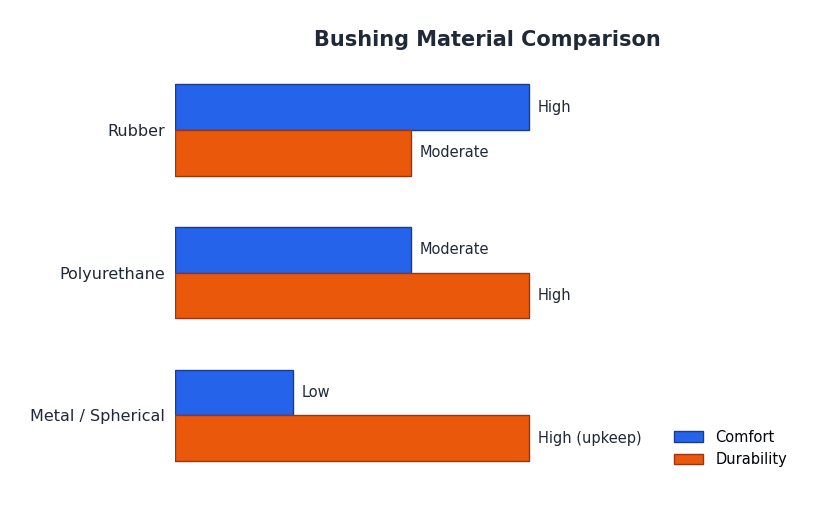
Manufacturers choose bushing material based on comfort, durability, and how a vehicle typically gets driven. Three materials dominate the market: rubber, polyurethane, and metal.
Each option trades comfort for precision differently, so picking the right one depends on whether a car prioritizes a smooth ride or sharper handling.
A fourth option, hybrid bushings that pair a rubber core with a stiffer outer shell, has gained ground on newer performance trims, offering a middle ground between everyday comfort and firmer handling.
Rubber Bushings
Rubber is the material most cars leave the factory with. Automakers favor it because it controls NVH, the industry shorthand for noise, vibration, and harshness, better than any other common option.
The compound bonds to an inner metal sleeve and an outer shell, creating a cushion that flexes under load. This design keeps road noise from traveling into the cabin.
Some modern vehicles push rubber technology further with hydraulic, fluid-filled bushings. An internal chamber of fluid fine-tunes damping beyond what solid rubber alone can do. This design shows up most often in subframe and engine mounts on refined, higher-end models.
Rubber’s biggest weakness is its lifespan. Heat, oil, road salt, and ozone exposure gradually break the compound down, causing it to crack, harden, or separate from its metal sleeve.
A rubber bushing can look intact on the outside while the bond underneath has already failed. That hidden wear pattern is one reason a simple glance sometimes misses a real problem.
Polyurethane Bushings
Polyurethane, often shortened to poly, is the go-to upgrade for drivers chasing sharper handling. It resists oil, heat, and general aging far better than rubber does.
Because poly is firmer, it holds suspension geometry more precisely under hard cornering or heavy braking. Control arms stay better aligned, which improves steering feedback noticeably.
That extra stiffness comes with a trade-off. Poly bushings transmit more road noise and vibration into the cabin, so a car can feel firmer and louder after the swap.
Squeaking is another common complaint with polyurethane. These bushings need a specific poly-friendly grease during installation, since ordinary grease breaks down fast and leaves the bushing dry.
Enthusiasts, track drivers, and off-road builders tend to favor polyurethane, while owners who value a quiet cabin generally stick with rubber instead.
Metal And Spherical Bushings
Metal and spherical bushings, sometimes called heim joints or rod ends, sit at the far end of the comfort-to-precision spectrum. They offer almost no cushioning at all.
Racing teams and serious performance builds use these because they eliminate deflection entirely. The suspension moves exactly as designed, with zero flex robbing precision from the geometry.
That precision comes at a real cost for daily driving. Metal bushings send every bit of road noise and harshness straight into the chassis, making the ride noticeably harsh and tiring.
They also need regular lubrication and tend to wear faster in dusty or wet conditions compared to sealed rubber or polyurethane bushings.
For a street car, metal bushings rarely make sense outside a dedicated track or off-road build, where handling precision outweighs everyday comfort.
| Bushing Material | Comfort Level | Durability | Best Suited For |
| Rubber | High | Moderate | Daily commuting, family vehicles |
| Polyurethane | Moderate | High | Performance driving, towing, off-road use |
| Metal Or Spherical | Low | High with upkeep | Racing, dedicated track builds |
Where Bushings Sit On A Car
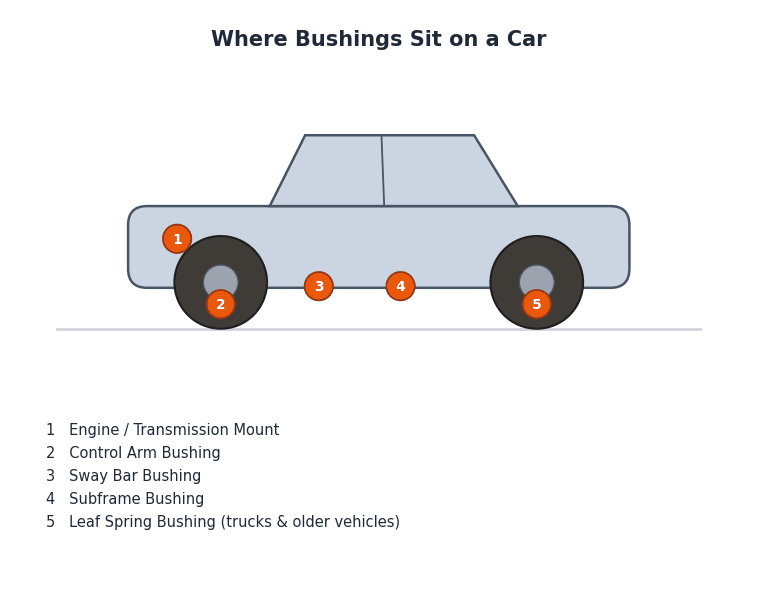
Bushings show up in more places than most drivers expect, not just the front suspension. Nearly every part that pivots or absorbs vibration relies on one somewhere.
The table below covers the most common bushing locations and what each one actually does.
| Bushing Location | Primary Function |
| Control Arm Bushing | Allows the arm to pivot while staying aligned |
| Sway Bar Bushing | Lets the anti-roll bar twist during cornering |
| Sway Bar End Link Bushing | Connects the bar to the suspension, absorbing small movements |
| Subframe Bushing | Isolates the subframe and cabin from road vibration |
| Strut Rod Bushing | Controls fore-and-aft movement of the control arm |
| Leaf Spring And Shackle Bushing | Lets leaf springs flex on trucks and older vehicles |
| Engine And Transmission Mount | Cushions the drivetrain from the frame |
Steering rack bushings deserve a mention too. They mount the steering rack to the subframe and soak up the small vibrations a power steering pump or electric motor sends through the chassis.
Bushings In Unibody Cars Versus Body-On-Frame Trucks
Unibody cars, which make up most sedans and crossovers, rely heavily on subframe bushings. The subframe carries the engine and front suspension, then bolts to the body through several large bushings.
These subframe bushings isolate the passenger cabin from road vibration and drivetrain noise. When they wear out, the whole front end can feel loose, even if every other suspension part checks out fine.
Body-on-frame trucks and older SUVs use a different setup entirely. A separate frame runs the length of the vehicle, and body mount bushings cushion the cabin from that frame.
Trucks with leaf spring rear suspension add another layer: leaf spring bushings and shackle bushings, which let the springs flex without their metal eyelets grinding against the mounting brackets.
Because these vehicles often carry heavier loads and travel rougher terrain, their bushings tend to wear faster than those on a typical passenger car covering mostly paved roads.
Signs Of Worn Or Failing Bushings
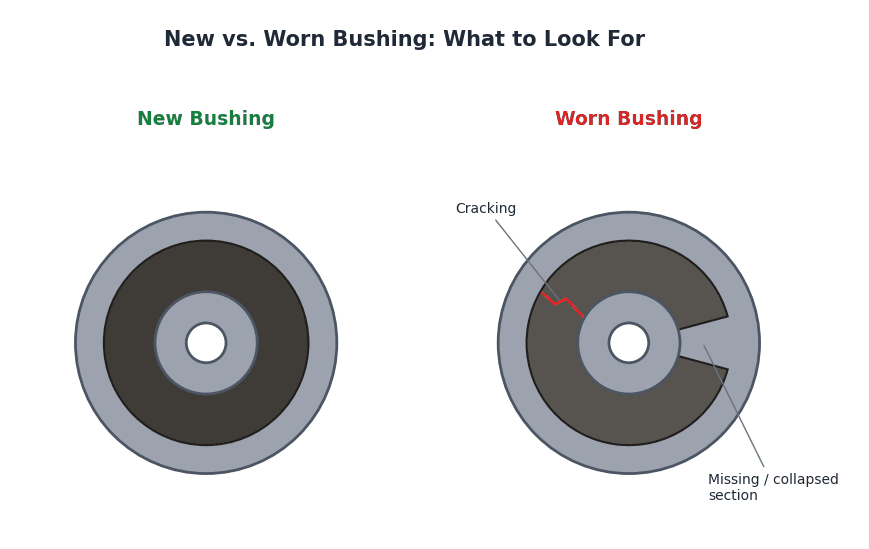
Bushings wear out gradually, so symptoms often creep in slowly rather than appearing overnight. Most drivers notice a noise long before they notice any change in handling.
Noises And Vibrations Worth Investigating
A clunk or knock from underneath the car is the most common complaint tied to worn bushings. It usually shows up over speed bumps, potholes, or uneven pavement.
Control arm bushings that have collapsed often produce a distinct clunk during acceleration or braking, since the arm shifts slightly under load before the bushing catches it again.
Sway bar bushings tend to announce themselves differently. A cracked or loose one often creates a rattling or clunking sound specifically while cornering or crossing small bumps.
Subframe bushings, when badly worn, sometimes cause a low-frequency vibration through the floor or steering wheel, especially around certain engine speeds or highway cruising rpm.
Any new noise from the suspension deserves a look, since ignoring it usually turns a small bushing job today into a bigger repair once other parts start compensating for the play.
Handling Changes And Tire Wear Patterns
Beyond noise, worn bushings change how a car feels on the road. Steering can start to feel vague, with more play before the wheels actually respond to input.
A car may also wander slightly at highway speed, needing small steering corrections that weren’t necessary before. That looseness often traces back to control arm or subframe bushings.
Tire wear offers another clue. Bushings that no longer hold proper alignment let camber and toe drift out of spec, which can cause cupping, feathering, or uneven wear across the tread.
Bushings on one side of the car sometimes wear faster than the other, especially on vehicles that spend most of their time on crowned roads, where one side sits slightly lower during normal driving.
Mechanics sometimes misdiagnose these symptoms as bad shocks or worn tie rods, since the complaints overlap closely. A proper suspension inspection, checking each bushing for play, cracking, or separation, usually settles the question.
Bushing Replacement, Lifespan And Maintenance Tips
Bushings don’t follow a fixed replacement schedule the way oil or filters do. Their lifespan depends heavily on material, climate, and how the vehicle gets driven day to day.
When Bushings Should Be Inspected Or Replaced
Rubber bushings typically hold up well for several years under normal driving, though heat and oil exposure shorten that window considerably in warmer climates.
Vehicles that see frequent towing, off-road trips, or rough roads tend to wear bushings faster than a car mostly driven on smooth highways.
A visual check during routine service, like an oil change or tire rotation, is a good habit. A technician can look for cracking, splitting, or a bushing that has shifted out of position.
Suspension play is also one of the checks performed during a routine safety inspection, so a failed inspection sometimes traces back to a worn bushing rather than a bigger mechanical issue.
One detail often gets overlooked during replacement. Bushings should be torqued down with the vehicle’s full weight resting on its suspension, not while it sits lifted on a jack. Tightening one while the suspension hangs free adds a twist that shortens its life.
Once a bushing shows play or visible damage, waiting rarely helps. A failing bushing puts extra stress on nearby parts, since something else has to absorb the movement it used to control.
Choosing Between Rubber And Polyurethane Replacements
When it comes time to replace a bushing, most owners choose between sticking with factory rubber or upgrading to polyurethane.
Rubber makes sense for anyone who wants the car to feel the way it did from the factory, with a quiet, cushioned ride and minimal noise transfer.
Polyurethane suits drivers who tow, drive spiritedly, or want sharper handling. The trade-off is a firmer ride and the chance of an occasional squeak if the bushing isn’t greased correctly during installation.
Control arm bushings often press into place with specialized tools, which makes shop replacement more practical than a driveway repair for most owners.
Sway bar bushings and end links, by contrast, are simple enough that many drivers handle them at home with basic hand tools and a jack.
Whichever material gets chosen, a wheel alignment afterward is worth doing, since new bushings shift the suspension geometry back to where it belongs.
Keeping the old bushing nearby during installation helps confirm the new one sits in the correct orientation, since a twisted bushing tends to wear out again quickly.
Frequently Asked Questions
How Long Do Car Bushings Last?
Most rubber bushings last several years under normal driving, though heat, oil exposure, and rough roads shorten that lifespan considerably. Polyurethane bushings generally outlast rubber by a wide margin, since the material resists cracking and chemical breakdown far better over time.
Can A Car Be Driven With A Bad Bushing?
Driving short distances with a mildly worn bushing usually isn’t dangerous, though it accelerates wear on nearby parts. A collapsed or badly cracked bushing should get attention soon, since it affects suspension control and, in some cases, steering response too.
Do Worn Bushings Cause Vibration?
Yes, especially subframe and engine mount bushings, which can let vibration travel into the cabin once they lose their cushioning ability. A vibration that changes with engine speed often points toward a mount, while one that changes with road speed instead points more toward a suspension bushing or a wheel-related part.
Are Polyurethane Bushings Worth The Squeaking Noise?
Squeaking usually happens when a poly bushing wasn’t greased with the correct lubricant during installation, not because of the material itself. Applying poly-specific grease during installation, and reapplying it periodically, prevents most noise complaints from developing.
Does Replacing Bushings Fix An Alignment Problem?
Worn bushings can cause alignment to drift even when a static reading looks acceptable, so replacing them often resolves handling complaints that alignment alone could not fix. A fresh alignment after bushing replacement is still worth doing to fine-tune the geometry.
Can Bushings Be Replaced Without Replacing The Whole Control Arm?
On many vehicles, yes, though it usually requires pressing the old bushing out and a new one in with specialized tools. Some manufacturers only sell control arms as a complete assembly, which makes replacing the bushing alone impossible on certain models. Checking parts availability before starting the job saves an unnecessary trip back to the parts counter.