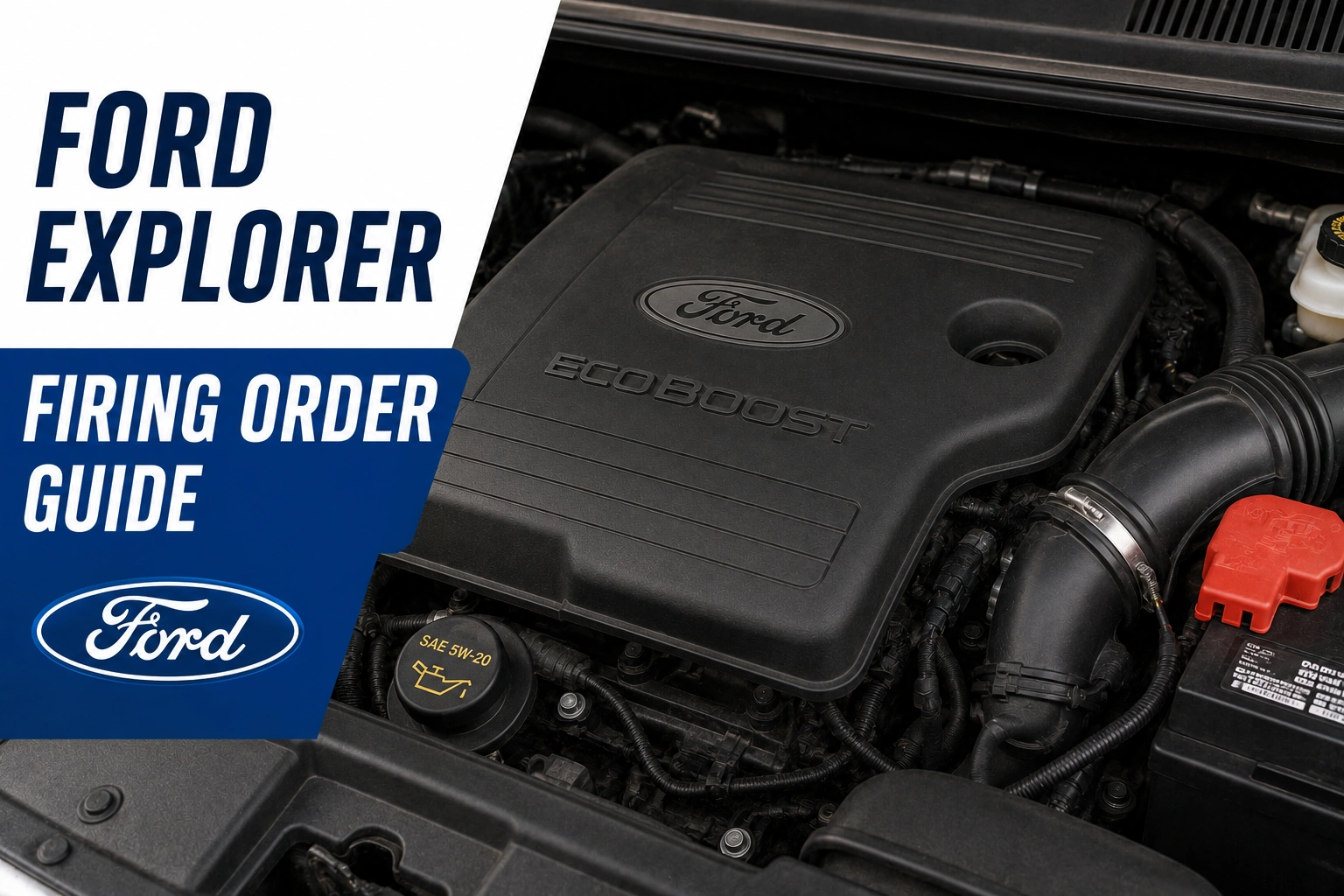
A German-developed V6 from the 1990s and a modern twin-turbocharged EcoBoost engine built decades later fire their cylinders in the exact same sequence under a Ford Explorer’s hood.
Almost nothing else connects these two engines mechanically, yet Ford landed on identical combustion logic for both.
That consistency runs through nearly every V6 this three-row SUV has ever offered, spanning three body architectures and more than two decades of continuous reinvention.
A completely different firing pattern shows up the moment a V8 or four-cylinder enters the picture instead.
Every engine the Explorer has used since its 2002 redesign, along with the genuinely current engine lineup shuffling happening on today’s Platinum trim, gets covered here in complete detail.
Why The Explorer Has Three Very Different Engine Stories
Few three-row SUVs changed their fundamental engineering approach as often as the Explorer did across this stretch. That variety makes this a genuinely layered topic once split into its distinct architectural eras.
What Firing Order Actually Controls Inside An Engine
Every cylinder fires at a specific point in crankshaft rotation rather than simple numerical order. A four-cylinder engine completes one firing event every 180 degrees of rotation, while a V6 fires every 120 degrees and a V8 packs a firing event every 90 degrees.
That even spacing keeps vibration low and distributes mechanical stress evenly across bearings, mounts, and the crankshaft itself.
Getting this sequence wrong, whether through a genuine mechanical fault or a wiring mistake, produces rough running, wasted fuel, and accelerated wear over time.
Every Explorer engine covered here uses coil-on-plug ignition rather than a distributor and plug wires, with the engine control module firing each coil individually based on crankshaft and camshaft sensor data.
Firing order still matters enormously for hands-on repair work, since a stored misfire code always points to a specific physical cylinder location.
Diagnostic trouble codes follow the same predictable pattern regardless of engine type or generation.
P0301 identifies cylinder one, P0302 identifies cylinder two, and the pattern continues through the highest cylinder count present, always referring to physical position rather than firing sequence.
Body-On-Frame To Unibody To RWD-Based Again
Ford redesigned the Explorer for 2002 while keeping its traditional body-on-frame truck architecture, adding fully independent suspension for the first time but retaining the same basic engine choices from the previous generation. A follow-up fourth generation arrived for 2006, sharing considerable engineering with its predecessor despite fresh styling.
Everything changed for 2011, when Ford moved the Explorer onto a unibody, front-wheel-drive-based platform shared with the Ford Taurus and Flex, bringing genuinely new engine options including a turbocharged four-cylinder for the first time in this nameplate’s history. That architecture carried through 2019 before another significant shift arrived.
The sixth generation launched for 2020 on a new rear-wheel-drive-based unibody platform shared with the Ford Bronco and Lincoln Aviator, moving away from the front-wheel-drive layout while keeping the modern unibody construction.
This generation continues in production today, remaining America’s best-selling three-row SUV.
Three distinct engine families served across these architectural shifts: an older Cologne V6 paired with a Modular V8 during the body-on-frame years, a Duratec V6 and EcoBoost four-cylinder during the front-wheel-drive-based generation, and the current EcoBoost lineup powering today’s rear-wheel-drive-based model.
Maximum towing capacity has stayed fairly consistent across most of this history, generally landing around 5,000 pounds regardless of which specific engine or generation a buyer selects.
4.0L V6 And 4.6L V8 Firing Order From 2002 Through 2010
Both the third and fourth-generation Explorer relied on the same two-engine lineup, changing very little about the fundamental powertrain choices across nearly a decade of production. A V6 handled base duty while a V8 served buyers wanting genuinely stronger towing and passing power.
Sorting out these two engines matters enormously given how differently they fire, and how much genuine confusion one of them has generated among owners over the years.
The Cologne V6’s Well-Documented Cylinder Confusion
The 4.0-liter Cologne V6, originally developed in Germany and used across the Explorer, Ranger, and even the V6 Mustang of the same era, served as the standard engine throughout 2002 through 2010. This single overhead cam design produced up to 210 horsepower in its later, more refined applications.
Its firing order runs 1-4-2-5-3-6, confirmed consistently across factory documentation, independent repair references, and decades of forum discussion among Explorer and Ranger owners alike.
That same numerical sequence, remarkably, matches the firing order used by Ford’s completely unrelated Duratec V6 family developed separately and used in later Explorer generations.
Physical cylinder identification on this specific engine has generated genuine, well-documented disagreement among mechanics and owners over the years, even though the firing order number itself remains completely unambiguous.
Some sources describe cylinders one through three grouped together on the passenger side with four through six on the driver’s side, while others describe an alternating odd-and-even pattern between the same two banks.
This isn’t a case of conflicting firing order information, since every source agrees on the 1-4-2-5-3-6 sequence itself. It’s specifically about which physical cylinder occupies which position, a distinction worth confirming against a factory diagram or under-hood sticker before starting any ignition repair on this particular engine rather than trusting memory or a generic online description.
The Modular V8’s Completely Different Sequence
Buyers wanting more power than the Cologne V6 could offer stepped up to a 4.6-liter V8 from Ford’s Modular engine family, the same architectural lineage that powered the Mustang GT, Crown Victoria, and F-150 of the same era.
This engine produced up to 292 horsepower and came standard with a six-speed automatic transmission in later applications.
Its firing order runs 1-3-7-2-6-5-4-8, a sequence that shares nothing in common with the V6 covered in the previous section. Cylinders one and cylinders two through four sit on one bank, while cylinders five through eight occupy the opposite side, following a completely different combustion logic than Ford’s V6 lineup.
This distinction matters enormously for anyone assuming Ford maintains one universal firing order across every engine configuration. While Ford’s V6 family shows remarkable consistency across decades and architectures, that same consistency doesn’t extend to comparing a V6 against a V8, since cylinder count alone forces a fundamentally different combustion sequence.
Both the Cologne V6 and Modular V8 disappeared entirely once the fifth-generation Explorer arrived for 2011, replaced by an all-new engine lineup built around Ford’s more modern Duratec and EcoBoost architecture covered in the next section.
Here’s how the third and fourth-generation lineup compares:
| Engine | Model Years | Type | Firing Order |
| 4.0L Cologne V6 | 2002-2010 | Standard | 1-4-2-5-3-6 |
| 4.6L Modular V8 | 2002-2010 | Upgrade | 1-3-7-2-6-5-4-8 |
Duratec And EcoBoost Firing Order From 2011 Through 2019
Ford’s dramatic shift to a unibody, front-wheel-drive-based platform for 2011 brought an entirely new engine lineup with it, though the underlying firing order philosophy for the V6 option stayed remarkably familiar. A genuinely new four-cylinder option also joined partway through this generation.
Sorting out both engines clears up most of what a shopper researching a fifth-generation Explorer specifically needs to know, particularly since Sport and Platinum badges sometimes get confused for one another when discussing this specific generation.
3.5L Duratec And Twin-Turbo Firing Order
The redesigned 2011 Explorer launched with a 3.5-liter Duratec V6 producing 290 horsepower as its standard engine, later joined by a twin-turbocharged version of the same basic architecture producing up to 365 horsepower for Sport and Platinum trims.
Both versions share an identical 1-4-2-5-3-6 firing order, continuing the same sequence used by the outgoing Cologne V6 despite representing a genuinely different engine family.
Cylinder numbering on this Duratec-based engine follows the sequential grouping convention rather than an alternating pattern, with cylinders one through three sitting together on one bank and four through six on the opposite side.
This matches the same layout logic found on other Duratec applications across Ford’s broader lineup during this period.
Turbocharging adds considerable mechanical complexity to the twin-turbo version, from boost control to intercooling, without touching the underlying combustion sequence in any way.
That separation between forced induction hardware and firing order holds true consistently across every EcoBoost engine Ford has produced.
This twin-turbo 3.5-liter also found its way into other Ford products of the same era, including the F-150 and Lincoln MKS, meaning ignition and diagnostic knowledge gained from any of these siblings transfers directly to a Sport or Platinum-trim Explorer running the same engine code.
The 2.0L EcoBoost Four-Cylinder’s Simple Pattern
Ford added a turbocharged 2.0-liter four-cylinder to the Explorer lineup shortly after the fifth generation’s 2011 launch, offering meaningfully better fuel economy than the standard V6 while still delivering 240 horsepower.
This marked the first four-cylinder engine ever offered in this nameplate’s history, a genuine departure from decades of V6 and V8-only power.
Its firing order runs 1-3-4-2, the standard pattern used by the overwhelming majority of inline-four engines across the industry regardless of manufacturer.
Cylinder one sits at one end of the engine with cylinders two through four following in a straight line, removing any bank-related confusion entirely since there’s only one row of cylinders to consider.
This engine shares its fundamental architecture and firing order with other EcoBoost four-cylinders found across Ford’s broader lineup, including applications in the Escape and Edge of the same general period.
A technician comfortable with any of these related engines can apply identical cylinder logic to a four-cylinder Explorer without hesitation.
Front-wheel drive came standard with this four-cylinder option, while all-wheel drive remained reserved for the more powerful V6 choices throughout this generation’s run.
That pairing makes engine identification straightforward for anyone specifically shopping a front-wheel-drive example from this era.
Current Sixth-Generation Firing Order And The Platinum’s V6 Flip-Flop
Today’s Explorer rides on yet another new platform, this time shifting back to a rear-wheel-drive-based architecture shared with the Ford Bronco and Lincoln Aviator.
The engine lineup simplified considerably compared to the previous generation, even as trim-level availability has genuinely shifted within just the past two model years.
That recent trim shuffling offers a useful reminder of why confirming a specific vehicle’s exact configuration matters more than assuming based on trim name alone.
2.3L And 3.0L EcoBoost Firing Order Today
The sixth-generation Explorer, launched for 2020 and continuing into the current 2027 model year, offers exactly two engines: a standard 2.3-liter EcoBoost four-cylinder producing 300 horsepower, and an optional twin-turbocharged 3.0-liter EcoBoost V6 producing 400 horsepower on ST and properly equipped Tremor and Platinum trims. This represents the most powerful V6 ever offered in Explorer history.
The four-cylinder fires in the same 1-3-4-2 sequence used by every EcoBoost four-cylinder covered so far, while the V6 continues Ford’s remarkable 1-4-2-5-3-6 pattern that traces back through the Duratec family all the way to the original Cologne V6 from decades earlier.
Few manufacturers maintain this level of firing order consistency across such genuinely different engine generations and architectures.
Ford has publicly discussed plans to eventually offer hybrid power across most of its Blue Oval lineup by the end of the decade, and the Explorer represents a likely candidate for that expansion given its sales volume and importance to the brand.
No hybrid Explorer exists in the current 2026 or 2027 lineup, though a naturally aspirated V6 hybrid briefly appeared on select trims earlier in this generation before being dropped from recent order guides.
A minor power adjustment arrived partway through 2026 production, with the 3.0-liter EcoBoost losing 15 horsepower specifically in states following California’s stricter emissions standards.
This change affects output figures and emissions calibration, not the underlying firing order or cylinder arrangement in any way.
Both engines pair with a ten-speed automatic transmission across every trim, and rear-wheel drive comes standard with intelligent all-wheel drive available depending on configuration.
The Tremor off-road trim, added for 2026, comes standard with all-wheel drive regardless of which engine a buyer selects.
Why The Platinum Lost Then Regained Its V6
Ford dropped the 3.0-liter EcoBoost V6 from the Platinum trim entirely for the 2026 model year, leaving the 2.3-liter four-cylinder as that trim’s only engine choice after the V6 had previously been available as part of an optional upgrade package.
This decision affected only the range-topping Platinum trim, since the ST and Tremor continued offering the V6 throughout the same period without interruption.
That change reversed for the 2027 model year, with Ford confirming the V6 would return to the Platinum trim as a standalone upgrade option rather than bundled into a larger package as it had been previously.
This kind of single-trim engine availability shuffle happens more often across the industry than most buyers realize, though it rarely generates the attention a full engine discontinuation would.
None of this trim-level back-and-forth changed the actual firing order for either engine even slightly. The 3.0-liter V6 fired 1-4-2-5-3-6 before losing Platinum availability, continued firing the identical sequence in ST and Tremor applications during its Platinum absence, and returned to the same specification once Ford reinstated it for 2027.
Anyone shopping a 2026 Platinum-trim Explorer specifically should confirm whether their exact example came before or after this V6 removal, since two vehicles sharing an identical model year and trim badge could still differ in available engine choice depending on production timing. A build sheet or window sticker settles this immediately.
Practical Diagnosis Across Every Explorer Generation
None of this technical and historical detail matters much until a check engine light appears or an engine starts running rough. Firing order and cylinder position knowledge turns that vague warning into a specific, targeted repair.
The sections below apply everything covered so far to real diagnostic work across every generation this nameplate has produced.
Matching A Misfire Code To The Right Engine
A scan tool reading a P0301 through P0308 code identifies a misfiring cylinder by its physical position, never by where that cylinder falls within the firing sequence itself.
Confirming which engine family sits under the hood comes first, since the same cylinder number occupies a genuinely different physical location depending on whether a V6, V8, or four-cylinder is involved.
Once that’s settled, matching the engine against the correct chart from earlier sections points straight to the affected coil, plug, or injector.
Swapping a suspect coil with a known-good unit from another cylinder remains a reliable confirmation test across every engine covered here, from the original Cologne V6 through the current twin-turbo lineup.
Given the documented confusion around physical cylinder placement on the older V6 engines specifically, confirming bank orientation against a factory diagram before assuming a Bank 1 or Bank 2 code applies to a particular side prevents ordering a replacement sensor for the wrong location.
This extra verification step costs a few minutes and avoids a genuinely common, well-documented mistake.
A VIN decode remains the fastest way to confirm exactly which engine sits under a specific Explorer’s hood, particularly valuable for anyone shopping a used third or fourth-generation model where the Cologne V6 and Modular V8 shared identical exterior badging in many cases. Most auto parts stores can pull this information within minutes at no charge.
Direct-injected EcoBoost engines can develop carbon buildup on intake valves over time, since fuel no longer washes over the valves the way it does on the older port-injected Cologne and early Duratec engines.
A misfire that only appears after a cold start, improving as the engine warms, often points toward this specific concern rather than a straightforward ignition failure.
Maintenance Habits That Matter Most By Era
Spark plugs and coils on the EcoBoost-era engines typically last well beyond 60,000 miles under normal conditions, while the older naturally aspirated Cologne V6 and Modular V8 often tolerated slightly longer intervals given their simpler, less thermally stressed design.
Replacing ignition components proactively before symptoms appear costs considerably less than diagnosing a mystery rough idle months later.
Twin-turbo V6 models across every generation place additional demands on cooling and lubrication systems given their considerably higher output relative to the standard four-cylinder lineup.
Owners of ST, Sport, and V6-equipped Platinum or Tremor models benefit from closer attention to fluid condition and change intervals than a base four-cylinder model typically requires.
Timing chain health deserves attention across every engine family covered here, since a stretched chain won’t alter the programmed firing order but can throw crankshaft and camshaft sensor signals out of sync enough to trigger stored misfire codes.
This concern applies more to high-mileage examples of the older body-on-frame generations than to a well-maintained current-generation Explorer.
Keeping the exact engine code, not just generation or trim name, documented in any service record prevents the most likely mistake given this nameplate’s recent history: assuming a specific Explorer’s engine based on trim badge alone when the same trim genuinely offered different engine choices depending on the exact production timing.
A quick reference for common symptoms across this lineup:
| Symptom | Likely Cause | Applies To |
| Rough idle, specific cylinder code | Failing coil, plug, or injector | All engines, every generation |
| Confusing Bank 1 or Bank 2 code | Uncertain physical cylinder layout | 4.0L Cologne V6 specifically |
| Misfire only after cold start | Carbon buildup on intake valves | EcoBoost, direct-injected |
| Rattle at startup, quiets quickly | Early timing chain wear | High-mileage examples, any generation |
Frequently Asked Questions
What is the firing order of a Ford Explorer 4.0 V6?
The 4.0-liter Cologne V6, used from 2002 through 2010, fires in a 1-4-2-5-3-6 sequence. Physical cylinder placement has generated genuine confusion among owners over the years, even though this firing order number itself is well established.
What is the firing order of the Ford Explorer 3.0 EcoBoost V6?
The current twin-turbocharged 3.0-liter V6 fires in the same 1-4-2-5-3-6 sequence used by every Ford V6 already covered, continuing a pattern that spans multiple genuinely different engine architectures across decades.
Is the firing order different between the 4.6 V8 and the V6 engines?
Yes, the 4.6-liter Modular V8 fires in a completely different 1-3-7-2-6-5-4-8 sequence, sharing nothing in common with any V6 this nameplate has used.
Why did the Explorer Platinum lose its V6 option for 2026?
Ford removed the 3.0-liter EcoBoost V6 from the Platinum trim specifically for the 2026 model year, though it returned as an available upgrade for 2027. The ST and Tremor trims retained V6 availability throughout this entire period without interruption.
Does the 2.3L EcoBoost four-cylinder use the same firing order as the older four-cylinder options?
Yes, both the current 2.3-liter and the earlier 2.0-liter EcoBoost four-cylinder fire in an identical 1-3-4-2 sequence, the standard pattern shared by most inline-four engines regardless of manufacturer.
Where can I confirm the exact firing order for my specific Ford Explorer?
A factory service manual matched to the exact model year and engine code remains the most reliable source. Most auto parts stores can also pull a firing order reference free of charge once given the vehicle’s VIN.
Three body architectures, five distinct engines, and a V6 firing order legacy stretching back decades still resolve into two dependable answers for anyone shopping this three-row SUV today. Every V6 this nameplate has used fires 1-4-2-5-3-6, every four-cylinder fires 1-3-4-2, and the discontinued V8 fired its own distinct 1-3-7-2-6-5-4-8 sequence.
Confirming the exact engine code, rather than relying on trim badge or generation alone, remains the only real starting point for applying any of this information correctly on a nameplate that continues evolving even in its current sixth generation. That single habit turns what could be a confusing search across overlapping trims and model years into a straightforward, five-minute answer.