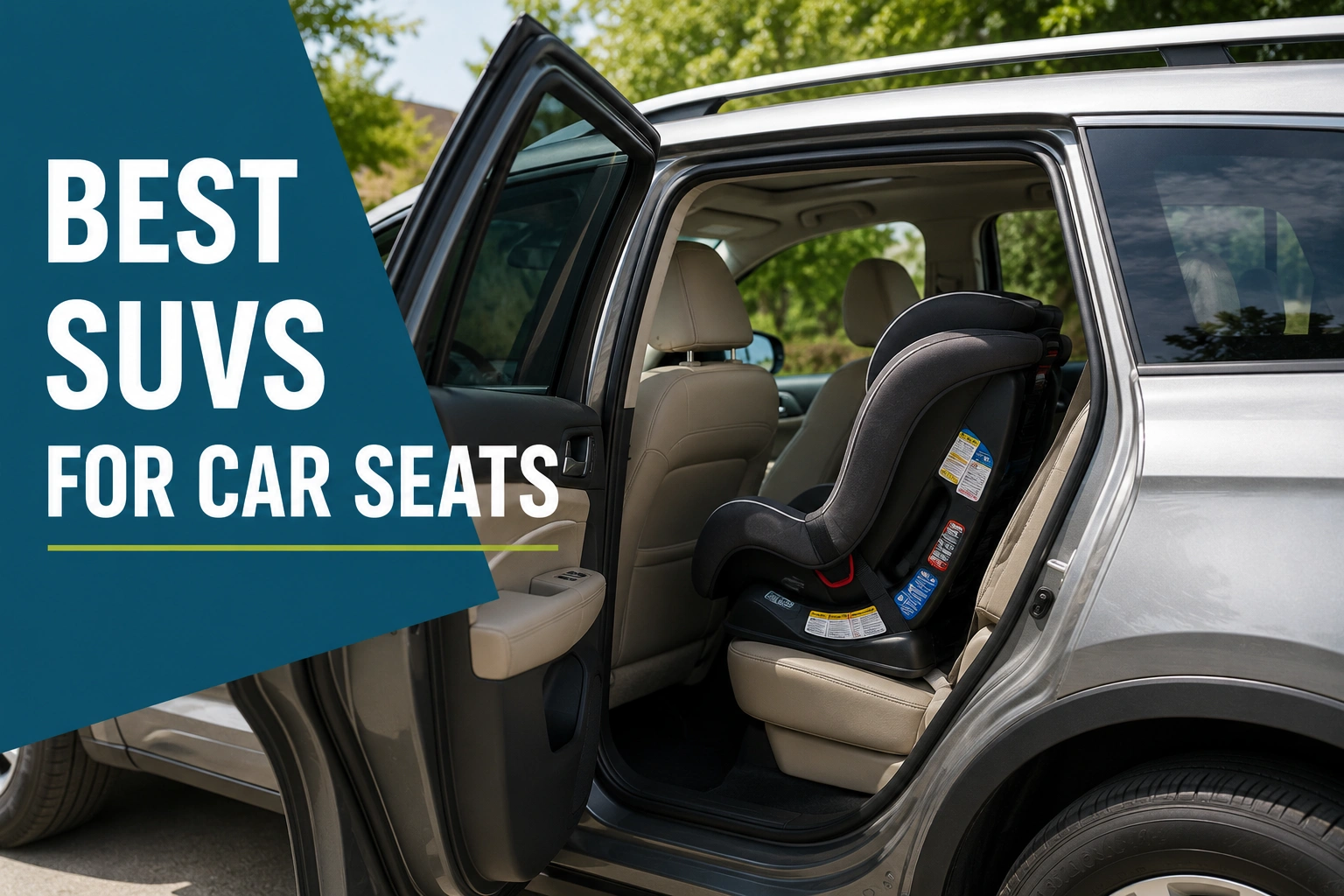
Car seat compatibility rarely shows up on a window sticker, yet it quietly decides whether family life runs smoothly or turns into a daily wrestling match. Some SUVs bury their anchor points deep inside leather crevices. Others place them in plain sight, ready to click in seconds.
For 2026, automakers finally started treating this detail with the same seriousness as horsepower figures and infotainment screens. Cars.com tested dozens of vehicles this year using real infant, convertible, and booster seats to see which ones genuinely work for growing households.
Nine SUVs stood out for reasons that go beyond size alone. They pair wide rear seats, usable third rows, and anchor hardware that doesn’t turn every school run into a chore. Below, each one gets a real look at pricing, specifications, and what loading three kids on a Tuesday morning actually feels like.
What Makes An SUV Truly Car Seat Friendly
Not every three-row SUV treats a rear-facing infant seat the same way. Some models leave generous space between the front seatback and the car seat shell, while others force a six-foot driver to scoot uncomfortably close to the wheel.
Three factors separate the vehicles that genuinely work for families from the ones that just look the part on a dealership lot.
LATCH Position And Ease Of Access
Lower anchors buried deep where the seat cushion meets the backrest sound like a minor inconvenience until a parent tries connecting them one-handed while holding a toddler. Kia Telluride owners often mention this exact frustration, since the second-row anchors sit low in the seat bight and resist stiffer leather trim.
Exposed anchors, by contrast, take seconds. The Honda Pilot and Chevrolet Suburban both mark their connection points clearly and keep them free of extra padding, which matters more during a rushed morning than any spec sheet suggests.
The Insurance Institute for Highway Safety recently began publishing a separate LATCH ease-of-use rating alongside its usual crash-test scores. It’s worth checking before assuming a vehicle’s safety badge automatically means painless installation.
Bench Seats Versus Captain’s Chairs
Captain’s chairs feel like a luxury upgrade, and in many ways they are. The gap between the two seats opens a walk-through path to the third row, sparing parents from climbing over a folded bench with a squirming child in tow.
That gap comes at a cost, though. Most captain’s chair configurations drop total seating by one position and remove a usable spot for a middle car seat entirely.
A bench seat keeps that middle position alive, and vehicles like the Pilot and Suburban use it to offer three full sets of lower anchors side by side. Families who carpool regularly, or who have three kids close in age, tend to lean toward the bench for this reason alone, even if it means a slightly tighter squeeze reaching row three.
Third Row Access And Legroom
A third row that only fits a folded-up booster isn’t much of a third row. Legroom numbers vary wildly across this segment, from around 28 inches in a Toyota Highlander to well over 31 inches in a Kia Telluride or Subaru Ascent.
Sliding second-row mechanisms matter just as much as raw inches. Volkswagen engineered the Atlas so its second row tilts and slides forward even with a car seat still installed on the outboard position, a detail that saves real time during a busy pickup line.
Step-in height plays a role too, particularly for older relatives or shorter caregivers helping a child climb back. A lower floor and a wider door opening make the difference between an easy lift and an awkward reach, every single time.
Nine Best SUVs For Car Seats In 2026
Pricing, seating layouts, and anchor placement below reflect current 2026 model-year configurations. Every figure comes from manufacturer specifications and recent third-party testing rather than guesswork.
1. Honda Pilot
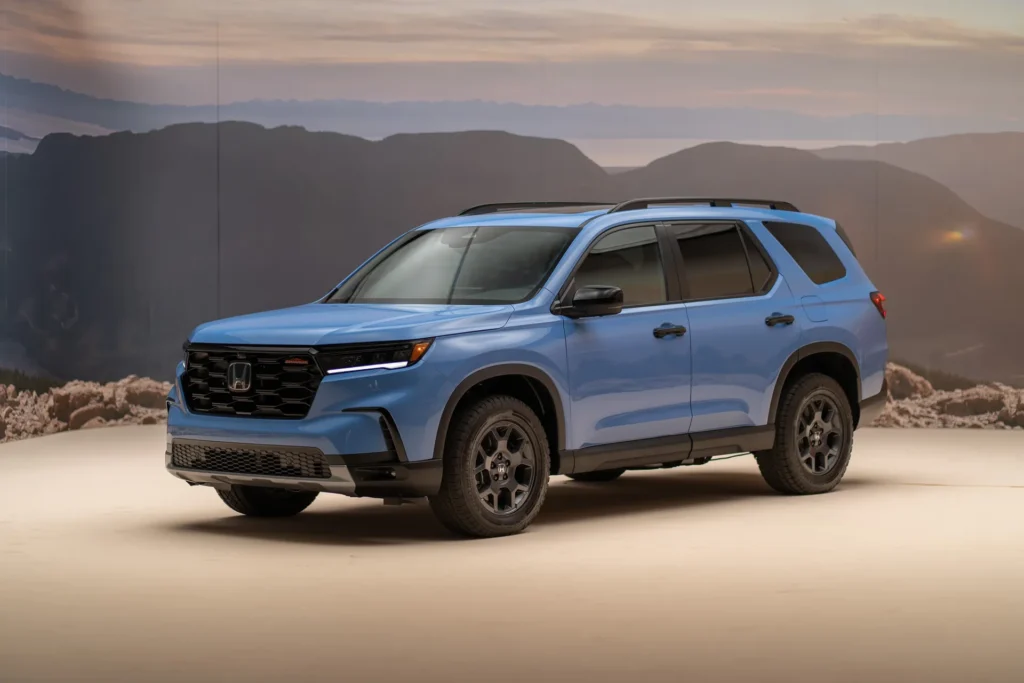
Few midsize SUVs still offer three complete sets of lower anchors across a single row, and the Pilot’s bench-seat configuration is one of them. That detail alone makes it a standout for households juggling three young kids.
Starting Price: $42,195 | Engine: 3.5-liter V6, 285 horsepower | Seating: 7-8 passengers | Cargo Behind Third Row: 22.4 cubic feet | Towing: 5,000 pounds
The removable center seat adds real flexibility, letting a family switch between a bench and a two-seat gap without buying a different trim. Second-row legroom measures a generous 40.8 inches, so a rear-facing infant seat rarely crowds the front passenger.
Honda’s 2026 mid-cycle refresh brought a larger 12.3-inch touchscreen and updated exterior styling without touching what already worked underneath. Trims run from the value-focused Sport through the off-road-leaning TrailSport and up to a loaded Black Edition at $54,995.
2. Volkswagen Atlas
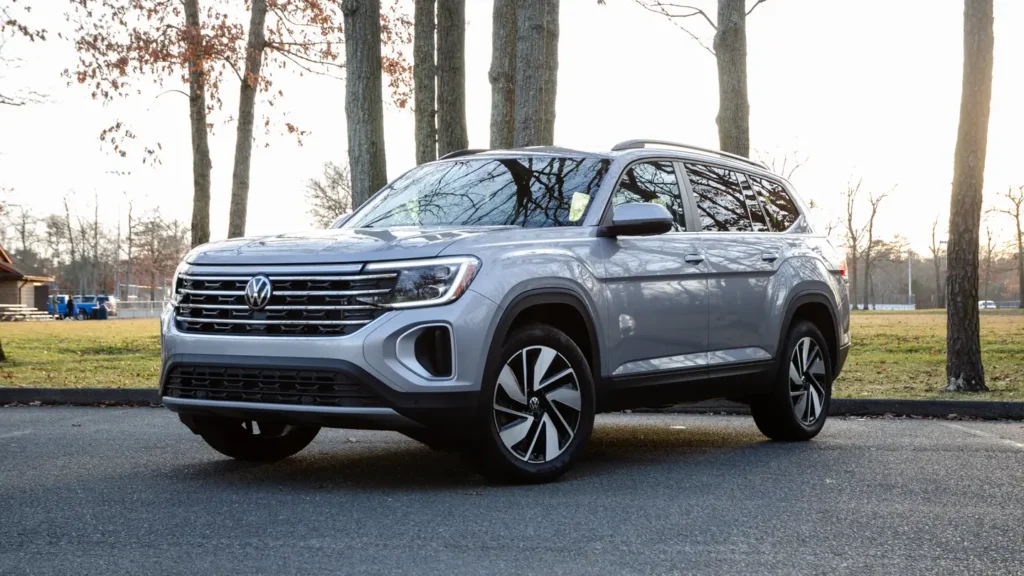
Cars.com’s 2026 Car Seat Check named the Atlas an honorable mention, missing a perfect score by a single grade. That’s a rare distinction among three-row SUVs, reflecting genuinely thoughtful engineering rather than luck.
Starting Price: $40,785 | Engine: 2.0-liter turbocharged four-cylinder, 269 horsepower | Seating: 6-7 passengers | Cargo Behind Third Row: 20.6 cubic feet | Towing: 5,000 pounds
What sets the Atlas apart is a tilt-and-slide second row that keeps working even after a car seat gets installed on the outboard position. Parents don’t need to unbuckle anything just to load a third-row passenger.
Legroom stretches to 33.7 inches in the third row, adult-friendly territory that most rivals only manage in row two. Cargo space behind that row reaches a class-leading 20.6 cubic feet, useful once diaper bags and stroller frames enter the equation.
3. Hyundai Palisade
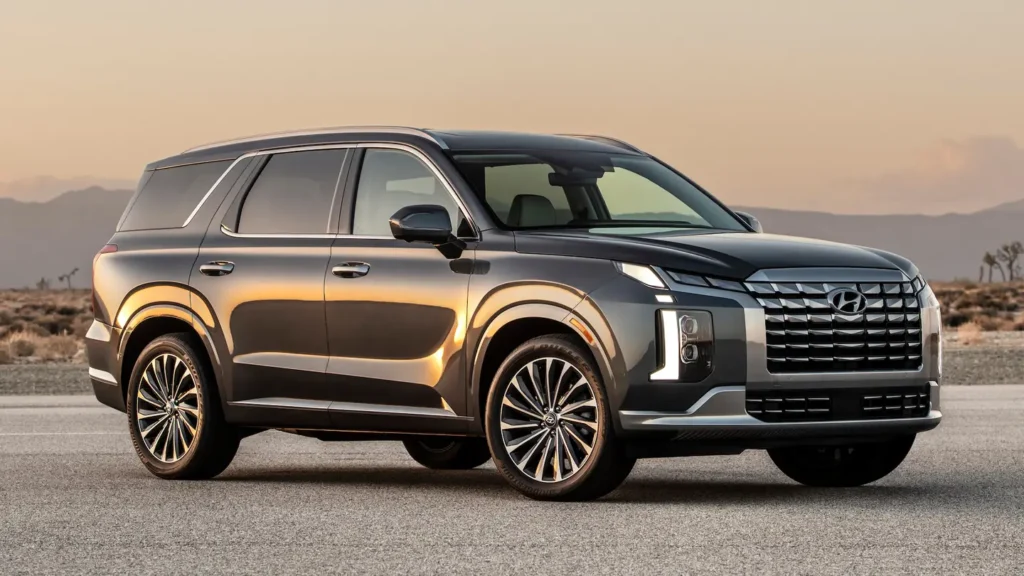
Hyundai redesigned the Palisade from the ground up for 2026, and the changes go well beyond styling. Ten airbags, third-row seatbelt pretensioners, and load limiters now come standard across the lineup.
Starting Price: $38,935 | Engine: 3.5-liter V6, 287 horsepower (turbo hybrid available at 329 combined horsepower) | Seating: 7-8 passengers | Cargo Behind Third Row: 19.1 cubic feet | Towing: 5,000 pounds gas, 4,000 pounds hybrid
The 2026 Palisade earned an IIHS Top Safety Pick award under the agency’s tougher new testing rules, a badge granted only to vehicles built after November 2025. That timing matters, so checking a specific unit’s build date is worth the extra minute.
New Relaxation seating in the first and second rows reclines further than most rivals allow, and the one-touch second-row tilt-and-slide function works even with captain’s chairs installed. The hybrid powertrain joins the lineup for the first time, starting at $43,660.
4. Kia Telluride
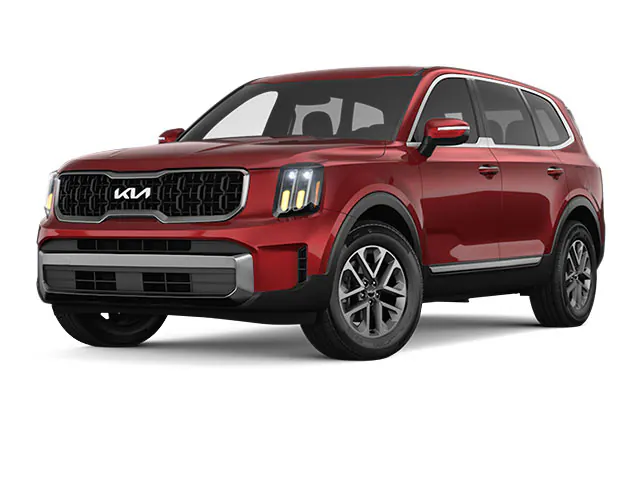
Kia’s largest SUV earned Cars.com’s Best Family Car award in past testing, and the formula behind that win hasn’t changed much for 2026. Space, comfort, and value remain its calling cards.
Starting Price: Around $37,000 | Engine: 3.8-liter V6, 291 horsepower | Seating: 7-8 passengers | Cargo Behind Third Row: Approximately 21 cubic feet | Towing: 5,000 pounds, 5,500 on X-Pro
Second-row lower anchors sit fairly deep within the seat bight, so parents with convertible seats featuring thinner connectors may need extra effort to click them into place. The third row fares better, with one set of lower anchors and two clearly marked top tethers.
Third-row legroom reaches 31.4 inches, among the roomiest in this class. An off-road-ready X-Pro trim rounds out the lineup with 8.4 inches of ground clearance for families splitting time between school runs and trailheads.
5. Toyota Highlander
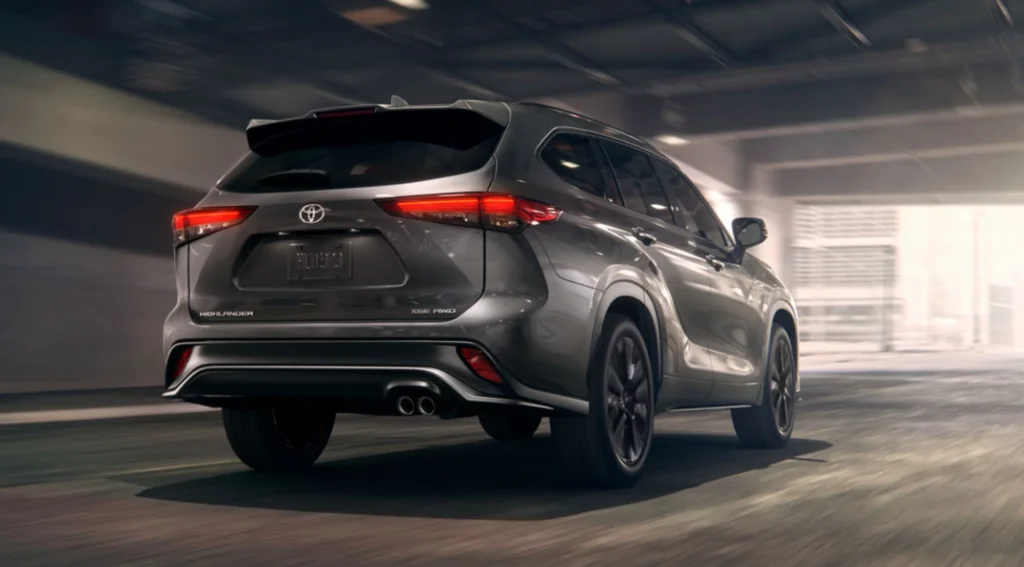
Reliability keeps drawing families back to the Highlander, and 2026 marks the final year before an electric successor arrives. Worth flagging upfront: its third row is the least accommodating car seat space in this lineup.
Starting Price: $46,765 | Engine: 2.4-liter turbocharged four-cylinder, 265 horsepower (hybrid available) | Seating: 7-8 passengers | Cargo Behind Third Row: 16.0 cubic feet | Towing: 5,000 pounds gas, 3,500 pounds hybrid
The second-row bench includes two accessible sets of lower anchors, but trims equipped with captain’s chairs skip lower anchors entirely in that row. Third-row seating fares worse still, with no lower anchors at all and just a single top tether squeezed into the middle position.
None of that erases the Highlander’s real strengths: composed ride quality, strong resale value, and all-wheel drive now standard across the 2026 lineup. Families planning to keep car seats mostly in row two will rarely notice the third-row limitation day to day.
6. Subaru Ascent
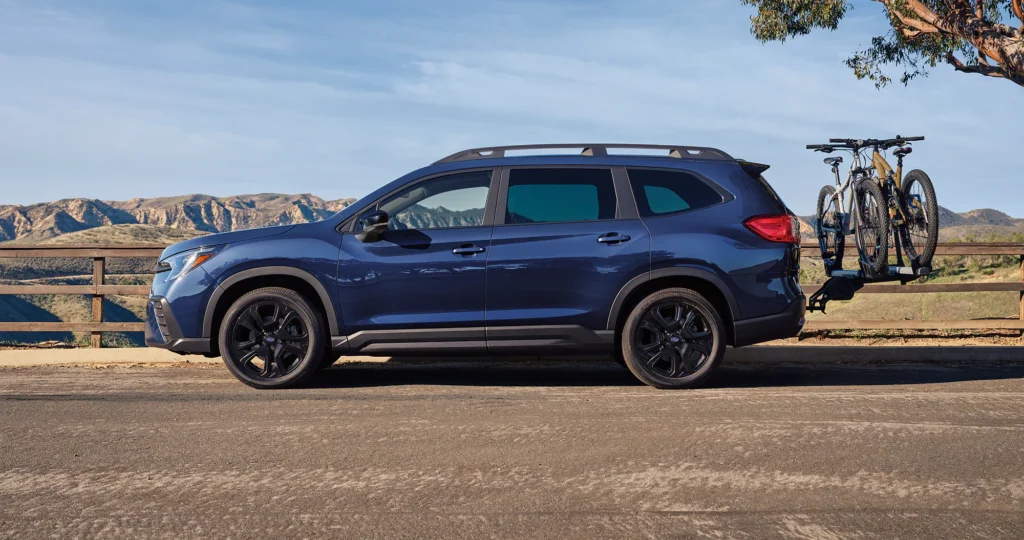
Standard all-wheel drive sets the Ascent apart from most rivals on this list, a genuine advantage for households in snow-heavy regions. Every trim comes equipped with Subaru’s Symmetrical AWD system at no extra cost.
Starting Price: $40,795 | Engine: 2.4-liter turbocharged boxer four-cylinder, 260 horsepower | Seating: 7-8 passengers | Cargo Behind Third Row: Approximately 17.8 cubic feet | Towing: 5,000 pounds
Second-row anchors hide beneath small Velcro flaps in the upholstery, easy to find once a parent knows to look. Those seats also recline slightly, which helps with tighter installations.
Third-row access is where the Ascent asks for patience. Only one set of lower anchors sits on the driver’s side, wedged between two seatbelt buckles. Most families let the second row do the heavy lifting here, saving the way-back for older kids using boosters rather than bulky convertible seats.
7. Honda CR-V
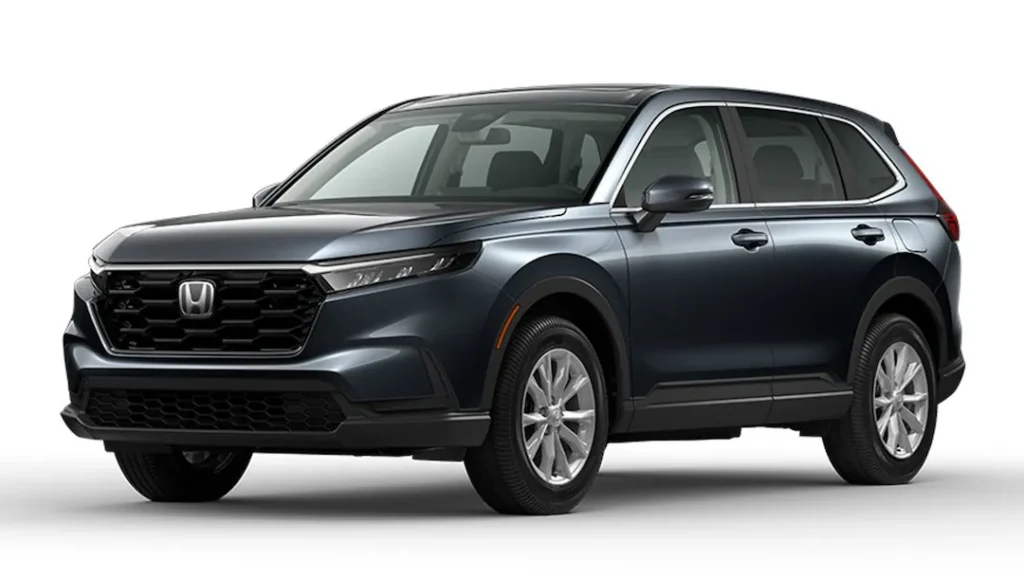
Not every family needs three rows, and the CR-V proves a compact SUV can still handle car seat duty with confidence. Its hybrid variant earned an honorable mention in Cars.com’s 2026 testing.
Starting Price: $32,315 | Engine: 1.5-liter turbocharged four-cylinder, 190 horsepower (hybrid: 2.0-liter, 204 horsepower) | Seating: 5 passengers | Cargo: 39.3 cubic feet behind the rear seat
Rear legroom measures a class-leading 41.0 inches, giving a rear-facing infant seat plenty of clearance without pushing the front passenger uncomfortably forward. Two accessible sets of lower anchors sit in the back row, exposed rather than buried in cushioning.
Fuel economy climbs as high as 40 mpg combined on the front-wheel-drive hybrid, a meaningful saving for parents logging daily preschool and daycare runs. For a smaller household, or a second family vehicle, few compact SUVs balance space and efficiency this well.
Tall drivers usually pay a price for that rear legroom in compact SUVs, sliding their own seat forward until a rear-facing infant carrier barely clears their back. The CR-V manages to avoid much of that trade-off, a detail that only becomes obvious after actually sitting in both rows at once.
8. Kia Sorento
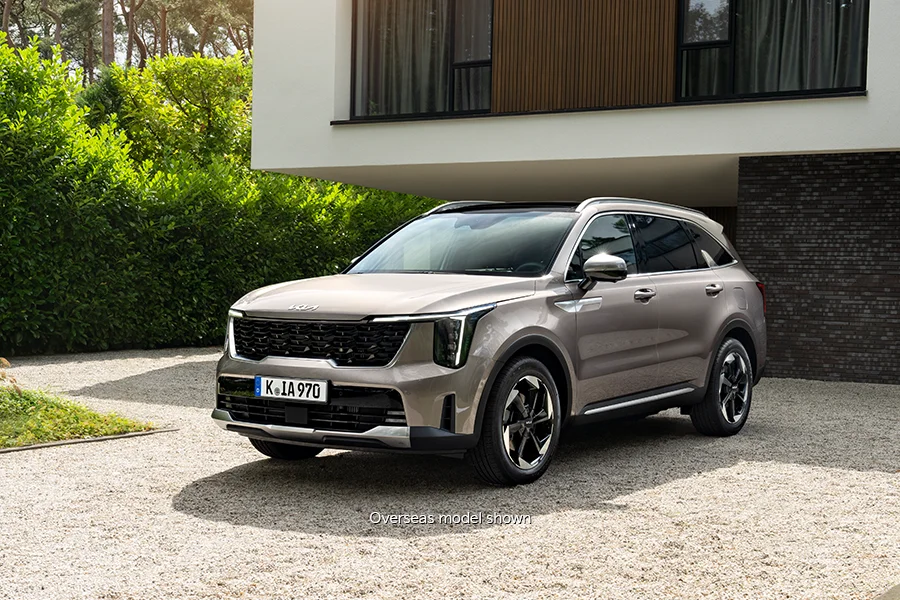
Sized between a compact crossover and a full midsize SUV, the Sorento suits families who need a third row occasionally rather than every single day. It’s noticeably easier to park than most vehicles on this list.
Starting Price: $33,885 | Engine: 2.5-liter four-cylinder, 191 horsepower (turbocharged 281-horsepower option available) | Seating: 6-7 passengers | Cargo: 38.5 to 45 cubic feet with the third row folded
Second-row lower anchors are exposed and simple to connect, with tether anchors just as easy to locate on the seatback. Third-row legroom comes in at 29.6 inches, tighter than the Telluride but still workable for children under ten.
Turbocharged models swap the bench for second-row captain’s chairs, trading one seating position for noticeably easier third-row access. Towing tops out at 4,500 pounds on the off-road-tuned X-Pro trim, unusually strong for a vehicle this size.
Hybrid and plug-in hybrid versions round out the lineup for buyers chasing better fuel economy without stepping up to a larger, thirstier SUV. For a family that mostly needs two rows but wants the occasional third-row option for grandparents or extra carpool duty, the Sorento covers that gap neatly.
9. Chevrolet Suburban
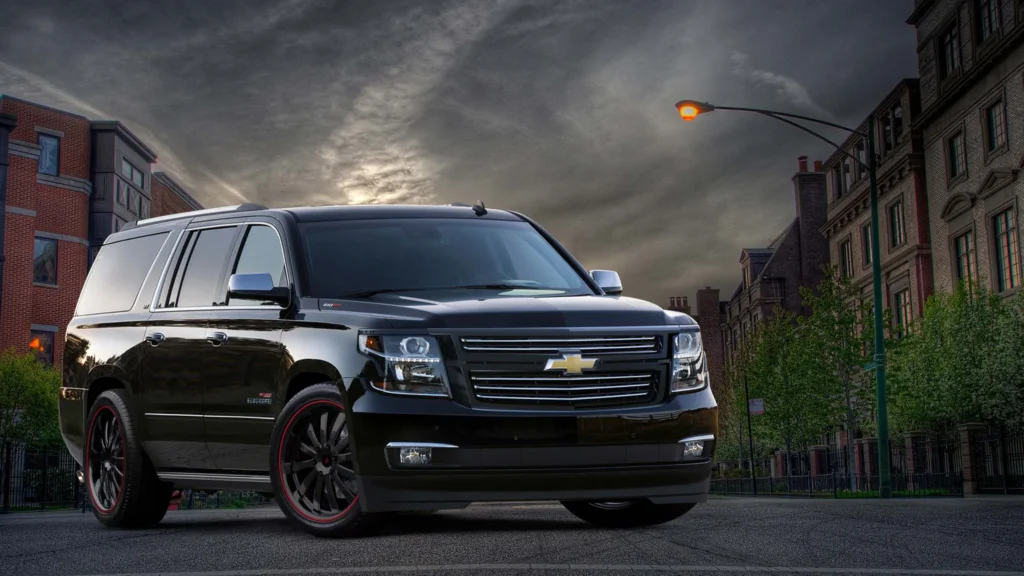
When a family outgrows every SUV on this list, the Suburban is usually next. Its second-row bench holds three complete sets of lower anchors, matching the Pilot as the only other vehicle here with that capability.
Starting Price: $66,495 | Engine: 5.3-liter V8, 355 horsepower (6.2-liter V8 available) | Seating: 7-9 passengers | Cargo Behind Third Row: 41.5 cubic feet | Towing: Up to 8,200 pounds
The third row adds three separate tether anchors, giving households with four or more kids a genuine option for simultaneous car seat installation across two full rows. Cargo space behind that row alone beats what many smaller SUVs offer with every seat folded flat.
Size is the trade-off. At 226.3 inches long, the Suburban demands a bigger garage and extra patience in tight parking structures, though families hauling multiple car seats rarely mind the room once everyone is loaded up.
Price And Specification Comparison At A Glance
Numbers tell part of the story, but seeing every SUV side by side makes the trade-offs easier to weigh. Figures below reflect starting MSRP before destination fees and dealer add-ons.
| SUV | Starting Price | Seating | Cargo (Seats Up) | Max Towing |
| Honda Pilot | $42,195 | 7-8 | 22.4 cu ft | 5,000 lbs |
| Volkswagen Atlas | $40,785 | 6-7 | 20.6 cu ft | 5,000 lbs |
| Hyundai Palisade | $38,935 | 7-8 | 19.1 cu ft | 5,000 lbs |
| Kia Telluride | ~$37,000 | 7-8 | ~21 cu ft | 5,000 lbs |
| Toyota Highlander | $46,765 | 7-8 | 16.0 cu ft | 5,000 lbs |
| Subaru Ascent | $40,795 | 7-8 | ~17.8 cu ft | 5,000 lbs |
| Honda CR-V | $32,315 | 5 | 39.3 cu ft | N/A |
| Kia Sorento | $33,885 | 6-7 | ~38.5 cu ft | 3,500 lbs |
| Chevrolet Suburban | $66,495 | 7-9 | 41.5 cu ft | 8,200 lbs |
Anchor placement doesn’t always track with price, which surprises plenty of shoppers. The table below focuses specifically on LATCH hardware rather than comfort or tech features.
| SUV | Second Row Anchors | Third Row Anchors | Three Across Second Row |
| Honda Pilot | 3 full sets | Tether only | Yes, with bench |
| Volkswagen Atlas | 2 sets, tilt-slide access | 1 set plus tethers | Tight, not ideal |
| Hyundai Palisade | 2 sets | Tethers, pretensioners | No |
| Kia Telluride | 2 sets, deep-set | 1 set, 2 tethers | No |
| Toyota Highlander | 2 sets, bench only | Tether only | No |
| Subaru Ascent | 2 sets, easy access | 1 set, driver side | No |
| Honda CR-V | 2 sets | Two-row layout | Tight, possible |
| Kia Sorento | 2 sets | Varies by trim | No |
| Chevrolet Suburban | 3 full sets | 3 tether anchors | Yes, with bench |
A pattern emerges once every column lines up. Pricing does not reliably predict anchor accessibility, and bench-seat platforms consistently out-perform captain’s-chair layouts for raw car seat capacity, regardless of brand or badge.
Smart Tips For Installing Multiple Car Seats
A little preparation saves a lot of frustration once the SUV is actually parked in the driveway. These habits come straight from certified car seat technicians and years of dealership testing.
Bring the actual car seats along on a test drive. Spec sheets describe anchor counts, but they can’t show whether a specific convertible seat clears a fixed headrest or crowds a middle buckle.
Remember that lower anchors max out at 65 pounds combined, covering the seat’s own weight plus the child. Once a toddler approaches that limit, switching to a seatbelt installation keeps everything properly secured, since seatbelts carry no such cap.
Save the center seat for a booster or a lighter convertible seat rather than a bulky infant carrier. Middle positions often share anchor points with the outboard seats, making a clean three-across install harder than automakers sometimes suggest.
Check top tether anchors even when using a seatbelt install for a forward-facing seat. Skipping the tether is one of the most common installation mistakes, and it meaningfully increases how far a child’s head can travel during a crash.
Reading the owner’s manual before shopping sounds tedious, yet it reveals anchor locations that showroom brochures gloss over. Some third-row tethers hide beneath seatback carpeting, exactly where a rushed parent won’t think to look.
A free inspection from a certified passenger safety technician catches mistakes that even careful parents miss. Local fire stations and children’s hospitals frequently host these checks at no cost.
Frequently Asked Questions
Which SUV fits three car seats across most comfortably?
The Honda Pilot and Chevrolet Suburban lead this category since both offer three complete sets of lower anchors on their second-row bench. Seat width matters just as much as anchor count, and both vehicles measure wide enough to avoid crowding three seats into one row.
Is a bench seat or captain’s chairs better for car seats?
A bench seat generally wins for raw capacity because it preserves a usable middle position with anchor access. Captain’s chairs trade that position for an easier walk-through to the third row, which suits families with only one or two car seats.
What is the LATCH weight limit parents should know about?
Lower anchors are rated for 65 pounds combined, covering both the car seat’s weight and the child inside it. Once a growing toddler pushes close to that number, a seatbelt installation becomes the safer, code-compliant option since it carries no such limit.
Do all three-row SUVs include lower LATCH anchors in the third row?
No, and this catches many shoppers off guard. The Toyota Highlander and Subaru Ascent both skip full lower-anchor coverage in row three, relying mainly on top tethers and seatbelt installation for that position.
Does a higher price guarantee an easier car seat installation?
Not necessarily. The Kia Sorento and Honda CR-V, both priced well below the segment average, scored competitively for anchor accessibility against SUVs costing tens of thousands more. Engineering choices around anchor placement matter more than trim level or luxury badge.
How much should a family budget for a car seat friendly SUV?
Pricing spans a wide range across this list. Compact options like the CR-V and Sorento open in the low $32,000s, three-row favorites such as the Palisade and Pilot start in the high $30,000s to low $40,000s, and a full-size Suburban begins closer to $66,000.