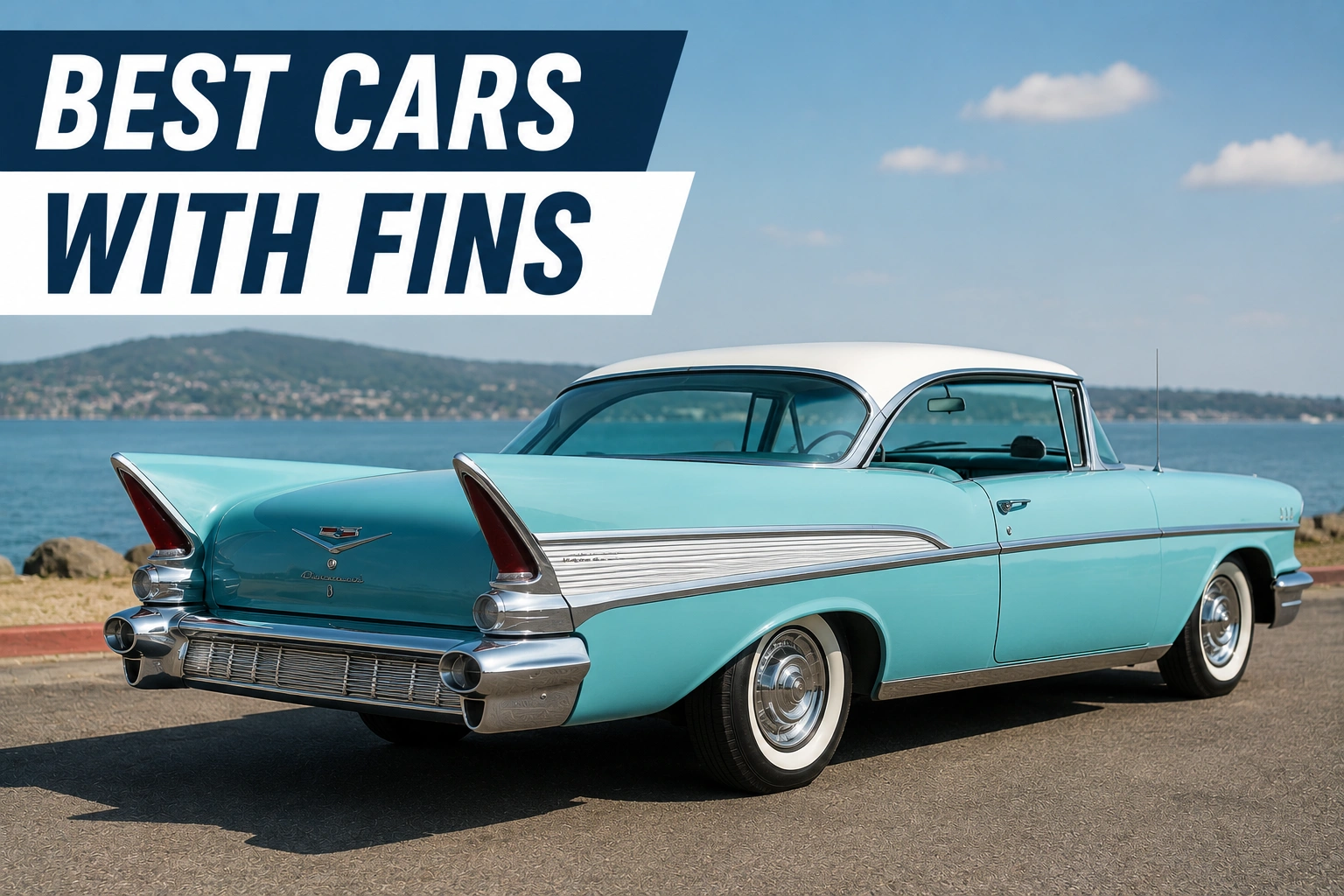
Detroit spent the 1950s obsessed with flight. Jet fighters roared across newsreels, Sputnik crossed the night sky, and car designers translated that fascination into steel, chrome, and rear ends shaped like rockets ready for launch.
Tailfins turned ordinary sedans into rolling sculpture. For roughly a decade, the taller the fin, the louder the statement a car made about its owner.
Some of these machines chased NASCAR speed records. Others chased Hollywood fame, or simply outsold everything else on dealer lots that year. A few came from companies that no longer exist, built by engineers who bet everything on one bold idea paying off.
General Motors and Chrysler turned fin height into an arms race that collapsed almost overnight once the 1960s began.
Eight of these finned originals still shape how people picture postwar American design. Their original prices, engines, and the stories stamped into their sheet metal explain exactly why collectors still chase them decades later.
Why Tailfins Ruled American Roads
The story starts in 1948, when General Motors design chief Harley Earl sent his stylists to see a Lockheed P-38 Lightning fighter plane up close. Stylist Frank Hershey never forgot the aircraft’s twin tail rudders.
That memory became a pair of modest fender fins on the new Cadillac Series 62. Nobody predicted what came next.
Rival brands noticed how much attention Cadillac earned from something so small. Within a few years, fins crept onto Chevrolets, Fords, Plymouths, and nearly every full-size American car on sale.
Chrysler pushed back hard. Designer Virgil Exner unveiled his “Forward Look” lineup for 1957, with fins so low and sharp that General Motors reportedly reworked its own styling plans in response.
That rivalry between Earl and Exner became the real engine behind the whole trend. Each new model year had to out-fin the last one, or risk looking outdated on the showroom floor.
Cadillac answered in 1959 with fins reaching 42 inches off the ground, capped with twin bullet taillights. Nothing built before or since has matched that height on a production car.
Then, almost as quickly as it began, the fashion ended. Buyers grew tired of chrome excess, safety advocates pointed to sharp edges as genuine hazards, and even presidential candidate John F. Kennedy mocked flashy “gimmicks” during his 1960 campaign.
By 1962, most American cars had shed their fins entirely, replaced by cleaner, squared-off lines. The era lasted barely fifteen years, yet it produced some of the most recognizable automobiles ever built.
Eight Classic Cars With Fins Worth Knowing
Every car on this list wore its fins differently. Some kept things restrained. Others turned the rear fender into a full aeronautical statement.
Pricing, output, and rarity varied wildly between brands, even within the same model year. A Cadillac and a Studebaker built months apart shared almost nothing except that design language.
The table below offers a quick snapshot before the full story behind each one.
| Model | Year | Original Price | Engine | Horsepower |
| Cadillac Series 62 | 1948 | $2,910–$3,440 | 346 cu in V8 | 150 hp |
| Chevrolet Bel Air | 1957 | ~$2,200–$2,600 | 283 cu in V8 | 185–283 hp |
| Chrysler 300C | 1957 | $4,924 | 392 cu in Hemi V8 | 375 hp |
| Plymouth Fury | 1958 | $3,032 | 318–350 cu in V8 | 290–305 hp |
| Ford Fairlane 500 Skyliner | 1957 | $2,942 | 292–312 cu in V8 | up to 270 hp |
| Lincoln Continental Mark III | 1958 | ~$6,000+ | 430 cu in V8 | 375–400 hp |
| Cadillac Eldorado Biarritz | 1959 | $7,401 | 390 cu in V8 | 345 hp |
| Studebaker Golden Hawk | 1957 | $3,180 | 289 cu in supercharged V8 | 275 hp |
1. 1948 Cadillac Series 62: Where Tailfins Began
Every fin on every car in this list traces back to this one. Cadillac’s Series 62 wore the first factory tailfins ever sold to the public, and the shape stuck around for three more decades.
The fins themselves were tiny by later standards, barely rising above the taillight housing. Designer Frank Hershey borrowed the shape directly from the Lockheed P-38 Lightning.
Under the hood sat a 346-cubic-inch L-head V8 producing 150 horsepower, paired with an optional Hydra-Matic automatic transmission. Top speed landed close to 90 miles per hour.
Original prices ranged from about $2,910 for a base sedan to around $3,440 for the convertible coupe, putting the Series 62 firmly in luxury territory.
Well-kept examples today sell anywhere from $30,000 to more than $100,000, depending on body style and originality. Convertibles command the steepest premiums.
2. 1957 Chevrolet Bel Air: The People’s Icon
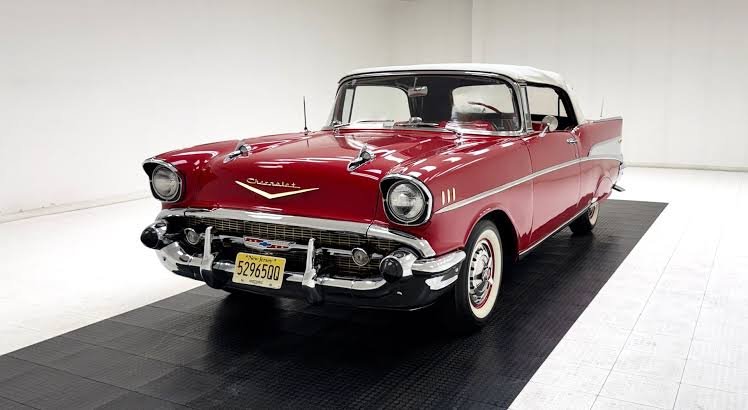
Chevrolet built the Bel Air for everyday buyers, not showroom royalty, yet it became one of the most recognized American cars ever made. Three trim levels shared the same body: the basic One-Fifty, the mid-range Two-Ten, and the top Bel Air.
Gold anodized trim, a wraparound windshield, and modest rear fins set the Bel Air apart from its cheaper siblings.
Engine choices ranged from a 235-cubic-inch inline six up through a fuel-injected 283-cubic-inch V8. That top engine made 283 horsepower, a rare case of an engine matching its own displacement number.
On the track, the 283 helped the 1957 Chevrolet win 49 NASCAR Grand National races, still the most of any single car in the sport’s history.
Base prices started around $2,200 for a sedan and climbed toward $2,600 for the convertible. Restored Bel Airs now trade from $30,000 for a clean driver to well beyond that for a documented fuel-injected car.
3. 1957 Chrysler 300C: America’s Fastest Letter Car
Chrysler built the 300C to embarrass everyone else on the road, and for one model year, it mostly succeeded. Advertising called it America’s most powerful car, and the claim held up.
Designer Virgil Exner shaped the body with low, crisp fins and a massive eggcrate grille borrowed from Chrysler’s Forward Look family.
Power came from a 392-cubic-inch Hemi V8 rated at 375 horsepower, with dual four-barrel carburetors and a three-speed TorqueFlite automatic. A rare 390-horsepower version existed too, built for only 18 buyers.
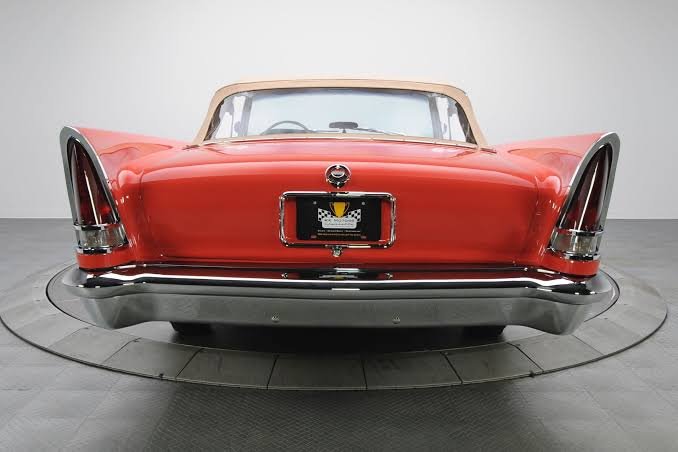
The 300C reached somewhere between 130 and 150 miles per hour depending on gearing, and set a Flying Mile record at Daytona Beach. Chrysler sold just 2,402 examples across hardtop and convertible body styles.
Original pricing started at $4,924, a genuine fortune in 1957. Surviving examples now regularly clear six figures at auction, with the rarest convertibles pushing toward $200,000.
4. 1958 Plymouth Fury: The Real Story Behind Christine
Long before Stephen King gave it a personality of its own, the Plymouth Fury was already Plymouth’s halo car. Only one color combination existed: sandstone white body panels with gold anodized trim.
King borrowed the 1958 Fury for his novel Christine, and the 1983 film adaptation introduced the model to an audience who never saw one on a real showroom floor.
Standard power came from a 318-cubic-inch V8 rated at 290 horsepower. Buyers chasing more performance could order the 350-cubic-inch Golden Commando, good for 305 horsepower and a 0-60 run of about 7.7 seconds.
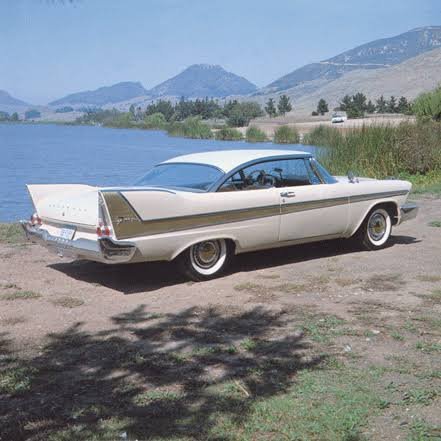
Every 1958 Fury came exclusively with Chrysler’s three-speed TorqueFlite automatic, since manual transmissions had already left the lineup.
Plymouth built only 5,300 Golden Commando versions that year. Original pricing started at $3,032, making the Fury the priciest Plymouth sold in 1958. Clean survivors now fetch anywhere from $60,000 to upwards of $120,000.
5. 1957 Ford Fairlane 500 Skyliner: A Roof That Vanishes
Ford solved a problem nobody had really asked it to solve: how to build a hardtop that folds completely into the trunk. The Skyliner remains the first mass-produced retractable hardtop convertible ever sold.
Engineers originally designed the mechanism for the ultra-expensive Lincoln Continental Mark II, then moved the idea downmarket once that project’s price tag spiraled out of control.
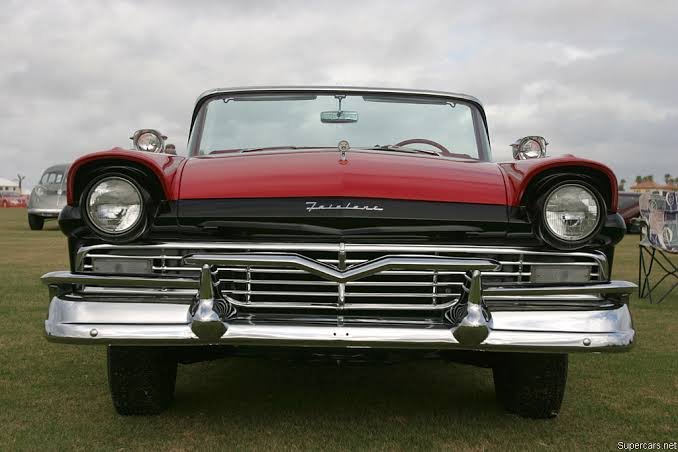
Raising or lowering the roof required close to 600 feet of wiring, along with a network of relays, motors, and limit switches working in sequence. Owners simply pressed a button and watched the show.
Standard power came from a 292-cubic-inch V8. Buyers could step up to a 312-cubic-inch “Thunderbird Special,” rated at 245 horsepower, or a rare dual four-barrel version making 270.
Ford priced the Skyliner at $2,942, worth about $26,600 in 2022 dollars, and sold nearly 21,000 in its debut year. Well-sorted examples today typically bring $50,000 to $80,000.
6. 1958 Lincoln Continental Mark III: Size Beyond Reason
Lincoln built the Continental Mark III to be bigger than anything Ford Motor Company had ever produced, and it succeeded by a wide margin. At 229 inches long on a 131-inch wheelbase, it remains the largest unibody car built in America.
A distinctive slanted rear “breezeway” window could retract even with the top up, pulling fresh air through the cabin without opening a door.
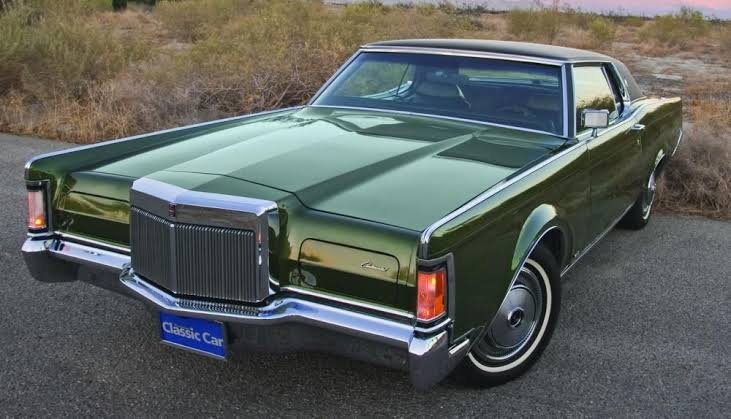
Power came from a 430-cubic-inch V8 rated at 375 horsepower, with a rare factory tri-carburetor option pushing output to 400. A three-speed Turbo-Drive automatic was the only transmission offered.
Diagonally placed quad headlights and fins sitting atop the rear fenders, smaller than Cadillac’s but unmistakable, rounded out one of the decade’s most distinctive silhouettes.
Base sedan pricing started around $6,000, extraordinary money for 1958. Only 3,048 convertibles were built, and survivors now command $50,000 to more than $90,000 depending on condition.
7. 1959 Cadillac Eldorado: Fins That Touched The Sky
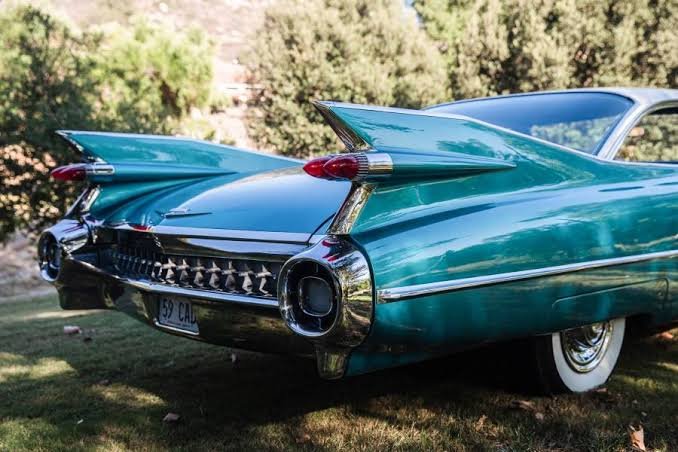
No car on this list wears its fins louder than the 1959 Eldorado Biarritz. Measured from pavement to peak, those fins stood 42 inches tall, still the record for any production automobile.
Designer Chuck Jordan shaped this response to Chrysler’s low-slung 1957 lineup, and Cadillac clearly aimed to reclaim the fin crown it had invented back in 1948.
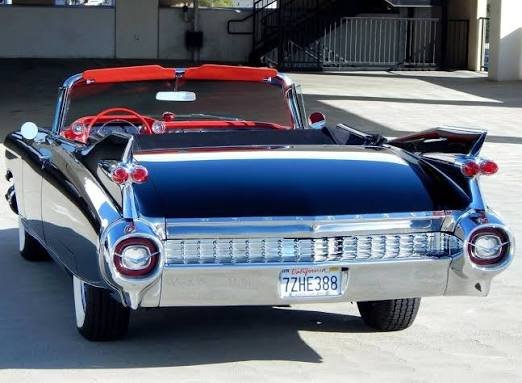
Twin bullet taillights capped each fin, while a jeweled grille pattern and acres of chrome finished off the rest of the body.
Power came from a 390-cubic-inch V8 fitted with three two-barrel carburetors, producing 345 horsepower and 435 pound-feet of torque through a four-speed Hydra-Matic automatic.
Cadillac built only 1,320 Biarritz convertibles for 1959, each priced at $7,401 when new. Values today range from $80,000 for driver-quality cars to well past $200,000 for concours-level restorations.
8. 1957 Studebaker Golden Hawk: The Underdog With A Supercharger
Studebaker never had General Motors money, yet the Golden Hawk still out-accelerated nearly everything else built in America that year. Independent automakers rarely got to make that claim.
The body traced back to Raymond Loewy’s 1953 Starliner coupe, reshaped with a raised hood and an F-86 Sabre-inspired grille. Steel fins replaced the previous year’s bolt-on fiberglass pieces.
A McCulloch supercharger bolted onto Studebaker’s own 289-cubic-inch V8, squeezing 275 horsepower from a smaller engine than most full-size rivals used.
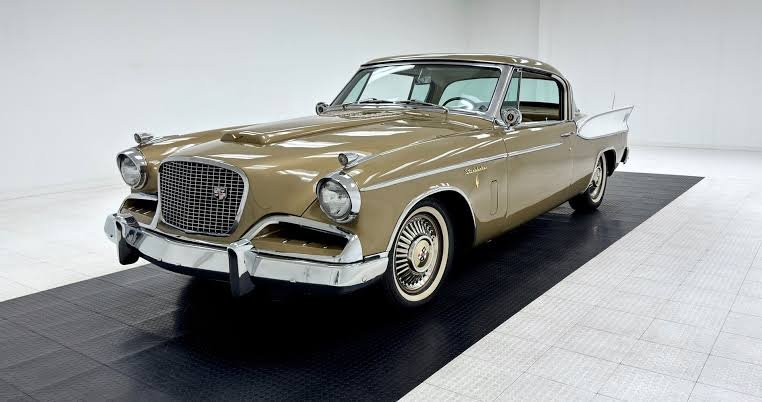
That combination reportedly made the Golden Hawk the fastest American production car of 1957, an impressive feat for a company fighting to survive against much larger competitors.
Studebaker sold just 4,356 examples, priced from around $3,180. Survivors remain relatively approachable today, often trading between $30,000 and $60,000, though exceptional cars reach higher.
What To Know Before Buying A Finned Classic
Owning one of these cars means joining a hobby built on patience. Parts, documentation, and honest sellers matter more than horsepower figures ever will.
Every model here rewards research before money changes hands. A few habits separate a smart purchase from an expensive lesson.
Where These Cars Hide Today
Specialty auction houses like Barrett-Jackson, Mecum, and RM Sotheby’s handle the bulk of high-value sales, especially for Cadillac, Chrysler, and Lincoln models with documented history.
Chevrolet and Ford models turn up far more often through car clubs, regional shows, and dedicated marque dealers, since parts networks for both brands remain the strongest in the hobby.
Studebaker and other independent-brand cars require more digging. Owners clubs, like the Studebaker Drivers Club, often know about unlisted cars long before they reach a public sale.
Hagerty’s valuation tool offers a useful starting point for pricing research, tracking recent sale data across condition grades. Treat any single listing price as a starting point for negotiation, not a fixed number.
What Really Drives Their Prices
Originality outweighs almost everything else in this market. A car with its factory engine, correct trim, and matching numbers routinely sells for double what a modified equivalent brings.
Rust tells the real story on any of these cars. Unibody models like the Lincoln Continental Mark III demand especially close inspection, since structural repairs cost far more than fixing a body-on-frame car.
Rarity matters too, but only alongside desirability. A Studebaker Golden Hawk is scarcer than a Chevrolet Bel Air, yet the Bel Air often commands stronger money simply because more buyers want one.
Documentation, from original window stickers to build sheets, adds real value. Sellers who can prove a car’s history typically justify asking prices well above similar, undocumented examples.
Common Questions About Classic Cars With Fins
What Years Had The Biggest Tailfins On Cars?
Fins grew steadily from 1948 through the late 1950s, reaching their tallest and most dramatic form on the 1959 Cadillac Eldorado. Most of the era’s flashiest designs appeared between 1957 and 1960, right before the trend collapsed.
Why Did Automakers Stop Putting Fins On Cars?
Buyer tastes shifted toward cleaner, simpler lines by the early 1960s. Rising safety concerns over sharp body edges, combined with public criticism of chrome excess, pushed designers away from the look within a few model years.
Which Production Car Had The Tallest Fins Ever Built?
The 1959 Cadillac Eldorado Biarritz holds that record, with fins reaching 42 inches above the pavement. No manufacturer has come close to matching that height on a mass-produced car since.
Are Classic Cars With Fins A Good Investment Today?
Values vary widely by model, rarity, and condition, so outcomes depend heavily on which car and example someone chooses. Documented, original cars from desirable years have historically held value better than modified or incomplete examples, though collector markets can shift over time.
How Much Does A Restored Finned Classic Typically Cost?
Pricing spans an enormous range, from around $30,000 for a solid Studebaker or Chevrolet up to $200,000 or more for a documented Cadillac Eldorado Biarritz. Condition, originality, and engine options move that number more than almost anything else.
Can Parts Still Be Found For These Older Cars?
Chevrolet and Ford models benefit from strong reproduction parts networks built over decades of demand. Cadillac, Chrysler, and Lincoln parts remain available but pricier, while Studebaker owners often rely on dedicated club networks and used parts specialists.
Chevrolet and Ford models benefit from strong reproduction parts networks built over decades of demand. Cadillac, Chrysler, and Lincoln parts remain available but pricier, while Studebaker owners often rely on dedicated club networks and used parts specialists.
Fins lasted barely fifteen years on American roads, yet nothing else in automotive design has proven quite as instantly recognizable since. These eight cars explain why that brief, chrome-heavy chapter still pulls collectors toward auction floors and garage restorations every year.