
The V8 engine is one of the most iconic powerplants in automotive history. Eight cylinders firing in sequence, two rows of four, producing a sound and a surge of torque that no turbocharged four-cylinder has yet fully replicated.
For decades it was the standard choice for American muscle cars, full-size sedans, luxury flagships, and work trucks. Then fuel economy regulations tightened, engine downsizing became the industry default, and the V8 began its slow retreat from new car showrooms.
By 2026, the number of new vehicles offering a V8 has shrunk dramatically. The Ford Mustang GT starts at $46,560. The Dodge Durango R/T opens above $60,000. Even the most basic V8 option in the new car market is expensive.
But the used market tells a completely different story. Thanks to depreciation — one of the most reliable forces in the automotive world — V8-powered cars from a decade ago have fallen to price points that would have seemed implausible when they were new.
A Dodge Charger R/T that rolled off the lot at $35,000 in 2010 is now a private-party transaction in the $4,000 to $7,500 range.
A Ford Mustang GT from the same era with its 4.6-liter V8 can be found in the $5,000 to $9,000 range depending on condition and mileage. The V8 has not gone away — it has just moved to where the real bargain hunters shop.
This guide covers the best V8 cars available in the 2026 used market at or below the budget ceiling, with verified pricing from Kelley Blue Book and CarFax, honest assessments of what each car delivers, and clear guidance on what to watch out for before handing over the cash.
Note
Pricing and private party values referenced throughout this guide are sourced from Kelley Blue Book, CarFax, CarBuzz, HotCars, and TopSpeed. Used car market figures reflect 2026 national averages and are based on vehicles in Good condition.
Mileage, location, and overall condition can significantly affect final pricing — always verify current values on KBB.com or CarFax before making any purchase decision.
What The 2026 Used V8 Market Actually Looks Like
The used V8 landscape in 2026 is shaped by two forces pulling in opposite directions. On one side, depreciation continues to push older V8 vehicles to lower price points. On the other side, appreciation has already hit the most desirable muscle cars.
A 2015 Dodge Challenger R/T now hovers in the low-to-mid $30,000 range. A 2015 Ford Mustang GT sits closer to $36,000. These are no longer the bargains they once were, and anyone shopping at the budget end needs to go back further in the model year calendar to find genuine value.
The sweet spot for V8 vehicles in the price bracket targeted by this guide is roughly the 2005 to 2013 model year range. Cars from this window have depreciated past the point where condition-conscious enthusiasts typically shop, making them accessible to buyers with tighter budgets.
They are old enough that basic maintenance knowledge and a functional parts market keep the cost of ownership reasonable. And they still carry the same V8 engines — the Hemi, the 5.0 Coyote, Ford’s 4.6-liter modular, the Northstar — that made them compelling when they were new.
The other important reality of this market in 2026 is condition variance. At these price points, condition is everything. Two identical 2009 Dodge Charger R/T sedans with similar mileage can differ by $2,000 to $3,000 based on maintenance history, rust exposure, tire condition, and interior wear.
A pre-purchase inspection from an independent mechanic — typically $100 to $150 — is not optional when buying a V8 car in this price range. It is the most cost-effective money spent in the entire transaction.
How To Think About Mileage And Value At This Budget
The instinct to avoid high-mileage vehicles is understandable, but at this price point, mileage must be weighed against maintenance history and overall condition rather than treated as the primary filter.
A 2008 Ford Mustang GT with 130,000 miles that has documented oil changes every 5,000 miles, a recent timing chain service, and no rust is a better buy than the same car with 80,000 miles and a mystery maintenance history.
The 4.6-liter V8 in that Mustang was used in Ford vehicles from police interceptors to full-size vans precisely because it is a durable, proven unit — one that regularly reaches 200,000 miles with proper care.
The same principle applies to the Dodge Hemi. The 5.7-liter Hemi found in the Charger R/T and 300C is a robust, well-understood engine with a large parts market and a community of owners who have mapped its common failure points clearly.
High mileage on a well-maintained Hemi is not a red flag — it is a testament to what the engine was designed to do.
What mileage should tell the buyer is how much of the consumable component life remains. High mileage means tires, brakes, shocks, belts, and hoses are more likely to need attention soon. Factoring those costs into the purchase negotiation — or simply planning for them after purchase — gives a more accurate picture of the total cost of getting the car into reliable daily condition.
The Best V8 Cars Available For The Budget In 2026
1. Dodge Charger R/T (2006–2013)
- Used Price; $3,000–$7,800
The good news about Charger R/Ts is that they are dirt cheap, with high-mileage models starting at just $3,000, making it one of the cheapest V8 muscle cars you can buy on the used car market.
The Charger R/T is the most obvious starting point in any V8 budget search, and for good reason. The 2010 iteration features a 5.7-liter V8 that generates 368 horsepower and 395 lb-ft of torque. That is a serious amount of torque in a car that now costs less than many people’s monthly rent payment.
Used 2010 Dodge Charger prices currently range from $2,925 for the base Sedan to $8,925 for the SRT8 Sedan when purchasing from a dealership, with private party values ranging from about $2,475 to $7,850 depending on vehicle style.
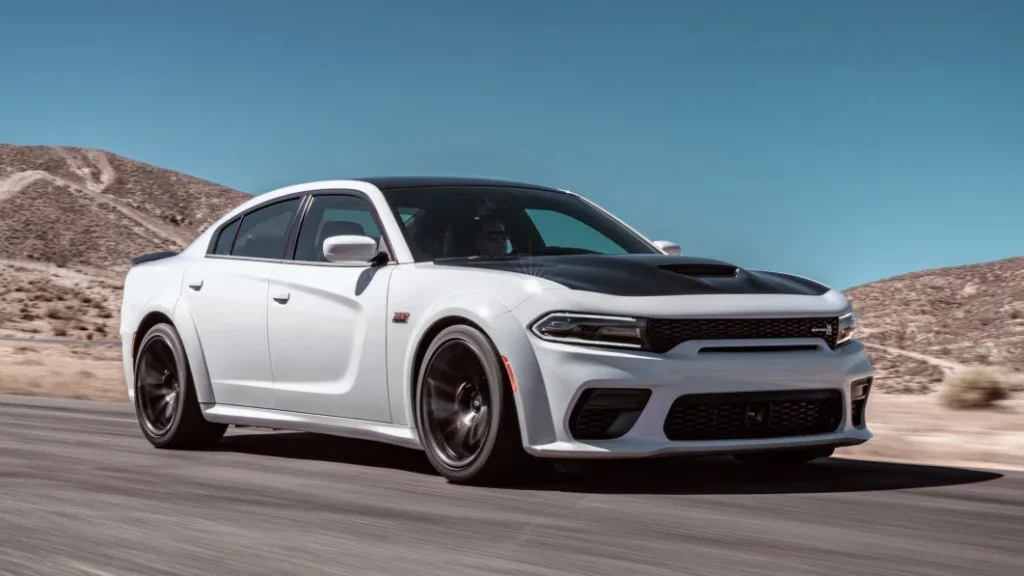
For a buyer targeting the R/T trim with the 5.7-liter Hemi specifically, the realistic private-party sweet spot in the 2026 market is $4,500 to $7,500 for a 2010–2012 example in serviceable condition with 100,000 to 150,000 miles.
The Charger R/T rides on the same LX platform that underpins the Chrysler 300, and it shares the Hemi engine, the five-speed automatic transmission, and much of the suspension geometry with that car.
The platform has Mercedes-Benz DNA from the Daimler-Chrysler era, which gives it a more composed highway ride than pure American muscle car geometry would suggest.
The rear seat is genuinely usable — one of the few V8 muscle vehicles in this price range that can carry four adults without significant discomfort. The trunk is large. Bluetooth and UConnect infotainment appeared in later model years (2011 and on) making those versions more livable day-to-day.
Known issues to check before buying: the 5.7-liter Hemi can develop a MDS (Multi-Displacement System) lifter tick, particularly if oil changes were irregular. A cold start tick that clears within thirty seconds is common and usually benign; one that persists at operating temperature warrants further investigation.
The front lower control arm bushings wear with age and show up as clunks over bumps. The power window regulators on earlier cars are a common and inexpensive repair. A thorough test drive covering low-speed parking lot maneuvers, highway speed, and hard braking will surface most of the mechanical issues present.
2. Ford Mustang GT (2005–2010) $5,000–$9,500
- Used price: $5,000–$9,500
For as little as $5,000, you can find a V8 GT model in decent shape. The 4.6-liter Windsor V8 found in the SN95 and S197 is one of Ford’s most reliable engines, being used in everything from the Crown Victoria to Econoline Vans, so if this V8 does go wrong, parts are cheap and plentiful, and labor is pretty easy and inexpensive due to the simplicity of the engine itself.
The 2008 Ford Mustang GT private party values range from about $5,775 to $17,850 depending on vehicle style and condition, with trade-in values from $2,025 to $14,050. For a realistic, serviceable example with moderate mileage, private party pricing for 2007–2010 Mustang GTs in the 2026 market falls between $5,500 and $9,000 — well within budget range for buyers who know what they are looking at.
The S197-generation Mustang GT (2005–2009) carries the 4.6-liter three-valve V8 producing 300 horsepower. The 2010–2014 cars got a revised version of the same basic architecture with slightly more output.
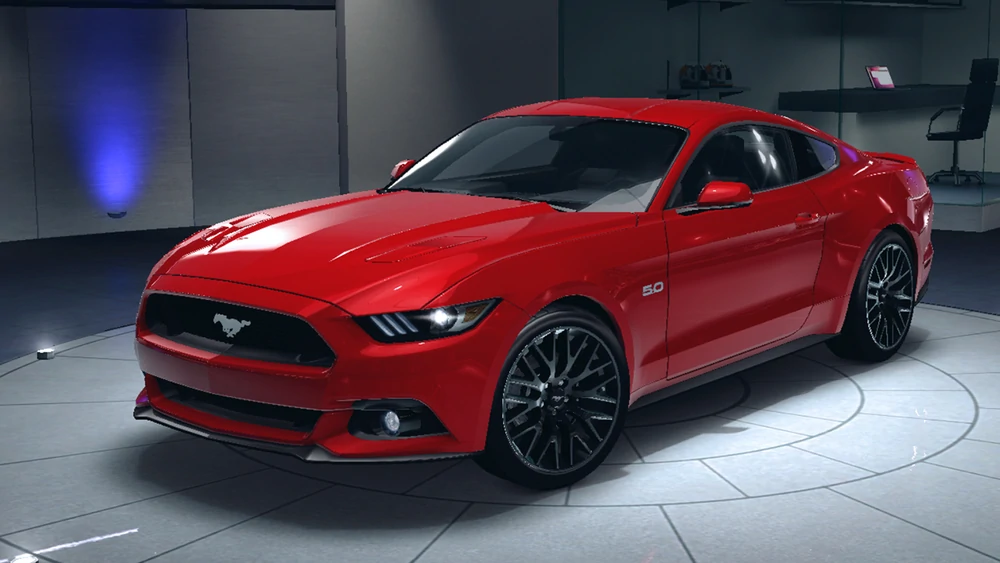
These are not the most powerful Mustangs ever built, but they are among the most reliable. The 4.6-liter modular V8 has logged over half a million miles in fleet vehicles, and the parts ecosystem is enormous — independent shops are comfortable with this engine, and virtually no component is difficult to source.
The Mustang’s live rear axle setup from this generation gives it predictable behavior and simple maintenance compared to independent rear suspension designs, and the solid front suspension is likewise straightforward to inspect and repair.
What the Mustang gives up relative to the Charger is practicality. The rear seat is genuinely tight, and the trunk, while usable for a couple of bags, is not the Charger’s cavernous space.
What it gains is character, sound, and that specific combination of steering feel and chassis feedback that has kept the Mustang on every enthusiast’s shortlist for sixty years. For a buyer who prioritizes what the car feels like rather than how much it can carry, the Mustang is the stronger choice in this price range.
3. Chrysler 300C (2005–2012)
- Used price: $3,500–$8,000
The 2012 Chrysler 300C is one of the cheapest V8 cars available for a very affordable price, and it gives you lots of power to make it fun on any road.
If you’re looking for a large RWD sedan to drive and enjoy, this Hemi-powered Chrysler could be the car that gives you the qualities you want at an affordable price.
The 300C deserves a special mention in this guide because it delivers something no other V8 vehicle in this price range can match: genuine luxury appointments at a bargain price.
The 300C trim level comes with heated leather seats, a premium Infinity or Harman Kardon audio system depending on the year, a large trunk, wood-grain interior trim, and a cabin that was considered genuinely upscale when these cars were new. All of that is now available for $4,000 to $7,500 in private party transactions for 2008–2011 examples in reasonable condition.
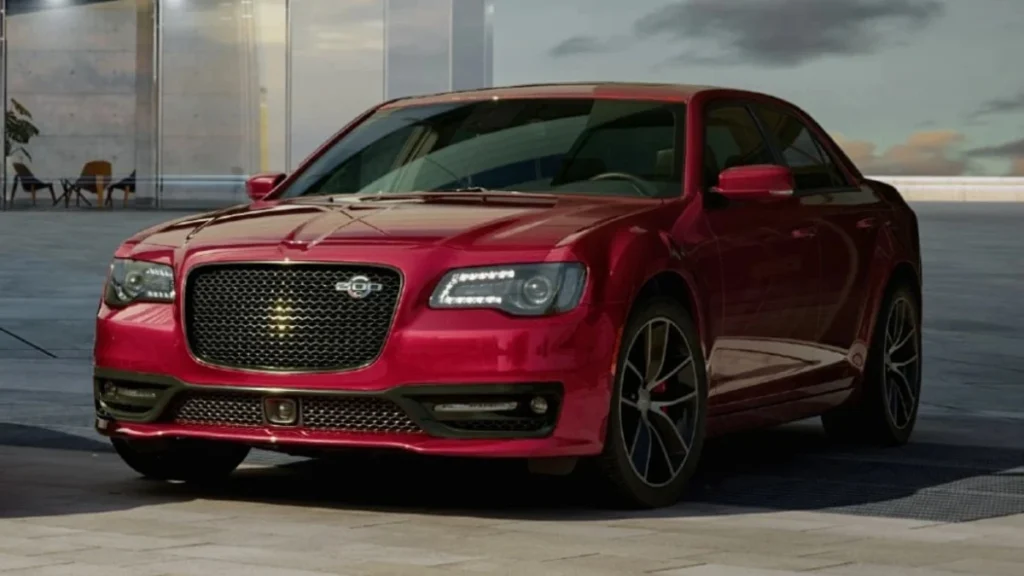
The powertrain is identical to the Charger R/T — the 5.7-liter Hemi V8 producing 340 to 363 horsepower depending on the model year, paired with a five-speed automatic. The platform is the same LX architecture. The 300C sits lower and rides slightly more softly than the Charger, tuned for composed comfort rather than the Charger’s marginally sportier character.
It is rear-wheel drive as standard — all-wheel drive was available on some trims and years, which adds all-weather confidence worth seeking out if it matters for the buyer’s location.
The 300C is the most overlooked vehicle in the affordable V8 segment precisely because it does not carry the muscle car branding of the Charger or Mustang.
That lack of flash has kept prices reasonable even as the Charger has started to develop a modest collector following.
For a buyer who wants V8 power in a sophisticated, comfortable package and has no attachment to the performance styling of the Mustang or Charger, the 300C is the most civilized choice on this list.
4. Ford Crown Victoria / Police Interceptor (2003–2011)
- Used price $2,500–$7,000
The Ford Crown Victoria is the most durability-tested V8 car available at this price point, and it is not particularly close. The Lincoln Town Car is about as cheap a V8 as you can find. What was once a $50,000 executive sedan is now available for less than a tenth of the price.
The same platform — the Panther body-on-frame architecture — underpins both the Town Car and the Crown Victoria, and the 4.6-liter V8 in each is the same fundamental engine.
The Crown Victoria, particularly the Police Interceptor model, was engineered to run 24 hours a day in high-stress conditions.
Fleet maintenance was rigorous. Many examples changed engine oil every 3,000 miles for their entire service lives, and the 4.6-liter engines in these cars routinely reach 300,000 miles without major internal work.
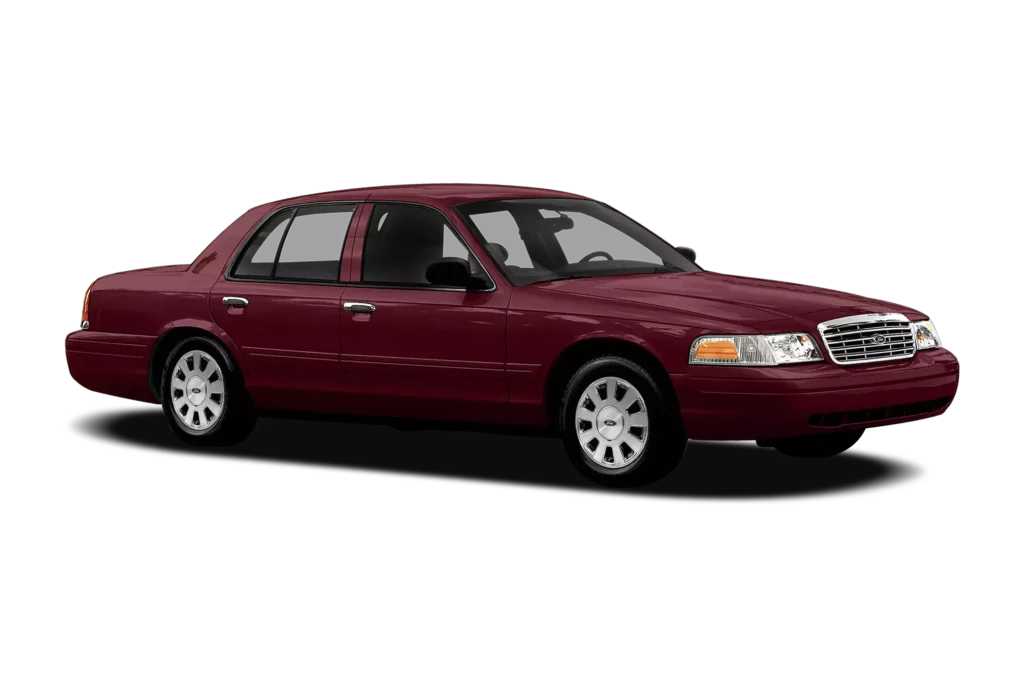
Retired police vehicles that have since passed through auction, reconditioning, and the retail used market are often mechanically excellent despite high mileage — because they were maintained on strict schedules that civilian-owned vehicles rarely match.
The trade-offs are real. The interior is dated and austere by any modern standard. Road noise intrudes at highway speed.
The body-on-frame platform means these are larger, heavier cars that handle with the deliberate mass of a traditional American sedan rather than the relative agility of the Charger or Mustang.
But for a buyer who values mechanical simplicity, long-term durability, a massive parts market, and the security of a proven platform, the Crown Victoria is the most defensible choice in this entire guide.
5. Hyundai Genesis 4.6 V8 (2010–2012)
- Used price: $5,500–$9,500
In the early days of the Hyundai Genesis, it didn’t have a V8 engine, but by 2012, it became one of the best V8 cars. Today, you can find it for under budget and enjoy the impressive power and performance built into this substantial sedan. The horsepower output of this Hyundai is more than the output of the original Dodge Viper.
The Genesis 4.6 V8 is the most surprising car on this list and arguably the one that delivers the most per dollar for buyers who can find a well-maintained example. The 4.6-liter Tau V8 engine produces 375 horsepower and 333 lb-ft of torque — more than the Charger R/T’s Hemi, and in a package that weighs significantly less than the Charger.
The result is a rear-wheel-drive luxury sedan that reaches 60 mph in the mid-5-second range and cruises at highway speeds with near-luxury refinement that the Charger and Mustang cannot match in interior quality.
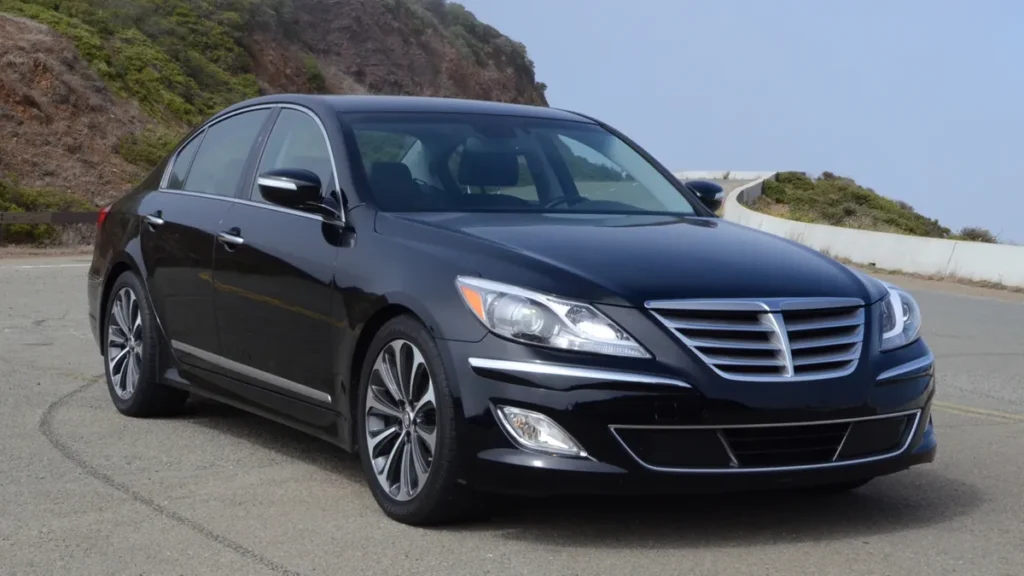
The Genesis was Hyundai’s flagship luxury vehicle when this generation was built, and the interior reflects that. Leather seating, a premium Lexicon audio system, heated and ventilated front seats, and a sophisticated infotainment system for the era were all standard on V8 trims.
The suspension uses a double-wishbone front and multi-link rear setup — proper sports sedan geometry — rather than the MacPherson strut designs found on most American competitors from the same period. The handling balance is considerably more polished than any other V8 car on this list.
The main considerations for a used purchase are finding one with documented service history — the Tau V8 is reliable but requires consistent maintenance — and verifying the condition of the timing chain, which can develop noise if oil changes were delayed.
Well-maintained examples with 80,000 to 120,000 miles represent excellent value in the 2026 market at prices that still clear the budget ceiling.
Quick Comparison: Best V8 Cars Available At This Price Range
| Model | Best Years | V8 Engine | Horsepower | KBB Private Party | Best For |
| Dodge Charger R/T | 2008–2013 | 5.7L Hemi | 368 hp | $3,000–$7,800 | Four-door muscle, daily use |
| Ford Mustang GT | 2005–2010 | 4.6L Modular | 300 hp | $5,000–$9,500 | Classic pony car character |
| Chrysler 300C | 2005–2012 | 5.7L Hemi | 340–363 hp | $3,500–$8,000 | Luxury comfort plus V8 |
| Ford Crown Victoria | 2003–2011 | 4.6L Modular | 224–239 hp | $2,500–$7,000 | Max durability, lowest cost |
| Hyundai Genesis 4.6 | 2010–2012 | 4.6L Tau V8 | 375 hp | $5,500–$9,500 | Performance and refinement |
KBB private party values reflect 2026 market data for vehicles in Good condition. Prices vary significantly by mileage, location, and condition. Always verify current market values on KBB.com or CarFax before purchasing.
What To Know Before Buying A V8 Car At This Budget
Walking into a private-party transaction or a small used car lot with a budget ceiling requires a structured approach. V8 vehicles in this price range can be excellent values or expensive mistakes, and the difference almost always comes down to the condition and maintenance history of the specific vehicle rather than the model itself.
The Pre-Purchase Inspection Is Non-Negotiable
Every car purchase at this price point should involve an independent inspection by a mechanic who is not affiliated with the seller. This costs between $100 and $150 at most independent shops and provides a lift inspection of the underside — where rust, leaks, and suspension wear are most visible — along with an engine compression check, a scan of stored fault codes, and a general assessment of the car’s mechanical condition.
Rust is the single most disqualifying issue on any used vehicle and it cannot be evaluated properly from the outside alone. Structural rust on a body-on-frame vehicle or in the wheel arches and floor pans of a unibody car can make an otherwise inexpensive purchase a financial catastrophe when the full extent becomes clear.
Understanding Fuel Economy At This Price Point
V8 vehicles in the 2006 to 2013 model year range were not designed for fuel efficiency, and their EPA ratings reflect that. The Dodge Charger R/T with the 5.7-liter Hemi is rated at 16 city and 25 highway for the rear-wheel-drive configuration.
The Ford Mustang GT from the same era gets similar numbers — approximately 15 to 17 city and 23 to 26 highway depending on the specific model year and transmission. The Crown Victoria with the 4.6-liter gets 15 to 17 city and 23 to 25 highway. The Hyundai Genesis V8 returns approximately 15 city and 23 highway.
These numbers translate to real fuel costs that should factor into the ownership calculation. At current average gas prices, a buyer covering 12,000 miles per year in a Charger R/T averaging 18 mpg in mixed driving will spend approximately $1,800 to $2,200 on fuel annually depending on local prices — noticeably more than a four-cylinder commuter car, but not prohibitive as a primary vehicle cost.
Insurance Costs For Older V8 Vehicles
Insurance for V8 muscle and performance vehicles is often higher than equivalent non-performance cars, but the vehicle age and value at this price point work in the buyer’s favor on comprehensive and collision coverage.
A car with a private party value of $6,000 does not warrant comprehensive and collision coverage at premiums that approach or exceed the vehicle’s value — liability-only or liability plus comprehensive (without collision) is the appropriate coverage structure for most buyers in this situation.
Consulting an insurance agent before purchasing gives an accurate picture of the annual insurance cost for the specific vehicle, which should be factored into the total cost of ownership alongside fuel and maintenance.
Realistic Cost Of Ownership Breakdown
| Cost Category | Estimated Annual Cost | Notes |
| Fuel (12,000 miles, ~18 mpg average) | $1,800–$2,200 | Based on $3.00–$3.50 per gallon average |
| Insurance (liability + comprehensive) | $900–$1,400 | Varies by state, driver history, and insurer |
| Routine Maintenance (oil, tires, filters) | $400–$700 | More frequent on high-mileage vehicles |
| Unexpected Repairs (budget reserve) | $500–$1,000 | Higher for deferred-maintenance purchases |
| Total Estimated Annual Operating Cost | $3,600–$5,300 | Excluding purchase price |
These are national average estimates for a typical buyer. Actual costs will vary based on vehicle condition, local fuel prices, driving patterns, and insurance profile.
Frequently Asked Questions
Can you actually get a reliable V8 car for this budget in 2026?
Yes, but reliability at any price point depends almost entirely on the maintenance history of the specific vehicle rather than the model or engine type. The Hemi V8, Ford’s 4.6-liter modular, and Hyundai’s Tau V8 are all proven engines that regularly exceed 200,000 miles when properly maintained. A well-documented, well-maintained example from any of the models on this list can be a genuinely reliable daily vehicle. A neglected example of the same car with the same mileage will not. The pre-purchase inspection and service record review are the tools that separate one from the other.
Which V8 car on this list has the lowest ownership cost after purchase?
The Ford Crown Victoria consistently has the lowest total ownership cost among the options covered here. The 4.6-liter modular engine is among the most widely serviced V8 units in American automotive history — virtually every shop in the country can work on it, parts are inexpensive, and the labor is straightforward. The body-on-frame platform is simpler to repair than unibody alternatives, and fleet-maintained Police Interceptor examples often arrive on the retail market in better mechanical condition than civilian-owned alternatives. The trade-off is performance — the Crown Victoria is the slowest car on this list — and interior modernity.
Is the Dodge Charger R/T a good daily vehicle at this budget?
Yes, for most daily use cases. The Charger R/T is a four-door sedan with a usable rear seat and a large trunk, which gives it practical utility that the Mustang lacks. The Hemi V8 is smooth at highway cruise speeds and does not feel strained in routine driving. Fuel economy is the primary ongoing cost consideration. For buyers who commute modest distances and are comfortable with the fuel cost, the Charger R/T is the most versatile V8 option on this list for daily use.
What model years of the Ford Mustang GT should be avoided in this budget?
Avoid 2005 Mustang GTs with particularly high mileage — the three-valve 4.6-liter engines from early production had some valve seal issues that manifest as oil consumption at high mileage. The 2007 and later cars refined those seals. Among S197-generation Mustangs in this price bracket, 2008 through 2010 examples in honest condition with 100,000 to 140,000 miles represent the best combination of mechanical maturity and remaining useful life. Check for any prior body repairs using a paint depth gauge — the Mustang’s relatively accessible parts make it a common candidate for amateur collision repairs that are not always done to a high standard.
Is a V8 muscle car practical as a sole vehicle for a buyer on this budget?
It depends entirely on the specific circumstances. For a buyer with moderate daily mileage — 25 to 50 miles per day — who lives in a climate without severe winter weather and parks in a secure location, a Dodge Charger R/T or Chrysler 300C is perfectly practical as a single vehicle. The four-door body, comfortable cabin, and trunk space make both cars genuinely livable. For a buyer with long daily mileage where fuel cost is a primary concern, the fuel economy of any V8 at this level will add meaningful cost versus a comparable four-cylinder alternative. The Mustang, with its tight rear seat, is the least practical of the group for anyone regularly carrying passengers or cargo.
How much should be budgeted for initial repairs after buying a used V8 car at this price?
A realistic contingency budget of $1,000 to $1,500 for immediate post-purchase maintenance is advisable regardless of how clean the vehicle appears at purchase. Common first-year costs on a vehicle in this age and price range include fresh tires ($400 to $700 for a full set on most models), fresh brake pads and rotors if not recently done ($250 to $450), a full fluid service covering coolant, transmission fluid, and differential fluid ($150 to $300), and any specific items identified during the pre-purchase inspection. Budgeting for these costs upfront transforms a $6,000 car purchase into a realistic $7,000 to $7,500 total investment in a vehicle that is genuinely ready for reliable use.