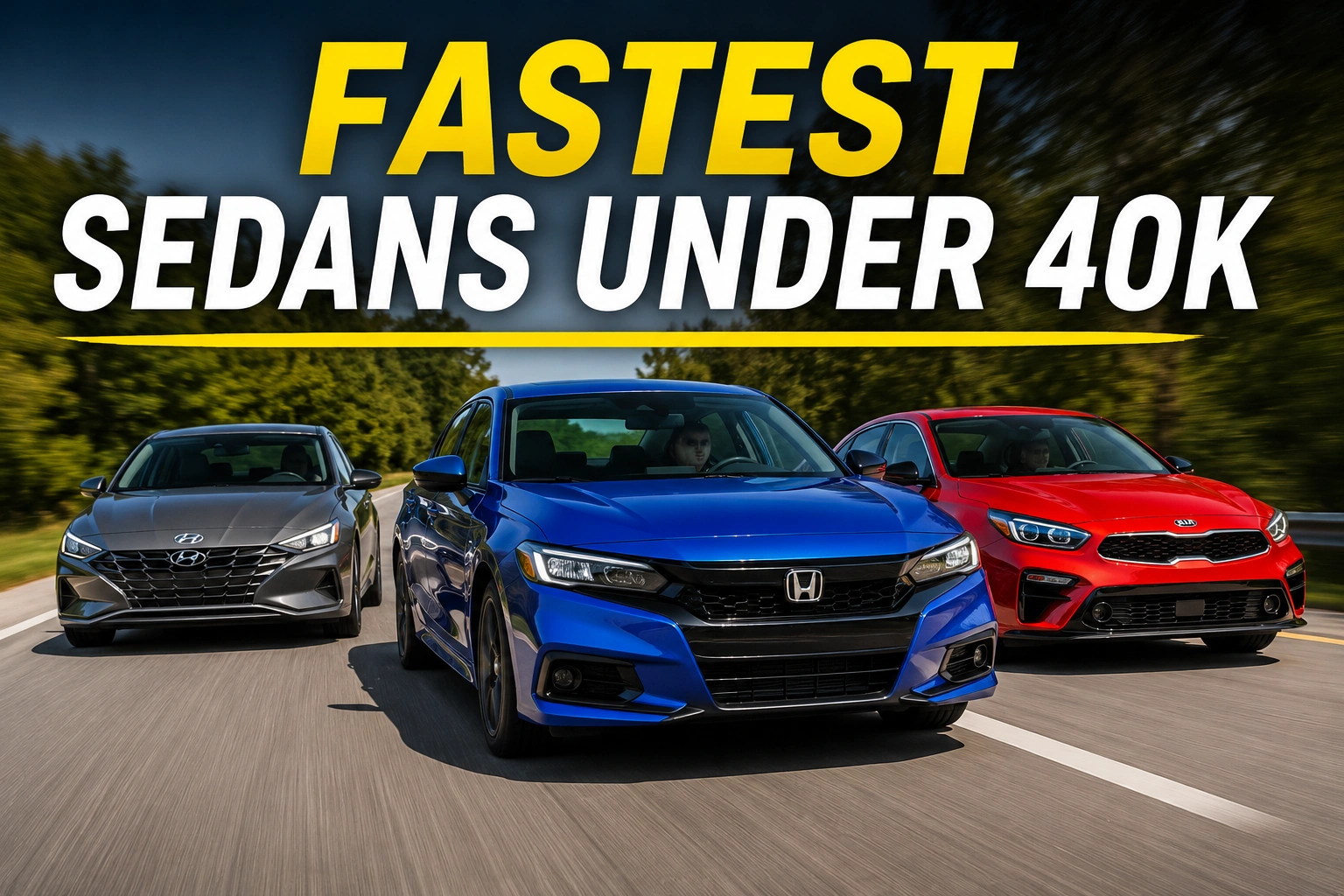
Speed has never been this accessible. A generation ago, buying a sedan that could crack 60 mph in under six seconds meant writing a check with a lot of zeros and parking in the luxury lane at the dealership.
Today, that barrier has collapsed. The 2026 market — including both new cars and a smartly shopped used inventory — puts legitimately fast, properly engineered performance sedans in the hands of anyone with a $40,000 ceiling and enough patience to find the right one.
The options range from rally-bred AWD machines and precision-tuned sport compacts to used luxury sedans with turbocharged V6 engines that were once out of reach at their original sticker prices.
The segment has never been more competitive, and the value on offer — raw acceleration, chassis tuning, safety technology, and real-world daily usability — is genuinely remarkable at this price point.
The cars on this list were chosen based on verified 0-60 mph times, current 2026 market pricing, and honest assessment of what each one delivers beyond the numbers.
Note
All pricing, specifications, and performance data referenced in these guides are sourced from Edmunds, Kelley Blue Book, Car and Driver, CarFax, U.S. News & World Report, and official manufacturer websites.
Performance figures reflect independent track testing, and used car pricing is based on current market listings. All content targets the USA market and is subject to change — always verify current pricing with your local dealership before making a purchase decision.
Why Fast Sedan Is The Performance Sweet Spot In 2026
Performance sedans in the under-$40,000 bracket occupy a position in the American market that gets underappreciated because the category does not get the marketing budget that sports cars and SUVs attract.
Yet this is the segment where manufacturers push engineering boundaries hardest relative to cost. The economics are straightforward: there are more buyers here than in any other performance category, so competition is fierce, and fierce competition produces genuinely impressive products.
The turbocharged four-cylinder engine has become the dominant powertrain in this bracket, and the results would have seemed extraordinary even a decade ago.
Engines displacing 1.5 to 2.5 liters are producing 200 to 280 horsepower in affordable packages by combining turbocharging with direct injection, variable valve timing, and increasingly sophisticated engine management. These are not peak-power-on-a-dyno figures that never appear in real roads — they are accessible, usable outputs that translate directly to fast on-ramp merges, confident passing maneuvers, and genuinely entertaining back-road sessions.
The used market expands the picture further. Luxury sedans from Genesis, Cadillac, and BMW that were priced well above $40,000 when new are now available at or below that ceiling in certified pre-owned or private-party channels, bringing more sophisticated powertrains — turbocharged V6s, premium chassis tuning, and Brembo braking hardware — into the equation at prices that overlap with new compact performance cars.
The best strategy depends on priorities: new cars bring warranty coverage and the latest tech, while used luxury sedans bring a different kind of performance engineering at a similar price.
What Makes A Sedan Fast — Beyond The 0-60 Number
Acceleration numbers are the most commonly quoted metric in performance discussions, but they only tell part of the story.
A sedan that reaches 60 mph quickly but then runs out of ability on a curved road, or that feels unstable at highway speeds, or that cannot manage its weight through a sequence of corners, is not actually fast in any useful sense — it is only quick in a straight line.
The cars on this list were evaluated on a broader set of criteria that together define what fast actually means in real-world conditions.
Chassis tuning — the calibration of the suspension, steering, and brakes as a system — determines whether the power the engine produces can actually be deployed confidently. Sport-tuned suspensions, limited-slip differentials, and performance-optimized tire specifications all contribute to translating engine output into real-world pace.
The Hyundai Elantra N’s electronically controlled suspension, the Subaru WRX’s symmetrical all-wheel drive, and the Genesis G70’s multi-link rear suspension with Brembo brakes are all examples of chassis hardware that enables the engine’s performance rather than limiting it.
Transmission quality matters as much as gear count. A well-calibrated dual-clutch gearbox fires gear changes in milliseconds and enables the kind of sequential downshifts under braking that feel genuinely mechanical and connected.
A poorly tuned CVT, conversely, can take a powerful engine and make it feel sluggish. The transmission choice is one of the most consequential decisions within each model’s option list, and the guide below notes the best configuration for each car on performance grounds.
The Fastest New Sedans Under $40,000 In 2026
1. 2026 Hyundai Elantra N
- Starting At $35,100
Starting at a relatively low $35,100, the Elantra N packs a punchy 276-horsepower engine and wields razor-sharp handling, making it a blast to drive when the roads get twisty.
Its interior is fairly spacious, and the sedan comes loaded with tech and convenience features. The Elantra N is offered in two transmission configurations for 2026: a six-speed manual at $35,100 and an eight-speed wet dual-clutch automatic (DCT) at $36,600.
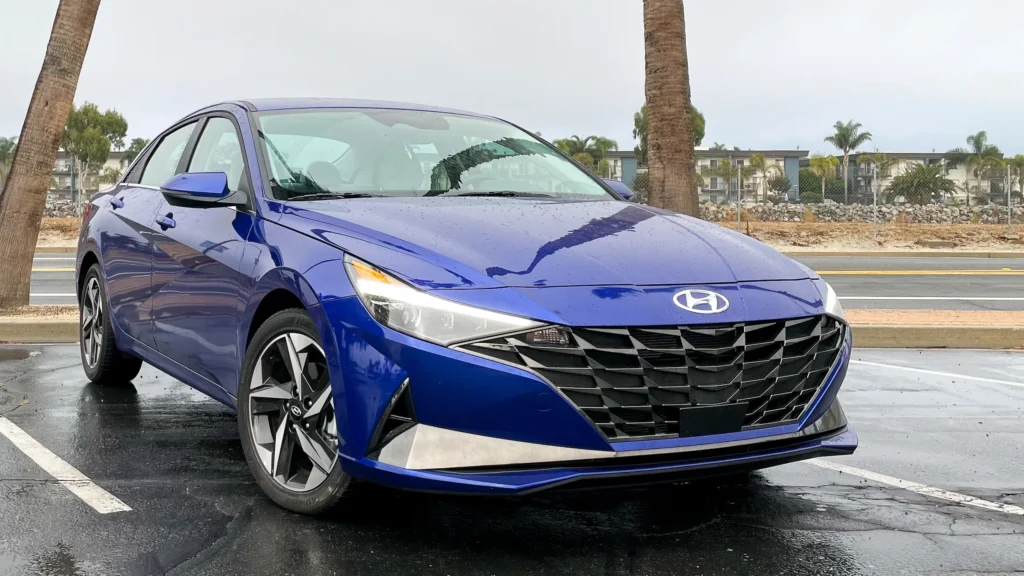
The manual-equipped Elantra N covers the 0-60 mph sprint in 6.4 seconds, while the DCT version cuts that to 5.5 seconds — a meaningful difference that reflects how well-calibrated the dual-clutch unit is for the application.
Hyundai positions the Elantra N above the milder Honda Civic Si and Volkswagen Jetta GLI sedans and below the hardcore Honda Civic Type R and Toyota GR Corolla hatchbacks. That positioning is accurate and useful.
It is not trying to be a weekend track weapon at the expense of Monday morning commuting. The electronically controlled suspension has a genuine Comfort mode that softens the car for highway use without requiring a full character transplant.
The cabin has Hyundai’s well-regarded digital interface, N-specific performance displays, and enough supportive seat bolstering to hold the driver in place under hard cornering without punishing them on longer trips.
Hyundai covers the 2026 Elantra N with a five-year/60,000-mile limited warranty and a 10-year/100,000-mile powertrain warranty, along with five years of complimentary roadside assistance.
That warranty package is one of the strongest in the entire segment and adds real ownership value to a car that already leads on outright performance per dollar at this price point.
2. 2026 Subaru WRX
- Starting At $32,495
Subaru offers the 2026 WRX in six trims: Base, Premium, Limited, GT, tS, and Series.Yellow. Pricing for the WRX ranges from $33,690 to $47,190. Every 2026 Subaru WRX comes with a turbocharged 2.4-liter four-cylinder engine producing 271 horsepower and 259 pound-feet of torque.
The re-addition of the base trim for 2026 brings the entry price down meaningfully, making the WRX more competitive with the Civic Si and Jetta GLI at the bottom of the range while the upper trims extend into more specialized performance territory.
The WRX’s standard Subaru Symmetrical All-Wheel Drive delivers reliable grip over all kinds of surfaces and weather conditions — a capability the Honda Civic Si, Volkswagen Golf GTI, Hyundai Elantra N, and Acura Integra do not offer.
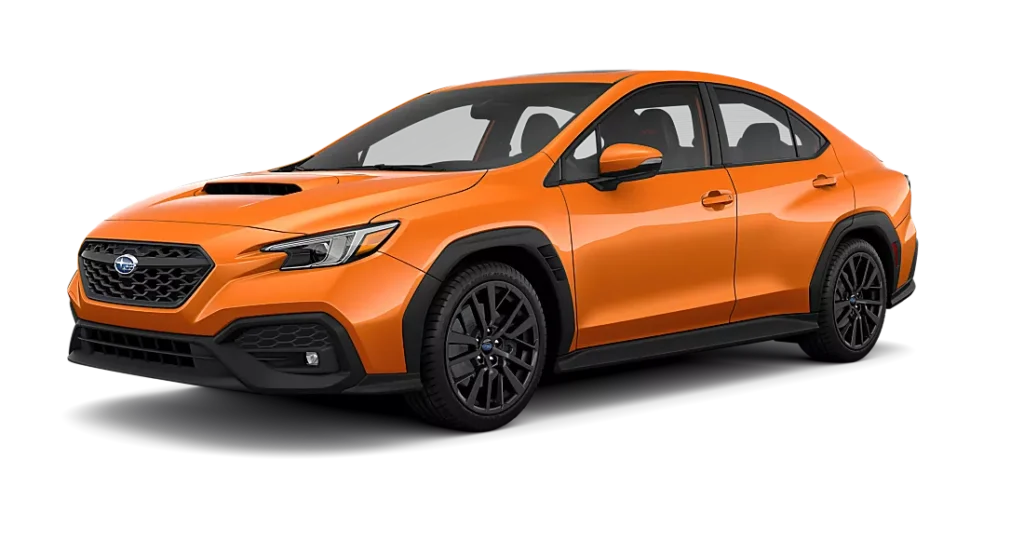
That AWD advantage is not just a winter driving story. Under hard acceleration, AWD distributes torque to all four wheels simultaneously, which allows more aggressive throttle application out of corners where a front-wheel-drive car would understeer or break traction.
At the Edmunds test track, the manual-equipped WRX tS accelerated from 0 to 60 mph in 6 seconds. At this price point, the WRX provides 71 more horsepower than the Civic Si, and on torque, it’s an advantage of 66 lb-ft for the WRX.
From the driver’s seat, the WRX is more responsive across more of the rev range, and should handily beat the Civic Si to 60 mph by a second or so as a result.
The 2026 WRX also earned a 5-Star Overall Vehicle Score from the National Highway Traffic Safety Administration — a strong safety credential that makes it a credible choice for buyers who want performance without compromising on occupant protection.
3. 2026 Honda Civic Si
- Starting At $31,495
The base price for the 2026 Honda Civic Si is $31,495, and it clocks in at under seven seconds for the 0-60 mph sprint. That puts it behind the WRX and Elantra N in outright acceleration, but the Civic Si’s case is built on different strengths.
The 1.5-liter turbocharged four-cylinder produces 200 horsepower and pairs to a six-speed manual with Honda’s rev-matching technology — meaning the transmission automatically blips the throttle to match revs on downshifts, which makes the car both easier and faster to operate in spirited situations.
The primary rival is the Volkswagen Jetta GLI, which is priced at $33,745 but offers 228 hp and 258 lb-ft from its 2.0L turbocharged engine with a six-speed manual sending power to the front wheels.
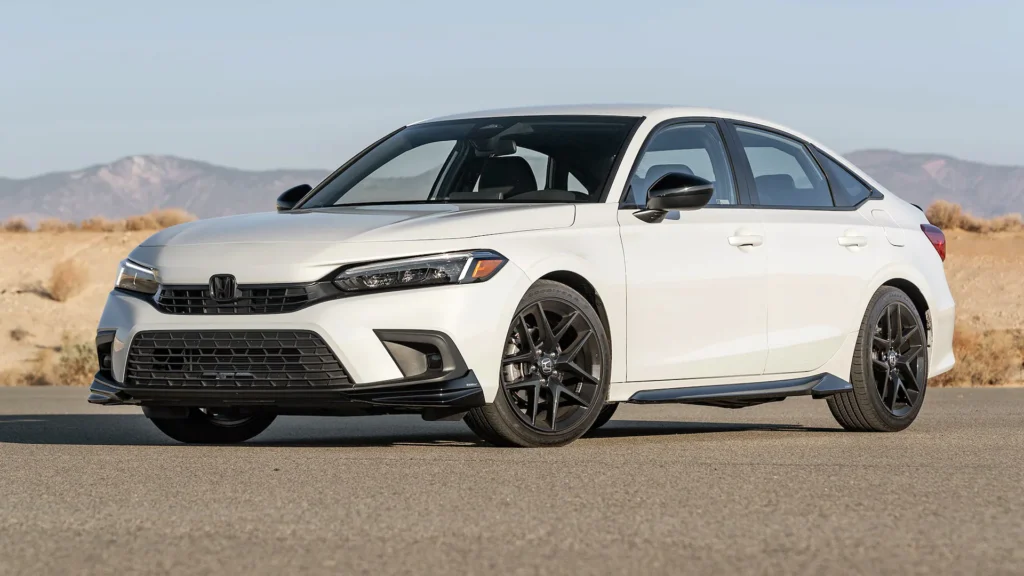
Both the Civic Si and Jetta GLI are notably less powerful than the WRX and Elantra N, but they occupy a distinct value proposition: more refined daily character, higher interior quality, and a more accessible price that leaves room in the budget for fuel, tires, and the occasional track day fee.
The Civic Si’s cabin is genuinely well-regarded in this segment, with a quality that exceeds what either the WRX or Elantra N delivers at comparable trim levels.
4. 2026 Volkswagen Jetta GLI
- Starting At $33,745
The Jetta GLI brings a German-engineered turbocharged sport sedan to the market at a price that sits comfortably under the $40,000 ceiling. The 2.0-liter TSI turbocharged engine produces 228 horsepower and 258 lb-ft of torque, available with either a six-speed manual or a seven-speed DSG dual-clutch automatic.
Car and Driver testing had the Jetta GLI going from 0 to 60 mph in approximately 5 seconds with the DSG transmission. The DSG is one of Volkswagen’s best-executed gearboxes — it downshifts rapidly under braking, holds gears through corners, and eliminates the torque interruption of a traditional automatic during hard acceleration.
The GLI’s appeal extends beyond its engine. It rides on a sport-tuned suspension that is firm enough to reduce body roll without making the car uncomfortable on typical American roads.
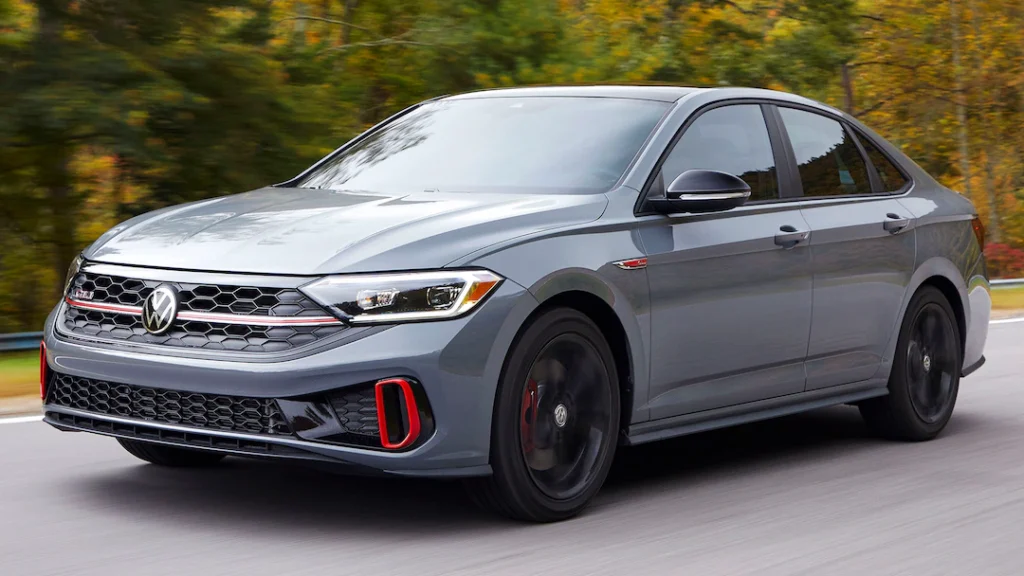
The interior quality is a step above most competitors in this bracket, with the same fundamental cabin architecture as the Golf GTI’s — which is widely considered one of the best interiors in the affordable performance segment.
Red brake calipers are standard, the dual exhaust note has a genuine character at higher revs, and the overall package feels more planted and refined at highway speeds than either the WRX or Elantra N.
2026 New Sedan Performance Comparison
| Model | Starting MSRP | Engine | Horsepower | 0-60 mph | Drivetrain | Transmission |
| Hyundai Elantra N (DCT) | $36,600 | 2.0L Turbo-4 | 276 hp | ~5.5 sec | FWD | 8-Speed DCT |
| Hyundai Elantra N (Manual) | $35,100 | 2.0L Turbo-4 | 276 hp | ~6.4 sec | FWD | 6-Speed Manual |
| Subaru WRX (Manual) | $32,495 | 2.4L Turbo-4 | 271 hp | ~6.0 sec | AWD | 6-Speed Manual |
| Volkswagen Jetta GLI (DSG) | ~$34,000 | 2.0L Turbo-4 | 228 hp | ~5.0 sec | FWD | 7-Speed DSG |
| Honda Civic Si | $31,495 | 1.5L Turbo-4 | 200 hp | ~6.6 sec | FWD | 6-Speed Manual |
Pricing is approximate MSRP before destination, taxes, and fees. 0-60 times sourced from Edmunds, Car and Driver, and CarBuzz testing.
The Best Used Sedans Under $40,000 For Raw Speed In 2026
The used market in 2026 opens up a genuinely different tier of performance for buyers who are comfortable with a pre-owned vehicle.
Luxury sedans from Genesis, Cadillac, and BMW that were priced well above $40,000 when new are now available at realistic prices in this range, and they bring engineering and power that new cars in the bracket simply cannot match.
1. Used Genesis G70 3.3T
- Around $25,000–$38,000
The Genesis G70 is the most compelling used performance sedan available in the 2026 market. It was developed on the same platform as the Kia Stinger and shares its chassis DNA with the Hyundai Motor Group’s most performance-focused engineering.
With 365 horsepower and 376 lb-ft of torque, the G70 3.3T can sprint from 0 to 60 mph in the mid-4-second range according to independent testing. It uses an eight-speed automatic transmission, Brembo brakes, multi-link rear suspension, a limited slip differential, and a variable exhaust valve system.
The available V6 turns the G70 into a screamer that can leap from 0 to 60 mph in just under 5 seconds with immediate power delivery and a muscular exhaust note.
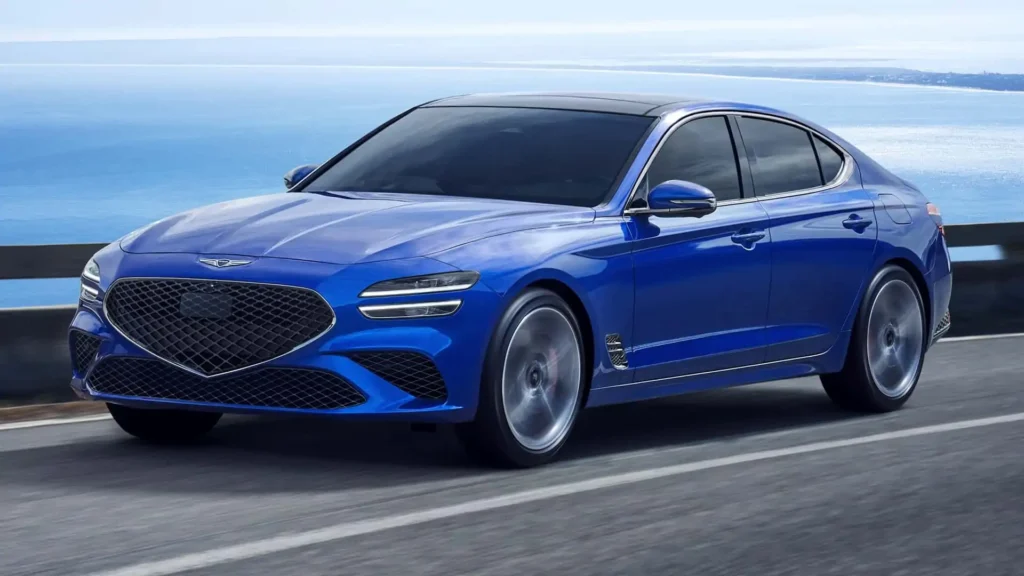
Used 2022 and 2023 Genesis G70 3.3T examples are now appearing in Carfax and dealer certified pre-owned listings in the $28,000–$38,000 range depending on mileage and trim configuration.
The entry-level 2.0T trim has everything most buyers would want, including a strong turbo four-cylinder engine as well as a healthy helping of standard amenities, including synthetic leather upholstery, heated front seats, Apple CarPlay, adaptive cruise control, and blind-spot monitoring.
Genesis’ certified pre-owned program applies to vehicles that are less than five years old and have fewer than 60,000 miles, and Genesis offers the remainder of a 10-year/100,000-mile powertrain warranty on its certified models.
That warranty coverage is an extraordinary benefit on a used luxury performance sedan. Most competitors offer far shorter CPO coverage, which means the Genesis G70’s combination of real V6 performance, genuine luxury interior quality, and industry-leading warranty coverage creates a used car value proposition that is difficult to match anywhere in this price bracket.
2. Used BMW 330i M Sport (2021–2023)
- Around $28,000–$39,000
The BMW 3 Series remains one of the benchmark performance sedans in the world, and 2021–2023 examples are settling into prices that clear the $40,000 ceiling with enough consistency to make them a realistic option for buyers willing to navigate the used market carefully.
The 330i’s turbocharged 2.0-liter four-cylinder produces 255 horsepower and 295 lb-ft of torque, paired with an eight-speed automatic that BMW has tuned across many generations to be one of the most responsive torque-converter automatics available. The result is 0-60 mph in approximately 5.4 seconds — within a few tenths of most new performance sedans in this guide.
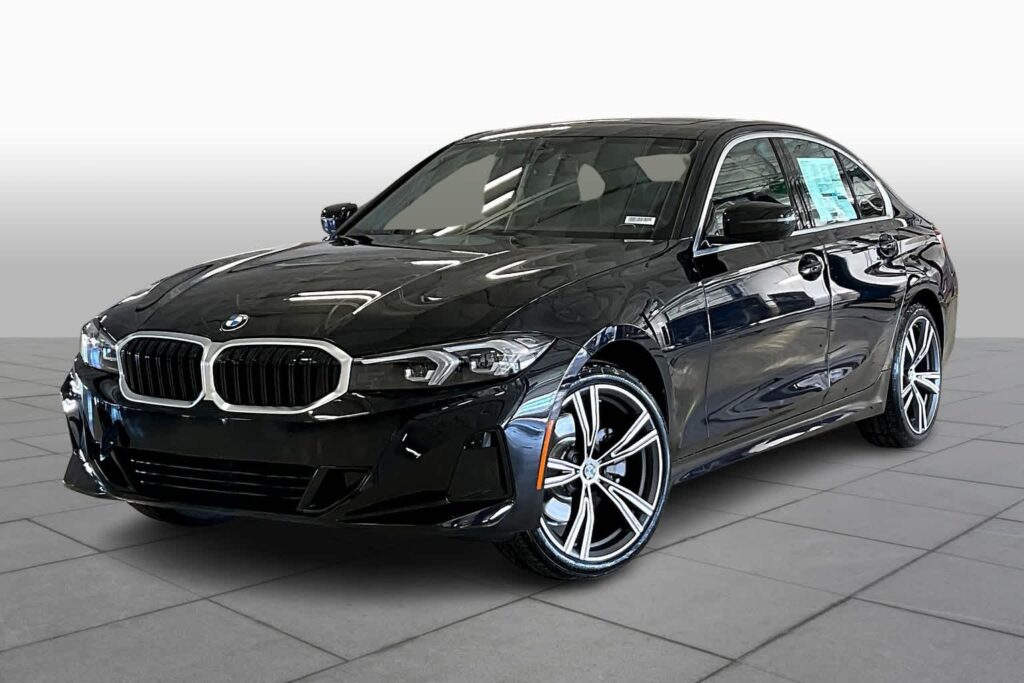
What the 3 Series brings that no car at this price can replicate new is the combination of BMW’s rear-wheel-drive chassis balance, the precision of the electric power steering that communicates road surface detail better than most competitors, and the quality of the cabin materials and build.
An M Sport package adds adaptive suspension, M Sport brakes, an aerodynamic body kit, and 18-inch M wheels that give the car a stance and presence that the more understated exterior of the Jetta GLI or Civic Si cannot match.
For buyers who want a used premium sedan that still feels tight and current, the 2021–2023 330i in M Sport trim represents one of the strongest overall value cases in the under-$40,000 segment.
3. Used Cadillac CT4-V (2022–2024)
- Around $32,000–$39,000
The Cadillac CT4-V is the more accessible sibling of the extreme CT4-V Blackwing, and it brings a turbocharged 2.7-liter four-cylinder producing 325 horsepower and 380 lb-ft of torque to the market in a rear-wheel-drive or available all-wheel-drive configuration.
A 325-horsepower turbo-four paired to a 10-speed automatic pushes the Caddy to 60 in just 4.5 seconds, and unlike many other options, it offers buyers the choice between rear- and all-wheel drive.
The CT4-V is significantly more focused as a sports sedan than the base CT4. The suspension tuning is notably firmer, the steering has a more direct ratio, and the standard Brembo front brakes provide fade resistance that is a meaningful step above the standard braking hardware on most cars in this price range.
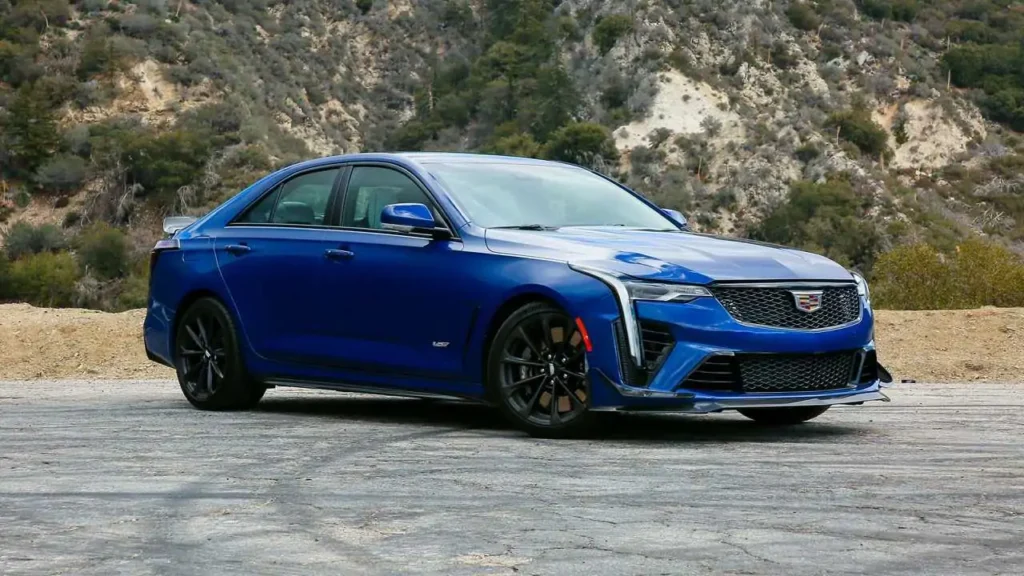
Used 2022–2024 examples are now appearing in the $32,000–$39,000 range depending on trim, mileage, and drivetrain choice, which puts a 325-horsepower, 4.5-second sedan from an American luxury brand into budget territory that would have been unthinkable at original MSRP.
Used Vs. New Fast Sedan — How To Think About The Choice
The decision between buying a new sport compact in this class and shopping a used luxury or performance sedan comes down to four factors that every buyer needs to weigh according to their own priorities.
Warranty and ownership risk favor new cars. A new Hyundai Elantra N with a 10-year powertrain warranty is a known quantity. A used Genesis G70 or BMW 330i is a function of its maintenance history and the specific vehicle’s condition. Certified pre-owned programs reduce but do not eliminate this risk. Having any used car independently inspected by a mechanic before purchase is essential, particularly for vehicles with turbocharged powertrains that require regular oil change intervals to stay healthy.
Outright performance per dollar often favors used luxury sedans once the depreciation curve does its work. A Genesis G70 3.3T at $32,000 used delivers more horsepower, more sophisticated braking hardware, and a more premium interior than any new sedan at the same price. The performance engineering in the used car was originally priced out of reach — depreciation makes it accessible.
Technology and safety features favor newer cars. A 2026 Subaru WRX has Subaru EyeSight with all current driver assistance calibrations, a modern 11.6-inch touchscreen, and wireless Apple CarPlay. A 2022 Genesis G70 has an earlier generation of infotainment and safety systems that remain functional but do not match the current state of the art.
Daily usability and ride quality varies more than the performance numbers suggest. The Elantra N and WRX are genuinely firm in their sport suspension settings, which is appropriate for what they are but requires commitment. The G70 3.3T and 330i M Sport have multi-mode adaptive suspensions that can be genuinely comfortable on a highway run and firmer on demand — a broader operational range that suits buyers who need one car to do several different things well.
Used Vs. New: Side-By-Side Value Comparison
| Model | Type | Price Range | HP | 0-60 | Key Advantage |
| 2026 Hyundai Elantra N (DCT) | New | $36,600 | 276 hp | 5.5 sec | Best new performance per dollar; 10-yr warranty |
| 2026 Subaru WRX | New | $32,495 | 271 hp | ~6.0 sec | Only AWD sedan in class; 5-star NHTSA safety |
| 2026 VW Jetta GLI | New | ~$34,000 | 228 hp | ~5.0 sec | Best interior quality; DSG precision |
| 2026 Honda Civic Si | New | $31,495 | 200 hp | ~6.6 sec | Lowest price; rev-match manual; daily refinement |
| Used Genesis G70 3.3T (2022–23) | Used | $28,000–$38,000 | 365 hp | ~4.7 sec | V6 luxury with CPO warranty; Brembo brakes |
| Used BMW 330i M Sport (2021–23) | Used | $28,000–$39,000 | 255 hp | ~5.4 sec | RWD benchmark chassis; premium interior |
| Used Cadillac CT4-V (2022–24) | Used | $32,000–$39,000 | 325 hp | 4.5 sec | American V4 performance; RWD or AWD choice |
Used pricing based on current Carfax and Edmunds market data. New pricing is approximate MSRP before destination and fees.
How To Find The Right Fast Sedan For Your Budget And Priorities
Narrowing down from a shortlist to an actual purchase decision in this category benefits from a clear framework. The performance numbers are close enough across most of these cars that secondary factors — warranty, daily comfort, weather conditions, and long-term ownership costs — often make the decision more cleanly than a two-tenth difference in 0-60 time.
Start With The Weather And Road Conditions You Actually Drive In
The choice between front-wheel drive and all-wheel drive matters more in some parts of the country than others. For buyers in the Mountain West, the Upper Midwest, New England, and the Pacific Northwest, where roads are regularly wet, snowy, or both, the Subaru WRX’s standard AWD is not a marginal advantage — it is a meaningful safety and usability upgrade that affects how the car behaves for several months each year. The Elantra N, Civic Si, and Jetta GLI are all front-wheel drive, which is manageable in most conditions but does not match AWD confidence on slick surfaces.
For buyers in Southern California, Texas, Arizona, Florida, and similar climates where snow is rare and rain is infrequent, the AWD advantage is largely irrelevant for daily use. In those conditions, the front-wheel-drive options become more compelling because the traction limitation they have in adverse weather conditions rarely appears, and the money saved on AWD systems can go toward a better-equipped trim or a more engaging used luxury sedan.
Consider Transmission Type Carefully Before Committing
The manual versus automatic question in this segment deserves more attention than most buyers give it. All four new cars on this list offer manual transmissions — the Civic Si only in manual, the WRX predominantly in manual, the Elantra N and Jetta GLI with DCT and DSG options respectively. A manual transmission in a sport sedan is engaging and rewarding but requires more attention in heavy traffic, and on the increasingly congested roads of most American cities, that attention has a real fatigue cost over a long daily commute.
The Elantra N’s DCT at $36,600 is genuinely one of the best transmission choices in the segment — it is faster than the manual on a lap time basis, provides paddle-shift control for manual override, and eliminates the clutch work in bumper-to-bumper traffic without sacrificing the engagement that makes this category worth buying into. For buyers who commute heavily and also enjoy weekend canyon roads, the DCT is a more pragmatic choice than the manual despite the premium it commands.
Frequently Asked Questions
What is the fastest new sedan under $40,000 you can buy in 2026?
Based on verified independent testing, the 2026 Hyundai Elantra N with the eight-speed dual-clutch automatic transmission is the quickest new sedan available in the USA under $40,000 for the 2026 model year, with a 0-60 mph time of approximately 5.5 seconds at a starting price of $36,600. The Volkswagen Jetta GLI with the DSG transmission also records approximately 5.0 seconds in independent testing, making it the closest competitor to the Elantra N on outright acceleration. The Subaru WRX, while slightly slower in the 0-60 sprint, adds standard all-wheel drive that makes it more capable in adverse weather conditions than either of those front-wheel-drive alternatives.
Is a used Genesis G70 a good buy under $40,000 in 2026?
Yes, and it is one of the strongest value cases in the used performance sedan market at this price point. The Genesis G70 3.3T with the twin-turbocharged V6 produces 365 horsepower and reaches 60 mph in approximately 4.7 seconds, which is considerably quicker than any new sedan available under $40,000. Used 2022 and 2023 examples with reasonable mileage are regularly appearing in the $28,000–$38,000 range, often with remaining Genesis certified pre-owned warranty coverage that extends powertrain protection to 10 years and 100,000 miles from the original purchase date. The interior quality, Brembo brake hardware, and overall refinement of the G70 significantly exceed what any new car in this budget can offer.
Which is better for a daily commute — the Subaru WRX or Hyundai Elantra N?
For a heavily urban commute with significant stop-and-go traffic, the Elantra N with the DCT transmission is more comfortable than the WRX with the manual. The DCT eliminates clutch operation in traffic and the Elantra N’s Comfort suspension mode smooths out city road surfaces reasonably well. The WRX’s manual transmission requires continuous clutch engagement in slow traffic, which adds fatigue over a long commute. For buyers in climates where winter driving is a consistent factor, the WRX’s all-wheel drive tips the balance significantly back in its favor for the overall year-round experience, making the extra effort worthwhile from an all-season usability standpoint.
Does the Honda Civic Si qualify as a fast sedan in 2026?
The Civic Si qualifies as a genuinely engaging sport sedan, though it is the slowest on this list with a 0-60 time of approximately 6.6 seconds. Its 200-horsepower turbocharged 1.5-liter engine prioritizes the balance of accessible torque and mechanical engagement over outright acceleration. The strongest case for the Civic Si is its price at $31,495 — the lowest of any car on this list — and its reputation for long-term reliability, interior quality, and the precision of the six-speed manual with rev-matching. For a buyer whose priority is an engaging, well-built sport sedan at the most accessible price rather than the quickest 0-60 time, the Civic Si makes a compelling argument that the other cars in the segment do not fully counter.
What should buyers check before buying a used turbocharged performance sedan?
The maintenance history is the single most important factor in evaluating any used turbocharged performance sedan. Turbocharged engines require consistent, correctly-timed oil changes — typically every 5,000 to 7,500 miles with the correct oil specification — to maintain turbocharger bearing health and prevent carbon buildup on intake valves. Request full service records from any seller. Have the car inspected by an independent mechanic who can check turbocharger boost pressure, inspect intercooler hoses and charge pipes for cracks, and check for any stored fault codes that might not be immediately visible. A certified pre-owned purchase through the manufacturer’s program reduces but does not eliminate the need for a pre-purchase inspection, since the CPO inspection checklist does not cover every aspect of a turbocharged drivetrain’s condition.
Is all-wheel drive worth the trade-off in fuel economy at this price point?
The AWD premium in fuel economy is real but modest. The Subaru WRX with the manual transmission is EPA-rated at approximately 21 mpg city and 27 mpg highway — lower than the front-wheel-drive Civic Si and Jetta GLI, which achieve better figures partly because they do not carry the mechanical overhead of AWD hardware. Over 15,000 miles a year at average fuel prices, the cost difference between AWD and FWD fuel consumption is typically in the range of $400 to $600 annually. For buyers in climates where the AWD traction advantage is relevant for several months each year, that annual fuel cost differential is reasonable insurance for the all-weather confidence the system provides. For warm-climate buyers, the FWD options are more economical and the traction trade-off rarely appears in practice.