Cars today are not just about reaching a destination. They reflect personality, lifestyle, and everyday comfort in a very personal way. Many buyers prefer vehicles that feel approachable, stylish, and easy to live with, especially in daily city life. Cute cars have gained attention for their compact size, attractive design, and thoughtful interiors that make every ride feel light and enjoyable.
These cars are not limited to one category. Some are small hatchbacks with playful looks, while others are compact SUVs that blend charm with practicality. What makes them appealing is the balance they offer between design, comfort, and modern features. They are easy to handle, simple to park, and often come with smart technology that fits daily routines.
The following guide explores what defines a cute car, how to choose the right one, and some of the best options available that combine charm with real-world usability.
Note
This content is based on a combination of design trends, user preference studies, and real-world vehicle comparisons sourced from platforms like Consumer Reports, TrueCar, and Cars.com, along with feature validation from official manufacturer websites including Mini, Hyundai, Mazda, and Kia.
Additional insights were drawn from market listings and ownership feedback to reflect practical usability, styling appeal, and current buying trends in the U.S. automotive market.
What Actually Makes a Car “Cute”
Before getting into specific models, it helps to define the qualities that put a vehicle in this category. The word “cute” in automotive context refers to a specific set of design and proportional characteristics, not a dismissive label.
Proportions matter most. A short nose, tall cabin relative to overall length, and compact overall footprint create the foundational look. These proportions are not accidental — they are the result of deliberate packaging decisions that prioritize visual friendliness and urban maneuverability.
Front-end design communicates personality. Rounded headlights, soft grille shapes, and upturned corners in the lower fascia create what designers call an “approachable face.” This is studied in automotive design schools as a genuine discipline — the way a car’s front presents itself has a measurable impact on consumer appeal.
Color availability amplifies the effect. Pastel tones, two-tone roof treatments, and unusual finishes are disproportionately offered on vehicles in this segment. Pearl whites, mint greens, warm yellows, and dusty roses appear regularly in option lists that would be unusual on mainstream sedans.
Interior design follows the same philosophy. Clean layouts, circular or organic shapes in instrument clusters, soft textures, and thoughtful small details — a well-placed accent color, an interesting material on the door panel — create cabins that feel genuinely pleasant rather than functional-but-forgettable.
Size enables the lifestyle. Urban parking, narrow streets, and tight multi-story car parks favor compact dimensions. A car that is easy to place, easy to see out of, and easy to park becomes part of daily life in a way that larger vehicles cannot.
None of this means these cars lack substance. The best examples in this guide combine visual appeal with strong driving dynamics, real safety credentials, and competitive technology.
How to Choose the Right One
With ten strong options across different segments and price points, a few practical questions help narrow the decision:
City-only or mixed use? Pure city cars like the Fiat 500e and Mini Cooper are optimized for urban environments. If regular motorway driving or longer weekend trips are part of the picture, models like the Mazda CX-30 or Hyundai Tucson are better suited.
Electric or combustion? Electric options in this segment have improved significantly. Running costs are lower, urban driving is quieter and smoother, and several governments still offer purchase incentives. The range limitations of smaller electric cars are a real consideration if charging infrastructure is limited or off-street parking is unavailable.
Practicality requirements? If carrying passengers regularly — especially children with car seats — or needing meaningful cargo space, the compact SUV options (CX-30, Venue, Soul) provide more usable room than the pure hatchbacks.
Budget: Entry prices in this guide range from approximately $19,000 to $40,000 depending on trim. Running costs, insurance band, and expected fuel or energy costs vary significantly across the segment and should factor into total cost of ownership calculations.
The 9 Best Cute Cars in 2026
1. Mini Cooper Hardtop
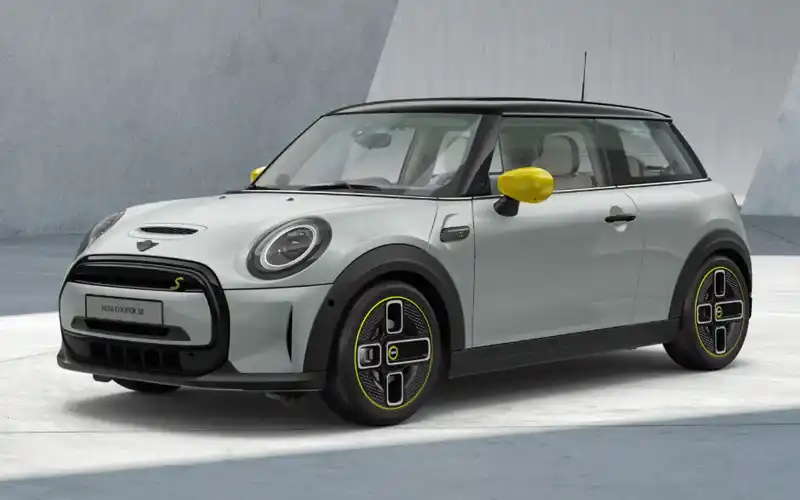
Starting Price: $25,300
The Mini Cooper is the benchmark against which every other cute car is measured. Since BMW revived the brand in 2001, it has maintained a design language that feels genuinely distinctive without resorting to nostalgia as a substitute for substance. The current fourth-generation model, which arrived for 2024 and carries forward into 2026, represents the most refined version of the formula.
Exterior Design
The 2026 Mini Cooper retains the proportions that made the original iconic — short overhangs, tall greenhouse, circular headlights — but the execution is considerably more sophisticated. The octagonal grille is now larger and more confident, flanked by round LED headlights that give the front end a graphic quality. Body lines are clean and minimal, letting the proportions and the color choices carry the visual weight.
Color options deserve particular attention. The Mini configurator offers an unusually wide palette, including Zesty Yellow, Rooftop Grey, and British Racing Green alongside the expected whites and blacks. Two-tone roofs — contrasting black, white, or body color — remain available and remain one of the most effective exterior customization options in the compact segment.
Specifications
- Engine options: 1.5-liter 3-cylinder (Cooper) / 2.0-liter 4-cylinder (Cooper S)
- Horsepower: 134 hp (Cooper) / 189 hp (Cooper S)
- Torque: 162 lb-ft (Cooper) / 207 lb-ft (Cooper S)
- Transmission: 7-speed dual-clutch automatic
- Drivetrain: Front-wheel drive
- 0–60 mph: 7.3 seconds (Cooper) / 6.3 seconds (Cooper S)
- Fuel economy: 29 city / 38 highway mpg (Cooper)
- Cargo space: 8.7 cubic feet
Essential Features
- 9.4-inch circular OLED touchscreen with Mini Operating System 9
- Wireless Apple CarPlay and Android Auto
- LED headlights and taillights standard
- Dual-zone climate control
- Heated front seats
- Reversing camera
- Forward collision warning with automatic emergency braking
- Lane departure warning
- Available panoramic glass roof
Interior
The interior of the 2026 Cooper represents a significant departure from its predecessors. The large circular display dominates the dashboard in a way that feels designed rather than grafted on — it echoes the round instrument cluster of the original while serving a genuinely modern function. The physical button count has been reduced substantially, which some buyers will appreciate and others will find requires adjustment.
Material quality is noticeably improved over earlier generations. Soft-touch surfaces appear in places that were previously hard plastic, and the ambient lighting system (available on higher trims) can cycle through multiple colors to create a personalized cabin atmosphere.
Rear seat space remains the Cooper’s acknowledged limitation. Two adults can sit in the back comfortably for shorter journeys, but taller passengers on longer trips will find legroom marginal. The two-door configuration also makes rear access less convenient than four-door alternatives.
Driving Character
The Mini Cooper’s driving dynamics are a genuine differentiator in this segment. The steering is direct and communicative, body roll is well controlled, and the car changes direction with a precision that feels more sports-focused than most competitors. The Cooper S variant amplifies this character significantly — its 2.0-liter engine delivers brisk acceleration and a distinct exhaust note.
This is not a car that merely looks fun. It drives with purpose, and for buyers who prioritize the driving experience alongside the visual appeal, it remains the strongest option in the segment.
Who It Suits
Buyers who want maximum personality, premium feel, and genuine driving engagement in a compact package. Best suited to urban and suburban use rather than regular long-distance driving. The two-door layout works best for buyers without regular rear-seat passengers.
2. Fiat 500e
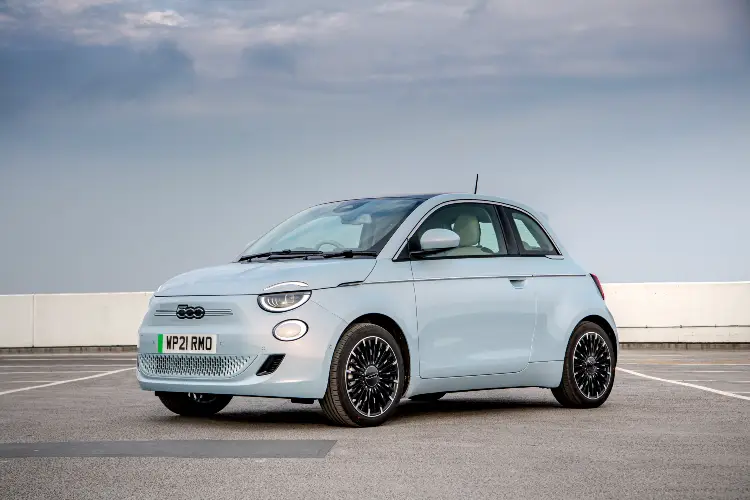
Starting Price: $33,500
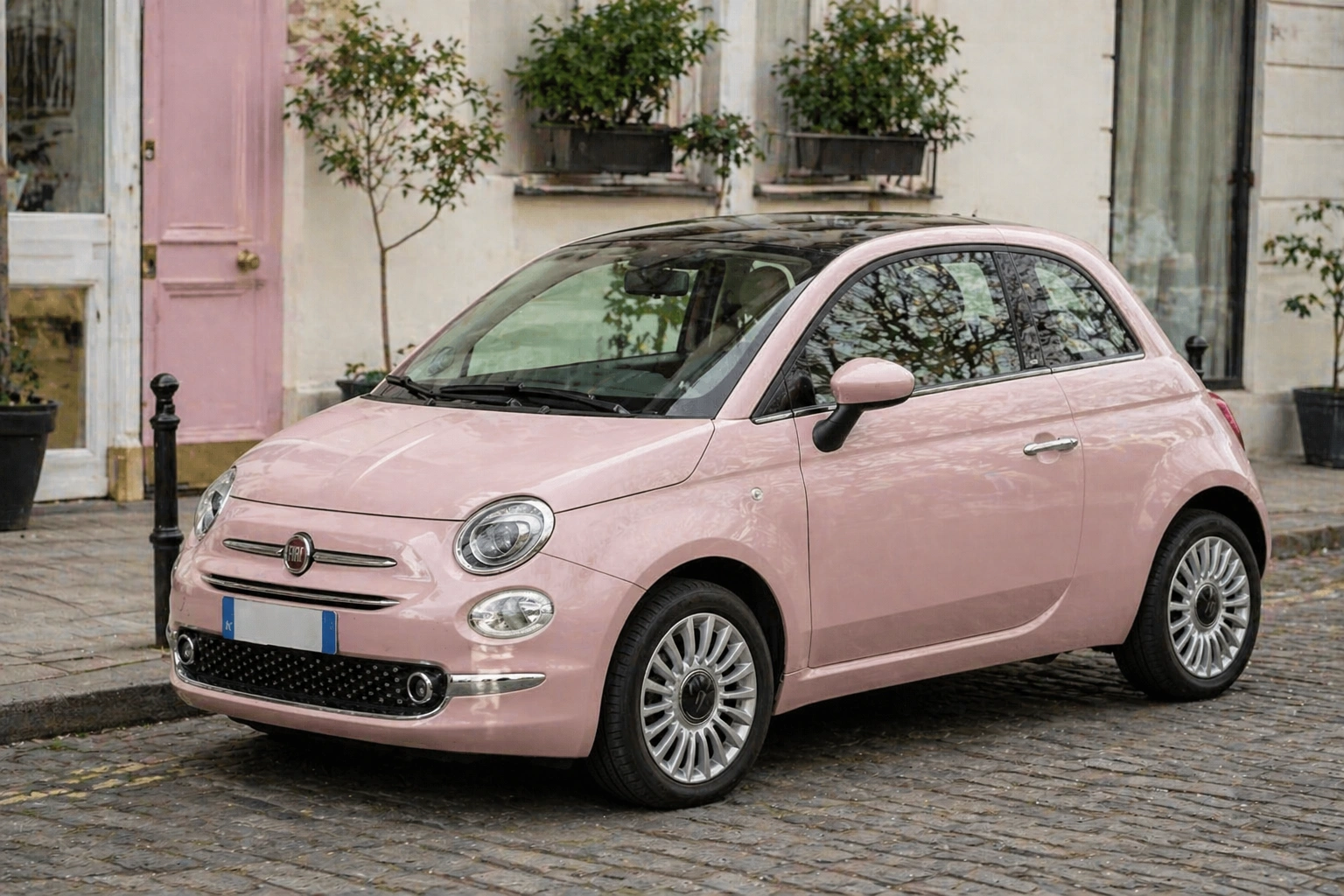
The Fiat 500e is the electric version of one of automotive history’s most enduring designs, and it makes a compelling case that electrification can enhance a car’s character rather than dilute it. The smooth, silent power delivery suits the 500’s urban personality perfectly.
Exterior Design
Fiat has maintained the 500’s fundamental proportions — circular headlights, a wide smile-shaped lower grille, a rounded roof, and compact overall dimensions — while subtly modernizing the details. Closed-off lower air intakes signal the electric powertrain without being aggressive about it, and the available color palette includes the kind of expressive choices (Gelato White, Mineral Grey, Pop Red) that make the 500e immediately recognizable.
A convertible version (the 500e Cabriolet) is available for buyers who want an open-top urban experience, adding another dimension to the model’s appeal.
Specifications
- Powertrain: Single electric motor, front-wheel drive
- Motor output: 117 hp
- Torque: 162 lb-ft
- Battery capacity: 42 kWh usable
- Range: Up to 149 miles (EPA estimate)
- DC fast charging: Up to 85 kW (0–80% in approximately 35 minutes)
- 0–60 mph: 8.5 seconds
- Cargo space: 9.5 cubic feet
Essential Features
- 10.25-inch touchscreen infotainment system
- Wireless Apple CarPlay and Android Auto
- Level 2 onboard charger (11 kW)
- Heated front seats
- Reversing camera with parking sensors
- Lane keeping assist
- Automatic emergency braking
- Available full glass panoramic roof
- JBL audio system (higher trims)
Interior
The 500e’s interior is clean, simple, and honest. The dashboard is uncluttered, the materials are pleasant without being extravagant, and the overall layout feels considered. The infotainment screen integrates well into the design rather than sitting as an afterthought.
Space is tight by any objective measure — this is genuinely a small car. Rear seats are best suited to children or short-distance adult passengers. The lack of a conventional engine creates useful storage space under the front hood (a small frunk), which partially compensates.
Driving Character
Electric power delivery transforms the 500e’s urban personality. Instant torque from standstill makes city traffic genuinely effortless — pulling away from lights, threading through gaps, and navigating stop-start conditions all feel natural and smooth. The steering is light, the turning circle is tight, and the low-speed maneuverability is excellent.
Range of 149 miles is adequate for urban use, but buyers who regularly travel beyond the city will find it limiting. The 500e is fundamentally an urban tool, and within that context it excels.
Who It Suits
Urban buyers with reliable home or workplace charging. Ideal for daily city commutes, short errand runs, and buyers who want electric efficiency without sacrificing personality. Not the right choice for buyers without off-street charging access or those who regularly drive long distances.
3. Mazda CX-30
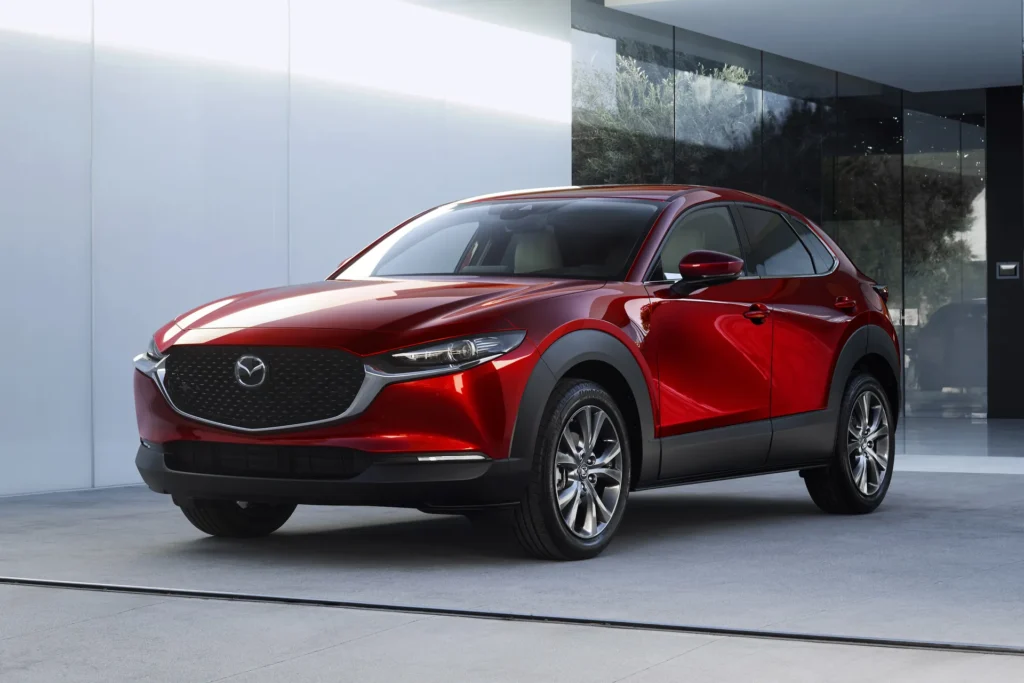
Starting Price: $26,820
The Mazda CX-30 occupies a different position in this guide than the cars above. It is not a city car — it is a compact crossover with real refinement, genuine interior quality, and a design philosophy that has earned consistent praise from automotive critics. It appears here because Mazda’s Kodo design language produces some of the most elegant shapes in the mainstream market, and the CX-30 is among its best expressions.
Exterior Design
The CX-30’s design is characterized by long, flowing surfaces and deep sculpting that catches light in unusual ways. Mazda’s design team studies the way shadows move across the body at different times of day — a level of attention that shows in the finished product. The result is a car that looks different depending on where you observe it from, and consistently looks better in person than in photographs.
Soul Red Crystal and Polymetal Grey are the signature Mazda finishes — multi-layered metallic paints that depth and richness that mainstream competitors rarely match at this price point.
Specifications
- Engine options: 2.5-liter 4-cylinder / 2.5-liter turbocharged 4-cylinder
- Horsepower: 186 hp (standard) / 227 hp (turbo)
- Torque: 186 lb-ft (standard) / 310 lb-ft (turbo)
- Transmission: 6-speed automatic
- Drivetrain: Front-wheel drive or all-wheel drive
- 0–60 mph: 7.3 seconds (standard FWD) / 5.8 seconds (turbo AWD)
- Fuel economy: 25 city / 33 highway mpg (standard FWD)
- Cargo space: 20.2 cubic feet behind rear seats
Essential Features
- 8.8-inch center display with rotary controller
- Apple CarPlay and Android Auto (wired standard, wireless on higher trims)
- Mazda Radar Cruise Control
- Lane centering assist
- Blind spot monitoring
- Rear cross-traffic alert
- Automatic emergency braking with pedestrian detection
- Heated front seats
- Leather seating surfaces (higher trims)
- Available Bose 12-speaker audio system
- Available head-up display
Interior
The CX-30’s interior is one of the strongest arguments for its purchase. Material quality, tactile feel, and layout design all sit above what the price suggests. The instrument panel is clean, the switchgear has a satisfying solidity, and the overall impression is of a car that has been put together with care.
Rear headroom is slightly constrained for taller passengers due to the sloping roofline — a tradeoff made for exterior elegance — but rear legroom is adequate for most adult passengers.
Driving Character
The CX-30 drives with a composure and precision that distinguishes it from most compact crossovers. Mazda’s focus on “Jinba Ittai” (horse and rider as one) driving philosophy produces cars that feel connected rather than isolated. The steering is well-weighted, body control is excellent, and even the standard naturally aspirated engine feels responsive in normal driving conditions.
The turbocharged variant adds a meaningful performance dimension — 310 lb-ft of torque in a compact crossover is a substantial upgrade — but the standard car is entirely satisfying for most buyers.
Who It Suits
Buyers who want refinement and genuine quality in a compact crossover, and who value driving character as much as practicality. Excellent for mixed urban and suburban use, comfortable on motorways, and appealing enough to stand out in any setting.
4. Hyundai Venue
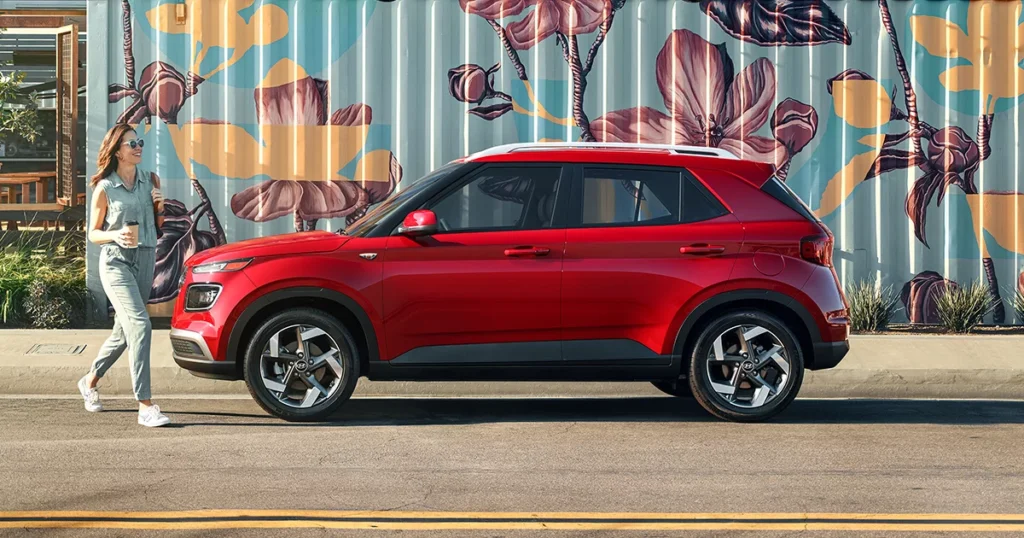
Starting Price: $19,650
The Hyundai Venue is the most affordable car in this guide and one of the better-value propositions in the compact segment. Its boxy design is charming in an unpretentious way, and its feature list punches well above its price point.
Exterior Design
The Venue’s design is confident and geometric rather than rounded and soft. Square wheel arches, a flat roofline, and bold body lines give it a distinctive silhouette among compact SUVs. The two-tone color options — combining a dark roof with a brighter body color — are particularly effective on this body shape and available at competitive prices compared to similar options on other brands.
Specifications
- Engine: 1.6-liter 4-cylinder naturally aspirated
- Horsepower: 121 hp
- Torque: 113 lb-ft
- Transmission: 6-speed manual or CVT automatic
- Drivetrain: Front-wheel drive
- 0–60 mph: 9.8 seconds
- Fuel economy: 28 city / 33 highway mpg (CVT)
- Cargo space: 18.7 cubic feet behind rear seats
Essential Features
- 8-inch touchscreen (standard) / 10.25-inch (higher trims)
- Wireless Apple CarPlay and Android Auto
- Rear view camera
- Forward collision-avoidance assist
- Lane keeping assist
- Driver attention warning
- Available Bose premium audio (IQ trim)
- Available wireless device charging
- Available heated front seats
- USB-C connectivity ports front and rear
Interior
The Venue’s interior is functional and well-organized without being particularly exciting. Controls are logically laid out and easy to use. Material quality is appropriate for the price — hard plastics dominate in places, but overall assembly quality is solid and consistent with what Hyundai delivers across its lineup.
Rear seat space is competitive for the class. Cargo space is genuinely useful, and the square body shape allows for more practical loading than curved roofline alternatives.
Driving Character
The Venue is not a car that prioritizes driving dynamics. The 121-horsepower engine is adequate for city use and comfortable cruising, but highway passing and uphill performance reveal the limits of the naturally aspirated unit. The CVT transmission is smooth in everyday use, if uninspiring.
Ride quality is well-judged for urban conditions, absorbing road imperfections without drama.
Who It Suits
First-time buyers, urban commuters, and buyers who prioritize value, practicality, and ease of use above driving engagement. The Venue’s feature list at its price point is genuinely impressive, and Hyundai’s warranty coverage (5-year/60,000-mile basic, 10-year/100,000-mile powertrain) provides meaningful ownership security.
5. Kia Soul
Starting Price: $21,090
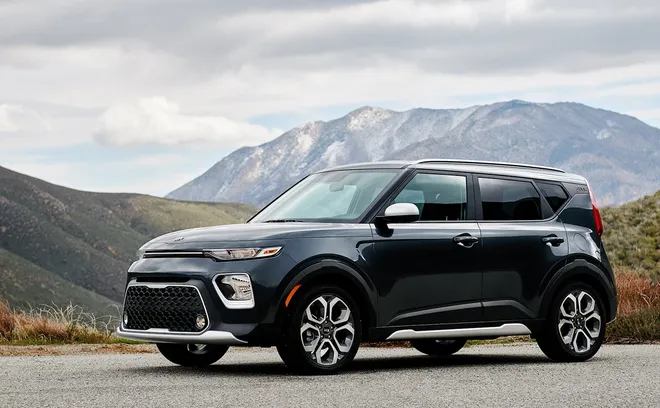
The Kia Soul has maintained a loyal following since its introduction precisely because it refuses to look like everything else. Its upright, boxy design is a deliberate rejection of the flowing crossover aesthetic, and it works. The Soul is one of the most spacious cars relative to its external footprint in this segment.
Exterior Design
The Soul’s design is defined by its verticals. Upright windshield, flat roof, squared-off rear — the silhouette is immediately recognizable and unapologetically distinctive. Kia offers the Soul in bold color combinations, and the squared body carries two-tone treatments particularly well. The full-width LED rear light bar on current models gives the rear end a modern and cohesive graphic quality.
Specifications
- Engine options: 2.0-liter 4-cylinder / 1.6-liter turbocharged 4-cylinder
- Horsepower: 147 hp (2.0L) / 201 hp (1.6T)
- Torque: 132 lb-ft (2.0L) / 195 lb-ft (1.6T)
- Transmission: CVT (2.0L) / 7-speed dual-clutch (1.6T)
- Drivetrain: Front-wheel drive
- 0–60 mph: 8.4 seconds (2.0L) / 6.9 seconds (1.6T)
- Fuel economy: 28 city / 33 highway mpg (2.0L CVT)
- Cargo space: 24.2 cubic feet behind rear seats / 62.1 cubic feet with rear seats folded
Essential Features
- 10.25-inch touchscreen infotainment
- Wireless Apple CarPlay and Android Auto
- Forward collision avoidance with pedestrian and cyclist detection
- Lane keeping assist and lane following assist
- Blind spot collision warning
- Rear cross-traffic collision warning
- Driver attention warning
- Available dual panoramic sunroof
- Available Harman Kardon 8-speaker audio system
- Heated front and rear seats (higher trims)
- Available heads-up display
- USB-C ports front and rear
Interior
The Soul’s interior is its strongest card. The upright body style creates genuine headroom for all passengers — a commodity that sloping-roofline alternatives sacrifice. Rear seat space is genuinely comfortable for adult passengers, not just tolerable. Cargo space is exceptional for the size; the 24.2 cubic feet behind the rear seats is competitive with crossovers significantly larger than the Soul.
Higher trim interiors offer a premium feel with quality materials and the Harman Kardon audio system, which is particularly well-tuned for the Soul’s cabin dimensions.
Driving Character
The base 2.0-liter Soul is a relaxed, easy-going city car. Its CVT and naturally aspirated engine prioritize smoothness over excitement, which suits its character. The turbocharged GT-Line variant with the 7-speed dual-clutch is a different proposition — more responsive, more engaging, and better suited to mixed driving conditions.
Who It Suits
Buyers who need more interior space than typical cute cars provide, who value distinctive design, and who do not want to pay crossover pricing for crossover practicality. The Soul’s cargo space makes it genuinely functional for buyers who haul equipment, groceries, or sports gear regularly.
6. Toyota GR86
Starting Price: $30,995
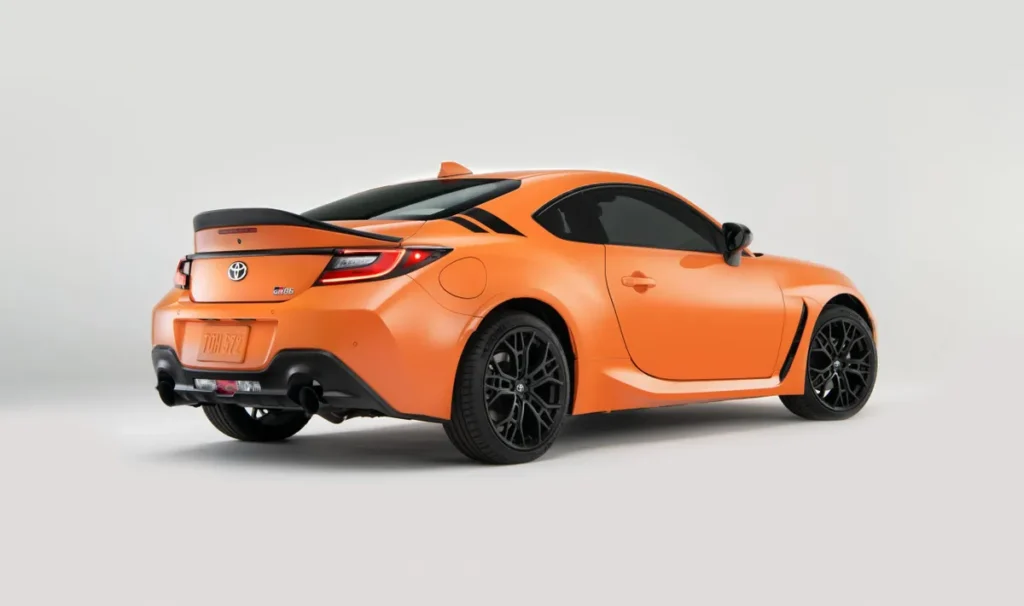
The Toyota GR86 earns its place in this guide through an unusual combination: a genuinely beautiful, low-slung coupe body with classic proportions and a driving experience that has attracted near-universal praise from automotive writers. It represents a different kind of appeal — the understated elegance of a well-proportioned sports car rather than the cheerful approachability of the city cars above.
Exterior Design
The GR86’s design is characterized by long hood, short deck proportions — the classic sports car formula executed with precision. The body is low, wide relative to its height, and aerodynamically considered. Available colors include an unusual Trueno Blue and a warm-toned Halo White that suit the body’s lines particularly well. The overall effect is elegant rather than aggressive.
Specifications
- Engine: 2.4-liter naturally aspirated 4-cylinder (FA24)
- Horsepower: 228 hp @ 7,000 rpm
- Torque: 184 lb-ft @ 3,700 rpm
- Transmission: 6-speed manual or 6-speed automatic
- Drivetrain: Rear-wheel drive
- 0–60 mph: 6.1 seconds (manual) / 6.6 seconds (automatic)
- Fuel economy: 21 city / 30 highway mpg (manual)
- Cargo space: 6.3 cubic feet
Essential Features
- 8-inch touchscreen infotainment
- Apple CarPlay and Android Auto
- Torsen limited-slip differential
- 4-wheel independent suspension (MacPherson front / double-wishbone rear)
- Performance-tuned Brembo brakes (GR86 Premium)
- Track Mode with stability control adjustability
- Rev-matching automated blip on manual transmission
- Available Michelin Pilot Sport 4 tires
- Heated front seats
- 6-speaker audio (8-speaker on Premium)
Interior
The GR86’s interior is driver-focused and sports-car honest. Space is tight — there are rear seats, but they are best considered occasional rather than regular. The low seating position, close-set controls, and driving-oriented layout communicate the car’s priorities clearly.
Material quality is adequate rather than premium. This is not where the GR86’s budget was spent. The cockpit feel, the quality of the gearshift, and the way the controls are arranged for a seated-low driving position are where the design attention is concentrated.
Driving Character
The GR86’s driving dynamics are the reason it appears here. The naturally aspirated FA24 engine revs freely and willingly to its 7,000 rpm limit. The 6-speed manual is one of the best short-throw gearboxes available under $35,000. The rear-wheel-drive chassis is balanced and communicative, inviting driver involvement in a way that front-wheel-drive alternatives cannot replicate.
This is a sports car that happens to be attainable. Its character is distinctive and its dynamics are genuinely rewarding.
Who It Suits
Buyers who prioritize driving engagement and proportional elegance over practicality. Not suited to families or buyers who need rear seat space regularly. Best for enthusiasts who want a sports car with accessible running costs and a design that ages gracefully.
7. Honda Jazz (Fit)
Starting Price: $23,800
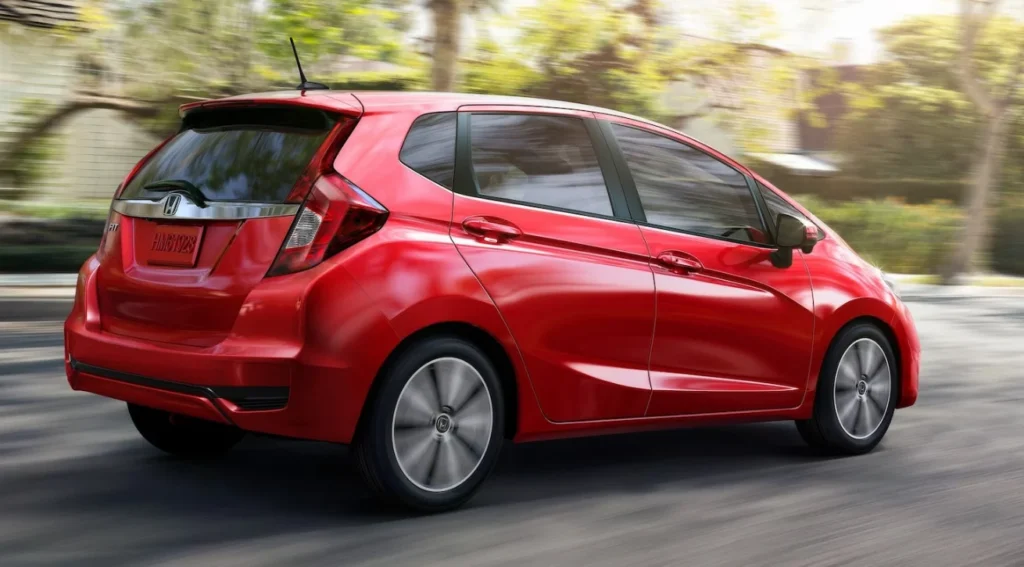
The Honda Jazz — sold as the Fit in North America — is one of the most intelligently engineered small cars ever built. Its Magic Seat system, which allows the rear seats to fold flat or flip up to accommodate tall cargo, creates interior flexibility that cars twice its size cannot match. The current generation also offers a hybrid powertrain as standard in most markets.
Exterior Design
The Jazz’s design is friendly and upright without being overtly aggressive or bland. The wide-set headlights, smooth bonnet line, and large glass area create a car that feels open and approachable. It is not the most dramatic design in this guide, but it is coherent and pleasantly proportioned, and the available two-tone roof options add personality without complication.
Specifications (Hybrid)
- Powertrain: 1.5-liter Atkinson cycle 4-cylinder + dual electric motors (e:HEV)
- Combined system output: 107 hp
- Torque: 253 lb-ft (combined electric)
- Transmission: e-CVT
- Drivetrain: Front-wheel drive
- 0–60 mph: 9.2 seconds
- Fuel economy: 40 city / 42 highway mpg (EPA hybrid estimate)
- Cargo space: 16.7 cubic feet standard / 52.8 cubic feet with rear seats folded (Magic Seat)
Essential Features
- 9-inch touchscreen infotainment
- Wireless Apple CarPlay and Android Auto
- Honda Sensing safety suite standard on all trims
- Adaptive cruise control
- Lane keeping assist
- Automatic emergency braking with pedestrian detection
- Road departure mitigation
- Traffic sign recognition
- Heated front seats (higher trims)
- Rear seat Magic Seat system (fold-flat or tip-up configurations)
- Available Honda Connect with over-the-air updates
Interior
The Jazz’s interior makes more of its space than any car in this guide. The Magic Seat system transforms the rear cabin depending on what the journey requires: flat floor for furniture or bicycles, flipped-up cushions for tall plants or standing cargo, standard seating for four adults with comfortable legroom. This flexibility is genuinely useful in daily life in a way that specification sheets do not fully convey.
Dashboard design is clean and well-organized. The elevated seating position — higher than typical hatchbacks — improves visibility and creates an airier feel inside the cabin.
Driving Character
The e:HEV hybrid system fundamentally changes the Jazz’s character. Electric motors power the car at low speeds and in urban traffic, with the petrol engine acting primarily as a generator and contributing direct drive at higher speeds. The result is a remarkably smooth and quiet urban experience with fuel economy that significantly exceeds similarly powered petrol alternatives.
Who It Suits
Buyers who prioritize interior flexibility, fuel economy, and smart engineering. The Jazz’s hybrid system and Magic Seat make it one of the most practically capable cars at its size and price point. Excellent for urban and suburban families who need flexibility without stepping up to a larger vehicle.
8. Volkswagen Polo
Starting Price: $22,000 (approximate, market dependent)
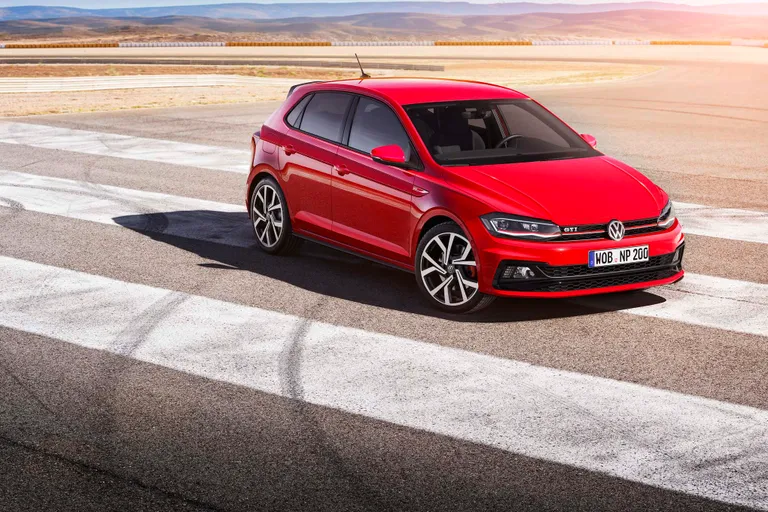
The Volkswagen Polo occupies a specific and well-defined position in the compact segment. It offers a level of interior quality, driving refinement, and assembly solidity that feels genuinely premium for its class. The current sixth-generation model benefits from technology and design cues that have filtered down from Volkswagen’s larger vehicles.
Exterior Design
The Polo’s design is clean, proportioned, and quietly confident. It does not announce itself loudly, but its details — the sharp creases on the bonnet, the horizontal lighting elements connecting the tail lamps, the clean shut lines — demonstrate considered design work. Available in a range of colors including a warm San Remo Yellow and a deep Kings Red, the Polo carries its compact dimensions well.
Specifications
- Engine options: 1.0-liter 3-cylinder naturally aspirated / 1.0-liter turbocharged (TSI) / 1.5-liter TSI (higher markets)
- Horsepower: 80 hp (base) / 95 hp (1.0 TSI) / 110 hp (1.0 TSI higher output)
- Torque: 94 lb-ft (base) / 160 lb-ft (1.0 TSI)
- Transmission: 5-speed manual / 6-speed manual / 7-speed DSG automatic
- Drivetrain: Front-wheel drive
- 0–60 mph: 9.5 seconds (1.0 TSI 95 hp) / 8.3 seconds (1.0 TSI 110 hp)
- Fuel economy: Approximately 38–45 mpg combined (TSI variants, WLTP)
- Cargo space: 351 liters (12.4 cubic feet)
Essential Features
- 8-inch or 9.2-inch touchscreen (trim dependent)
- Wireless Apple CarPlay and Android Auto
- Digital instrument cluster (available)
- Front assist automatic emergency braking
- Lane assist
- Adaptive cruise control (higher trims)
- Blind spot monitoring (higher trims)
- Heated front seats
- Climatronic dual-zone climate control (higher trims)
- Available IQ.LIGHT matrix LED headlights
- Available keyless entry and start
Interior
The Polo’s interior quality is its primary differentiator. Soft-touch surfaces appear on the dashboard and door panels. Controls have a solidity and tactile quality that exceeds what the price suggests. The overall feel is of a genuinely well-made small car rather than a budget product that happens to have a premium badge.
Rear seat space is appropriate for the class. Cargo space at 351 liters is competitive, and the rear hatchback provides easy loading access.
Driving Character
The 1.0 TSI turbocharged engine is one of Volkswagen’s strongest assets in this class. Despite small displacement, it delivers usable torque from low rpm, making it genuinely relaxed in urban conditions while remaining responsive when higher speeds are required. The 7-speed DSG automatic is smooth and well-calibrated.
Ride quality is among the best in the segment — the Polo filters out road imperfections with a composure that its size and price do not predict.
Who It Suits
Buyers who value interior quality, build solidity, and driving refinement above standout design. The Polo is for buyers who want a premium feel in a compact package without necessarily wanting their car to attract attention.
9. MINI Electric (Cooper SE)
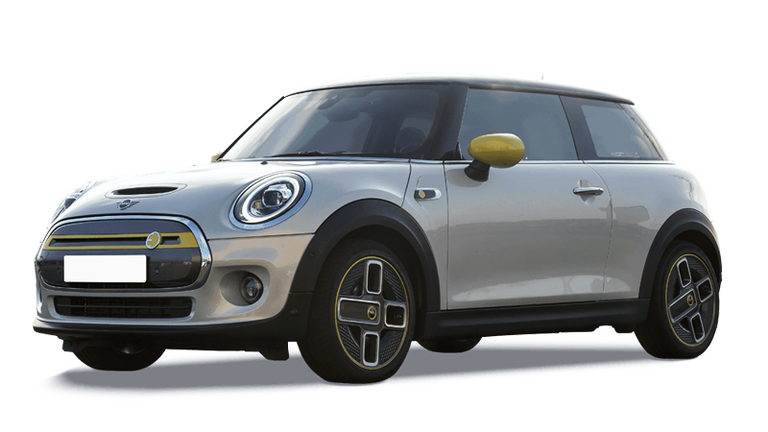
Starting Price: $30,900
The MINI Electric brings the Cooper’s character and design language to the electric powertrain, creating a package that combines urban efficiency with the brand’s distinctive personality. It is, in many respects, the logical evolution of the Cooper for city-focused buyers.
Exterior Design
The exterior of the MINI Electric is almost identical to the standard Cooper, which is a deliberate choice. Closed-off grilles, unique “Electric” badging, and a distinctive charging port cover are the primary visual differentiators. The same color palette and two-tone roof options are available, maintaining full design continuity with the combustion variants.
Specifications
- Powertrain: Single electric motor, front-wheel drive
- Motor output: 181 hp (new generation)
- Torque: 199 lb-ft
- Battery capacity: 40.7 kWh
- Range: Up to 145 miles (EPA estimate)
- DC fast charging: Up to 75 kW (0–80% in approximately 36 minutes)
- 0–60 mph: 6.7 seconds
- Cargo space: 8.7 cubic feet
Essential Features
- 9.4-inch circular OLED touchscreen
- Wireless Apple CarPlay and Android Auto
- Regenerative braking with adjustable intensity (including one-pedal driving mode)
- Heated front seats
- Lane departure warning
- Automatic emergency braking
- Available panoramic glass roof
- Available parking assistant
- Experience Modes: Core, Green, Vivid (adjusting powertrain, ambient lighting, and sound design)
Interior
The MINI Electric shares its interior with the combustion Cooper, which means the same distinctive circular display, the same quality of materials, and the same compact rear seat situation. The absence of a transmission tunnel creates a slightly more open feel in the front footwell, which is a minor but noticeable improvement.
Driving Character
Electric power delivery suits the Cooper’s character well. Immediate torque from standstill makes urban driving genuinely quick and engaging, and the MINI Electric’s 6.7-second 0–60 time is competitive for the class. The driving position and steering retain the Cooper’s communicative feel.
Range of 145 miles is adequate for urban use but limiting for buyers who regularly travel beyond the city. Honest assessment for its intended purpose, though: as an urban daily driver with home charging, the MINI Electric is an excellent proposition.
Who It Suits
Mini Cooper buyers who live in urban environments with reliable charging access and want to reduce running costs without changing their car’s personality. Strong overlap with Fiat 500e buyers — the decision often comes down to brand loyalty and the degree to which the driving experience matters.
Detailed Comparison Table
| Model | Starting Price | Powertrain | HP | Cargo Space | Key Strength | Best For |
| Mini Cooper Hardtop | $25,300 | 1.5L / 2.0L petrol | 134–189 | 8.7 cu ft | Driving dynamics, personality | Urban enthusiasts |
| Fiat 500e | $33,500 | Electric | 117 | 9.5 cu ft | EV efficiency, iconic design | City EV commuters |
| Mazda CX-30 | $26,820 | 2.5L / 2.5T petrol | 186–227 | 20.2 cu ft | Refinement, interior quality | Mixed urban/suburban |
| Hyundai Venue | $19,650 | 1.6L petrol | 121 | 18.7 cu ft | Value, feature list | Budget-conscious buyers |
| Kia Soul | $21,090 | 2.0L / 1.6T petrol | 147–201 | 24.2 cu ft | Interior space, uniqueness | Space-needing urbanites |
| Toyota GR86 | $30,995 | 2.4L petrol | 228 | 6.3 cu ft | Driving dynamics, elegance | Enthusiast drivers |
| Honda Jazz (Fit) | $23,800 | 1.5L hybrid | 107 | 52.8 cu ft (folded) | Space flexibility, fuel economy | Practical families |
| Volkswagen Polo | $22,000 | 1.0L TSI petrol | 95–110 | 12.4 cu ft | Build quality, refinement | Quality-focused buyers |
| MINI Electric | $30,900 | Electric | 181 | 8.7 cu ft | EV personality, driving fun | Urban EV converts |
Ownership Cost Considerations
Purchase price is only part of the equation. Buyers who evaluate cute cars solely on sticker price risk underestimating the real cost of ownership. Several factors vary significantly across this category:
Fuel and energy costs: The electric and hybrid models (500e, MINI Electric, Jazz, Ignis) offer meaningfully lower per-mile energy costs in normal use. The 500e and MINI Electric, charged at home overnight on a standard tariff, typically cost significantly less per mile than petrol alternatives. Fuel economy figures for the petrol models range from the Ignis’s 45–52 mpg to the Mini Cooper’s 29–38 mpg — a difference that compounds over high-mileage ownership.
Insurance: Sports-car category vehicles like the GR86 attract higher insurance premiums than equivalent-value city cars. The Hyundai Venue and Suzuki Ignis sit at the lower end of insurance bands, reflecting both their lower performance figures and the demographics of typical owners.
Maintenance intervals and costs: European luxury-adjacent brands (Mini, Volkswagen) generally command higher service costs than Japanese and Korean alternatives (Honda, Hyundai, Kia, Suzuki). Mini’s service intervals and parts pricing are worth researching before purchase, particularly for higher-mileage buyers.
Tires: The GR86 and Mini Cooper S use performance tire sizing that increases replacement costs compared to the economy-focused cars. The Suzuki Ignis and Hyundai Venue use relatively modest tire sizes that remain inexpensive to replace.
Resale value: Mini Cooper, Mazda, and Toyota (GR86) models have historically maintained strong resale values relative to their segment. Hyundai and Kia residuals have improved significantly in recent years. The Fiat 500e’s used market value depends heavily on battery health documentation.
Safety Ratings Overview
Safety is a non-negotiable consideration regardless of a car’s aesthetic appeal. The following reflects Euro NCAP and NHTSA overall assessment for current model year variants where published:
- Mazda CX-30: 5-star Euro NCAP
- Hyundai Venue: 5-star ANCAP (Asia-Pacific)
- Kia Soul: 4-star IIHS (Good ratings in most categories)
- Honda Jazz: 5-star Euro NCAP
- Volkswagen Polo: 5-star Euro NCAP
- Toyota GR86: IIHS Top Safety Pick (with qualifying headlights)
- Mini Cooper: 4-star Euro NCAP (current generation under assessment)
Buyers should verify the most current ratings for specific model year and market, as ratings vary by region and assessment year.
Color and Personalization
One of the practical pleasures of this segment is the degree of personalization available compared to mainstream family cars. Several of these models offer unusually broad color ranges and configuration options:
The Mini Cooper configurator is among the most extensive in the mainstream market, allowing buyers to specify roof color, mirror caps, interior trim, and ambient lighting independently. The level of personalization approximates what was once only available on premium sports cars.
The Fiat 500e carries on the 500’s tradition of expressive color options, and its Cabriolet variant adds roof-open configuration to the visual palette.
The Kia Soul and Hyundai Venue both offer two-tone roof options that are priced accessibly and significantly improve the visual impact of both cars.
The Mazda CX-30’s Soul Red Crystal finish is available at a modest premium and transforms the car’s visual appeal — the metallic depth of the paint is difficult to appreciate in photographs and consistently impressive in person.
Bottom Line
The best cute car is not the one with the most horsepower, the largest boot, or the most elaborate safety system. It is the one that fits the life it is asked to support — the city it navigates, the journeys it makes, the personality it reflects.
For urban electric commuters, the Fiat 500e and MINI Electric are thoughtfully built, efficient, and characterful in a way that mainstream EVs frequently are not. For buyers who want the most space from the smallest external footprint, the Honda Jazz’s engineering is genuinely impressive. For those who value driving dynamics and proportional elegance, the Mini Cooper and Toyota GR86 are the standout choices. For buyers on tight budgets who still want personality, the Suzuki Ignis and Hyundai Venue both overdeliver on their price tags.
The category is richer and more genuinely capable than its informal name suggests. These cars are not compromises. The best of them are exactly what their buyers need — well-designed, well-built, and thoughtfully considered for the way real people actually use cars every day.