
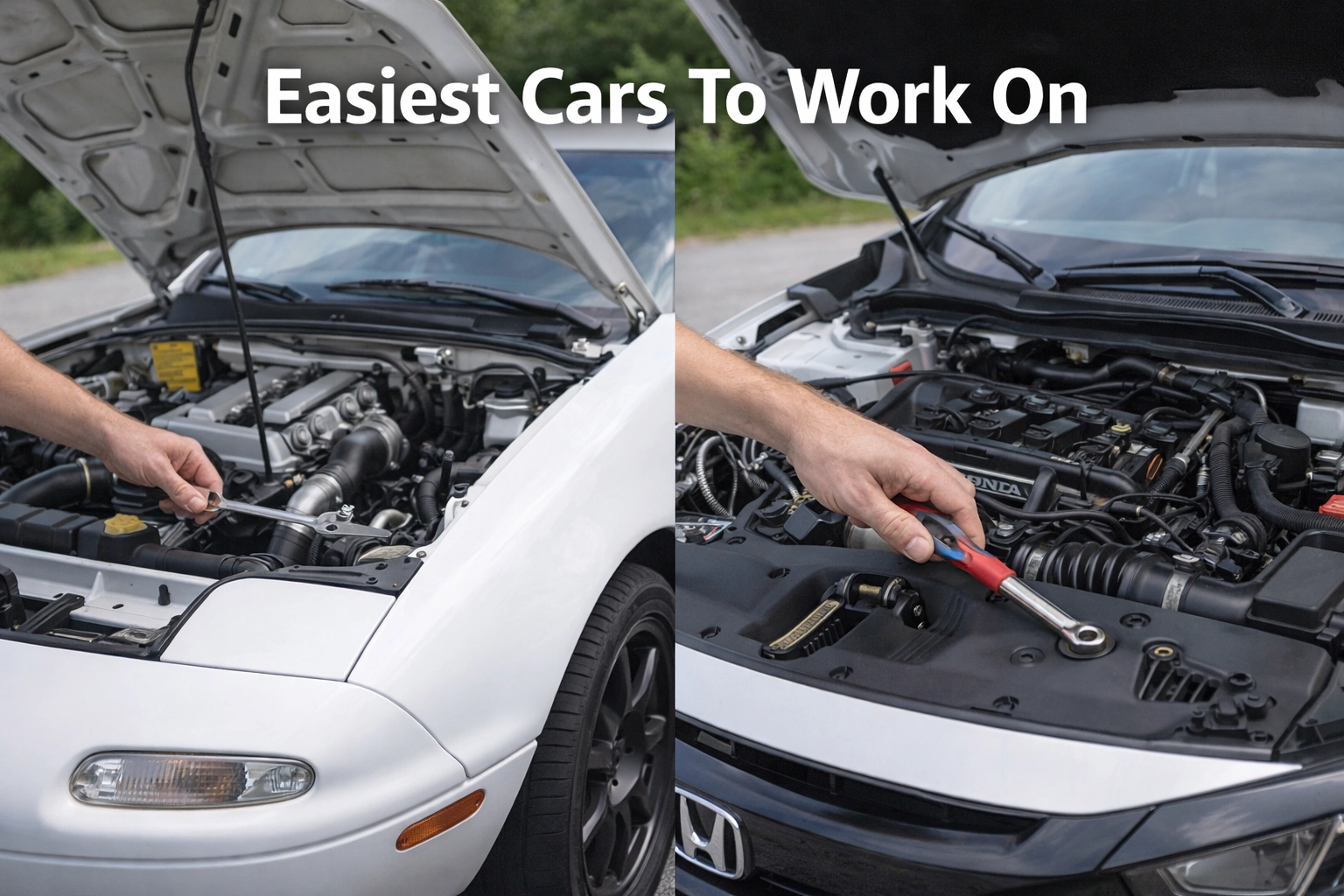
Automotive technology has progressed rapidly over the past few decades. Modern vehicles now include complex electronic systems, turbocharged engines, and tightly packed engine bays that often require specialized diagnostic tools.
While these improvements enhance efficiency and performance, they can make routine maintenance more difficult for owners who prefer to handle repairs themselves.
Despite this growing complexity, several cars remain refreshingly straightforward when it comes to mechanical work. These vehicles are widely appreciated by hobby mechanics, weekend repair enthusiasts, and owners who value simple engineering.
Many drivers still enjoy performing oil changes, brake replacements, suspension upgrades, and other service tasks in their own garage. Vehicles with accessible engine components, logical mechanical layouts, and widely available replacement parts make this process far easier.
Certain models have earned strong reputations for reliability and serviceability, supported by large enthusiast communities and extensive repair documentation.
The following guide explores some of the easiest cars to maintain, along with the qualities that make them ideal for do-it-yourself maintenance and long-term ownership.
Short Note On Research
The information presented in this guide was compiled by reviewing official manufacturer websites for vehicle specifications, engine layouts, and maintenance design details.
Community forums, repair manuals, and technical resources commonly used by mechanics were also referenced to evaluate real-world serviceability, parts availability, and ease of routine maintenance for the vehicles discussed.
Core Design Features That Make Cars Easy To Maintain
Before focusing on specific models, it is important to examine the engineering characteristics that determine whether a car is simple or difficult to repair. Certain mechanical principles consistently appear in vehicles that mechanics recommend for DIY maintenance.
Spacious Engine Bay Layout And Accessible Components
One of the most important qualities of an easy-to-maintain vehicle is the arrangement of its engine bay. Cars with spacious engine compartments allow owners to access common service components without removing multiple surrounding parts. Spark plugs, ignition coils, serpentine belts, air filters, and battery connections should be reachable with basic hand tools.
Many older naturally aspirated engines are particularly friendly to home mechanics because they lack complex turbochargers, intercoolers, and extensive sensor networks. Fewer components mean fewer obstacles when performing maintenance tasks. A simple intake layout and clearly organized wiring also reduce the risk of damaging sensitive components during repairs.
Accessibility also applies to underbody components such as oil filters, drain plugs, and suspension parts. Vehicles designed with serviceability in mind often allow mechanics to perform oil changes or brake work without removing large covers or panels. These practical design choices make routine maintenance faster and more manageable for individuals working outside professional repair shops.
Availability Of Affordable Parts And Repair Resources
Ease of maintenance extends beyond the engine itself. Vehicles that sell in large numbers often develop strong aftermarket ecosystems. Replacement parts become widely available, and prices remain competitive due to high demand. Components such as brake pads, filters, sensors, and suspension parts are easy to locate through local parts stores or online suppliers.
Repair documentation also plays a significant role. Cars with large owner communities typically have detailed service guides, video tutorials, and online forums dedicated to troubleshooting mechanical issues. These resources provide step-by-step explanations that help owners complete repairs with confidence.
Reliable service manuals and digital diagnostic tools further simplify the process. When a vehicle combines simple mechanical design with widely available parts and strong community support, it becomes one of the most approachable platforms for do-it-yourself maintenance.
Reliable Compact Cars Known For Mechanical Simplicity
Compact cars often represent the best entry point for drivers who want to maintain their vehicles at home. Their engines are usually smaller, the components are easier to access, and replacement parts remain affordable.
1. Honda Civic
The Honda Civic has been a favorite among DIY mechanics for decades. Many generations of the Civic feature reliable four-cylinder engines that emphasize durability and straightforward design. These engines typically avoid excessive complexity, which makes routine maintenance tasks easier to complete.

Spark plugs, ignition components, and air filters are usually located in accessible areas of the engine bay. Oil changes require minimal tools, and the vehicle’s suspension design allows brake replacements and wheel component service without extensive disassembly. Civic models also benefit from a large global owner community, which provides extensive repair documentation and troubleshooting advice.
Another advantage is the availability of aftermarket parts. Because millions of Civics have been produced, replacement components are inexpensive and widely available. Owners can easily find brake kits, cooling system components, and engine parts from numerous suppliers. This combination of reliability, accessibility, and strong community support makes the Civic one of the easiest cars to maintain.
2. Toyota Corolla
The Toyota Corolla is widely recognized for its long-term reliability and practical engineering. Toyota has traditionally focused on durability and straightforward mechanical design, which benefits both professional technicians and home mechanics. Many Corolla engines rely on naturally aspirated configurations that avoid the complexity associated with turbocharging systems.

Routine service tasks such as oil changes, spark plug replacements, and air filter installation can often be completed within a short period using basic tools. The layout of the engine bay allows easy access to key components, reducing the time required for maintenance.
Another strength of the Corolla is its shared platform across multiple model years. Many parts remain interchangeable between different generations, making replacement components easy to locate. Combined with Toyota’s reputation for reliability, this design philosophy allows owners to maintain their vehicles with minimal difficulty.
Rear Wheel Drive Platforms That Simplify Mechanical Work
Rear-wheel-drive vehicles frequently provide additional space around the engine and transmission. This layout can make certain repair procedures easier compared with compact front-wheel-drive designs.
3. Ford Crown Victoria
The Ford Crown Victoria has become a legend among mechanics due to its durability and mechanical simplicity. Originally used by law enforcement agencies and taxi fleets, the Crown Victoria was engineered for long service life and frequent maintenance. Its large engine bay allows easy access to components that would normally be difficult to reach in smaller vehicles.

The vehicle uses a 4.6-liter V8 engine known for its reliability and straightforward design. Spark plugs, ignition coils, cooling system components, and accessory belts are easily accessible without extensive disassembly. The rear-wheel-drive layout also simplifies transmission and drivetrain repairs.
Another advantage is the availability of inexpensive parts. Fleet vehicles were produced in large numbers, and many components remain widely available through aftermarket suppliers. This combination of mechanical simplicity and durable construction makes the Crown Victoria an excellent vehicle for DIY mechanics.
4. Mazda MX-5 Miata
The Mazda MX-5 Miata offers a unique combination of performance and mechanical accessibility. Despite its sports car identity, the Miata uses relatively simple four-cylinder engines that are easy to maintain. The lightweight design also allows mechanics to reach components without excessive effort.

Routine service tasks such as brake replacement, oil changes, and clutch adjustments are straightforward. The suspension system is relatively simple compared with larger performance vehicles, which makes repairs easier to perform at home.
Miata owners also benefit from a strong enthusiast community that provides extensive repair guides and maintenance tutorials. From engine upgrades to suspension improvements, nearly every procedure has been documented by experienced owners. This wealth of knowledge makes the Miata an excellent platform for drivers interested in learning mechanical skills.
Pickup Trucks With Straightforward Mechanical Layouts
Pickup trucks often feature larger engine compartments and durable mechanical components designed for heavy work. These characteristics frequently make them easier to maintain compared with smaller vehicles.
5. Ford F-150
The Ford F-150 has remained one of the best-selling vehicles in North America for decades. Many earlier generations of the truck feature naturally aspirated V6 or V8 engines that prioritize durability and ease of service.
Large engine bays provide generous working space, allowing mechanics to access belts, filters, and ignition components without removing surrounding parts. Brake systems and suspension components are also easy to reach, which simplifies common repairs such as shock replacement or brake pad installation.

Because the F-150 has been produced in such large numbers, parts availability is exceptional. Replacement components can be found in nearly every auto parts store, and prices remain competitive due to strong aftermarket demand. These qualities make the F-150 an excellent choice for drivers who prefer to handle maintenance tasks themselves.
6. Chevrolet Silverado
The Chevrolet Silverado shares many characteristics that make the F-150 easy to maintain. Many Silverado models use General Motors’ pushrod V8 engines, which are known for mechanical simplicity and strong durability. These engines use fewer moving parts compared with overhead camshaft designs, which can simplify certain repairs.

The Silverado’s spacious engine compartment allows easy access to spark plugs, ignition coils, and accessory belts. Oil changes and cooling system maintenance are typically straightforward procedures that can be completed with basic tools.
Another advantage is the strong aftermarket support available for Silverado trucks. Parts suppliers offer a wide range of replacement components and upgrade options, allowing owners to maintain or modify their vehicles without difficulty. This accessibility has helped the Silverado become a favorite among home mechanics.
Selecting a vehicle that supports do-it-yourself maintenance requires careful consideration of several factors. Mechanical simplicity, parts availability, and repair documentation all contribute to the overall ease of ownership.
Naturally aspirated engines often represent the best starting point for DIY mechanics. These engines contain fewer complex systems and are generally easier to service than turbocharged alternatives. Vehicles with spacious engine bays also make maintenance tasks more manageable by allowing clear access to essential components.
Parts availability and repair documentation should also influence the decision. Cars with large owner communities often provide the best resources for troubleshooting and repair guidance. Online forums, service manuals, and video tutorials can significantly reduce the difficulty of performing maintenance tasks.
Ultimately, the best vehicle for DIY maintenance is one that balances reliability, mechanical simplicity, and accessible components. When these elements come together, routine service becomes a practical and rewarding experience for owners who prefer to maintain their vehicles themselves.