Dielectric grease on spark plugs is commonly used to protect ignition-system connections from moisture, corrosion, dirt, and contamination. However, there is a common misunderstanding about where this grease belongs.
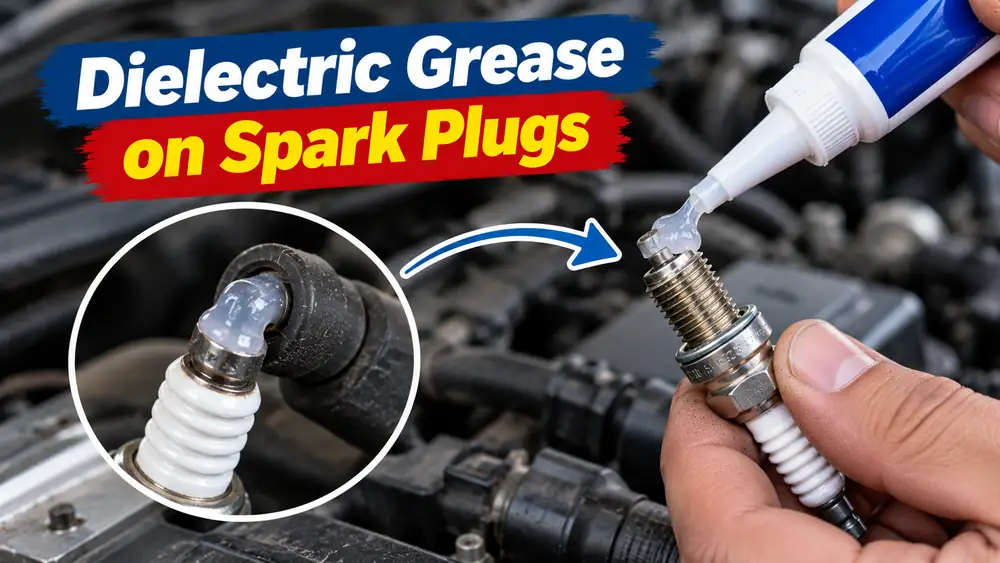
It is normally applied to the inside of the spark plug boot, around the insulating ceramic area, rather than smeared onto the metal electrode or threaded portion of the spark plug.
Used correctly, dielectric grease can help maintain a clean, moisture-resistant connection between the ignition coil or plug wire boot and the spark plug. It can also make future removal easier by reducing the tendency of the rubber boot to stick to the ceramic insulator.
The grease itself is electrically insulating, so it does not function like conductive grease. That distinction is important because the ignition system must still deliver high voltage through the correct metal contact between the ignition terminal and spark plug.
The amount matters too. Too little may provide limited sealing, while excessive grease can create a messy installation and make inspection more difficult.
For that reason, proper placement, cleanliness, compatibility, and installation technique matter more than simply adding grease whenever spark plugs are replaced.
What Is Dielectric Grease And Why Is It Used On Spark Plugs?
Dielectric grease is a non-conductive, moisture-resistant grease commonly used around electrical connectors and ignition-system components. Its purpose is generally to protect and seal the connection area, not to conduct electricity from one terminal to another.
This is especially useful around spark plug boots because the area can be exposed to engine heat, moisture, dirt, oil vapor, and condensation.
A spark plug boot needs to provide a secure connection while also insulating the high-voltage ignition system from the surrounding engine components.
When dielectric grease is applied properly inside the boot, it can help prevent moisture from reaching the electrical contact area.
It can also reduce the chance of the rubber boot bonding tightly to the spark plug’s ceramic insulator.
| Dielectric Grease Use | Purpose |
|---|---|
| Inside Spark Plug Boot | Helps seal against moisture |
| Around Ceramic Insulator | Provides contamination protection |
| Ignition Coil Boot | Helps protect boot-to-plug area |
| Electrical Connector Seals | Helps reduce moisture intrusion |
| Rubber Boot Contact Area | Can ease future removal |
| Metal Electrode | Generally Not The Intended Application |
| Spark Plug Threads | Not Normally Used For This Purpose |
The key point is that dielectric grease is insulating, not electrically conductive.
That can sound counterintuitive because it is used around an electrical connection. But the grease does not need to conduct electricity. The metal terminal inside the boot makes the electrical connection with the spark plug terminal.
The grease sits around that connection and helps protect it.
Where Should Dielectric Grease Go On A Spark Plug?
For a conventional spark plug and ignition coil boot, a small amount of dielectric grease is typically applied inside the rubber boot, particularly along the portion that contacts the ceramic insulator.
The goal is to create a thin protective film rather than fill the entire boot with grease.
The metal terminal must still make direct contact with the spark plug terminal.
This is one of the most important installation details.
Do not coat the spark plug electrode, the firing tip, or the gap with dielectric grease.
The spark must jump across the engineered electrode gap inside the combustion chamber. Grease placed on the firing end does not provide any useful protection there and can interfere with normal ignition if contamination reaches the electrode area.
The threaded portion of the plug is also a separate issue. Dielectric grease should not be treated as a general-purpose thread lubricant.
Spark plug threads require the manufacturer’s specified installation procedure and torque. Some modern spark plugs are designed to be installed dry unless the manufacturer specifically calls for another product.
Why Does An Insulating Grease Work Around An Electrical Connection?
The ignition system contains a metal-to-metal electrical path.
For example, in a coil-on-plug system, the ignition coil produces the high voltage and transfers it through a terminal or spring inside the boot to the spark plug.
The electrical current does not need to travel through the dielectric grease.
Instead, the grease surrounds the connection.
Its insulating characteristics help keep the high-voltage electricity from finding an unintended path through moisture or contamination.
The rubber boot provides the primary physical insulation, while the grease helps protect the interface from environmental contamination.
This is similar to the way dielectric grease is used on certain electrical connectors. The grease does not make the connection electrically conductive. It helps protect the connection from outside conditions.
Dielectric Grease Vs Conductive Grease
These products should not be treated as interchangeable.
Dielectric grease is formulated to insulate and protect.
Conductive grease or electrically conductive compounds are designed for applications where electrical conductivity through the material is desired.
Using a conductive product where an insulating seal is intended can create problems.
For spark plug boots, dielectric grease is commonly used because the objective is to protect the high-voltage connection without creating an alternate conductive path.
Always check the product instructions and vehicle manufacturer’s recommendations before applying any grease to ignition components.
How To Apply Dielectric Grease On Spark Plugs
Applying dielectric grease to a spark plug boot is relatively simple, but correct placement makes a significant difference.
The first step is to make sure the ignition area is clean.
Dirt, sand, oil, and moisture should not be pushed into the spark plug well during installation.
If the vehicle uses coil-on-plug ignition, the ignition coil should be removed according to the manufacturer’s procedure.
If it uses traditional plug wires, remove the wire by gripping the boot rather than pulling aggressively on the wire itself.
Clean The Spark Plug Area Before Applying Grease
Cleaning should happen before the spark plug is removed whenever possible.
Loose debris around the plug can fall into the combustion chamber after the plug is removed.
Compressed air can be useful for clearing dirt around the plug, provided it is used safely and does not blow debris toward sensitive components or the technician.
Inspect the spark plug well for oil or water.
Oil inside the spark plug well can indicate a valve-cover gasket, tube-seal, or related problem.
Water can enter through a damaged seal or during engine-bay washing.
Neither condition should simply be covered with dielectric grease.
The underlying contamination should be addressed first.
Apply A Thin Layer Inside The Boot
Once the boot is clean and dry, apply a small amount of dielectric grease inside the boot.
A thin coating along the inner rubber surface near the ceramic insulator is generally sufficient.
There is no benefit to packing the entire boot full of grease.
Excess grease can make the installation messy and can make it more difficult to determine whether the boot is properly seated.
The purpose is to create a moisture-resistant interface.
A small amount is generally easier to control than a large blob.
Use a clean applicator, cotton swab, or a clean fingertip if appropriate for the product and application.
Avoid contaminating the grease container with dirt or metal particles.
Do Not Coat The Spark Plug Electrode
The firing end of the spark plug should remain clean.
The electrode, ground strap, and spark gap are precisely designed components.
Dielectric grease does not belong on the firing end.
If grease is accidentally applied to the electrode area, clean the plug appropriately before installation rather than assuming the grease will burn away harmlessly.
The combustion chamber is not the place for unnecessary substances.
A clean spark plug provides a predictable ignition path and allows the plug to operate as designed.
Do Not Overfill The Boot
More grease does not mean more protection.
A large quantity can create several practical problems.
It may make the boot difficult to inspect, spread onto nearby surfaces, collect dirt, or make removal unnecessarily messy.
A thin film is normally enough for the sealing and release benefits associated with dielectric grease.
The boot should still seat fully over the spark plug.
If the ignition coil or plug wire does not seat correctly, investigate the fit instead of using extra grease to compensate.
Push The Boot Fully Into Position
After applying the grease, install the boot carefully.
The ignition coil or plug wire should seat firmly on the spark plug.
Depending on the design, you may feel or hear the terminal engage with the spark plug.
Do not force the component at an angle.
A damaged boot can create an ignition problem even if the spark plug itself is new.
Once installed, make sure the coil or wire is positioned correctly and that the connector locking mechanism is fully engaged where applicable.
A secure mechanical connection is just as important as the grease.
What Does Dielectric Grease Do For Spark Plugs?
Dielectric grease provides several useful benefits when applied to the correct area.
It is especially valuable in environments where moisture and contamination can reach the ignition boot.
However, its benefits should not be exaggerated.
It does not increase the engine’s ignition voltage, repair a weak ignition coil, fix a worn spark plug, or automatically cure a misfire.
Moisture Protection
Moisture can cause ignition problems because high-voltage electricity can sometimes find unintended paths across contaminated surfaces.
This is particularly relevant around spark plug boots and ignition components.
A properly installed boot already provides substantial protection.
Dielectric grease adds another layer of environmental protection by helping seal the interface against moisture.
This can be useful in humid climates, areas with frequent rain, or vehicles exposed to water crossings and engine-bay contamination.
However, grease should not be used as a substitute for a damaged boot or cracked ignition coil.
If the rubber is cracked or the boot is torn, replacement is usually more appropriate.
Corrosion Prevention
Electrical terminals can corrode when moisture and contaminants reach the connection.
Corrosion can increase electrical resistance or create an unreliable connection.
A small amount of dielectric grease around the protected portion of a connection can help reduce exposure to moisture and oxygen.
The grease is therefore useful as a barrier.
It does not remove existing corrosion.
If a terminal is already badly corroded, applying grease over it does not restore the metal.
The contact should be cleaned or the damaged component replaced according to the applicable repair procedure.
Easier Spark Plug Boot Removal
Another useful benefit is easier future removal.
Rubber boots can become stuck to the ceramic portion of a spark plug, particularly after years of heat cycling.
When the boot bonds to the ceramic, pulling it off can be difficult and may damage the boot.
A thin layer of suitable dielectric grease can reduce this tendency.
That can make future spark plug service easier.
This is particularly useful on vehicles where spark plugs are located deep inside narrow wells and access is already difficult.
Protection From Contamination
Dust, dirt, oil vapor, and moisture can accumulate around engine components.
A well-sealed spark plug boot helps prevent contaminants from reaching the electrical connection.
Dielectric grease can support that seal.
But if oil or coolant is actively leaking into the plug well, grease is not a permanent solution.
The leak should be repaired.
A spark plug boot contaminated with engine oil can eventually deteriorate, and the ignition system may develop misfires.
Common Mistakes When Using Dielectric Grease On Spark Plugs
Dielectric grease is simple to use, but several common mistakes can reduce its usefulness.
The most important is putting the grease in the wrong location.
Another is using too much.
A third is assuming that dielectric grease can repair an electrical fault.
It cannot.
Putting Grease On The Spark Plug Tip
The spark plug tip belongs inside the combustion chamber.
It should be kept clean.
Dielectric grease should not be intentionally applied to the center electrode, ground electrode, or spark gap.
The ignition spark must jump the specified gap.
The plug’s firing end should not be treated like an electrical connector.
This mistake often happens because the word “grease” makes people think the entire spark plug should be lubricated.
That is not the purpose of dielectric grease.
Applying It To The Threads Without Checking Specifications
Spark plug threads are another area where people often use unnecessary products.
Some older repair practices involved applying anti-seize compound to spark plug threads.
Many modern spark plugs and vehicle manufacturers specify installation without anti-seize because the compound can alter torque readings and potentially lead to incorrect clamping force.
Dielectric grease is not a replacement for anti-seize.
It should not be used on the threads simply because it is already available.
Follow the spark plug manufacturer’s installation instructions and the vehicle manufacturer’s torque specification.
Using Too Much Grease
A large amount of grease inside a boot is unnecessary.
The boot does not need to be filled.
The purpose is to protect the interface, not create a reservoir of grease.
Excess material can spread when the boot is installed and make future servicing messy.
It can also obscure inspection of the connection.
A controlled, thin application is usually the better approach.
Assuming Grease Fixes A Misfire
A misfire can have many causes.
Possible sources include:
- Worn spark plug
- Incorrect spark plug gap
- Faulty ignition coil
- Damaged plug wire
- Fuel injector problem
- Vacuum leak
- Low compression
- Valve-train problem
- Sensor or control-system fault
If a vehicle already has a misfire, adding dielectric grease does not automatically solve it.
If the problem is caused by moisture inside the boot, proper cleaning and sealing may help.
But a mechanical or electrical failure requires the appropriate repair.
Dielectric Grease For Different Ignition Systems
The correct application can vary depending on the ignition design.
Modern coil-on-plug systems are different from older plug-wire systems.
Coil-On-Plug Ignition
With coil-on-plug ignition, each cylinder may have its own ignition coil mounted directly above the spark plug.
The coil typically contains a rubber boot extending down toward the plug.
A small amount of dielectric grease can be applied inside the boot around the ceramic insulator.
This can help seal the boot and make future removal easier.
Care must be taken not to damage the boot while removing or installing the coil.
If the boot is cracked, swollen, burned, or contaminated with oil, replacement may be more appropriate than simply adding grease.
Spark Plug Wires
Older ignition systems may use spark plug wires that connect a distributor or ignition coil to individual spark plugs.
The boot at the spark plug end can also benefit from appropriate dielectric grease.
Apply a thin film inside the boot rather than coating the entire wire.
Inspect the wire for cracks, burns, hardening, or signs of electrical tracking.
A damaged spark plug wire can cause a misfire even when the spark plug and dielectric grease are perfectly fine.
Distributor Ignition Systems
Older engines with distributors may have additional ignition components that can be affected by moisture.
Distributor caps and rotors should be inspected according to the manufacturer’s service recommendations.
Dielectric grease can be useful in certain electrical connector applications, but it should not be randomly applied inside the distributor or across ignition contacts.
The specific component and manufacturer’s instructions matter.
Dielectric Grease Vs Spark Plug Anti-Seize
These two products have different purposes.
Dielectric grease is primarily used around electrical connection interfaces and rubber ignition boots.
Anti-seize is designed for threaded or metal mating surfaces where preventing thread galling or seizure is appropriate.
They should not be substituted for each other.
| Product | Primary Purpose | Typical Spark Plug Location |
|---|---|---|
| Dielectric Grease | Moisture Protection And Boot Lubrication | Inside Rubber Boot |
| Anti-Seize | Thread Protection Where Approved | Spark Plug Threads Only If Specified |
| Electrical Contact Cleaner | Cleaning Electrical Contacts | Metal Contact Surfaces As Appropriate |
| Penetrating Oil | Loosening Stuck Hardware | Not A Spark Plug Boot Product |
Modern spark plug installation often does not require anti-seize because many plug manufacturers provide specific recommendations against its use.
The correct procedure is to follow the instructions supplied for the particular spark plug and vehicle.
Do not assume that an old maintenance habit applies to every modern engine.
Can Dielectric Grease Cause A Misfire?
Properly applied dielectric grease should not normally cause a misfire.
The grease is intended to remain around the connection rather than between the metal electrical contacts.
However, improper application can create installation problems.
For example, if a large amount of grease is placed inside the boot and the terminal does not seat correctly, the ignition connection may become unreliable.
A damaged boot can cause the same problem.
If a misfire begins immediately after spark plug replacement, inspect the installation.
Check that the spark plug is correctly tightened, the ignition coil is fully seated, the connector is locked, and the boot is undamaged.
Also check that the correct spark plug type and gap have been used.
Can Dielectric Grease Stop Spark From Reaching The Plug?
Dielectric grease itself is electrically insulating, but that does not normally prevent the spark from reaching the spark plug when the connection is correctly assembled.
The metal terminal inside the boot makes the electrical contact.
The grease surrounds that connection.
Think of the grease as a protective seal rather than part of the electrical circuit.
Problems arise if the boot is incorrectly installed, the terminal is damaged, or an excessive amount of material interferes with the physical connection.
Proper assembly is therefore more important than trying to maximize the amount of grease used.
How Much Dielectric Grease Should You Use?
There is no universal measurement such as one gram or one teaspoon that applies to every spark plug boot.
The appropriate amount depends on the boot design.
In practical terms, a thin coating on the inside of the rubber boot is generally sufficient.
You should not fill the boot.
You should not create a thick layer over the electrical terminal.
You should not place grease on the firing end of the plug.
The application should be neat enough that the boot can fully seat without resistance caused by excess material.
If the manufacturer provides a specific application instruction, follow it.
A Simple Application Method
A practical approach is to put a small amount of dielectric grease on a clean applicator.
Spread it around the inner lip or ceramic-contact area of the boot.
The goal is coverage rather than quantity.
After the boot is installed, inspect the surrounding area for excess grease.
If a large amount squeezes out, more was probably used than necessary.
This approach also keeps the grease away from the spark plug electrode.
When Should You Use Dielectric Grease?
Dielectric grease can be particularly useful during spark plug replacement when the ignition boot is being serviced.
It can also be useful when replacing an ignition coil or plug wire, especially when the vehicle is exposed to moisture or harsh environmental conditions.
It is not necessary to treat every spark plug as though it requires a large quantity of grease.
If the manufacturer’s service procedure does not call for it, there is no need to assume that more product automatically means better maintenance.
The condition of the boot matters more.
A cracked boot should be replaced.
A contaminated boot should be cleaned or replaced as appropriate.
A corroded terminal should be repaired.
Dielectric grease is a protective measure, not a substitute for repairing damaged ignition components.
Does Every Spark Plug Need Dielectric Grease?
No.
A spark plug can operate normally without dielectric grease.
The ignition system is designed to function with the appropriate boot, terminal, insulation, and electrical connection.
Dielectric grease is an additional protective product.
It can be beneficial, particularly in moisture-prone environments, but it does not determine whether the engine can produce a spark.
This distinction is important because some maintenance products become associated with a component so strongly that people assume the component cannot function without them.
A properly designed ignition system does not depend on dielectric grease to create the spark.
The grease helps protect the connection.
Practical Spark Plug Installation Checklist
Before completing a spark plug service, check the following:
| Check | What To Verify |
|---|---|
| Correct Spark Plug | Correct Part Number And Heat Range |
| Spark Plug Gap | Follow Manufacturer Specification |
| Plug Well | Clean And Free Of Debris |
| Threads | Clean And Installed As Specified |
| Torque | Use Manufacturer’s Torque Specification |
| Boot | No Cracks Or Damage |
| Dielectric Grease | Thin Film Inside Boot If Appropriate |
| Ignition Connector | Fully Seated And Locked |
| Engine Operation | Verify Smooth Starting And Running |
This checklist helps prevent a simple spark plug replacement from creating a new ignition problem.
A new plug does not guarantee a successful repair if the coil connector is left loose or the boot is not fully seated.
The installation procedure is part of the repair.
A Useful Insight About Spark Plug Boots
One of the less obvious benefits of dielectric grease is that it can make future maintenance easier.
Spark plug boots experience repeated heating and cooling cycles.
Rubber expands and contracts.
The ceramic spark plug becomes extremely hot during engine operation.
Over time, the two surfaces can become tightly bonded.
When the next spark plug service arrives, the boot may resist removal.
A thin layer of appropriate dielectric grease can help reduce that sticking.
This is especially useful for coil-on-plug systems where the ignition coil boot may extend deep into the plug well.
However, grease should never be used to compensate for poor boot fit.
If the boot is loose, damaged, or incorrectly sized, the correct solution is to replace the component.
Final Thoughts
Using dielectric grease on spark plugs is a simple maintenance practice when it is done correctly. Its main purpose is to protect the spark plug boot and ignition connection from moisture and contamination while helping prevent the rubber boot from sticking to the ceramic insulator.
The most important detail is placement.
Apply a small amount inside the rubber ignition boot around the ceramic portion of the spark plug. Do not coat the spark plug electrode, spark gap, or firing tip. Do not automatically apply dielectric grease to the spark plug threads.
The grease is electrically insulating, so it does not conduct the high-voltage ignition current. The metal terminal inside the boot still makes the electrical connection with the spark plug.
Good spark plug service also involves much more than applying grease. The correct plug, gap, torque, ignition coil or wire, connector, boot condition, and sealing surfaces all matter.
If an engine has a misfire after spark plug replacement, do not assume that adding more grease will solve it. Inspect the ignition components and verify the installation.
The best approach is simple: use the right product, apply a thin amount in the correct location, keep the firing end clean, and follow the manufacturer’s spark plug installation instructions.
FAQs
Should You Put Dielectric Grease On Spark Plugs?
Yes, dielectric grease can be used around the spark plug boot on many ignition systems. It is generally applied as a thin layer inside the rubber boot around the ceramic insulator. Its purpose is to help protect the connection from moisture and contamination and make future boot removal easier.
Does Dielectric Grease Go On The Spark Plug Tip?
No. Dielectric grease should not normally be applied to the spark plug’s firing tip, electrodes, or spark gap. These areas should remain clean so the ignition system can produce the intended spark across the specified gap.
Does Dielectric Grease Go On Spark Plug Threads?
Dielectric grease is not intended to be a general spark plug thread lubricant. Follow the spark plug and vehicle manufacturer’s installation instructions. Some modern spark plugs are specifically installed without anti-seize or other thread compounds because these products can affect torque and clamping force.
Can Too Much Dielectric Grease Cause A Misfire?
Excessive grease is unnecessary and can create installation problems if it interferes with proper boot seating or terminal contact. A thin coating is generally sufficient. If a misfire occurs after spark plug service, check the coil, boot, connector, plug gap, plug type, and installation before assuming the grease is responsible.
Can Dielectric Grease Improve Spark Plug Performance?
Dielectric grease does not increase spark energy or make the spark plug produce a stronger spark. Its benefits are mainly protective. It can help seal the boot against moisture and contamination and may make future removal easier.
How Much Dielectric Grease Should I Put On A Spark Plug Boot?
Use a small amount sufficient to create a thin film inside the boot around the ceramic insulator. There is no universal measured quantity because boot designs differ. Avoid filling the boot with grease or allowing grease to reach the spark plug’s firing end.