Finding a decent used car for $3,000 feels like a treasure hunt — and in many ways, it is. The best ones disappear from listings within hours, not days. Private sellers get flooded with messages.
Dealers move them before they even hit the website. It is not luck that separates buyers who land a great deal from those who miss out — it is knowing exactly which models to target and why they move so fast at this price point.
The cars on this list have earned their reputation through millions of real-world miles, not marketing campaigns. They are practical, mechanically sound, and owned by communities of people who know how to keep them running.
Why Certain Used Cars Disappear Faster Than Others
Not all used cars are created equal, and the $3,000 segment makes that clearer than any other price point. At this level, buyers are not shopping for comfort packages or infotainment upgrades — they are shopping for reliability, low repair costs, and parts availability. The cars that sell fastest share a predictable set of qualities that experienced buyers have learned to recognize quickly.
Brand track record is everything. Toyota, Honda, and Mazda dominate this segment for a straightforward reason: their engines and transmissions have consistently proven capable of reaching 200,000 miles or more with basic maintenance. An older Toyota Corolla or Honda Civic with 150,000 miles on the odometer is often a better financial bet than a newer American or European model at the same price with half the mileage, because the cost and frequency of repairs is measurably lower. Consumer Reports has documented this reliability gap across decades of owner surveys, and it shows up directly in resale velocity — high-reliability models sell faster because buyers have more confidence in them.
Parts availability matters more than most buyers realize. A car that breaks down means nothing if repair shops cannot source parts affordably. Toyota, Honda, and Chevrolet models from the mid-2000s have deep aftermarket parts ecosystems. Independent mechanics stock common components, online suppliers carry everything from brake pads to timing chains at competitive prices, and labor costs are lower because these engines are familiar and straightforward to work on. European alternatives at the same price point — older expensive BMWs, Volkswagens, Mercedes models — often carry excellent engineering, but parts are expensive, specialist labor is required, and certain repairs can cost more than the car itself.
Market timing is a real factor. iSeeCars market data from 2025 showed that high-demand budget vehicles in the $2,000 to $4,000 range were spending fewer than 10 days on private listings before being sold or removed. The fastest-moving models in this budget — older Corollas, Civics, and Camrys — routinely attracted multiple inquiries on the first day of listing. Fuel price sensitivity also plays a role: when gas prices rise, compact sedans with 30-plus MPG ratings become dramatically more attractive to budget buyers, further accelerating their turnover.
One more thing buyers miss: a car’s history of average repair cost is as important as its list price. RepairPal data shows that the average annual repair cost for a Toyota Corolla sits around $362, compared to a segment average of approximately $526. The Honda Civic averages around $368. These are not just good-looking numbers — they represent the difference between a car that costs $3,000 plus $300 per year in repairs and one that costs $3,000 plus $900 per year in repairs. Over three years, that gap is meaningful
The Fastest Selling Cars At The $3,000 Price Point
The following models are the ones that consistently clear private listings and dealer lots the fastest at or near the $3,000 price point. Each entry covers the model years most likely to be found in this range, what makes them worth targeting, and what to watch out for during inspection.
1. 2006–2008 Toyota Corolla CE And LE
Typical Market Price: $2,500 – $3,200
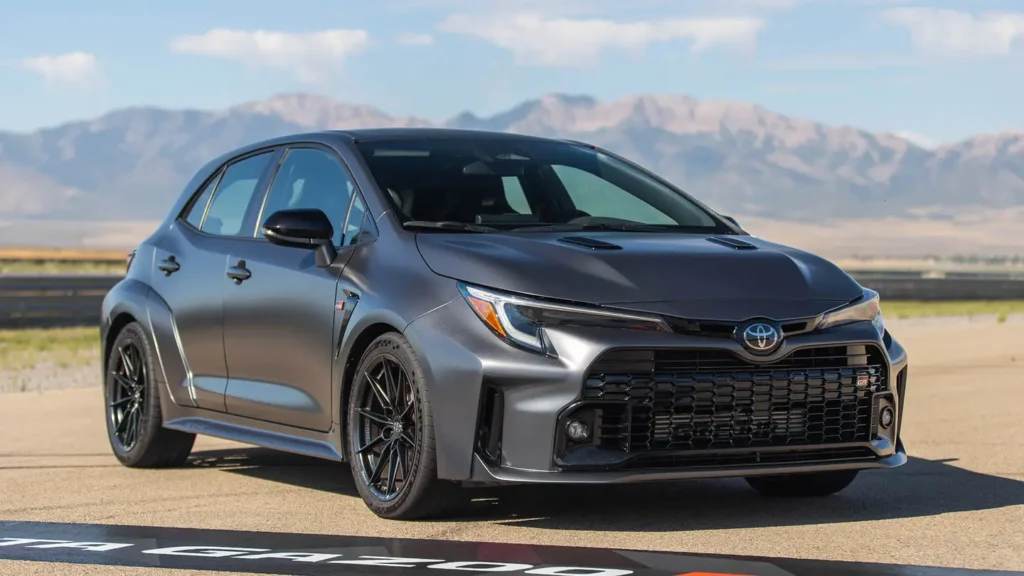
The Toyota Corolla needs no introduction in the used car market. What does need explaining is why the 2006–2008 generation specifically holds its value so consistently at this price level while other models from the same era continue to depreciate.
The answer comes down to one of the cleanest reliability records of any compact sedan ever produced. These years avoided the oil consumption issues that affected some earlier 2AZ-FE four-cylinder engines in the Camry, and the 1ZZ-FE four-cylinder used in the Corolla during this generation is among the most thoroughly documented and well-supported small engines in automotive history.
Specifications
- Model Years In Range: 2006, 2007, 2008
- Engine: 1.8-liter 4-cylinder (1ZZ-FE)
- Horsepower: 126 hp
- Torque: 122 lb-ft
- Transmission: 4-speed automatic or 5-speed manual
- Fuel Economy: 26 city / 35 highway mpg
- Typical Mileage Found: 120,000 – 175,000 miles
Essential Features (CE And LE Trims)
- Power windows and door locks
- Air conditioning — standard
- AM/FM/CD audio system with auxiliary input (later models)
- Driver and front passenger airbags
- Side curtain airbags
- Anti-lock braking system (ABS) on LE
- Rear defogger
- 60/40 split-folding rear seat (LE)
The 2006–2008 Corolla’s appeal to budget buyers goes beyond just the brand name. The 1.8-liter engine in these cars produces modest power — 126 horsepower is not exciting on paper — but it is the kind of engine that simply does not stop working when maintained. Timing chains rather than timing belts eliminate a common expensive service, and the transmission in both automatic and manual form has earned a reputation for longevity that exceeds most competitors.
Fuel economy of 26 city and 35 highway mpg is genuinely competitive even by modern standards. For a daily commuter logging 1,000 miles per month, the fuel savings compared to a less efficient vehicle at the same price add up to real money over a year of ownership.
What To Watch For
The 2006–2008 Corolla is not without known issues. The automatic transmission can develop hesitation at higher mileage if fluid has never been changed — always request transmission service records. The oxygen sensor and catalytic converter are common replacement items on high-mileage examples. Rust on the undercarriage and wheel arches is a concern on cars from northern states with heavy road salt exposure. Always inspect the undercarriage carefully on any high-mileage Corolla.
At a $3,000 price point, a clean 2007 Corolla LE with documented maintenance is genuinely rare. When one appears on a listing with service records, it typically receives inquiries within the first few hours. The combination of fuel economy, proven engine reliability, low average repair costs, and widely available parts creates a car that budget buyers recognize as a safe choice — and that recognition drives demand.
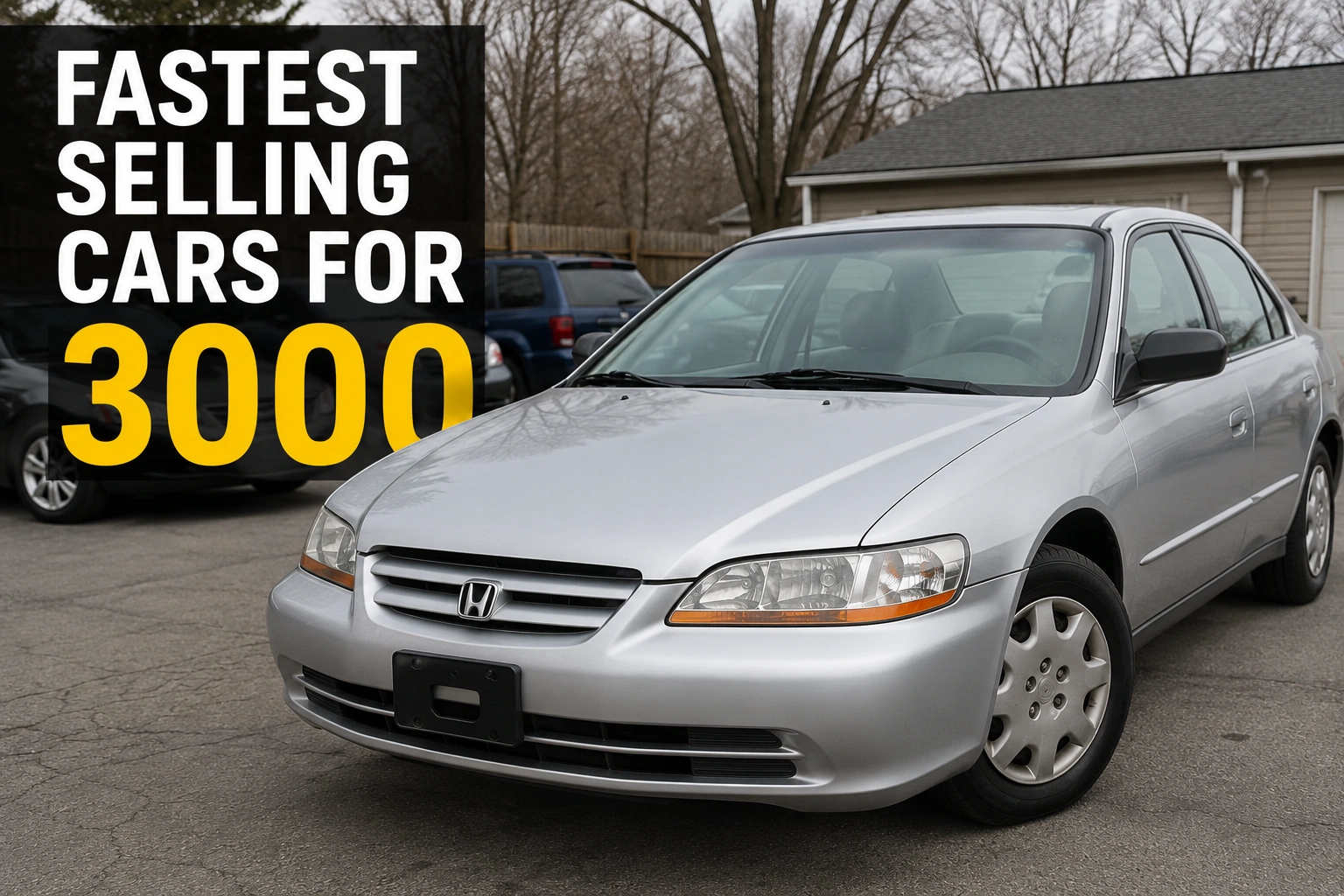
2. 2003–2007 Honda Accord EX And LX
Typical Market Price: $2,800 – $3,500
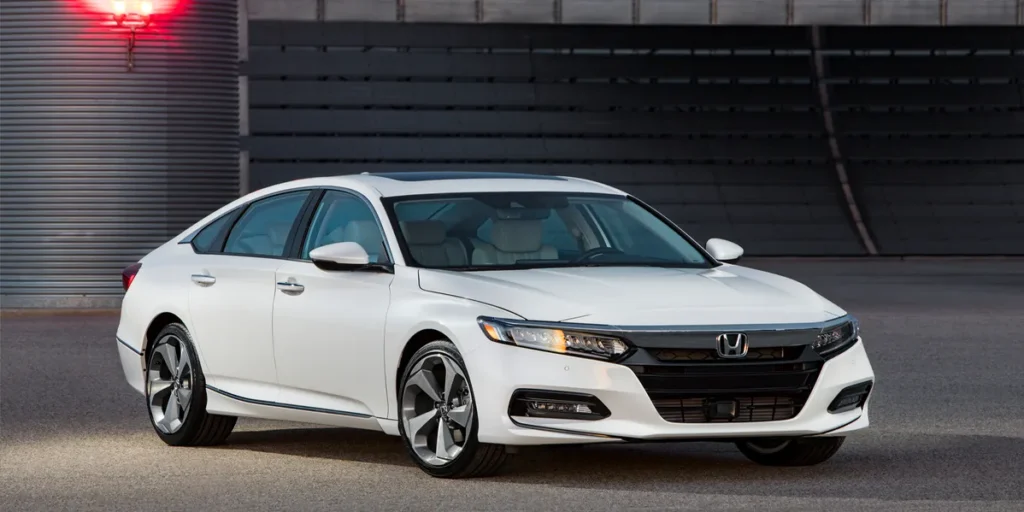
The Honda Accord from 2003 to 2007 is one of the most respected midsize sedans ever built, and at the $3,000 price point it represents some of the most usable space and strongest reliability available anywhere near this budget. The seventh-generation Accord, which covers the 2003–2007 model years, has been well-documented by Consumer Reports, which consistently rated it above average in reliability across all major systems.
Specifications
- Model Years In Range: 2003, 2004, 2005, 2006, 2007
- Engine Options: 2.4-liter 4-cylinder (K24A4) / 3.0-liter V6
- Horsepower: 160 hp (4-cyl) / 240 hp (V6)
- Torque: 161 lb-ft (4-cyl) / 212 lb-ft (V6)
- Transmission: 5-speed automatic or 6-speed manual (4-cyl) / 5-speed automatic (V6)
- Fuel Economy: 21 city / 31 highway mpg (4-cyl automatic 2007)
- Typical Mileage Found: 130,000 – 190,000 miles
Essential Features (LX And EX Trims)
- Dual-zone climate control (EX)
- Power driver’s seat (EX)
- Sunroof / moonroof (EX)
- Alloy wheels (EX)
- Honda Satellite-Linked Navigation (EX-V6, select years)
- Side curtain and front side airbags
- Anti-lock braking system — standard
- Keyless remote entry
- CD player with auxiliary input (later years)
- Cruise control
The 2003–2007 Accord with the four-cylinder K24 engine is particularly well-regarded. The K-series engine family is known for its high-revving character, strong reliability, and an enormous parts ecosystem supported by Honda enthusiasts worldwide. The timing chain design eliminates belt service costs, and the engine has documented longevity well beyond 200,000 miles when oil changes are performed regularly.
The V6 version offers more performance — 240 horsepower in a midsize sedan from the mid-2000s is respectable — but the V6 does require timing belt replacement at recommended intervals, which is a significant service cost to factor in. NHTSA awarded the 2003–2007 Accord five stars for the driver and front passenger in frontal crash tests, which remains a strong result for a vehicle of this age.
One angle often overlooked: the Accord’s cabin dimensions. At this budget, finding a comfortable car for four adults is difficult. The Accord delivers genuinely spacious rear seating and a roomy trunk by the standards of its class, making it particularly valuable for small families or buyers who regularly carry passengers.
What To Watch For
The seventh-generation Accord’s common issues include power window regulator failure (a known problem across multiple model years, though the repair is affordable), air conditioning compressor wear on higher-mileage examples, and the V6-specific timing belt service requirement. Always confirm whether the timing belt has been replaced on any V6 Accord — it is a $400–$600 service and a critical one. On four-cylinder models, check for any signs of coolant contamination in the oil, which occasionally occurs on high-mileage examples with worn head gaskets.
The combination of interior space, proven reliability, and the Honda brand reputation creates a car that disappears quickly from listings. A clean 2005 Accord EX with service records and under 160,000 miles often receives multiple calls on the same day. The four-cylinder version is the faster-moving variant because its simplicity, lower fuel costs, and reputation for longevity are well-known even among casual buyers.
3. 2008–2011 Honda Civic LX And EX
Typical Market Price: $2,500 – $3,300
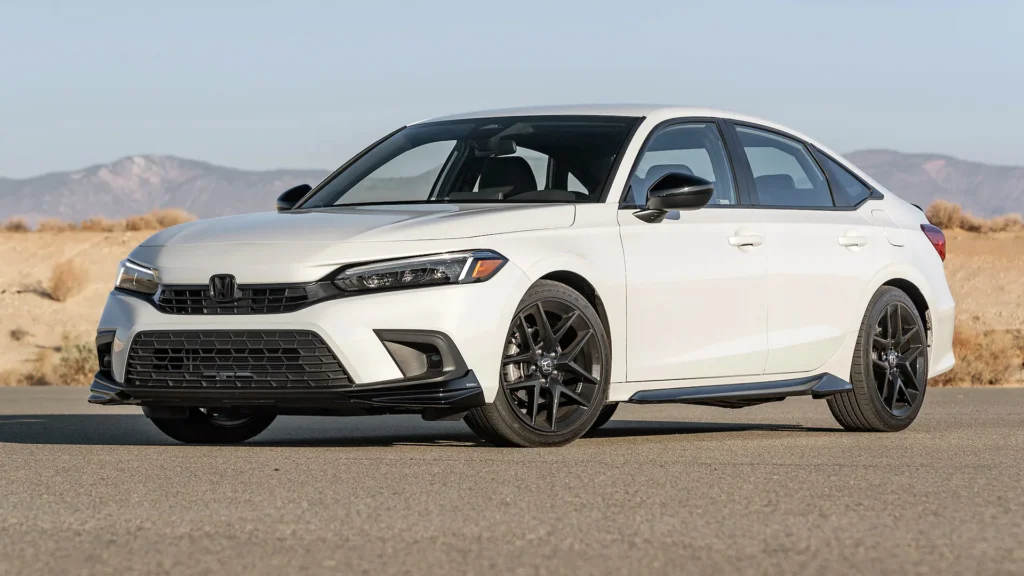
The eighth-generation Honda Civic from 2008 to 2011 occupies a specific and compelling position in the sub-$3,000 market. It is smaller and more fuel-efficient than the Accord, makes better use of compact parking situations, and carries the same Honda reliability credentials in a lighter, more economical package. For single buyers or couples without regular passenger requirements, the Civic frequently beats the Accord on pure value at this price point.
Specifications
- Model Years In Range: 2008, 2009, 2010, 2011
- Engine: 1.8-liter 4-cylinder (R18)
- Horsepower: 140 hp
- Torque: 128 lb-ft
- Transmission: 5-speed manual or 5-speed automatic
- Fuel Economy: 25 city / 36 highway mpg
- Typical Mileage Found: 120,000 – 180,000 miles
Essential Features (LX And EX Trims)
- ABS with electronic brakeforce distribution — standard
- Side curtain airbags — standard
- Active head restraints (reduces whiplash in rear collisions)
- CD audio system with auxiliary input
- Cruise control — standard
- Air conditioning — standard
- EX trim adds: sunroof, alloy wheels, navigation-ready audio
- Bluetooth streaming (some 2011 models)
- In-vehicle temperature display
The 2008–2011 Civic is well-regarded for a specific engineering reason beyond general Honda reliability: the R18 engine introduced in 2006 and carried through this generation is lighter and more fuel-efficient than its predecessor, and it responds particularly well to basic maintenance. Oil consumption is low, the VTEC system adds efficiency at higher RPMs without sacrificing low-end pulling power, and the overall powertrain package has earned a reputation for trouble-free operation that makes it particularly attractive to buyers who want minimal maintenance costs.
Fuel economy of 25 city and 36 highway mpg makes the 2008–2011 Civic one of the most efficient non-hybrid options available in this price range. For high-mileage commuters, the fuel savings relative to a less efficient vehicle at the same purchase price can be substantial over a full year of operation.
What To Watch For
The 2008–2011 Civic is not entirely without concerns. Transmission shudder on automatic models at higher mileage has been reported — a fluid change often addresses it on lower-mileage examples, but severe cases may require attention. The air conditioning system on some models required compressor replacement at moderate mileage. Interior materials show wear more readily than the Accord — cloth seats and the dashboard plastic on high-mileage Civics often look their age. None of these are serious mechanical concerns, but they are worth factoring into the inspection.
Budget buyers who commute long distances and prioritize fuel cost place the Civic at the top of their shortlist. Its 36 highway MPG rating, compact dimensions for urban use, and low average repair costs make it a logical choice that needs little explanation to a knowledgeable buyer. When a well-maintained 2009 or 2010 Civic LX appears at $2,800 with a clean vehicle history, it rarely survives more than a day on any listing platform.
4. 2005–2009 Toyota Camry LE And SE
Typical Market Price: $2,800 – $3,500
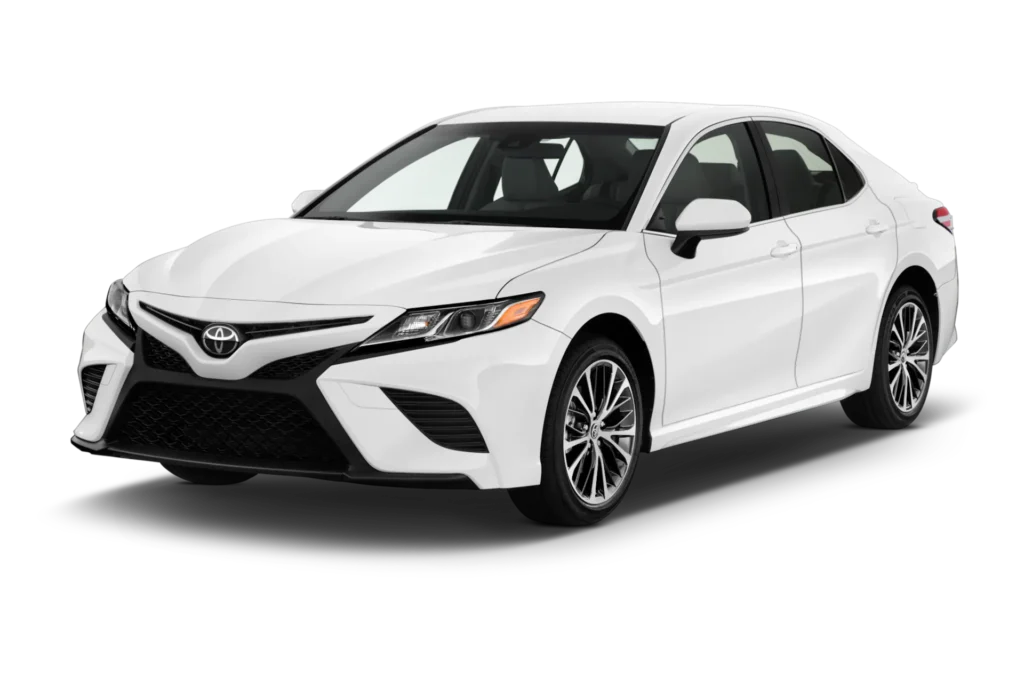
The Toyota Camry’s reputation needs little setup — it has been the best-selling passenger car in the United States for most of the past two decades. The 2005–2009 generation (XV40 platform) covers one of the most prolific production runs in the model’s history, and examples from these years appear regularly in the sub-$3,000 market with high but manageable mileage. The critical issue to be aware of — and it is important enough to mention prominently — is the 2007–2009 four-cylinder Camry’s documented excessive oil consumption problem related to the 2AZ-FE engine. This does not disqualify the car, but it does require specific attention during inspection.
Specifications
- Model Years In Range: 2005, 2006, 2007, 2008, 2009
- Engine Options: 2.4-liter 4-cylinder (2AZ-FE) / 3.5-liter V6 (2GR-FE)
- Horsepower: 158 hp (4-cyl) / 268 hp (V6)
- Torque: 162 lb-ft (4-cyl) / 248 lb-ft (V6)
- Transmission: 5-speed automatic or 6-speed automatic (V6)
- Fuel Economy: 21 city / 31 highway mpg (4-cyl) / 19 city / 28 highway mpg (V6)
- Typical Mileage Found: 140,000 – 210,000 miles
Essential Features (LE And SE Trims)
- Dual-zone climate control
- Power driver’s seat
- Alloy wheels (SE)
- Sport-tuned suspension (SE)
- JBL audio system (certain trims)
- Bluetooth connectivity (2009)
- Anti-lock brakes — standard
- Vehicle Stability Control (VSC) — standard
- Side curtain and front side airbags
- Folding rear headrests with split seat (LE)
The 2005–2006 four-cylinder Camry is the cleaner choice in this generation. These years predate the oil consumption complaints that emerged with the revised 2AZ-FE engine calibration in 2007. If the budget stretches to a 2008 or 2009 model, have the engine checked specifically for oil consumption by performing a quart-usage test — the engine should not consume more than one quart per 1,000 miles. A car that burns half a quart every 1,000 miles is acceptable; one burning a quart or more per 1,000 miles requires evaluation of repair versus price discount.
The V6 Camry from these years is a genuinely strong engine — the 2GR-FE is among the most reliable V6s Toyota has produced — but at this price point, the V6 examples have high mileage and the timing chain system has more components to monitor. The four-cylinder’s simplicity makes it the safer choice for most budget buyers.
What To Watch For
Beyond the oil consumption issue on 2007–2009 four-cylinder models, the XV40 Camry’s known concerns include premature exterior paint wear (a documented issue that Toyota acknowledged), brake actuator wear on some model years, and air conditioning evaporator leaks on higher-mileage examples. The good news: all of these issues are well-documented, repairs are affordable, and any competent mechanic will know exactly what to check.
Why It Sells So Fast
The Camry’s reputation alone drives demand. Many buyers in the $3,000 range are not automotive experts — they are people who need reliable transportation and have been told by family, mechanics, or coworkers to “get a Camry.” That institutional knowledge drives listings to sell quickly even when the car is not in perfect condition. A clean 2006 Camry LE with a full service history at $3,000 is a genuine find, and the market treats it accordingly.
5. 2004–2009 Mazda3
Typical Market Price: $2,500 – $3,200
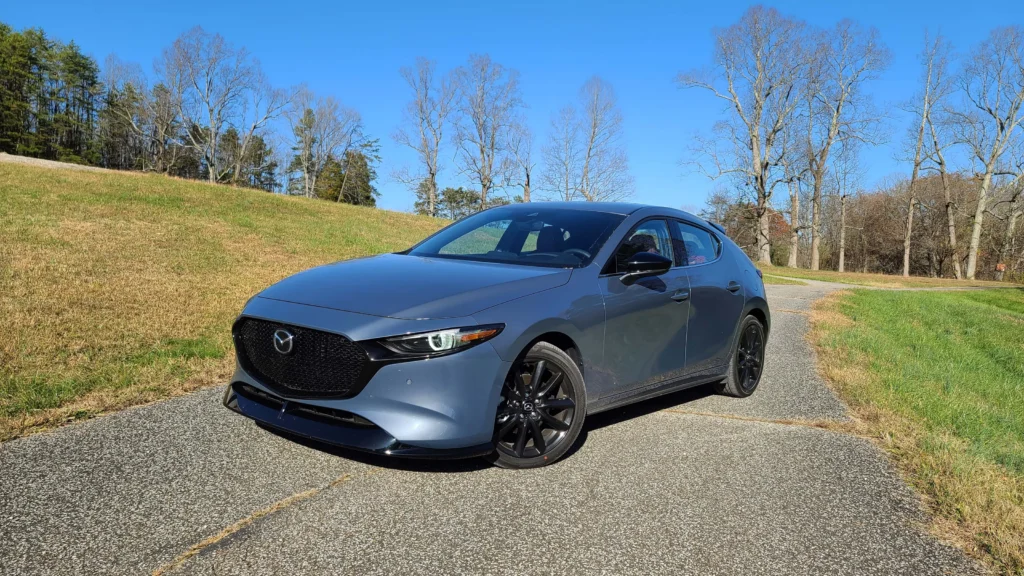
The first-generation Mazda3, covering 2004 to 2009, brings something to the $3,000 segment that the Corolla and Civic do not: a chassis that is genuinely rewarding to drive. Mazda’s engineering focus on driver involvement — what the brand calls Jinba Ittai — produced a compact car with more precise steering, sharper handling, and a more communicative feel than most competitors of its era. It is not merely transportation. For buyers who spend significant time behind the wheel and want the commute to be at least mildly enjoyable, the Mazda3 frequently ranks as the best option in its price bracket.
Specifications
- Model Years In Range: 2004, 2005, 2006, 2007, 2008, 2009
- Engine Options: 2.0-liter 4-cylinder (sedan) / 2.3-liter 4-cylinder (hatchback S)
- Horsepower: 148 hp (2.0L) / 160 hp (2.3L)
- Torque: 135 lb-ft (2.0L) / 150 lb-ft (2.3L)
- Transmission: 5-speed manual or 4-speed automatic (2.0L) / 5-speed manual or 5-speed automatic (2.3L)
- Fuel Economy: 24 city / 32 highway mpg (2.0L automatic)
- Typical Mileage Found: 120,000 – 175,000 miles
Essential Features (I And S Trims)
- Air conditioning — standard
- Power windows and locks — standard
- Anti-lock brakes — standard (i Touring and above)
- Side curtain airbags — standard
- CD audio system with auxiliary input
- Cruise control
- Alloy wheels (S and Touring trims)
- Sunroof (Grand Touring)
- 6-speed manual available on 2.3L S models
Mazda3 reliability, while not quite at the Toyota or Honda level, is stronger than many buyers assume. RepairPal gives the Mazda3 solid marks for reliability, and the 2.0-liter and 2.3-liter four-cylinder engines used in this generation have proven durable through 150,000 to 200,000 miles when maintained. The hatchback body style adds cargo versatility — the 2.3-liter Mazda3 hatchback in particular offers flexibility that neither the Civic sedan nor the Corolla can match at this price.
An angle worth noting: the Mazda3 manual transmission models from this generation are particularly well-regarded by enthusiast buyers, which creates a secondary demand pool. Buyers who prioritize the manual gearbox option are often willing to pay a small premium and are less price-sensitive — meaning a clean manual Mazda3 often sells faster than an equivalent automatic because it attracts both general buyers and enthusiast buyers simultaneously.
What To Watch For
The most common maintenance-related concern on first-generation Mazda3 models is ignition coil failure, which can cause misfires and rough running. The repair is inexpensive, but it is worth asking about coil history or budgeting for a set of replacement coils if the service history is unclear. The automatic transmission on early 2004–2005 models has been noted as less refined than Honda or Toyota equivalents — a fluid service is a sensible starting point. Rust on the rear wheel arches is a concern on northern-state examples.
Why It Sells So Fast
The Mazda3’s combination of reliability, fuel economy, and notably more engaging road manners than typical compact sedans creates a loyal buyer community. Enthusiast forums, Reddit communities, and word-of-mouth recommendations consistently direct compact car buyers toward the Mazda3 as the choice that is both practical and enjoyable. This broad appeal — covering practical daily use buyers and enthusiast buyers simultaneously — means that well-priced examples face competition from multiple buyer types, and they move accordingly.
What To Check Before Buying Any Used Car At This Price Point
The $3,000 segment requires more inspection discipline than higher price brackets, not less. The cars here are older and higher-mileage, and sellers are not always forthcoming about maintenance gaps or recent issues. The following approach applies to every model on this list.
Run A Vehicle History Report First
Carfax and AutoCheck reports are standard tools and worth the $40 they cost. Look specifically for accident reports, title status (salvage or rebuilt titles at this price are common and represent significant risk), and ownership history. A car with three previous owners and gaps in service reporting needs more scrutiny than a two-owner car with documented dealer service visits.
Hire A Pre-Purchase Inspection
For $3,000, spending $100 to $150 on a pre-purchase inspection at an independent mechanic is one of the highest-return decisions a buyer can make. A qualified mechanic can compression-test the engine, check for exhaust smoke patterns that indicate valve seal or ring wear, inspect the transmission fluid condition, evaluate brake thickness, and flag any upcoming expensive maintenance. Many buyers skip this step to save money and regret it. A failed inspection that prevents a bad purchase has paid for itself many times over.
Inspect The Engine Yourself
Before paying for an inspection, look under the hood. Check the oil on the dipstick — it should be amber to light brown, not black. Milky or frothy oil indicates coolant contamination, which signals a head gasket concern. Check the coolant reservoir — it should be at the fill line and a clear green or orange, not brown or rusty. Look for oil residue around the valve cover and along engine mounts, which can indicate leaks. None of these checks require mechanical expertise, and they can save significant time and money.
Test Drive At Multiple Speeds
A test drive that only covers a parking lot is not a test drive. Drive at city speed and highway speed, brake firmly from 40 mph to check for pull or shimmy, and listen carefully for rattles, knocks, or transmission hesitation under load. Brake pull suggests worn rotors or a stuck caliper — not catastrophic, but not free. A knock from the engine at idle can indicate rod bearing wear or low oil pressure, which is a serious concern on high-mileage engines.
Fastest Selling Cars Under $3,000: At A Glance
| Model | Model Years | Typical Price | Engine | MPG (Hwy) | Avg. Annual Repair Cost |
| Toyota Corolla | 2006–2008 | $2,500–$3,200 | 1.8L 4-cyl | 35 mpg | ~$362 |
| Honda Accord | 2003–2007 | $2,800–$3,500 | 2.4L 4-cyl | 31 mpg | ~$400 |
| Honda Civic | 2008–2011 | $2,500–$3,300 | 1.8L 4-cyl | 36 mpg | ~$368 |
| Toyota Camry | 2005–2009 | $2,800–$3,500 | 2.4L 4-cyl | 31 mpg | ~$388 |
| Mazda3 | 2004–2009 | $2,500–$3,200 | 2.0L 4-cyl | 32 mpg | ~$421 |
Annual repair cost figures sourced from RepairPal. MPG figures from EPA estimates for stated model years.
Frequently Asked Questions
What is the most reliable used car for $3,000?
The 2006–2008 Toyota Corolla consistently ranks as the most reliable option at this price. Its 1.8-liter engine has one of the lowest documented failure rates of any compact car from the mid-2000s, average annual repair costs are the lowest in the segment, and parts are available everywhere. A well-maintained example with 150,000 miles still has significant life left if basic maintenance is continued.
Are there any SUVs worth buying for $3,000?
Options exist but they come with tradeoffs. Older Honda CR-Vs from the early 2000s and Toyota RAV4 models from the same era occasionally appear near $3,000, but they typically carry very high mileage and maintenance requirements that make them less predictable than a same-budget sedan. If cargo space is the priority, the Mazda3 hatchback offers a practical alternative without the risk profile of an older compact SUV.
How many miles is too many for a $3,000 car?
There is no single answer, but context matters more than mileage alone. A 2007 Corolla with 175,000 miles and documented oil changes every 5,000 miles is a significantly safer purchase than a 2009 Camry with 130,000 miles and no service history. Mileage is one data point. Maintenance history, engine condition on a test drive, compression test results, and overall inspection quality collectively tell a more accurate story than the odometer reading alone.
Should I buy from a private seller or a dealer at this price?
Both have legitimate tradeoffs. Private sellers typically offer lower prices because they have no overhead to cover, and they are more likely to have complete personal knowledge of the vehicle’s history. Dealers in this price range often apply cosmetic cleanup to hide wear, and dealer pricing is typically higher. The most important factor is inspection access — any seller who refuses to allow a pre-purchase inspection by an independent mechanic should be avoided regardless of the channel.
Is a vehicle history report enough before buying?
No. A vehicle history report is a starting point, not a complete evaluation. Reports only reflect events that were formally reported — accidents settled privately between owners, flood damage that was never documented, or maintenance that was performed without receipts will not appear. A pre-purchase mechanical inspection by a qualified mechanic is the only way to assess the true current condition of the vehicle.
What is the biggest mistake buyers make in the $3,000 used car market?
Skipping the inspection to move faster on a listing. The pressure of competing with other buyers is real — good cars at this price do move within hours — but buying a car with an undisclosed mechanical issue to avoid losing it is almost always more expensive than losing the deal and waiting for the next one. Have a mechanic’s contact ready before shopping, so a same-day inspection is possible when a strong candidate is found.