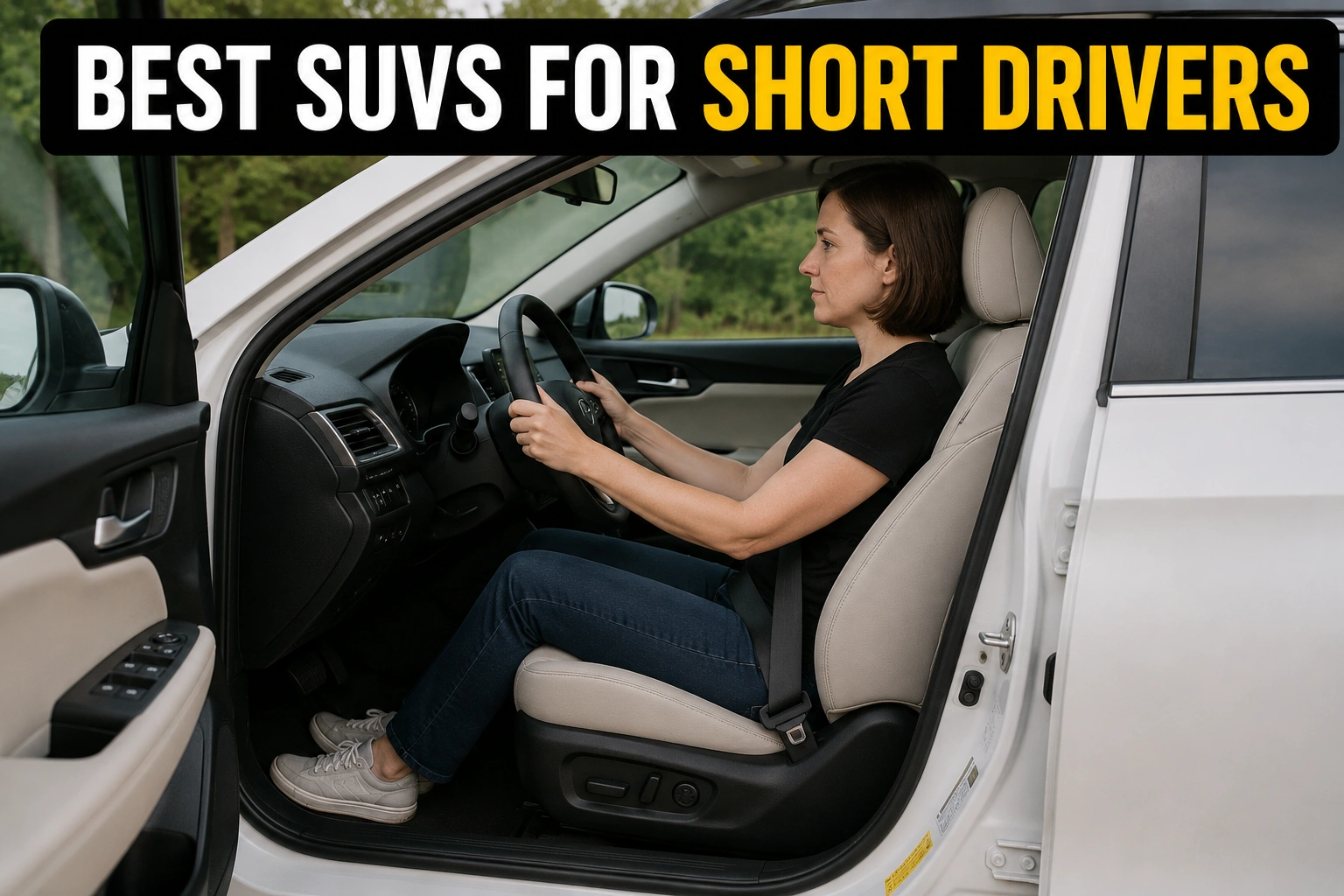
Height is never mentioned in an SUV brochure, but it shapes almost every aspect of how a vehicle feels from behind the wheel.
The distance from the seat to the pedals, the height of the hood line that blocks the view ahead, how far the steering wheel sits from the chest, whether a short driver can actually see the front corners of the vehicle while maneuvering in a parking garage — all of these details are determined by the vehicle’s proportions, and they vary significantly from one model to the next even within the same segment.
For drivers standing below five feet four inches, the difference between a well-suited SUV and a poorly suited one is not a minor inconvenience. It directly affects confidence, fatigue, and genuine safety.
A driver who cannot comfortably reach the pedals without sliding forward off the seat’s lumbar support, or whose sightline barely clears the dashboard on a tall crossover, is in a measurably less safe position than one in a vehicle that actually fits.
After comparing compact SUVs back-to-back at the 2026 New York Auto Show — and spending additional time evaluating seat adjustability, hood line height, and forward sightlines across multiple models — the results were genuinely surprising in several cases.
Some popular names on every short-driver list turn out to be significantly better than expected. Others disappoint in specific ways that most generic guides never mention.
Note
Pricing, specifications, and feature details referenced throughout this guide are sourced from Subaru USA official press releases, Kelley Blue Book, Edmunds, U.S. News & World Report, Cars.com, and CarsDirect.
Short-driver evaluations and sightline testing insights are drawn from independent automotive journalist Jill Ciminillo’s back-to-back compact SUV comparison conducted at the 2026 New York Auto Show.
Always verify current pricing and trim availability with your local dealer before purchasing.
What Short Drivers Should Actually Look For — Beyond Just Step-In Height
Most articles about vehicles for shorter drivers lead with step-in height as if it is the only relevant dimension. Step-in height matters — it determines whether getting in and out requires effort — but it is not the factor that most affects daily comfort or safety.
After reviewing seat testing feedback from automotive journalists who themselves stand near the fifth-percentile female measurement of around five feet, four specific dimensions consistently emerge as more influential than step-in height alone.
Seat height adjustability range is the first and most critical dimension. A seat that adjusts over a wide vertical range gives a short driver the ability to raise their eye level to a position where the hood line does not obstruct the view of the road immediately ahead.
Without meaningful height adjustment, a short driver’s sightline may sit low enough that a tall hood becomes a genuine forward visibility problem, particularly at intersections and in parking situations.
Steering wheel telescoping range is the second dimension. A steering wheel that telescopes deeply toward the driver allows the seat to be positioned further back, which lets shorter legs reach the pedals comfortably without the driver having to sit so close to the wheel that airbag deployment becomes a safety concern. Vehicles with only tilt adjustment and no telescoping make this balance significantly harder to achieve.
Hood line height and forward visibility are the dimensions most affected by vehicle design rather than seat adjustment. Some compact SUVs have low, tapered hoods with thin A-pillars that give a short driver a commanding view of the road ahead.
Others have high, bulky hoods and thick pillars that create a wall of metal directly in the sightline. For a five-foot driver, the difference between these two designs cannot be adjusted away with seat positioning — it is inherent to the vehicle’s proportions.
Pedal position and reach rounds out the list. Some vehicles have pedals positioned awkwardly far forward, or angled in ways that require an uncomfortable leg position for short drivers to engage fully. Adjustable pedals solve this problem completely but appear only on select vehicles at higher trim levels.
The Airbag Safety Dimension That Nobody Talks About
One critical safety consideration that rarely appears in short-driver vehicle guides is airbag clearance. The National Highway Traffic Safety Administration recommends that a driver’s chest be at least 10 inches from the center of the steering wheel to allow the airbag to fully deploy and decelerate the occupant effectively before the body contacts the wheel.
A shorter driver who must sit close to the wheel to reach the pedals may find themselves inside that 10-inch threshold. This is not a hypothetical concern — it is the reason telescoping steering wheels matter so much for shorter drivers, and it is the reason adjustable pedals are a genuine safety upgrade rather than just a convenience feature.
Vehicles that offer both features — telescoping wheels and adjustable pedals — give short drivers the tools to maintain safe airbag clearance while also reaching the controls comfortably.
The Best SUVs For Short Drivers In 2026
1. 2026 Subaru Forester
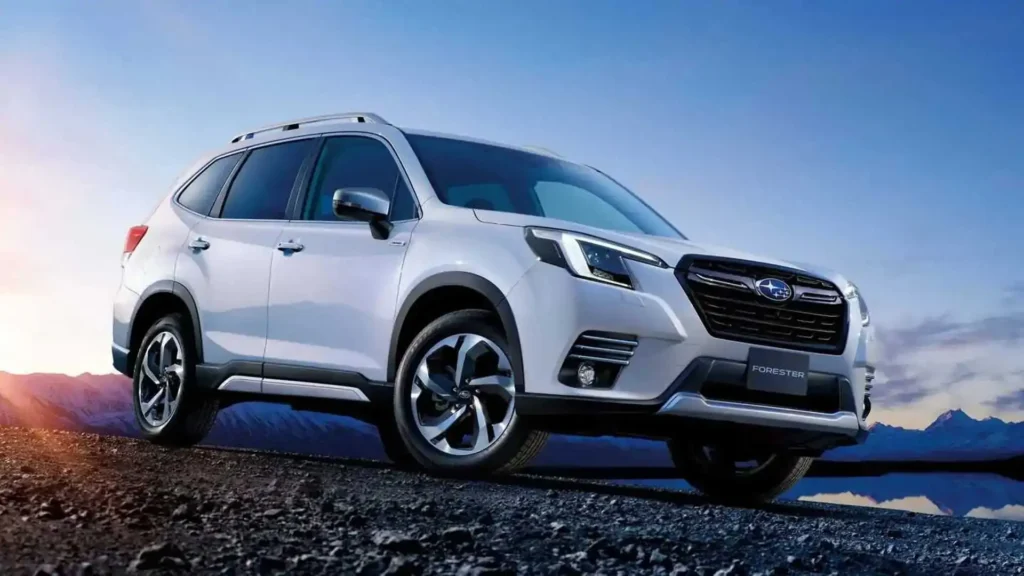
The 2026 Subaru Forester is the most consistent recommendation across independent automotive journalists who evaluate vehicles specifically for shorter drivers. Automotive journalist Jill Ciminillo, who stands at five feet tall — what the auto industry defines as the fifth-percentile female — tested compact SUVs back-to-back at the 2026 New York Auto Show and confirmed the Forester’s standing.
The step-in height is just right, the seats aren’t overly bolstered, and the steering wheel has a good amount of tilt and telescoping travel for exactly the right position. The Forester’s tall roofline and low window sills are two of its most distinctive characteristics, and both benefit short drivers directly.
The Forester’s low window sills mean the glass starts closer to the driver’s elbow, which extends the field of view and reduces the door structure in the sightline. One specific detail from direct seat evaluation: the Forester’s seat bottom length is appropriate for shorter legs.
Some compact SUVs have seat cushions so long that a short driver cannot sit fully back against the seatback while keeping their knees at a proper angle. The Forester does not have this problem.
2. 2026 Honda CR-V
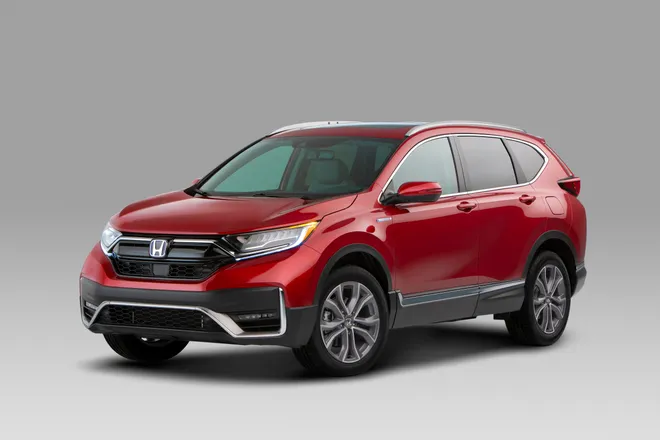
The Honda CR-V sets up shorter drivers for success with a high seating position, large side windows, and a low hood line that improves sightlines. U.S. News highlights generous seat and steering wheel adjustability that make it easy to get things just right, while big knobs and clearly labeled buttons keep controls easy to see and reach.
The 2026 model adds a 9-inch touchscreen standard across all trims, standard wireless Apple CarPlay and Android Auto, and standard wireless charging — practical updates that improve the package without changing the physical fit.
- Starting Price: $32,315 MSRP (LX FWD, includes $1,395 destination charge)
- AWD Version: $33,815 MSRP
- Engine: 1.5-liter turbocharged four-cylinder, 192 hp
- Transmission: CVT
- Fuel Economy: 28 city / 33 highway (FWD LX)
- Hybrid Option: CR-V Hybrid starts at $37,025, rated 43 city / 36 highway
- Passenger Volume: 106 cubic feet
- Key Features For Short Drivers: Height-adjustable driver’s seat (manual on LX, power on EX+), tilt and telescoping steering wheel, low hood line for clear forward sightlines, large side windows, standard wireless CarPlay/Android Auto, new 9-inch touchscreen for 2026
The CR-V’s combination of a low hood line and a high seating position creates exactly the commanding but unobstructed forward view that short drivers benefit from most.
The power seat option on EX and above trims — starting at $34,545 — allows a wider range of height adjustment than the manual option on the base LX. For households where multiple drivers of different heights share the vehicle, the EX trim’s power seat with memory settings is worth the upgrade cost.
3. 2026 Kia Sportage
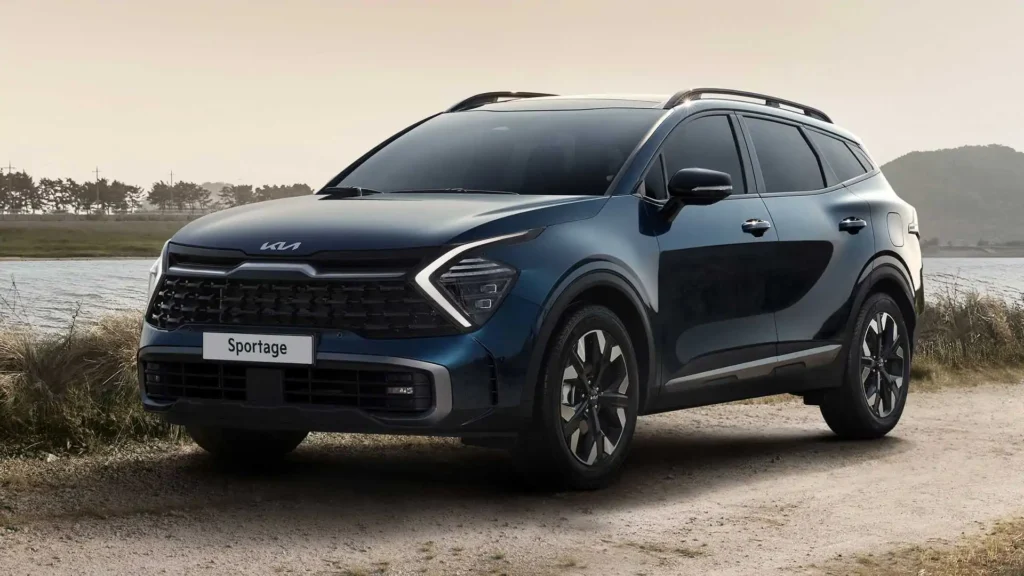
The Kia Sportage is described by U.S. News as well-suited for drivers on the shorter side, with a step-in height low enough to make entry a breeze and solid forward visibility from a high seating position.
The 2026 model receives updated front and rear styling along with a redesigned dashboard that positions controls more accessible — a specific benefit for shorter drivers whose arm reach to elevated or far-forward controls may be limited.
- Starting Price: $28,785 MSRP (LX FWD)
- Engine: 2.5-liter four-cylinder, 187 hp (standard); 1.6-liter turbocharged, 227 hp (available)
- Transmission: 8-speed automatic (standard); 7-speed DCT (turbo)
- Fuel Economy: 27 city / 33 highway (standard FWD)
- Hybrid Option: Sportage Hybrid starts at $30,185
- Key Features For Short Drivers: Low step-in height, height-adjustable driver’s seat, tilt and telescoping steering wheel, 10.25-inch touchscreen angled toward driver, intuitive and accessible control layout, available turbo engine for confident power without high revving
The Sportage is the most affordable new-car entry point on this list and delivers genuine short-driver accommodation without requiring a significant financial stretch.
The turbocharged engine option adds 258 lb-ft of torque — meaningfully more than the standard engine’s 178 lb-ft — which means confident acceleration at lower throttle input and lower RPM. This matters for a shorter driver who may prefer not to push hard on the accelerator in heavy traffic.
4. 2026 Mazda CX-5
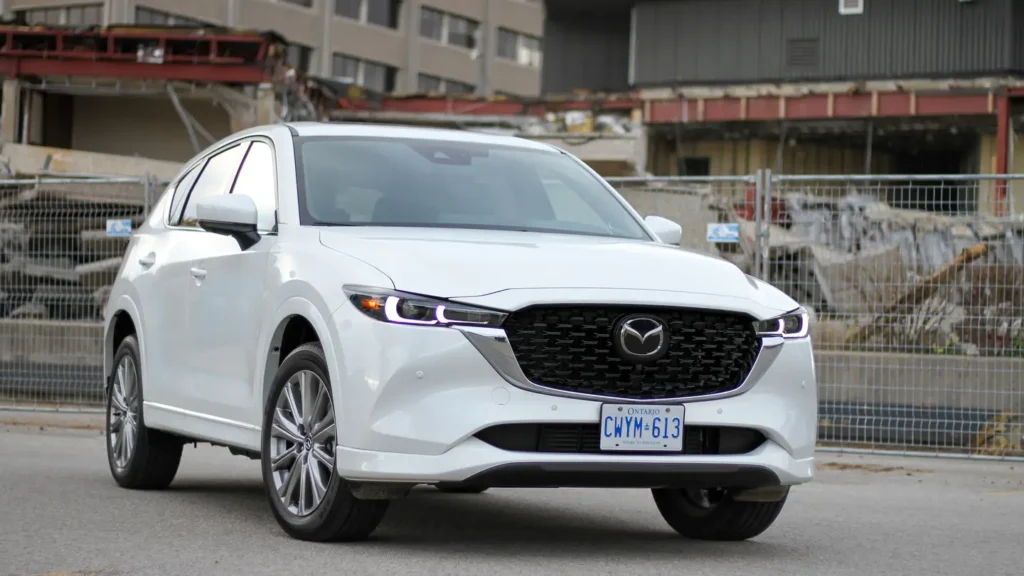
The Mazda CX-5 deserves inclusion specifically for its interior quality and the precision of its seat and steering adjustability at a price point that sits directly in the competitive middle of the compact segment.
The CX-5 is widely regarded as having one of the most premium-feeling interiors in the compact SUV class, and that quality extends to the ergonomic adjustment systems.
The steering wheel offers both tilt and telescoping adjustment, the seat has a meaningful height range, and Mazda’s low beltline design gives the driver noticeably more glass area compared to many competitors.
- Starting Price: $30,190 MSRP
- Engine: 2.5-liter four-cylinder, 187 hp (standard); 2.5-liter turbocharged, 227 hp (available)
- Transmission: 6-speed automatic
- Fuel Economy: 26 city / 31 highway (standard)
- Key Features For Short Drivers: Low beltline with large glass area, good tilt and telescoping range, premium seat quality and lumbar support, available Mazda i-Activ AWD, intuitive rotary infotainment control within easy reach
The CX-5’s rotary knob for infotainment control is positioned at the center console at a height that is genuinely accessible without arm extension — a detail that benefits short drivers significantly compared to vehicles where touchscreen-only controls require reaching toward an elevated screen.
5. 2026 Hyundai Tucson
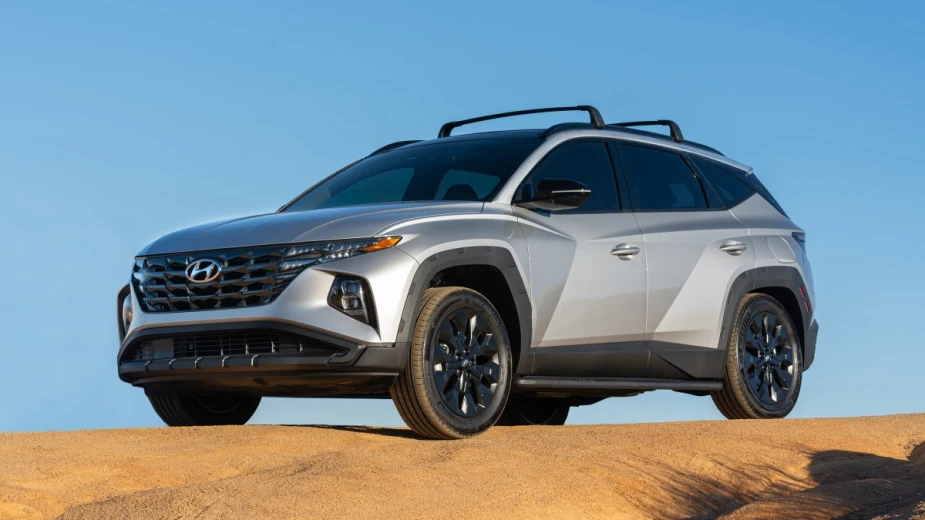
The Hyundai Tucson rounds out this list with one of the most accommodating overall short-driver packages in the segment. The step-in height is low, the seat height adjustability range is generous, and the wide door openings make entry and exit easier than on most competitors.
The 2026 Tucson also offers one of the most complete standard safety suites in the segment, with forward collision warning, automatic emergency braking, lane keeping assist, and blind-spot warning standard even on the base trim.
- Starting Price: $30,155 MSRP (SE FWD)
- Engine: 2.5-liter four-cylinder, 187 hp
- Transmission: 8-speed automatic
- Fuel Economy: 26 city / 33 highway
- Hybrid Option: Tucson Hybrid starts at $34,915
- Key Features For Short Drivers: Low step-in height, wide door openings, height-adjustable driver’s seat, tilt and telescoping steering wheel, standard comprehensive safety suite, available heated steering wheel, available power driver’s seat
Full Comparison: 2026 SUVs For Short Drivers At A Glance
| Model | Base MSRP | Seat Adjustment | Telescoping Wheel | Hood Line | AWD Standard | Safety Rating |
| Subaru Forester | $29,995 | Manual height-adjust | Yes — wide range | Low | Yes | 5-Star NHTSA |
| Honda CR-V | $32,315 | Manual (LX) / Power (EX+) | Yes | Very low | Optional | Top Safety Pick+ |
| Kia Sportage | $28,785 | Manual height-adjust | Yes | Low | Optional | Top Safety Pick |
| Mazda CX-5 | $30,190 | Manual height-adjust | Yes | Low beltline | Optional | Top Safety Pick+ |
| Hyundai Tucson | $30,155 | Manual height-adjust | Yes | Moderate | Optional | Top Safety Pick+ |
Pricing reflects published MSRP as of May 2026. Verify current figures at local dealership. Safety ratings from NHTSA and IIHS.
What To Test During Any SUV Evaluation As A Short Driver
Walking into a dealership with a clear evaluation checklist makes the comparison process faster and more objective. These are the specific checks worth performing on any SUV being considered.
Sit in the driver’s seat and raise it to maximum height before touching anything else. At maximum height, check whether the sightline over the hood is clear, whether both pedals are reachable, and whether the top of the seat is creating any headroom concern.
If the seat at maximum height still leaves the hood blocking meaningful forward vision, that vehicle does not fit regardless of its other merits.
Pull the steering wheel as close as possible using the telescoping adjustment. Note whether the column comes far enough toward the driver to allow sitting back with the seat in a comfortable position for pedal reach.
If the wheel at maximum extension still requires reaching forward from the seat, the telescoping range is insufficient for that driver.
Check the seat cushion length. Sit fully back against the seatback and note where the front edge of the cushion falls relative to the back of the knee.
At least two to three fingers of clearance between the cushion edge and the back of the knee is needed for proper circulation and comfortable long-distance posture. A cushion that reaches to the back of the knee forces shorter drivers to sit forward, losing lumbar support.
Test the view from directly behind the A-pillar. Turn to look at the diagonal forward corners — the 10 o’clock and 2 o’clock positions.
The A-pillar should not significantly block the view of a pedestrian or cyclist approaching from those angles. A-pillars that are thick or angled to create large blind triangles are a meaningful safety concern that no camera system fully compensates for.
Frequently Asked Questions
What features matter most for short drivers in an SUV?
The four most important features, in order of daily impact, are: seat height adjustability range, steering wheel telescoping range, hood line height relative to the driver’s sightline, and pedal reach. Seat height and steering telescoping can be evaluated during any test drive. Hood line height is a function of vehicle design that no adjustment can change. Together, these four dimensions determine whether the cockpit geometry works for a shorter driver. Step-in height, while frequently discussed, affects only entry and exit rather than the far more consequential hours of actual driving.
Is the Subaru Forester genuinely the best SUV for short drivers in 2026?
Based on independent journalist evaluations conducted specifically at this height range — including back-to-back comparisons at the 2026 New York Auto Show — the Forester consistently ranks at the top for shorter drivers. Its combination of a wide steering wheel telescoping range, appropriate seat bottom length, standard AWD, and a tall greenhouse with low window sills addresses more of the specific short-driver needs than any single competitor. That said, the Honda CR-V is a very close alternative, particularly for buyers who want the low hood line advantage and are willing to step up to the EX trim for the power seat option.
Do adjustable pedals make a meaningful difference for very short drivers?
Yes, significantly. Adjustable pedals allow the seat to be positioned further back — improving sightlines and increasing airbag clearance — while keeping the pedals within easy reach for shorter legs. Most compact SUVs in this price range do not offer adjustable pedals as standard equipment, and many do not offer them at all. Vehicles that do include them, typically at higher trim levels on certain models, provide a genuine safety and ergonomic advantage for drivers below five feet two inches in particular. Aftermarket pedal extenders are available as an alternative for vehicles without the factory option, though the factory system is always preferable.
Should a short driver choose a compact or midsize SUV?
Compact SUVs are generally more accommodating for shorter drivers because their lower overall height translates to lower step-in heights, lower hood lines, and cockpit dimensions proportioned more closely to what shorter drivers need. Midsize SUVs can work well — many have excellent seat height adjustment ranges that compensate for their larger overall scale — but they require more careful individual evaluation. A short driver who specifically wants a three-row vehicle should prioritize models with adjustable pedals and power seat adjustment with a wide range, as those features compensate most effectively for the larger cockpit dimensions of midsize platforms.
Is visibility from the driver’s seat worse in modern SUVs compared to older ones?
For shorter drivers specifically, yes — modern compact SUVs have generally gotten worse for outward visibility over the past decade as a result of two design trends: larger, thicker A-pillars driven by side-impact safety standards, and higher beltlines driven by styling preferences for a more athletic exterior appearance. Both trends increase the amount of metal in the driver’s sightline and reduce the glass area relative to the vehicle’s overall size. The Subaru Forester is notable for resisting the high-beltline trend — its low window sills and large glass area are a deliberate design choice that prioritizes visibility. The Honda CR-V’s low hood line achieves a similar result from a different design direction. Both stand out against the broader compact SUV market trend toward reduced outward visibility.