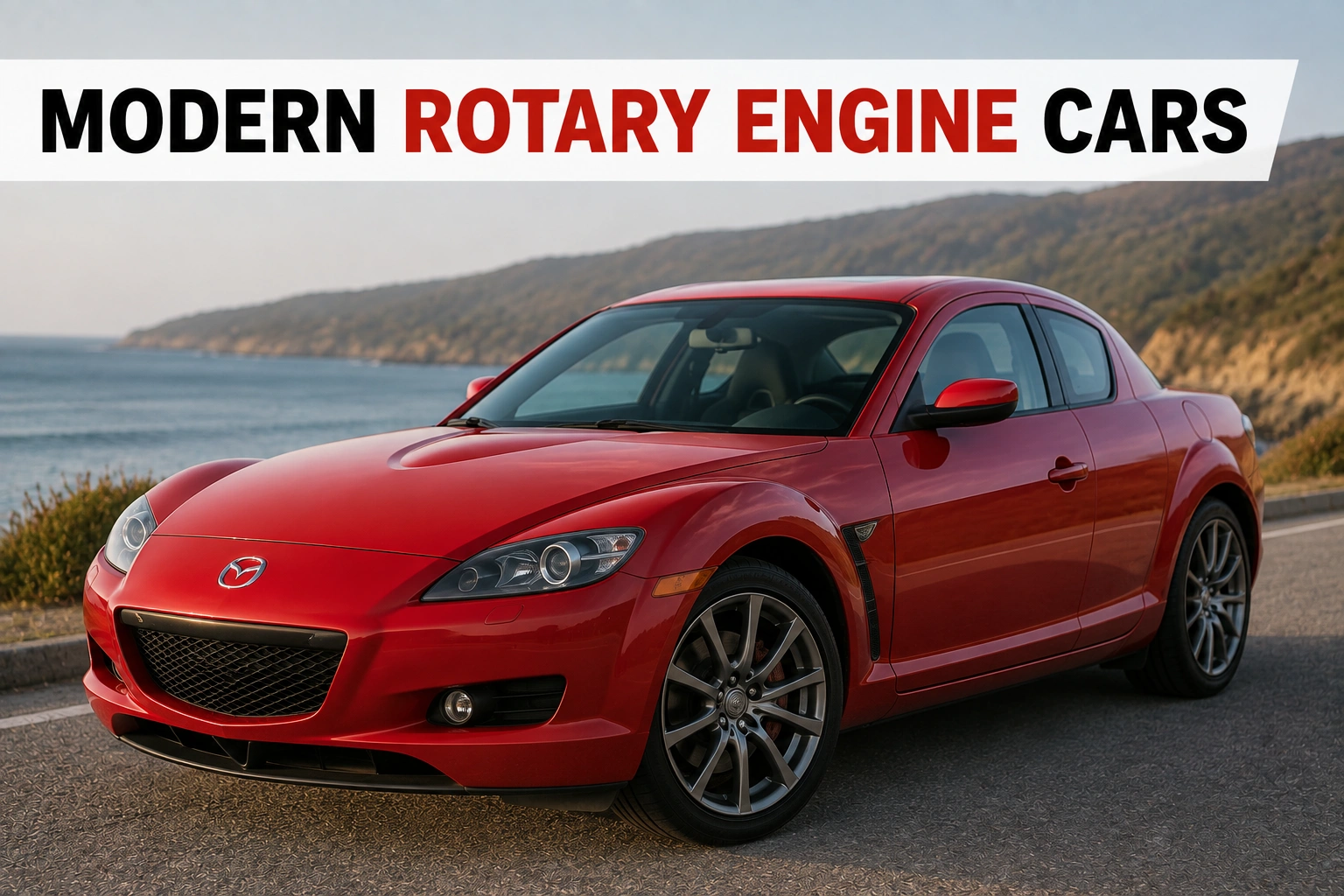
A rotary engine sounds like a wristwatch and revs like a chainsaw, yet it has quietly shaped some of the most beloved sports cars ever built. Most engines push pistons up and down. A rotary spins a triangular rotor in smooth, continuous circles instead, which is exactly why it feels so different from behind the wheel.
Mazda turned this odd German invention into a badge of honor, chasing it through racetracks, showrooms, and near bankruptcy. Today the rotary is having a strange second life, showing up in a hybrid crossover, a wild concept car, and rumors of a proper sports car comeback. Here are eight rotary powered machines, past and present, that tell that story best, along with their pricing and specifications.
How A Rotary Engine Actually Works
Inside a rotary engine, a triangular rotor spins inside an oval shaped housing called an epitrochoid. As it turns, the rotor’s three faces create separate chambers that handle intake, compression, combustion, and exhaust.
There are no valves, no camshafts, and no pistons slamming up and down thousands of times a minute. Fewer moving parts mean the engine can rev far higher than a typical four-cylinder, often past 9,000 rpm.
That simplicity comes at a cost. The tips of the rotor, called apex seals, wear out faster than piston rings, and the long combustion chamber burns fuel less completely than a round cylinder does.
Why Automakers Walked Away From It
Fuel economy rules tightened through the 1980s and 1990s, and rotary engines struggled to keep pace with turbocharged four-cylinders offering similar power for less fuel. Emissions testing exposed the same weakness, since unburned fuel escaping the elongated chamber made catalytic converters work overtime.
Warranty claims from failed apex seals also scared off European brands like NSU and Citroen early on. Mazda stuck around because the rotary had become part of its identity, not just an engine choice.
Eight Rotary Engine Cars That Shaped Modern Motoring
1. Mazda RX-8 (2003 to 2012)
The RX-8 tried something no rotary car had done before: four doors, four real seats, and rear-hinged suicide doors with no center pillar. It used the naturally aspirated RENESIS 13B engine, a redesigned rotary with side exhaust ports instead of peripheral ones.
Buyers could choose a six-speed manual making 232 horsepower or an automatic tuned closer to 212 horsepower, both revving to a screaming 9,000 rpm redline. Handling stayed sharp thanks to near-perfect 50:50 weight balance and a low center of gravity.
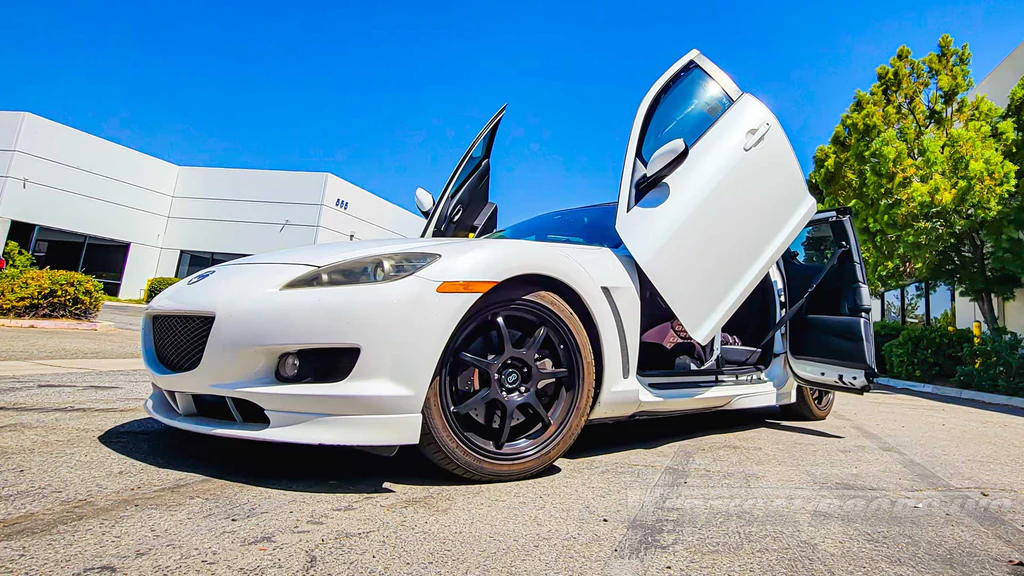
Original pricing ranged from roughly 25,000 to 32,000 dollars depending on trim. Clean used examples today typically sell between 8,000 and 20,000 dollars, with low-mileage manual cars commanding the top of that range.
| Specification | Detail |
| Engine | 1.3L RENESIS 13B twin-rotor, naturally aspirated |
| Power | 212 to 232 hp |
| Redline | 9,000 rpm |
| Layout | Rear-wheel drive, four-seat coupe |
| Original Price | $25,000 to $32,000 |
| Used Price Today | $8,000 to $20,000 |
2. Mazda RX-7 FD3S (1992 to 2002)
Enthusiasts still call the third-generation RX-7 the purest rotary sports car Mazda ever built. Its sequential twin-turbo 13B-REW engine used a small turbo for instant response and a larger one for top-end punch, a setup that felt genuinely advanced for its time.
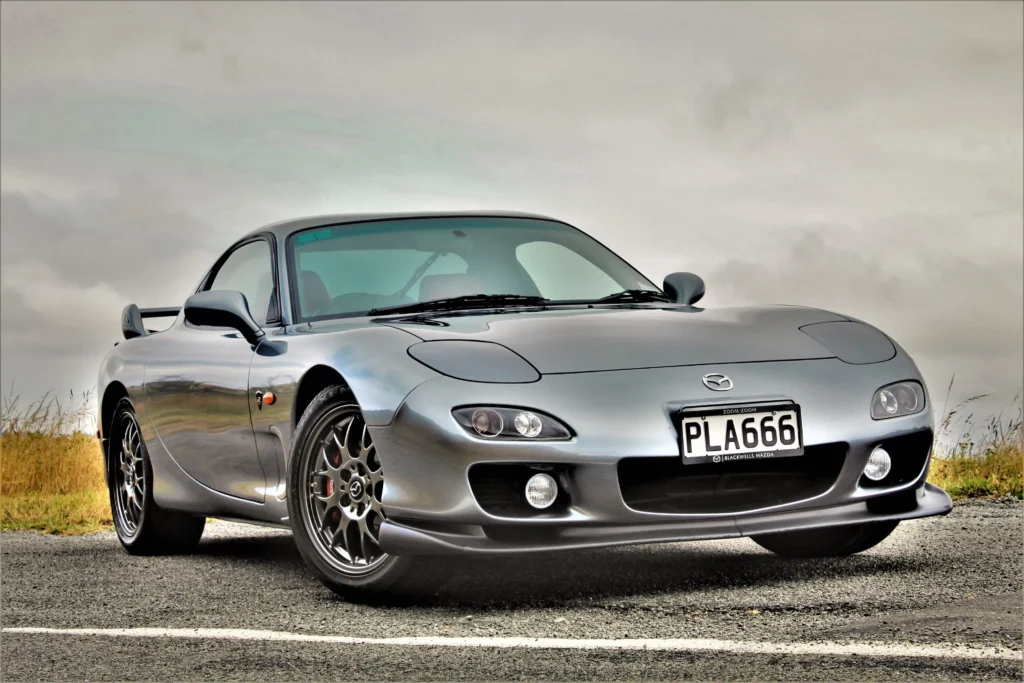
Curb weight stayed under 2,800 pounds, so even modest power figures translated into serious acceleration. Depending on market and model year, output ranged from about 255 to 280 horsepower.
Mazda pulled the FD out of the United States after 1995, which now makes clean American-market cars scarce and pricey. Original pricing sat around 32,000 to 38,000 dollars, while collector examples today routinely sell between 30,000 and 80,000 dollars or more for rare trims.
| Specification | Detail |
| Engine | 1.3L 13B-REW twin-rotor, sequential twin-turbo |
| Power | 255 to 280 hp |
| Weight | Under 2,800 lbs |
| Layout | Rear-wheel drive, two-seat coupe |
| Original Price | $32,000 to $38,000 |
| Collector Price Today | $30,000 to $80,000+ |
3. Mazda RX-7 FC3S (1985 to 1991)
The second-generation RX-7 softened the raw first car into a genuine grand tourer, adding pop-up headlights, a more rigid chassis, and optional turbocharging. Naturally aspirated versions used the 13B engine for about 146 horsepower, while the later Turbo II variant pushed closer to 200.
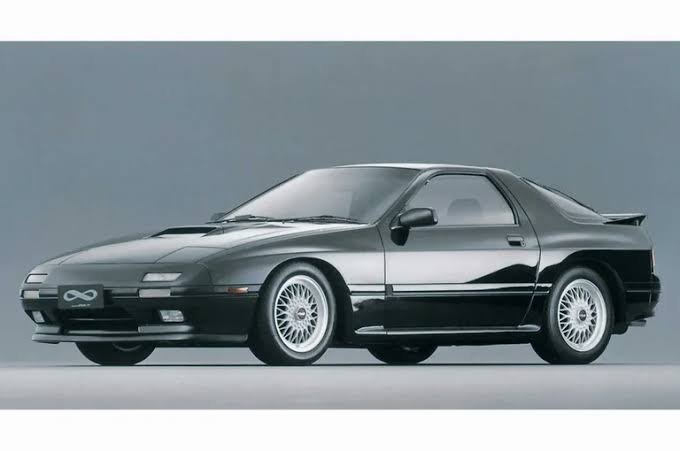
Convertible buyers got a rare factory soft-top option, something the FD never offered. Suspension tuning leaned toward comfort compared to its razor-sharp successor, making it an easier daily companion.
New pricing landed near 14,000 to 20,000 dollars at launch. Well-kept examples now trade hands for 10,000 to 25,000 dollars, with Turbo II models pulling the higher figures.
| Specification | Detail |
| Engine | 1.3L 13B twin-rotor, naturally aspirated or turbo |
| Power | 146 to 200 hp |
| Layout | Rear-wheel drive, coupe or convertible |
| Original Price | $14,000 to $20,000 |
| Used Price Today | $10,000 to $25,000 |
4. Mazda RX-7 SA22C (1978 to 1985)
Before turbochargers entered the picture, the original Savanna RX-7 proved a rotary sports car could be affordable and reliable enough for daily use. Its 12A engine made a modest 100 to 135 horsepower, but light weight kept the car feeling quick and eager.
Pop-up headlights and a long, low hood gave it a shape that still turns heads at car meets decades later. Mazda sold this generation in huge numbers relative to later RX-7s, which helped cement the rotary’s reputation in America.
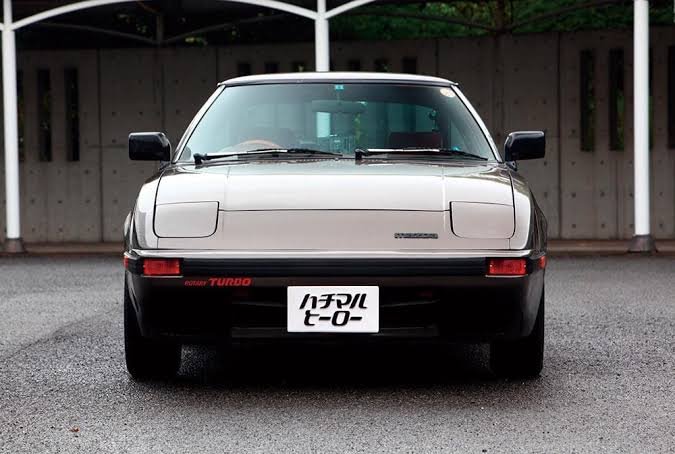
Launch pricing started around 6,395 dollars, an almost unbelievable figure by today’s standards. Restored or original-condition cars now fetch anywhere from 10,000 to 30,000 dollars.
| Specification | Detail |
| Engine | 1.1L 12A twin-rotor, naturally aspirated |
| Power | 100 to 135 hp |
| Layout | Rear-wheel drive, two-seat coupe |
| Original Price | $6,395 |
| Collector Price Today | $10,000 to $30,000 |
5. Eunos Cosmo (1990 to 1995)
Sold only in Japan under Mazda’s short-lived Eunos brand, the Cosmo remains the only production car ever fitted with a triple-rotor engine. The 20B-REW combined three rotors and twin sequential turbos to produce around 280 horsepower with a deep, unusual exhaust note.
Beyond the drivetrain, this was a genuine luxury grand tourer, complete with a built-in GPS navigation system years before that technology reached most Western cars. Its size and price kept it firmly out of reach for casual buyers even in Japan.
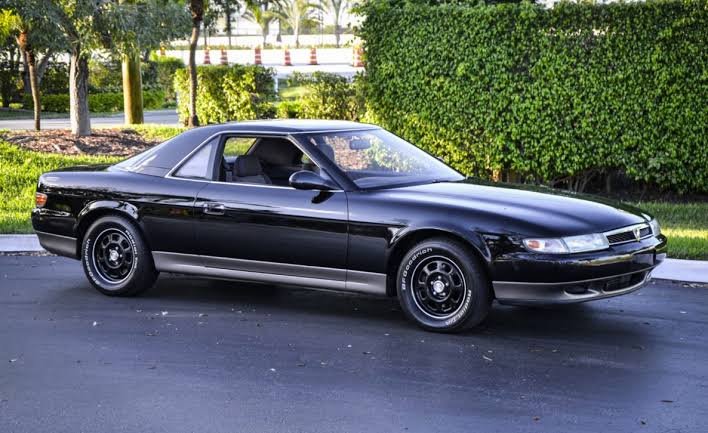
New pricing hovered around four to five million yen, roughly comparable to a well-equipped luxury sedan of that era. Import availability is limited today, and clean examples now command 30,000 to 60,000 dollars or more.
| Specification | Detail |
| Engine | 2.0L 20B-REW triple-rotor, twin-turbo |
| Power | Around 280 hp |
| Layout | Rear-wheel drive, luxury coupe |
| Original Price | ¥4 to 5 million (Japan only) |
| Import Price Today | $30,000 to $60,000+ |
6. Mazda MX-30 R-EV (2023 to present)
Rotary power returned to showrooms through an unlikely vehicle: a compact electric crossover. The MX-30 R-EV pairs a 168-horsepower electric motor driving the wheels with a small single-rotor 830cc engine that only spins a generator.
Because the rotary never connects mechanically to the wheels, it can run at one steady, efficient rpm instead of constantly changing speed. That single detail solves much of the fuel economy problem that plagued older rotary sports cars.
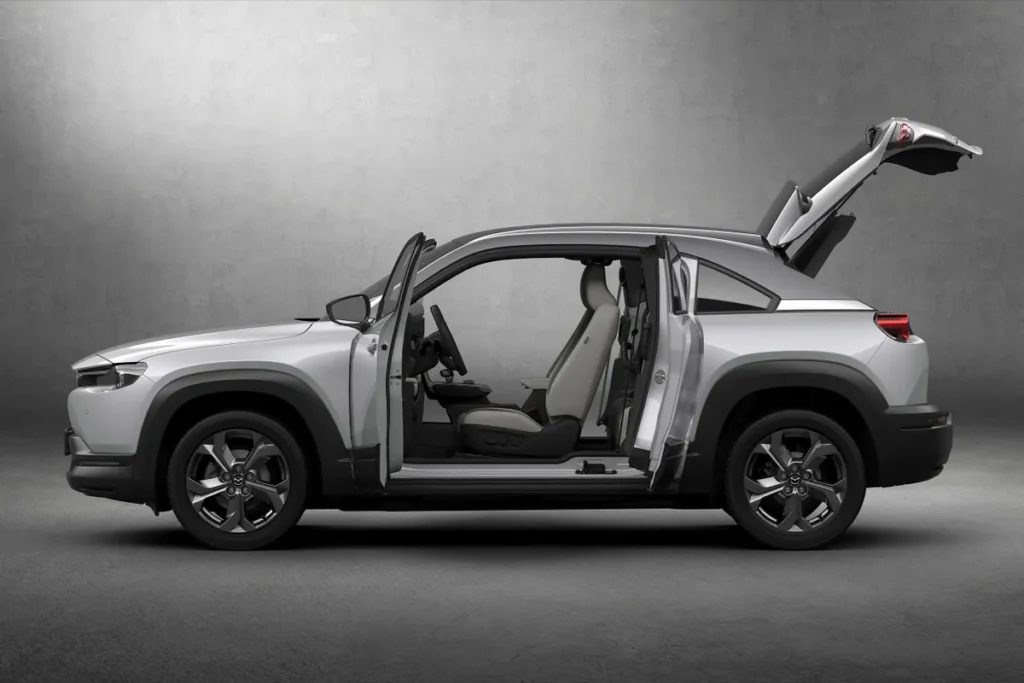
Battery-only range sits around 53 miles, while the generator extends total range past 400 miles on a full tank plus charge. European pricing starts near 35,000 to 40,000 euros; the model has not been offered in the United States.
| Specification | Detail |
| Engine | 0.83L single-rotor 8C generator |
| Electric Motor Power | 168 hp |
| Battery-Only Range | ~53 miles |
| Total Range | 400+ miles |
| Starting Price | €35,000 to €40,000 |
7. Mazda Iconic SP Concept
Unveiled in 2023, this two-door concept previews what Mazda calls a two-rotor rotary EV system, essentially a hybrid where the rotary engine again works as a generator rather than a direct power source. Design cues borrow heavily from the classic RX-7 and RX-8, with a low, curved silhouette and pop-up-inspired lighting details.
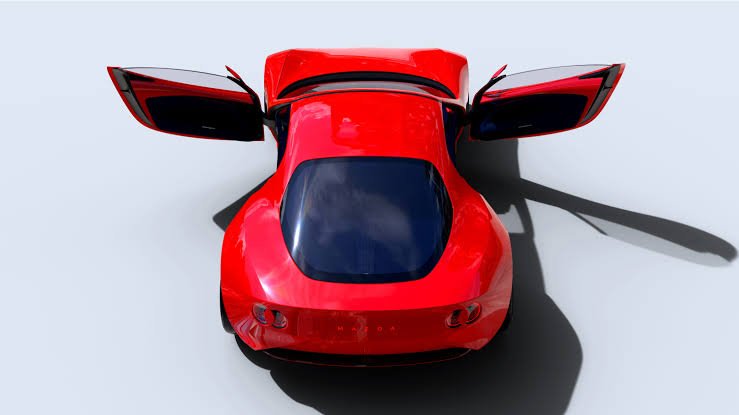
Mazda executives have publicly confirmed intent to bring a production version to market, though final specifications remain unconfirmed as of this writing. Industry reporting points toward a launch window in late 2026 or early 2027, with a rumored starting price near 50,000 dollars.
Because nothing is official yet, treat every figure attached to this car as a working estimate rather than a locked specification.
| Specification | Detail |
| Engine | Two-rotor rotary EV hybrid generator (concept) |
| Status | Confirmed for eventual production, unofficial timeline |
| Expected Launch | Late 2026 to early 2027 |
| Rumored Starting Price | ~$50,000 |
8. Mazda RX-9 (Rumored Successor)
No car named RX-9 officially exists yet, but Mazda’s Rotary Engine Development Group, launched in February 2025, has fueled years of speculation about a proper rotary sports car return. Reports describe a hybrid twin-turbo rotary setup under the Skyactiv-R banner, aimed at solving the fuel consumption and reliability complaints that ended earlier rotary programs.
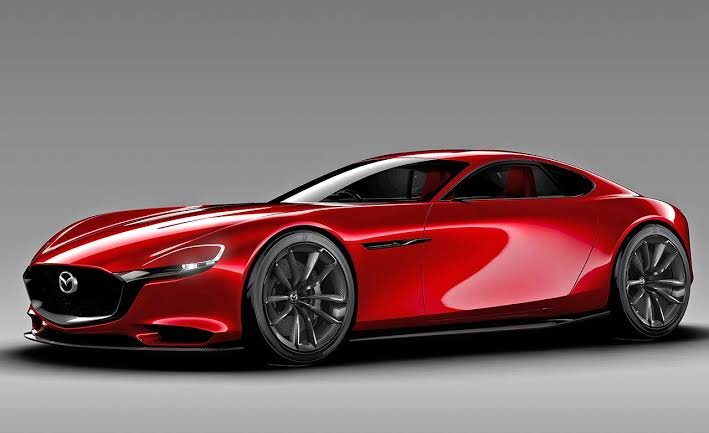
Enthusiast forums and several automotive outlets expect output somewhere north of 400 combined horsepower if the project reaches production form. None of this has been confirmed through an official Mazda specification sheet.
Given Mazda’s history of lengthy concept-to-production timelines, patience remains the only realistic strategy for anyone hoping to buy one soon.
| Specification | Detail |
| Engine | Hybrid twin-turbo rotary (rumored) |
| Status | Unconfirmed, in development |
| Expected Power | 400+ hp (speculative) |
| Price | Not announced |
Price And Specification Comparison Table
| Car | Engine Type | Power | Era | Approx. Price Today |
| Mazda RX-8 | Naturally aspirated 13B | 212 to 232 hp | 2003 to 2012 | $8,000 to $20,000 |
| Mazda RX-7 FD3S | Twin-turbo 13B-REW | 255 to 280 hp | 1992 to 2002 | $30,000 to $80,000+ |
| Mazda RX-7 FC3S | NA or turbo 13B | 146 to 200 hp | 1985 to 1991 | $10,000 to $25,000 |
| Mazda RX-7 SA22C | Naturally aspirated 12A | 100 to 135 hp | 1978 to 1985 | $10,000 to $30,000 |
| Eunos Cosmo | Triple-rotor 20B-REW | ~280 hp | 1990 to 1995 | $30,000 to $60,000+ |
| Mazda MX-30 R-EV | Single-rotor generator | 168 hp (electric) | 2023 to present | €35,000 to €40,000 new |
| Mazda Iconic SP | Two-rotor EV hybrid | TBA | Concept, 2026/27 | ~$50,000 (rumored) |
| Mazda RX-9 | Twin-turbo hybrid rotary | 400+ hp (rumored) | In development | Not announced |
Owning A Rotary Car Today
Maintenance And Apex Seal Care
Apex seals remain the single biggest concern for any rotary owner, since they wear faster than conventional piston rings and eventually cause compression loss. Regular oil injection, correct warm-up habits, and avoiding prolonged idling all extend seal life noticeably.
Parts availability has actually improved over the last decade as specialist shops and aftermarket suppliers rebuilt the ecosystem that Mazda once handled directly. A rebuild on an older 13B typically runs a few thousand dollars depending on labor rates and parts quality.
Owners who track oil consumption and change fluids on schedule often report far fewer surprises than internet horror stories suggest.
Fuel Economy And Running Costs
Older rotary sports cars rarely exceed 20 miles per gallon in mixed driving, a figure that pushed many buyers toward piston-powered alternatives during fuel price spikes. Insurance costs also tend to run higher on turbocharged rotary models due to their performance classification and smaller ownership pool.
The MX-30 R-EV flips this equation almost entirely, since its rotary only spins at one efficient rpm and rarely runs at all during short commutes. Combined fuel and electricity costs land closer to a conventional plug-in hybrid than to a thirsty RX-7.
Buyers chasing a classic rotary sports car should budget for premium fuel and slightly higher insurance from the outset.
What Comes Next For Rotary Technology
Mazda’s Rotary Engine Development Group has spent the past year working on emissions-friendly variants capable of running on hydrogen, biofuel, or standard gasoline interchangeably. That flexibility matters more than raw horsepower figures right now, since global emissions rules keep tightening regardless of engine type.
Chinese manufacturer Changan has separately confirmed a single-rotor engine project aimed at low-altitude aircraft, developed alongside Xpeng’s flying-car division rather than road cars. It signals renewed industrial interest in Wankel technology outside Mazda’s walls for the first time in decades.
Whether the Iconic SP or RX-9 actually reaches dealerships remains an open question, but the rotary engine clearly has more chapters left to write.
Which rotary engine car had the highest horsepower?
Among confirmed production models, the Eunos Cosmo’s triple-rotor 20B-REW and the RX-7 FD3S came closest, both landing near 280 horsepower depending on tune and market.
Is the Mazda RX-8 reliable for daily driving?
With disciplined maintenance, regular oil top-ups, and avoidance of short idle-heavy trips, many RX-8 owners report years of dependable use, though apex seal wear remains a long-term consideration.
Does Mazda still sell a rotary powered car?
Yes, the MX-30 R-EV currently uses a single-rotor engine as a range-extending generator, sold across Europe and Japan rather than the United States.
Why did Mazda stop selling the RX-7 in America?
Tightening emissions and fuel economy regulations, combined with slowing sales, led Mazda to withdraw the RX-7 from the US market after the 1995 model year.
Will Mazda build a new rotary sports car?
Company executives have confirmed intent to bring a rotary-powered successor to market, referencing both the Iconic SP concept and an internal Skyactiv-R development program, though no official specification sheet exists yet.
Are rotary engines more powerful than piston engines of the same size?
Rotary engines generally produce strong power relative to their small displacement and light weight, though they trade that advantage for lower fuel efficiency and more frequent internal wear compared to similarly sized piston engines.