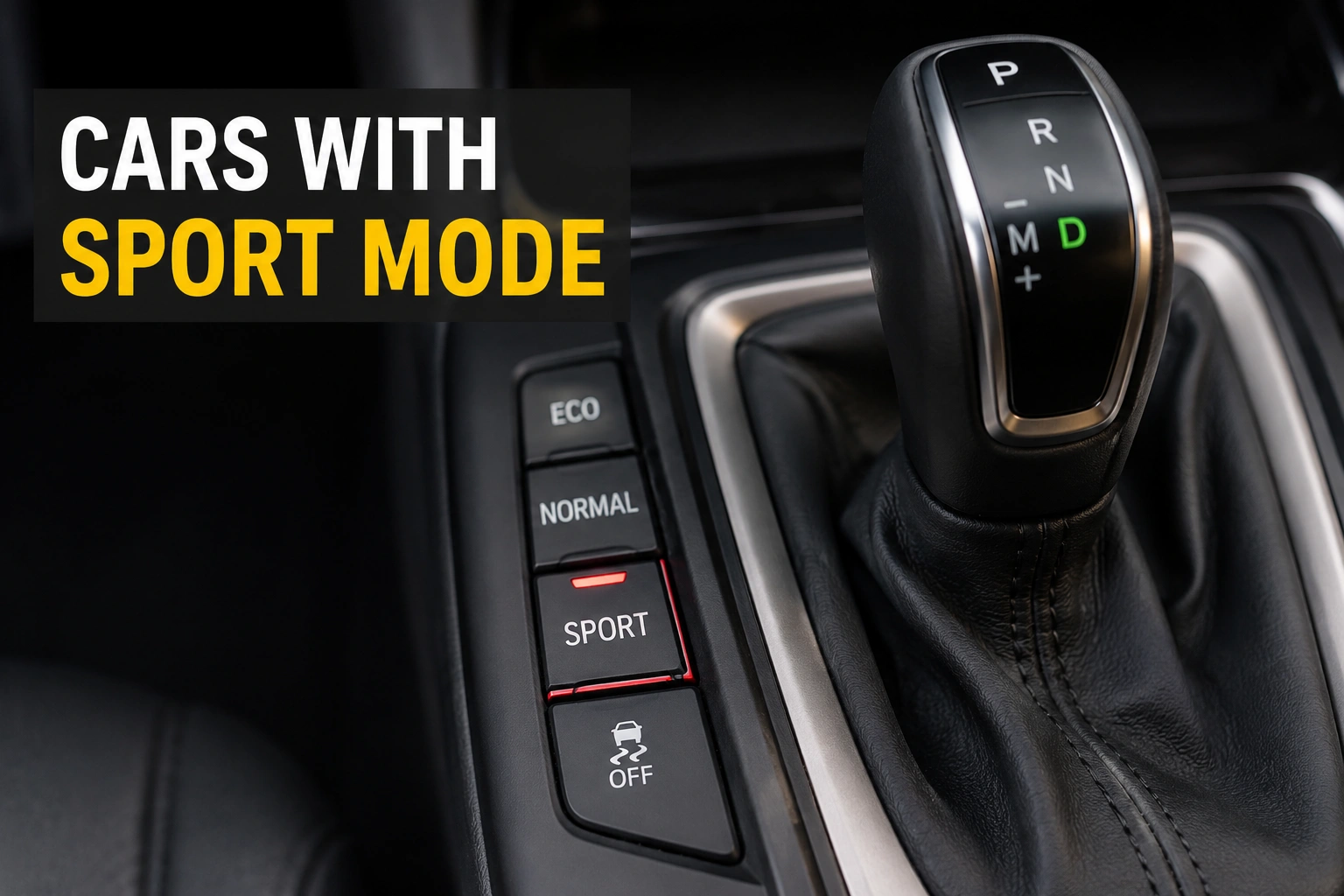
Press a single button and a family SUV stops feeling like a family SUV. The steering tightens in your hands, the throttle wakes up under your foot, and the transmission suddenly seems reluctant to let go of a gear.
Nothing under the hood changed. No parts were swapped. Yet the entire character of the drive shifted in under a second — and millions of drivers do this every single day without ever wondering how a button can rewrite a car’s personality so completely.
Sport mode has quietly become one of the most widespread pieces of technology in the automotive world, present on everything from a $24,000 hatchback to a $200,000 sports car. Yet most drivers treat it as a vague “go faster” switch rather than understanding what’s actually happening underneath.
The truth is more interesting: sport mode is a coordinated software rewrite of how a car’s throttle, transmission, steering, suspension, and even exhaust behave — all triggered instantly, all reversible, and all tuned differently depending on the manufacturer’s philosophy.
This guide breaks down exactly what sport mode does, how it differs across 2026’s most notable models, and which cars use it best.
What Sport Mode Actually Does Under The Skin
Sport mode isn’t a single feature — it’s a coordinated set of adjustments that a car’s onboard computer applies simultaneously across multiple systems the moment the mode is selected. At its most basic, sport mode is intended to sharpen how a vehicle responds to a driver’s inputs, telling the car’s computers to adjust settings like throttle sensitivity and the transmission’s shift points. The goal is to make the car feel more alert, more eager, and more connected to driver inputs without any physical modification.
The most universal change happens at the throttle. In Normal or Comfort mode, pressing the accelerator produces a deliberately softened response — partly for fuel efficiency, partly for smoothness when carrying passengers. In Sport mode, that same pedal travel produces a noticeably sharper reaction, even though the engine’s maximum output hasn’t changed at all. A more aggressive shift schedule and throttle map are the most typical Sport-mode attributes, alongside heavier steering weight and stiffer suspension tuning on cars equipped with adaptive dampers.
The transmission undergoes one of the most significant behavioral shifts. By shifting into Sport mode, the car adds weight to the steering, initiates more aggressive throttle response, and remaps shift points so the transmission holds gears longer and maintains higher RPMs for stronger torque availability. This is why a car in Sport mode often sounds louder even at the same speed — the engine is simply spinning faster than it would be in Normal mode for the same road speed, keeping it within its power band rather than allowing an early upshift into a quieter, more efficient gear.
The Steering And Suspension Layer
Beyond the powertrain, Sport mode frequently alters two systems that have nothing to do with engine output but everything to do with how a car feels: steering weight and suspension stiffness. Most modern cars use electric power steering, which means the amount of assistance — and therefore how heavy or light the wheel feels — is entirely software-controlled. In Sport mode, that assistance is reduced, making the wheel feel heavier and requiring more deliberate input from the driver, which many people associate with a more connected, “sportier” feel even though the actual steering ratio hasn’t changed.
For vehicles equipped with adaptive or air suspension, Sport mode typically firms up the damping rates, reducing body roll during cornering and minimizing the pitch and dive that occurs under hard acceleration or braking. It’s common to encounter heavily weighted steering, lower ride height for vehicles with air springs, and stiffer tuning for models with adaptive suspension when Sport mode is engaged. This is one of the few genuinely mechanical changes within Sport mode — actual valves and dampers physically adjust their resistance — rather than purely a software remap of existing hardware behavior.
The exhaust system is the final piece for performance-oriented vehicles. Many sports cars use electronically controlled exhaust valves that remain partially closed in quieter driving modes and open fully in Sport mode, producing a noticeably louder and more aggressive sound. This change is purely auditory — it has minimal effect on actual power output — but it has an outsized effect on how the car feels to drive, since engine sound is one of the primary ways humans perceive speed and aggression.
How Sport Mode Differs Across 2026’s Most Notable Cars
1. 2026 Hyundai Elantra N
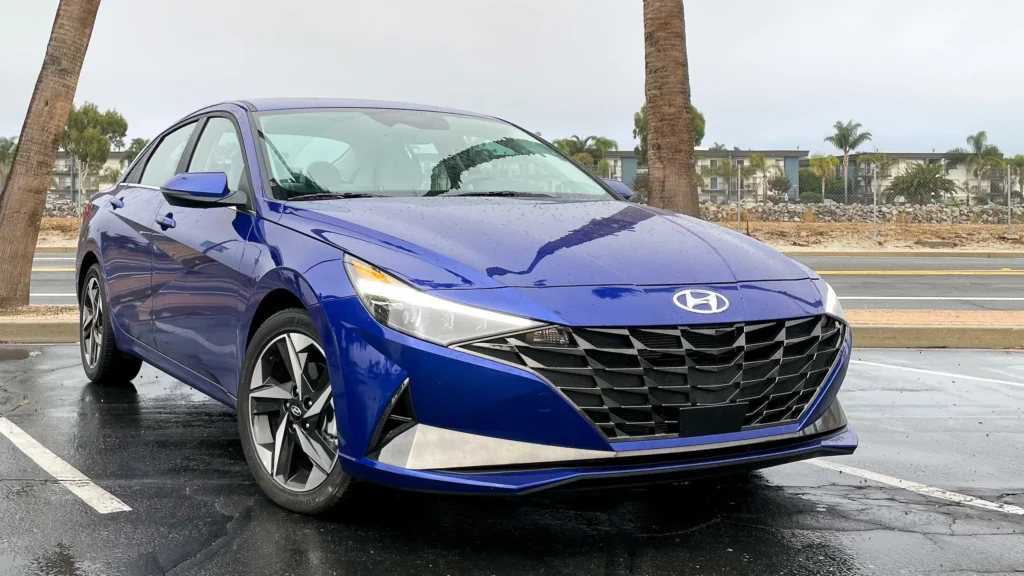
The Hyundai Elantra N represents one of the clearest examples of how far drive mode customization has come in mainstream performance cars. Rather than a simple toggle, the Elantra N runs in four drive modes: Normal, Sport, N, and N Custom — with the N Custom mode allowing individual configuration of steering weight, suspension firmness, and powertrain response independently of each other, rather than as a single bundled setting.
The Elantra N’s pricing has remained remarkably accessible relative to its rivals. For 2026, a brand-new 6-speed manual Elantra N costs $35,100, while the 8-speed dual-clutch automatic version costs $36,600 — figures that sit meaningfully below the Honda Civic Type R’s $46,895 and even below the Toyota GR Corolla’s $39,920, despite competitive performance figures.
2026 Hyundai Elantra N — Price And Specifications
- Starting price (6-speed manual): $35,100
- 8-speed dual-clutch automatic: $36,600
- Engine: 2.0L turbocharged inline-4; 276 hp / 289 lb-ft torque
- N Grin Shift (DCT only): Temporarily raises output to 286 hp for up to 20 seconds
- 0-100 km/h (DCT): 5.3 seconds
- Drivetrain: Front-wheel drive with electronically controlled limited-slip differential (E-LSD)
- Suspension: Electronically Controlled Suspension (ECS), adaptive across drive modes
- Rear legroom: 38.0 inches
- Trunk capacity: 14.2 cubic feet
Essential Features:
- Four drive modes: Normal, Sport, N, and N Custom
- N Sound Symposer pipes enhanced engine sound directly into the cabin through interior speakers
- N Grin Shift and N Power Shift buttons on flat-bottom steering wheel
- Dual 10.25-inch displays for instrument cluster and infotainment
- 8-speaker Bose premium audio system
- Heated sport seats trimmed in leather and Alcantara with blue accent stitching
- Wireless phone charging and dual-zone automatic climate control
- Available power moonroof (DCT variant)
What makes the Elantra N’s approach to Sport mode particularly interesting is the N Custom layer. Rather than forcing drivers to choose between a fixed Normal and a fixed Sport calibration, N Custom allows mixing — heavier steering with a softer suspension for backroads with poor surfaces, for example, or aggressive throttle mapping with comfort-oriented damping for daily commuting where outright handling sharpness matters less than ride quality. This level of granular control was, until recently, reserved for cars costing twice as much.
2. 2026 Honda Civic Si
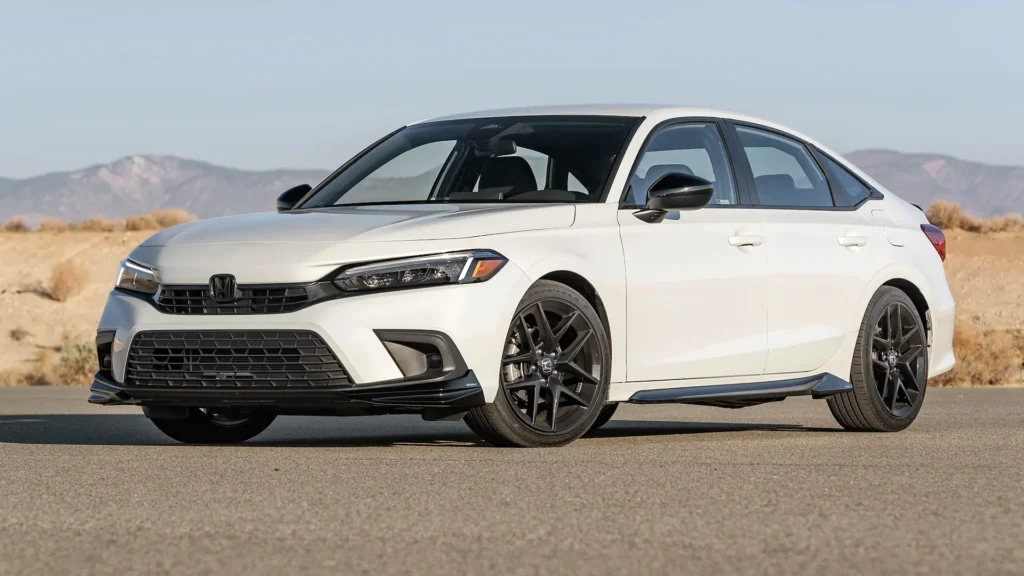
The Honda Civic Si occupies an interesting position in the Sport mode conversation: it’s positioned below both the Elantra N and the Civic Type R, yet retains a 6-speed manual transmission as standard — a configuration becoming genuinely rare in this price bracket. The Si’s approach to drive modes is less elaborate than the Elantra N’s four-mode system, but its mechanical foundation — a helical limited-slip differential and adaptive dampers — gives Sport mode a meaningful amount of hardware to actually work with.
2026 Honda Civic Si — Price And Specifications
- Starting MSRP: $32,690
- Engine: 1.5L turbocharged inline-4; 200 hp
- Transmission: 6-speed manual (standard, no automatic offered)
- Fuel economy: 27 city / 37 highway mpg
- Drivetrain: Front-wheel drive with helical limited-slip differential
- Body style: Sedan only
Essential Features:
- Adaptive damper system with Sport-mode firming
- Heated front seats
- Moonroof
- Adaptive cruise control
- Wireless Apple CarPlay and Android Auto
- Leather-wrapped steering wheel
- Premium audio system
- LED exterior lighting with rear spoiler
The Civic Si’s case demonstrates something important: Sport mode’s effectiveness depends heavily on what mechanical hardware it has to manipulate. A car with a basic open differential and passive suspension will feel a noticeably smaller difference between Normal and Sport than a car like the Si, where the limited-slip differential and adaptive dampers give Sport mode genuine mechanical levers to pull — not just throttle mapping and steering weight changes.
3. 2026 Toyota RAV4
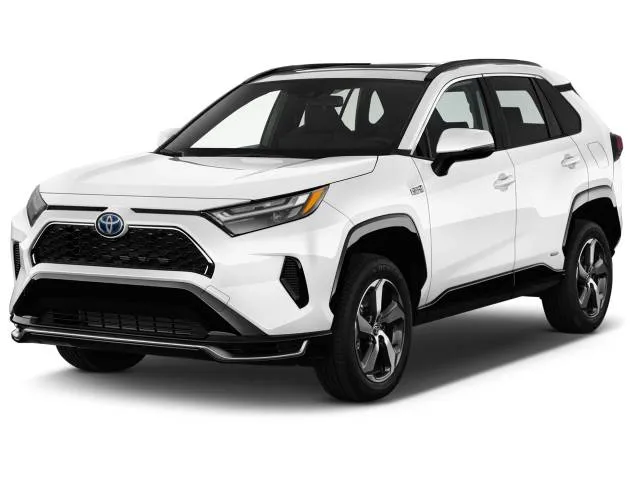
If there’s one vehicle that demonstrates how thoroughly Sport mode has permeated even the most mainstream segments, it’s the Toyota RAV4. The sixth-generation RAV4, redesigned for 2026, drops conventional gasoline engines entirely — every RAV4 is now hybrid or plug-in hybrid — yet still includes a dedicated Sport drive mode across the lineup, proof that performance-oriented drive modes are no longer reserved for cars marketed around speed.
Every RAV4 includes driver-selectable drive modes: Normal is the factory default tuned for balanced everyday driving, Eco is the most fuel-efficient setting ideal for long highway stretches, and Sport makes the throttle and steering more responsive while holding transmission shifts longer for stronger acceleration response.
2026 Toyota RAV4 — Price And Specifications
- XLE Premium AWD (as tested by Consumer Reports): $37,500 MSRP / $43,238 as configured with options
- Engine: 2.5L inline-4 hybrid; 226 hp (FWD) / 236 hp (AWD)
- PHEV variant: 324 hp combined; approximately 50 miles of electric-only range
- Transmission: Electronic continuously variable transmission (CVT)
- Drivetrain: Standard Electronic On-Demand All-Wheel Drive across the lineup
- Cargo capacity: Up to 37.8 cubic feet
- Fuel economy: Up to 47 city / 40 highway mpg
- Towing capacity: Up to 3,500 lbs
Essential Features:
- Three drive modes: Normal, Eco, and Sport (plus EV Mode on hybrid models for limited electric-only operation)
- Available 10.5-inch Toyota Audio Multimedia display
- Standard wireless Apple CarPlay and Android Auto
- Eco Drive Score display providing real-time efficiency feedback
- Energy monitor showing power flow between engine, battery, and wheels
- New for 2026: GR Sport grade — the first-ever performance-oriented RAV4 trim
- Toyota’s chief engineer described the redesign’s goal as making the RAV4 “a bit more exciting, someplace to have some fun”
The RAV4’s inclusion of Sport mode is less about transforming the vehicle into something genuinely sporty and more about giving drivers a sense of control and engagement during specific moments — merging onto a highway, overtaking on a two-lane road, or simply wanting the throttle to respond immediately rather than after a brief delay. For America’s best-selling SUV, even a modest Sport mode represents a significant cultural shift from how compact SUVs were positioned a decade ago, when “efficient and practical” was the entire pitch.
4. 2026 Porsche 911
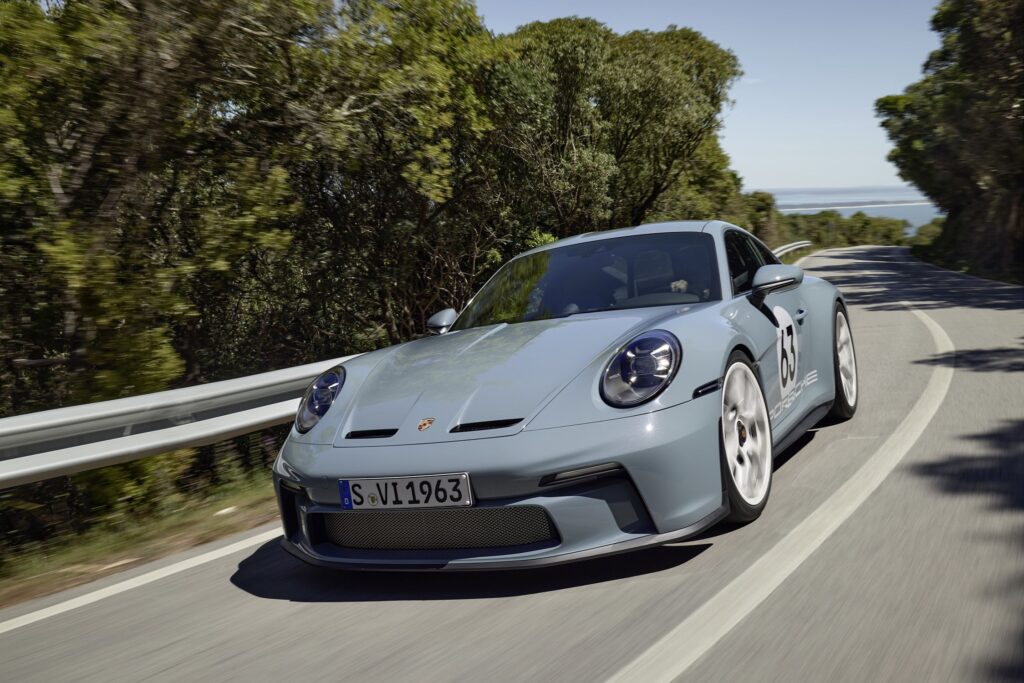
The Porsche 911 represents the most sophisticated implementation of drive modes on this list, and the 2026 model year brought a structural change to how those modes work. A new feature of the 911 Carrera is the mode switch, now standard, which allows easy switching between all driving modes — Normal, Sport, and Wet as standard, with Sport Plus added when the optional Sport Chrono Package is fitted (standard on GTS trims).
What makes the 911’s system particularly interesting is what Porsche removed for 2026: the previous Individual driving mode is no longer available as a separate mode, because all driving modes except Normal can now be individually configured directly — meaning Sport and Sport Plus themselves become starting templates that drivers can further customize, rather than fixed presets with a separate Individual mode layered on top.
2026 Porsche 911 — Price And Specifications
- Base Carrera: Starting around $135,500
- Carrera 4S: Mid-range AWD variant with 473 hp
- 911 Turbo S: 4.0L flat-six with 640 hp / 590 lb-ft torque — one of the fastest road-going 911s
- Hybrid variant (Carrera GTS T-Hybrid): 3.6L turbo with electric motor; 532 hp / 449 lb-ft torque
- 0-60 mph (base Carrera): 3.5 seconds (Edmunds tested)
- Transmission: 8-speed PDK dual-clutch automatic standard; manual available on Carrera T
- Body styles: Coupe, Cabriolet, and Targa
- Wheels: 19-inch front / 20-inch rear (Carrera)
Essential Features:
- Standard mode switch for Normal, Sport, and Wet driving modes
- Sport Plus mode (with optional/standard Sport Chrono Package) adds Launch Control and Sport Response functions
- Sport Response: a temporary 20-second boost button providing maximum responsiveness for overtaking — even available in Normal mode via the Sport Chrono dial
- All non-Normal modes individually configurable for exhaust, suspension, steering, and powertrain response
- Matrix Design LED headlights
- Available front-axle lift system (recommended for low-front-end clearance)
- Available rear-seat configuration as a no-cost option
The 911’s Sport Response feature deserves particular attention because it represents a different philosophy than most Sport mode implementations. Rather than requiring a driver to commit to Sport mode for an entire journey, Sport Response is a momentary override — press the button on the steering wheel-mounted dial, and for 20 seconds the car delivers its sharpest possible response regardless of which drive mode is currently selected, specifically for overtaking maneuvers. Its Sport mode is distilled into a single tactical decision rather than an ongoing setting.
Sport Mode Naming Conventions And What They Actually Mean
One of the more confusing aspects of Sport mode for buyers cross-shopping between brands is that manufacturers use wildly different names for functionally similar concepts — and in some cases, identically-named modes behave quite differently between brands. Some manufacturers opt for “Dynamic” instead of Sport when naming their performance mode, such as Jaguar and Land Rover, while Audi also uses the term “Dynamic” for the equivalent setting.
Understanding these naming conventions matters because a buyer comparing a BMW to a Jaguar might assume “Sport” and “Dynamic” represent fundamentally different technologies, when in practice they’re addressing the same underlying systems — throttle response, transmission behavior, steering weight, and suspension firmness — just under different marketing terminology.
Sport Mode Naming Across Major Manufacturers
| Manufacturer | Sport Mode Name | Additional Modes Often Included |
| Toyota / Lexus | Sport / Sport+ | Eco, Normal, Custom |
| Honda | Sport | Econ, Normal |
| Hyundai (N models) | N / N Custom | Normal, Sport |
| BMW | Sport / Sport+ | Comfort, Eco Pro, Adaptive |
| Audi | Dynamic | Comfort, Auto, Efficiency, Individual |
| Jaguar / Land Rover | Dynamic | Comfort, Eco, Terrain modes |
| Porsche | Sport / Sport Plus | Normal, Wet (Sport Chrono adds Individual configurability) |
| Mercedes-AMG | Sport / Sport+ / Race | Comfort, Eco, Individual |
Beyond Sport and its variants, several other mode names appear regularly across manufacturer lineups, each addressing a slightly different use case. Sport Plus mode represents an even more dynamic setting that usually turns off driver aids such as traction control, while Track mode sets the car up more aggressively specifically for closed-circuit use, and Drift mode — usually found on all-wheel-drive performance cars — transfers power bias toward the rear wheels to allow controlled oversteer.
Why Some Cars Skip Straight To Aggressive Settings And Others Layer Gradually
The number of drive modes a car offers often reflects how the manufacturer expects it to be used. A family SUV like the RAV4 offers exactly three modes — Eco, Normal, and Sport — because the realistic use cases are limited: maximize efficiency, drive normally, or feel slightly sportier for a moment. There’s no need for a Track mode on a vehicle that will essentially never see a circuit.
Performance-oriented cars like the Elantra N or 911, by contrast, layer multiple tiers specifically because their owners genuinely use the full range — daily commuting in a softer setting, weekend backroad driving in Sport, and occasional track days where Sport Plus or N mode with maximum aggression and reduced electronic intervention becomes relevant. The Elantra N’s N Custom mode exists specifically because Hyundai recognized that “Sport” as a single fixed setting couldn’t satisfy drivers who wanted, say, aggressive throttle response without the stiffest possible suspension setting on a bumpy daily commute.
When To Use Sport Mode — And When Not To
Sport mode is a valuable feature that provides a more immersive and responsive driving experience, but using it appropriately matters both for safety and for the car’s components over time. The most obvious ideal use case is merging onto a highway or overtaking — situations where immediate throttle response and a transmission that’s already in the right gear genuinely improve safety margins, not just enjoyment.
Twisty backroads represent the scenario where Sport mode’s combination of effects compounds most noticeably. Heavier steering provides more precise feedback through corners, firmer suspension reduces body roll that would otherwise unsettle the car mid-corner, and a transmission that holds gears longer means the engine is always ready to respond without a downshift delay. This is the environment Sport mode was fundamentally designed for.
The situations where Sport mode becomes actively counterproductive are worth taking seriously. Sport mode should be avoided on slippery or icy roads, since the sharper throttle response can make it considerably harder to maintain traction — a car that lurches forward more aggressively on a low-grip surface is simply more likely to spin a wheel than one with smoothed-out throttle delivery. Similarly, Sport mode increases fuel consumption meaningfully — more fuel is introduced into the engine to increase available power, and the transmission’s preference for higher RPMs means the engine spends more time operating less efficiently than it would in Normal or Eco modes.
Sport Mode Usage Guide
| Scenario | Recommended Mode | Why |
| Highway merging / overtaking | Sport | Immediate throttle response improves safety margin |
| Twisty backroads | Sport | Steering weight, suspension firmness, and gear-holding all benefit handling |
| Daily commuting / traffic | Normal | Smoother throttle reduces driver fatigue and jerky inputs |
| Long highway cruising | Eco / Normal | Reduces fuel consumption over distance |
| Icy or wet roads | Normal or Wet mode | Sharper throttle response increases wheelspin risk |
| Parking / low-speed maneuvering | Normal | Heavier steering in Sport makes tight maneuvers more tiring |
| Track days (where applicable) | Sport Plus / Track / N | Maximum response with reduced electronic intervention |
The Fuel Economy Reality Check
It’s worth being direct about the fuel economy impact, since it’s frequently understated. A car’s EPA or WLTP fuel economy ratings are obtained in Normal or Eco modes specifically because those represent the most efficient calibration. Driving primarily in Sport mode — even on a commute that doesn’t involve aggressive driving — can reduce real-world fuel economy by a meaningful margin, simply because the transmission and throttle mapping are both calibrated to prioritize responsiveness over efficiency at every input, not just during genuinely spirited driving.
This doesn’t mean Sport mode is something to avoid entirely — it means treating it as a situational tool rather than a default setting. Many owners of performance-oriented cars like the Elantra N or Civic Si report switching to Sport specifically for a weekend drive or a particular stretch of road, then returning to Normal for the bulk of daily use, getting the best of both characteristics from a single vehicle rather than compromising permanently in either direction.
Common Questions About Sport Mode
Does sport mode actually make a car faster?
Not in terms of maximum speed or outright power — pressing the accelerator pedal all the way down produces full-throttle acceleration regardless of which drive mode is selected, since the engine’s maximum output doesn’t change between modes. What Sport mode changes is how quickly and aggressively the car responds to partial throttle inputs, and how the transmission behaves during that acceleration. In a drag race with both cars floored from a standing start, Sport mode typically makes minimal difference to the outright time. In real-world driving with partial throttle inputs — which describes almost all everyday driving — Sport mode makes the car feel and often genuinely respond more quickly.
Can sport mode damage my car if used too often?
Used in normal conditions, Sport mode itself doesn’t cause mechanical damage — it’s a calibration change within parameters the manufacturer has already validated as safe for the engine, transmission, and drivetrain. However, because Sport mode keeps the engine at higher RPMs more often and applies more aggressive throttle inputs, components like brake pads, tires, and fuel consumption will wear or deplete somewhat faster under sustained Sport mode use compared to Normal mode, simply due to the more demanding way the car is being driven — not because Sport mode itself is harmful.
Is sport mode the same as a performance package or upgrade?
No. Sport mode is a software-based recalibration of existing hardware — it works within the car’s standard specifications and doesn’t add power, change gear ratios, or install different components. A performance package, by contrast, typically involves actual hardware changes: different springs, larger brakes, a retuned exhaust system, or in some cases a different engine tune entirely. Sport mode can make a car feel meaningfully different, but it operates entirely within the boundaries of what the standard car is already capable of.
Why does my car sound louder in sport mode?
Many vehicles, particularly performance-oriented models, use electronically controlled exhaust valves that remain partially closed during Normal or Eco driving to reduce cabin and exterior noise, then open more fully in Sport mode to allow exhaust gases to flow with less restriction — producing a louder, often deeper exhaust note. Some vehicles, including the Hyundai Elantra N with its N Sound Symposer, also pipe enhanced engine sound directly into the cabin through the audio system, layering an additional auditory effect on top of any genuine exhaust valve changes.
Can I switch to sport mode while driving, or do I need to stop the car?
Most cars allow switching drive modes while in motion, typically through a physical button, dial, or paddle near the gear selector, or via an on-screen menu in the infotainment system. The transition is generally seamless — the transmission, throttle mapping, and suspension settings adjust within a fraction of a second without requiring the driver to lift off the throttle or brake. Some vehicles do restrict certain mode changes above specific speed thresholds for safety reasons, but switching between Normal and Sport during normal driving is supported on virtually every modern car equipped with the feature.
Does sport mode affect electric and hybrid vehicles differently than gas cars?
In hybrid and electric vehicles, Sport mode often has a more immediately noticeable effect because electric motors deliver maximum torque instantly, with no need to wait for an engine to reach higher RPMs. In hybrids like the 2026 Toyota RAV4, Sport mode adjusts how aggressively the electric motor and gasoline engine work together, prioritizing immediate response over the more gradual, efficiency-focused blending used in Normal or Eco modes. In fully electric vehicles, Sport mode frequently adjusts regenerative braking strength, steering weight, and in some cases suspension height, since there’s no transmission shift behavior to alter in the traditional sense.
Do all cars with adaptive suspension change ride height in sport mode?
Only vehicles equipped with air suspension systems typically lower ride height in Sport mode — conventional adaptive dampers (which most cars with “adaptive suspension” actually use) adjust the firmness of the damping rather than the physical height of the car. Vehicles like certain electric trucks and some luxury SUVs with air springs do lower by a noticeable amount in Sport mode, which improves aerodynamics, reduces the centre of gravity, and sharpens handling — but this is a feature specific to air suspension systems, not a universal Sport mode behavior across all vehicles.