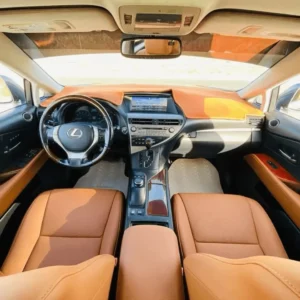
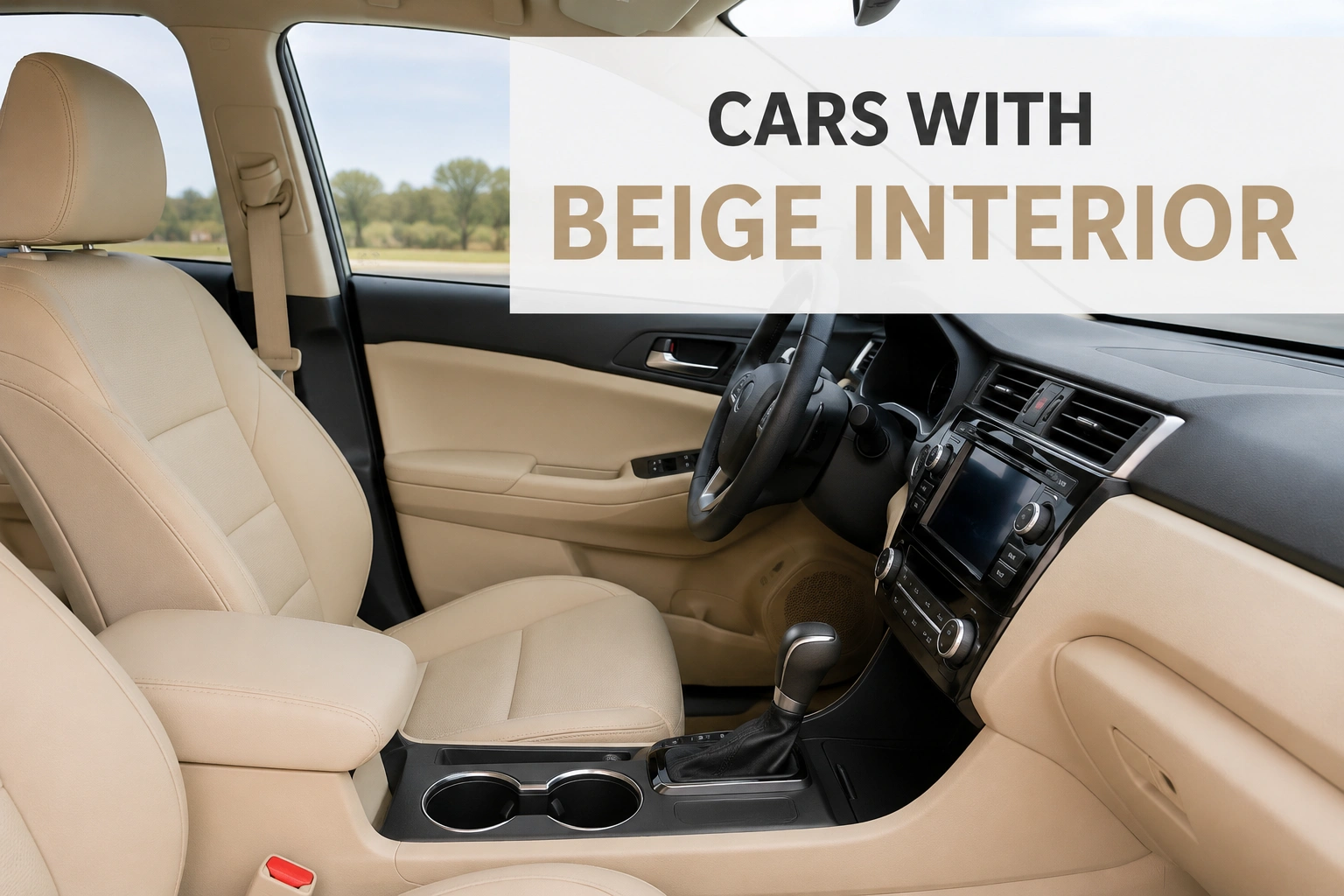
Walk through any car dealership lot in 2026 and a quiet pattern reveals itself once you start opening doors. Black cabins still dominate, sure, but tucked between them sit cars wearing something warmer — sandy tones, cream leather, soft tan upholstery that catches afternoon light differently than anything dark ever could.
Beige has spent years living in the shadow of black interiors, dismissed as the safe choice, the rental-car default, the colour nobody actively chooses. That perception has been quietly falling apart.
What’s changed is the material itself. Beige in 2026 isn’t the flat, slightly yellowish vinyl that defined budget cars for decades. It’s Macchiato Beige Nappa leather in a Mercedes S-Class. It’s Macadamia SofTex in a Toyota Camry.
It’s Calm Beige paired with Dune Grey exteriors on a BMW X3, photographed and shared online specifically because it looks expensive. Beige has become a deliberate styling choice rather than a default — and the cars wearing it well span everything from family SUVs to six-figure luxury sedans.
This guide walks through the best beige-interior cars available right now, what each one actually costs, the specs that matter, and the honest realities of living with a lighter cabin day to day.
Note
Pricing, specifications, and interior colour details referenced in this guide are sourced from manufacturer official media sites (Mercedes-Benz, BMW, Toyota, Volkswagen), alongside verified MSRP data from Kelley Blue Book, Edmunds, CarGurus, and TrueCar listings.
Why Beige Interiors Are Making A Genuine Comeback
For most of the past two decades, automotive interior trends moved almost entirely toward black. It hid wear, photographed consistently across lighting conditions, and matched literally any exterior colour without looking mismatched. Beige got relegated to fleet vehicles, base trims, and rental cars — a colour choice that signalled “this is someone else’s car” more than it signalled taste.
The shift back toward lighter cabins tracks closely with a broader move in interior design generally, both in homes and in vehicles. Warm neutrals — taupe, cream, sand, mushroom — have dominated furniture and home décor trends for several years now, and car manufacturers have followed that cultural shift. A cabin finished in warm beige tones now reads as considered and premium rather than cheap, particularly when paired with contrasting trim like dark wood, brushed metal, or charcoal accents.
There’s also a practical driver behind the shift that rarely gets mentioned: thermal comfort. Dark interiors absorb significantly more heat from sunlight than light ones, and as more buyers in hotter climates think seriously about how a cabin feels after sitting in a parking lot for six hours, lighter tones have a genuine functional advantage. A beige seat that’s merely warm beats a black seat that’s genuinely hot to sit on.
The Material Quality Difference In 2026
What separates a beige interior that looks cheap from one that looks expensive almost always comes down to material quality and how the colour is balanced against contrast trim. Cheap beige tends to be uniform, flat, and slightly yellow — the kind of tone that looked dated within a few years of a car leaving the factory. Modern beige treatments in 2026 lean toward cooler, more neutral sand and oat tones, frequently paired with charcoal, black, or grey accents on the dashboard, door panels, and lower trim.
Mercedes-Benz’s Macchiato Beige, for example, is consistently paired with Magma Grey or black accents rather than running beige across every surface — a deliberate two-tone approach that prevents the cabin from feeling like a single washed-out block of colour. Toyota’s Macadamia tone on the Camry follows a similar logic, used selectively against darker dashboard and door trim rather than blanketing the cabin.
Leather and synthetic leather technology has also improved dramatically. Nappa leather — the soft, fine-grained leather used in premium applications — takes lighter dyes more evenly and resists the patchy fading that plagued older beige leather seats. Synthetic alternatives like SofTex have also improved their stain resistance considerably compared to a decade ago, which directly addresses one of the longest-standing objections to light-coloured upholstery.
The Best Tan Interior Cars Available Right Now
1. 2026 Mercedes-Benz S-Class — Macchiato Beige Nappa Leather
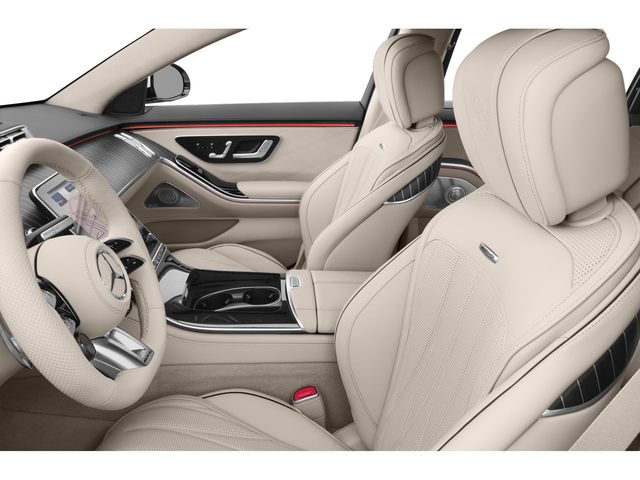
The Mercedes-Benz S-Class remains the reference point for what a luxury sedan interior should feel like, and for 2026 the Macchiato Beige Nappa leather option represents one of the most popular non-black configurations in the lineup. The combination — Macchiato Beige paired with Magma Grey or black accents in AMG Exclusive Nappa leather — appears repeatedly across dealer inventory, suggesting it’s a genuinely sought-after configuration rather than a rarely-chosen option buried in a colour chart.
The 2026 model year brought a significant expansion of personalisation options across the entire S-Class lineup, with the MANUFAKTUR program now offering 40 exterior paint colours and 25 Nappa leather upholstery choices — a level of customisation that places the S-Class well ahead of direct rivals in sheer configurability.
2026 Mercedes-Benz S-Class — Price And Specifications
- Starting price (S 500 4MATIC): From $119,500
- S 580e plug-in hybrid: From $130,400 — widely regarded as the best value in the current lineup
- Top trim (AMG S 63 E Performance): Over 1,000 lb-ft of torque available
- Engine options: Range from fuel-efficient hybrid to AMG twin-turbo V8 with electrification
- Transmission: 9-speed automatic across the range
- Drivetrain: 4MATIC all-wheel drive standard on most trims
- Legroom: 43.8 inches
- Cargo capacity: 10.7 cubic feet
Essential Features With Macchiato Beige Interior:
- Macchiato Beige/Magma Grey AMG Exclusive Nappa leather upholstery
- Beige headliner option for a fully coordinated cabin tone
- Standard 15-speaker Burmester sound system (30-speaker upgrade available)
- 12.8-inch MBUX infotainment with wireless Apple CarPlay and Android Auto
- Heated and ventilated front and rear seats
- Available massage function with hot-stone therapy mode
- Multiple wood trim choices to pair with the beige cabin, including Brown Burl Walnut and Slate Poplar
- Eight USB-C charging ports
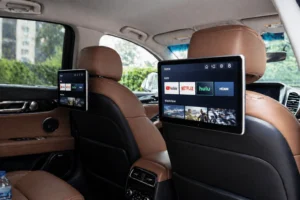
- Optional dual 11.6-inch rear entertainment screens
- Executive Rear Seat Package Plus with folding tray tables and power footrests (new for 2026)
The S-Class’s approach to beige is instructive for anyone considering the colour in any vehicle. The Macchiato Beige is never used in isolation — it’s always paired with a contrasting grey or black element, whether that’s the Magma Grey leather bolsters, a black piano lacquer trim insert, or a dark headliner. That contrast is what prevents a light cabin from looking flat or institutional, and it’s a principle that carries through to every other car on this list.
3. 2026 BMW X3 — Calm Beige With Dune Grey Exterior
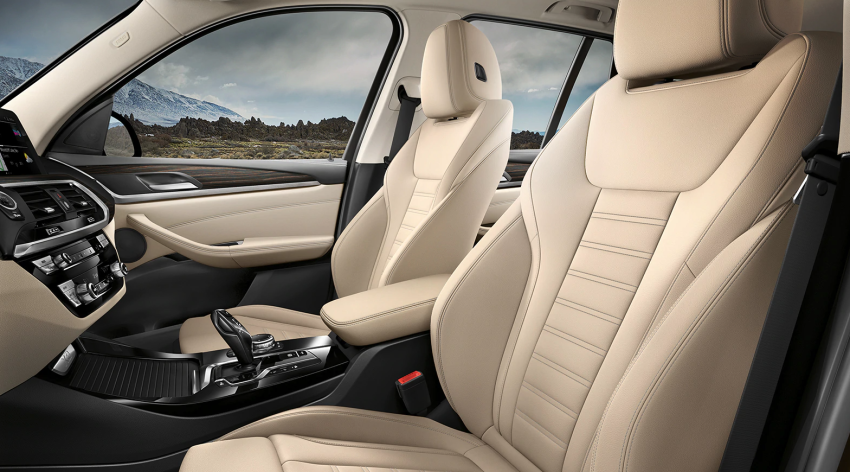
The BMW X3 has become one of the more visually discussed beige-interior combinations in 2026, particularly the pairing of Dune Grey exterior paint with the Calm Beige interior — a combination that’s been widely shared across social platforms specifically because of how cohesive the two tones look together. This isn’t an accident of marketing; BMW has clearly developed Calm Beige as part of a broader colour-matching strategy for the X3’s exterior palette.
The current-generation X3, redesigned with a more angular and technically sophisticated cabin than its predecessor, gives the Calm Beige trim room to breathe against large glass surfaces and the brand’s curved display setup, creating an airy effect that’s noticeably different from the tighter, more enclosed feel of a black-trimmed X3.
2026 BMW X3 — Price And Specifications
- Starting price (xDrive30): $52,650–$67,850 depending on configuration
- Engine: Turbocharged 4-cylinder, mild hybrid assistance
- Drivetrain: xDrive all-wheel drive standard on most US trims
- Transmission: 8-speed automatic
- Infotainment: BMW Curved Display combining digital instrument cluster and central touchscreen
- Available powertrains: Petrol, plug-in hybrid, and fully electric (iX3) variants across the range
Essential Features With Calm Beige Interior:
- Calm Beige leather/leatherette upholstery
- Pairs specifically well with Dune Grey, white, and dark blue exterior colours
- BMW Curved Display with iDrive 9 operating system
- Ambient lighting with multiple colour selections
- Panoramic glass roof (available)
- Sport seats with adjustable bolster width on higher trims
- Wireless Apple CarPlay and Android Auto standard
- Harman Kardon surround sound (available upgrade)
- Heated front seats standard in most climates; ventilated seats available
The Calm Beige naming itself is worth noting — BMW’s interior colour names increasingly lean into descriptive, almost wellness-adjacent language (Calm Beige, Oyster, Mocha) rather than purely descriptive terms, reflecting how interior colour has become part of the broader emotional pitch for a vehicle rather than just a practical specification line.
3. 2026 Toyota Camry XLE — Macadamia SofTex Interior
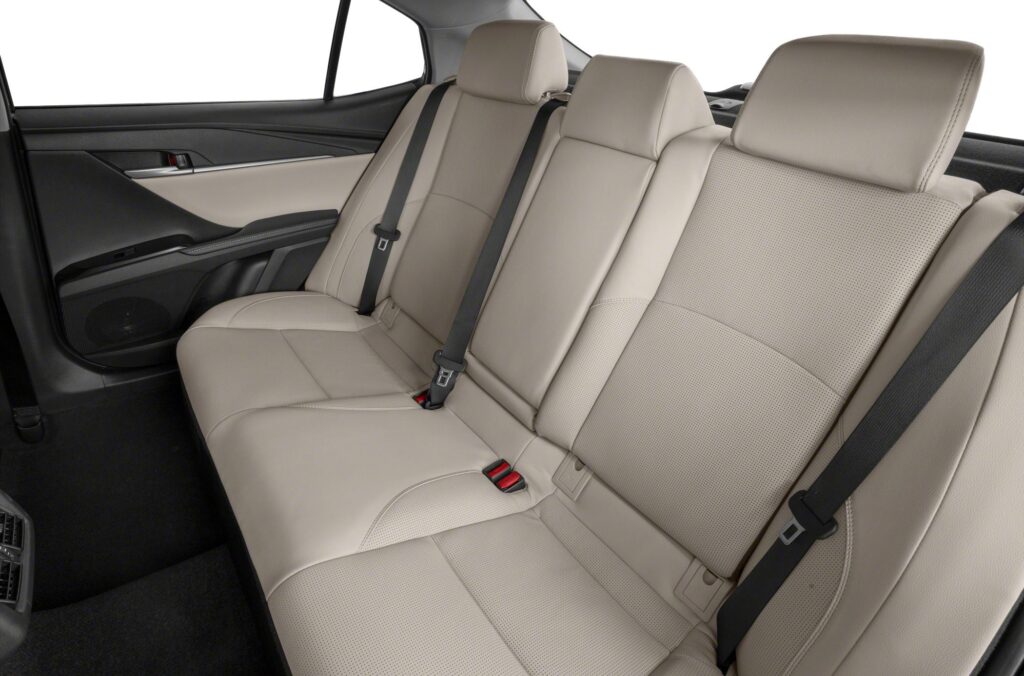
The Toyota Camry’s Macadamia interior option represents the most accessible entry point on this list by a significant margin, and it demonstrates that a warm, well-executed beige cabin doesn’t require a luxury badge or six-figure price tag. For 2026, every Camry is a hybrid — a major shift from previous generations — and the Macadamia colour option is available on the XLE and XSE trims in SofTex and Dinamica material combinations.
The Camry’s interior has long been a point of comparison against the Honda Accord, with some reviewers noting the Accord’s interior materials and technology integration edge out the Camry’s. That said, the Macadamia treatment specifically has been praised as one of the more successful colour executions in the segment, giving the cabin a noticeably more upscale feel than the base black cloth interior on lower trims.
2026 Toyota Camry — Price And Specifications
- Starting price (LE): From $30,495
- XLE trim (Macadamia available): From approximately $35.695
- XSE trim: From approximately $36,895
- Engine: 2.5L inline-4 hybrid, standard across all trims
- Combined output: 225–232 horsepower depending on drivetrain
- 0-60 mph: 7.8 seconds (XSE FWD, as tested)
- Cargo capacity: 15.1 cubic feet
- Drivetrain: FWD standard; AWD available on select trims
Essential Features With Macadamia Interior:
- Macadamia SofTex and Dinamica upholstery combination
- Available on XLE and XSE trim levels
- Contrasting stitching for visual definition against the lighter tone
- Toyota Safety Sense standard across the lineup
- 8-inch or larger touchscreen depending on trim (XLE/XSE get larger displays)
- Wireless charging pad
- Dual-zone automatic climate control
- Hybrid powertrain standard — no non-hybrid Camry available for 2026
- Excellent small-item storage including dedicated phone compartments and large door pockets
The practical value case here is straightforward: a beige interior that would have required a luxury brand premium a decade ago is now available on a mainstream midsize sedan starting in the low $30,000s. For buyers who want the warmth and visual lift of a lighter cabin without the luxury price tag, the Camry’s Macadamia option is arguably the best value execution currently on sale.
4. 2026 Volkswagen Atlas — Shetland Beige
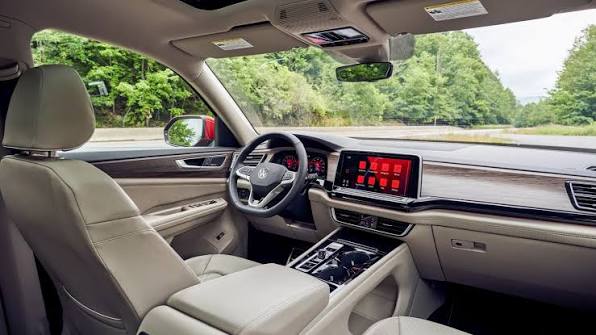
The Volkswagen Atlas represents the family-SUV end of the beige interior spectrum, and its approach is notably more understated than the luxury executions above — which is exactly the point for a vehicle whose primary job is hauling kids, groceries, and gear on a daily basis. The Atlas’s beige interior comes in V-Tex leatherette, Volkswagen’s synthetic leather material, paired typically with white or light-coloured exteriors for a clean, bright overall look.
The three-row Atlas has built a reputation as one of the more spacious options in the midsize three-row SUV segment, and the lighter cabin tone genuinely amplifies that sense of space — something that matters considerably in a vehicle where second and third-row passengers are evaluating headroom and the general feeling of openness on every trip.
2026 Volkswagen Atlas — Price And Specifications
- Starting price (SE FWD): 39,310
- SE AWD: Approximately $44,490 from an MSRP near $47,800
- Engine: 2.0L turbocharged 4-cylinder
- Fuel economy: 20 city / 26-27 highway mpg depending on drivetrain
- Transmission: 8-speed automatic
- Seating: 7 passengers across three rows
- Drivetrain: FWD standard; AWD available
Essential Features With Beige Interior:
- Perforated V-Tex leatherette seating surfaces in beige
- Heated front seats and heated steering wheel standard on SE trim
- Ventilated front seats available
- Front and rear dual-zone climate control
- Panoramic sunroof package available
- Power liftgate (AWD models)
- Split-folding third row for cargo flexibility
- VW Car-Net Safe & Secure connected services (5-year inclusion)
- Auto-dimming rearview mirror with HomeLink
The Atlas case demonstrates something important about beige interiors in family vehicles specifically: synthetic leather (V-Tex) handles the realities of child seats, spilled drinks, and muddy shoes considerably better than fabric ever could, while still delivering the visual lift of a lighter colour. For families specifically worried about staining, the leatherette surface is wipeable in a way cloth simply isn’t.
5. 2026 Mercedes-Benz CLE — Macchiato Beige With Tonka Brown Accents
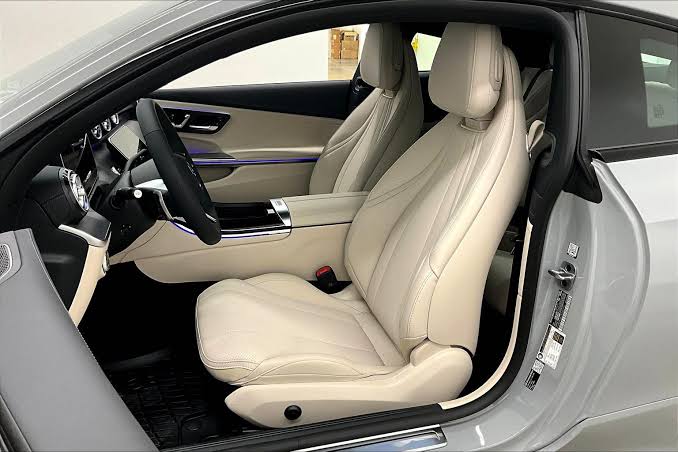
The Mercedes-Benz CLE — the coupe and convertible model that effectively replaces the previous C-Class and E-Class coupe lineup — offers one of the more visually distinctive beige executions on this list through its Macchiato Beige option, which can be paired with Tonka Brown/Black accents for a genuinely warm, layered cabin appearance that leans toward a more traditional, almost heritage-inspired luxury feel compared to the cooler tones found in some rivals.
The CLE’s available interior trim options extend the customisation further, with choices ranging from Natural Grain Walnut Wood through to modern Metal Weave finishes — giving buyers considerable latitude in how warm or contemporary the finished cabin feels.
2026 Mercedes-Benz CLE — Price And Specifications
- Starting price: $59,550 –$84,600 depending on configuration (CLE 300)
- Engine: 2.0L turbocharged inline-4 with mild hybrid assistance
- Body styles: Coupe and Cabriolet (convertible)
- Transmission: 9-speed automatic
- Drivetrain: RWD standard; 4MATIC AWD available
Essential Features With Macchiato Beige Interior:
- Macchiato Beige leather upholstery, available with Tonka Brown/Black or Power Red/Black contrast options
- Multicontour seats with massage function (available)
- Heated steering wheel
- Ventilated front seats
- Choice of Natural Grain Walnut Wood or Metal Weave interior trim
- MBUX infotainment with navigation
- Ambient lighting
The CLE’s positioning of beige alongside brown rather than grey accents creates a noticeably different mood than the S-Class’s beige-and-grey approach — warmer, more traditional, and arguably more forgiving in terms of how it ages visually compared to cooler grey-beige combinations.
What To Know Before Choosing A Beige Interior
A beige interior is a genuinely different ownership experience than a black one in ways that go beyond aesthetics, and several of these differences only become apparent after months of daily use rather than during a 20-minute test drive.
Heat, Comfort, And Climate Considerations
The most measurable advantage of a beige interior is thermal performance. Dark interiors absorb significantly more solar energy than light ones, meaning a black seat left in direct sunlight on a hot day can reach temperatures that are genuinely uncomfortable to sit on within minutes, while a beige equivalent stays noticeably cooler under identical conditions. For buyers in hot climates — the southern United States, the Middle East, Australia — this isn’t a minor cosmetic preference; it’s a daily comfort factor every time the car has been parked outside.
The flip side applies in cold climates. A black interior heats up faster under direct sun even in winter, which some owners in colder regions actually prefer, since it means seats and surfaces feel less cold to the touch after a vehicle has been sitting overnight. For buyers who split time between genuinely hot and genuinely cold seasons, the practical difference tends to favour beige overall, since modern climate control and heated/ventilated seats largely neutralise the cold-weather disadvantage while the hot-weather advantage of a lighter cabin remains real regardless of HVAC system quality.
If your windows are tinted to a reasonable degree, the interior colour’s impact on cabin temperature becomes less pronounced than it would be otherwise — tinting blocks a meaningful portion of the solar radiation that would otherwise heat dark surfaces, narrowing the gap between how hot a black versus beige seat actually gets in practice.
Maintenance, Staining, And Long-Term Appearance
The honest concern people raise about beige interiors — and it’s a legitimate one — centres on staining and visible wear. Blue jean dye transfer is the most commonly reported issue among current owners, appearing as a blue-ish discoloration on the edges of seat bolsters and thigh areas where denim makes repeated contact. This is a real phenomenon, not an exaggeration, and it affects beige leather more than almost any other colour because the contrast between the dye and the seat material is so visually obvious.
The good news is that this specific problem has a straightforward, well-documented solution. Specialist leather cleaning products are highly effective at removing jean dye transfer from beige leather — multiple owners report that a leather cleaner applied with a microfiber cloth removes blue staining with minimal effort, without requiring aggressive scrubbing. The key is addressing it periodically rather than letting dye build up over months.
Door sill and kick plate areas are the other commonly cited problem zone — black shoe soles leave marks on light-coloured lower door trim that are considerably more visible than they would be on a black equivalent. Some owners address this proactively by adding black floor mats or door sill protectors specifically to manage this high-contact area without compromising the rest of the cabin’s lighter tone.
Beige Interior Care — Quick Reference
| Issue | Cause | Solution | Frequency |
| Blue/dark discolouration on bolsters | Jean dye transfer | Leather-specific cleaner with microfiber cloth | As needed, check monthly |
| Marks on door sills/kick plates | Shoe contact | Door sill protectors or black floor mats | One-time installation |
| General surface dirt | Daily use | pH-neutral leather cleaner | Every 2-3 weeks |
| Leather drying/cracking | UV exposure, age | Leather conditioner | Every 3-4 months |
| Carpet staining | Spills, mud | Immediate blotting + carpet cleaner | As needed |
Resale Value — The Honest Picture
Resale conversations around beige interiors tend to be more nuanced than the simple “black is always safer” rule that gets repeated often. Neutral colours including black, grey, and beige generally appeal to the widest range of buyers and maintain resale value better than bold colour choices — but within that neutral category, black still edges out beige slightly in pure resale terms for most mainstream vehicles, primarily because it’s the more common default and therefore the configuration the largest pool of used buyers expects to find.
That said, the gap has narrowed considerably as beige executions have improved. For luxury vehicles specifically, a well-executed beige interior in good condition can actually be a selling point precisely because it signals the car was cared for — a beige cabin that still looks clean after several years of ownership communicates careful ownership in a way a black interior simply can’t, since black hides neglect rather than revealing care.
The practical takeaway: if resale value is the primary concern and the ownership period will be short, black remains marginally safer in pure numbers. If the vehicle will be owned for five-plus years — long enough that the enjoyment of a cabin you actually like outweighs a small resale differential — beige in 2026’s improved materials is a defensible choice on its own merits.
Beige Interior Comparison Table
| Model | Beige Option Name | Starting Price | Material | Best Paired With |
| 2026 Mercedes-Benz S-Class | Macchiato Beige/Magma Grey | ~$130,400 (S580e) | AMG Exclusive Nappa Leather | Black, white, dark wood trim |
| 2026 BMW X3 | Calm Beige | ~$48,000–$52,000 | Leather/Leatherette | Dune Grey, white, dark blue |
| 2026 Toyota Camry | Macadamia | ~$32,000 (XLE) | SofTex/Dinamica | Black accents, contrast stitching |
| 2026 Volkswagen Atlas | Beige | ~$39,670 (SE FWD) | V-Tex Leatherette | White, silver exteriors |
| 2026 Mercedes-Benz CLE | Macchiato Beige/Tonka Brown | ~$58,000–$62,000 | Leather | Brown wood trim, warm tones |
Frequently Asked Questions
Do beige interiors get dirty faster than black interiors?
Beige interiors show certain types of dirt and staining more visibly than black — particularly dye transfer from denim and marks on high-contact areas like door sills. However, beige is also genuinely effective at masking dust, light debris, and everyday grime in a way black cannot, since black shows every speck of lint and dust under bright light. The honest answer is that beige shows different things more visibly, not simply more things overall. With periodic cleaning using leather-specific products, a beige interior in 2026’s improved materials holds up comparably well to black over several years of ownership.
Is a beige interior cooler in summer than a black one?
Yes, measurably so. Dark surfaces absorb significantly more solar radiation than light surfaces, meaning a black seat left in direct sun reaches noticeably higher surface temperatures than an equivalent beige seat under identical conditions. For anyone parking outside regularly in hot climates, this is a real, daily comfort difference rather than a marginal one. Window tinting reduces the gap somewhat but doesn’t eliminate it entirely.
Does a beige interior reduce a car’s resale value?
Slightly, in most cases, though the gap has narrowed considerably as beige material quality has improved. Black remains the safer choice for pure resale numbers on mainstream vehicles because it’s the most common configuration and therefore matches what the largest pool of used buyers expects. For luxury vehicles or for owners planning to keep a car for five-plus years, a well-maintained beige interior is a far less significant factor than overall vehicle condition, mileage, and service history.
How do I remove blue jean stains from a beige leather seat?
A leather-specific cleaning product applied with a microfiber cloth is the most effective and widely recommended solution. Multiple owners report that products designed specifically for leather — rather than general all-purpose cleaners — remove blue dye transfer from beige leather with light wiping and no aggressive scrubbing required. Addressing staining periodically, rather than letting it accumulate over months, makes the process considerably easier each time.
Which 2026 car offers the best value beige interior?
The 2026 Toyota Camry’s Macadamia interior, available on XLE and XSE trims starting around $32,000, represents the strongest value execution of a beige cabin currently on sale. It pairs a warm, well-balanced tone with contrast stitching and dark accents in a way that looks considerably more expensive than the price point suggests, and it’s backed by Toyota’s hybrid powertrain across the entire 2026 lineup.
Should I get black floor mats with a beige interior?
Many owners and even some dealers recommend this specifically to manage the door sill and footwell areas, which see the most contact from shoes and accumulate visible marks faster than any other part of a light-coloured cabin. Black floor mats — sometimes provided by dealers at no extra cost as part of a beige interior order — protect the highest-wear zones without compromising the lighter tone across the seats, dashboard, and door panels where it has the most visual impact.
Are beige interiors only available on luxury cars?
No. While luxury brands like Mercedes-Benz and BMW offer some of the most polished beige executions through Nappa leather and premium leatherette, mainstream models including the Toyota Camry and Volkswagen Atlas offer genuinely well-designed beige interiors starting in the low-to-mid $30,000 range. The material quality gap between luxury and mainstream beige interiors has narrowed considerably as synthetic leather technology has improved across the industry.