Auto start-stop is one of those automotive features that arrived quietly, spread quickly, and generated a disproportionate amount of genuine frustration. The feature that shuts down the engine at every red light, every stop sign, and every backed-up school zone intersection was not developed to annoy drivers — it was engineered to reduce fuel consumption and lower emissions.
And to its credit, research shows it can cut fuel use by between 7.27% and 26.4% depending on how much idle time accumulates in a given drive. That is not a trivial number.
But the gap between what the feature achieves in measured tests and what drivers experience in daily use has always been significant. The brief delay when re-engaging the engine.
The air conditioning cuts out when the compressor stops. The vibration and mechanical wear from dozens of stop-start cycles per commute. The psychological discomfort of an engine that keeps shutting off in traffic.
These are real and measurable complaints that have been documented by consumers since the technology began appearing widely in 2016, growing from 9% of new vehicles to over 65% by 2023.
In February 2026, the landscape shifted in a way that has direct implications for buyers shopping new cars right now. EPA Administrator Lee Zeldin announced that the agency was ending the federal incentive structure that rewarded automakers for including start-stop systems.
The announcement eliminated off-cycle credits — the mechanism that made start-stop financially attractive for manufacturers to install — and effectively ended the regulatory push that made start-stop nearly universal on new vehicles.
According to the Washington Examiner, Zeldin specifically said: “We are ending the federal government’s push to get manufacturers to install that ‘Obama switch,’ the almost universally despised start-stop feature.”
Whether or not that political framing resonates, the regulatory change is real, and its effects will shape what buyers encounter on dealer lots through 2027 and beyond.
Here you we get the full picture: which vehicles in 2026 already operate without start-stop systems, how the regulatory change affects 2027 planning, and what buyers who specifically want to avoid this feature should look for and ask about before signing anything.
Note
Technical details, regulatory information, and vehicle specifications referenced throughout this guide are verified from Motor1, The Autopian, Washington Examiner, Kelley Blue Book, Edmunds, Car and Driver, U.S. News & World Report, TorqueNews, and official manufacturer websites including Mazda USA, Toyota USA, Subaru USA, Ford USA, and Nissan USA.
The EPA Ruling — What Actually Changed And What It Means For Buyers
The February 2026 EPA announcement was more than a press release. It represented the largest single deregulatory action in the agency’s history, rolling back a range of emissions standards that had been accumulating since 2009.
The specific mechanism relevant to start-stop was the elimination of off-cycle credits — a program that allowed automakers to earn regulatory compliance credits for including fuel-saving features like start-stop, active grille shutters, and engine idle reduction systems.
These credits helped manufacturers meet Corporate Average Fuel Economy requirements without improving the baseline efficiency of their conventional powertrains.
With those credits gone, the financial incentive for including start-stop in vehicles not required to have it by any direct mandate has been eliminated. As Motor1 noted in their February 2026 analysis, while the technology is not outright banned, it is more likely to be offered as an optional feature moving forward — if at all.
The same analysis cautioned that the feature probably would not disappear for the 2027 model year because vehicles designed for global markets include start-stop for other countries’ regulatory environments, and removing it specifically for the American market would require additional engineering effort that may not be cost-effective.
The practical implication for 2026 model year buyers is that many vehicles already on dealer lots were designed before this ruling took effect, and their start-stop systems remain in place.
The change will influence 2027 model year vehicles more directly, as manufacturers make decisions about whether to maintain, modify, or remove start-stop systems for their American market products.
For buyers who want certainty right now, the vehicles covered in this guide are those where start-stop is either definitively absent, permanently disableable, or where the manufacturer has already confirmed plans to modify the system for upcoming model years.
The Consumer Appetite Against Start-Stop — What The Data Shows
The level of consumer dissatisfaction with auto start-stop is unusually high for a feature that is, by every objective measure, functionally effective. An SAE study confirmed fuel savings of between 7% and 26%. Independent tests by multiple automotive publications have validated the efficiency gains.
And yet the feature has generated a cottage industry of aftermarket devices specifically designed to disable it — companies like Autostop Eliminator and 4D Tech have built substantial businesses selling plug-and-play modules that permanently remember a driver’s preference to keep start-stop turned off.
The reason for this disconnect is not difficult to identify. Fuel efficiency is a background consideration for most drivers — it shows up as a number at the fuel station and as an EPA sticker in a dealership window. Start-stop is a foreground experience that intrudes on every stop in every drive.
The physical sensation of the engine shutting down, the slight delay when pulling back into traffic, and the interruption of air conditioning all happen continuously and noticeably. For drivers who spend significant time in urban stop-and-go conditions — precisely the conditions where start-stop delivers its largest fuel savings — the feature is most present and most disruptive simultaneously.
KBB’s news team noted this directly: drivers often turn them off because, in many cars, shutting off the engine also shuts off the air conditioning.
The 2026 Hyundai Palisade was specifically highlighted as a vehicle that solved this problem by maintaining air conditioning during stop-start cycles — proof that the engineering challenge is solvable, but also evidence that most manufacturers have not prioritized solving it.
Cars That Come Without Start-Stop As Standard In 2026
1. 2026 Mazda MX-5 Miata
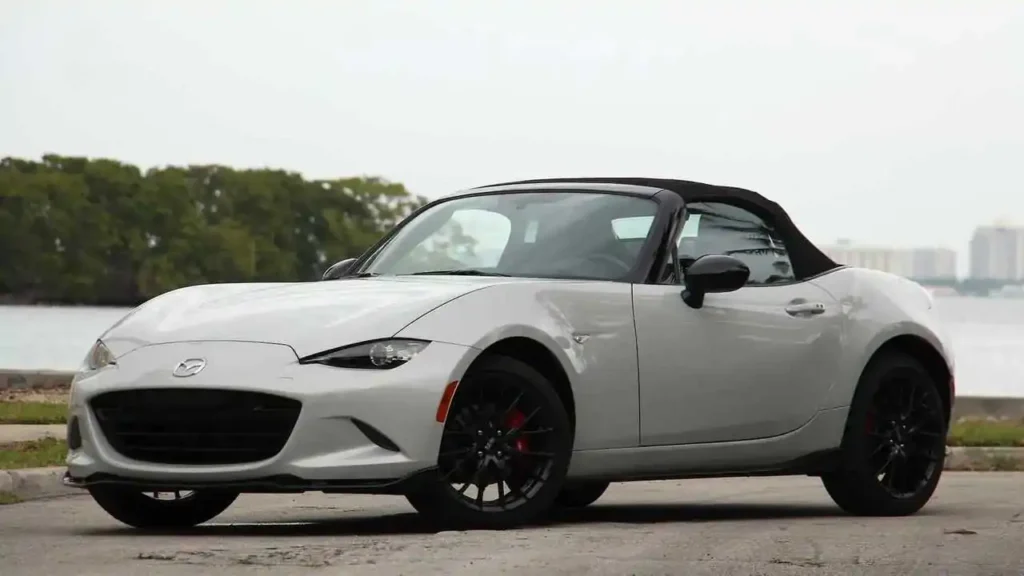
The Mazda MX-5 Miata is perhaps the purest argument against start-stop technology that exists in the 2026 new car market. The Miata’s entire philosophy is the elimination of anything between the driver and the mechanical reality of the car — weight reduction, direct steering, a naturally aspirated engine with a progressive power delivery that rewards attention and engagement.
Automatic start-stop sits directly opposite that philosophy, and the Miata does not have it. The engine runs from start to park, every time, without interruption.
- Starting Price: $31,665 MSRP (Sport trim, soft-top)
- RF Hardtop Starting Price: $39,685 MSRP (Club trim)
- Engine: 2.0-liter naturally aspirated four-cylinder, 181 hp / 151 lb-ft of torque
- Transmission: 6-speed manual (standard); 6-speed automatic (available on Grand Touring and RF Grand Touring)
- Drivetrain: Rear-wheel drive — all trims
- Fuel Economy: 26 city / 34 highway (manual); slightly lower with automatic
- 0-60 mph: 6.4 seconds (Edmunds tested, manual)
- Start-Stop Status: Not equipped — never has been
- Key Features:
- No automatic start-stop of any kind — engine runs continuously
- SKYACTIV-G 2.0-liter engine tuned for linear power delivery
- Power-retractable soft top (Sport/Club/GT) or retractable hardtop (RF)
- Brembo front brakes standard on Club and above
- Forward collision warning and automatic emergency braking standard
- Blind-spot monitoring standard on Club and above
- Available Bilstein suspension upgrade on Club
- 7-inch touchscreen with Apple CarPlay and Android Auto
The Miata was driven on Edmunds’ test track for the 2026 model year evaluation, and the review confirmed what long-term owners already know: the car is light, nimble, precise and easy-to-drive even when pushing its limits. The 6.4-second 0-60 time is not headline-grabbing by modern standards, but the way the Miata reaches that number — through driver involvement, not automated systems managing the power delivery — is the reason the car has maintained a dedicated following for thirty-five years across four generations.
For buyers who specifically want a car without start-stop, the Miata is the one model in 2026 where the absence is the most design-intentional.
It is not absent because Mazda forgot to include it, or because it was value-engineered out of a budget model. It is absent because the car was designed from the ground up to be continuously, uninterruptedly connected to the driver.
2. 2026 Toyota GR86
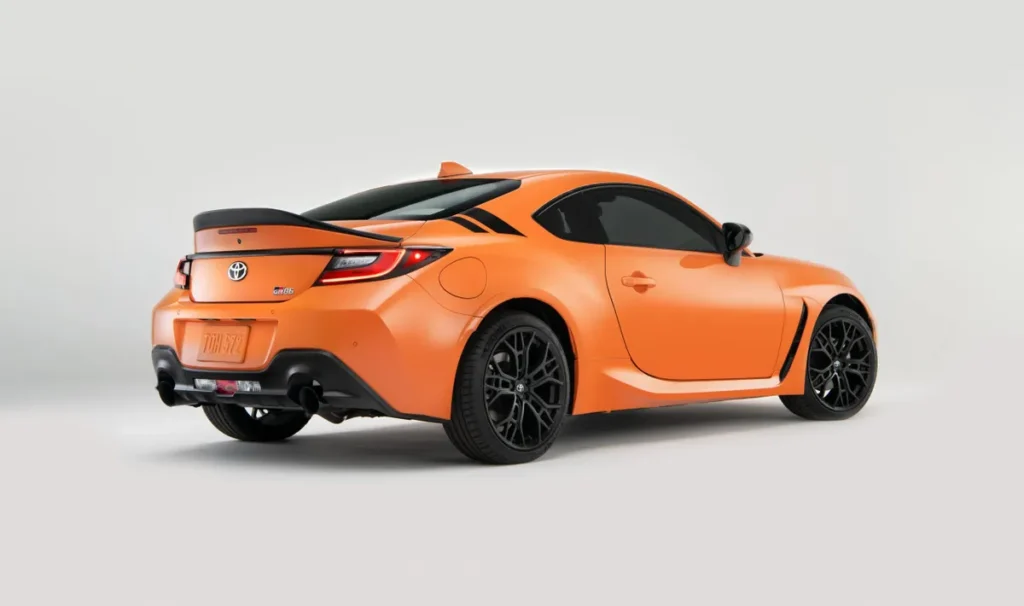
The 2026 Toyota GR86 is the Miata’s closest spiritual sibling in the affordable sports car segment, and it shares the same continuous-engine philosophy. Toyota designed the GR86 in partnership with Subaru on the same platform as the BRZ, and neither car includes automatic start-stop.
The GR86’s 2.4-liter naturally aspirated flat-four engine — sourced from Subaru’s FA series architecture — produces 228 horsepower and delivers a character that reviewers have described as one of the best cars available today at any price, not just within its budget.
- Starting Price: $32,395 MSRP (base trim, including $1,195 destination)
- Premium Trim Starting Price: $33,400 MSRP (before destination)
- Special Edition: Yuzu Edition available in Yuzu Yellow, limited to 860 units across North America
- Engine: 2.4-liter SUBARU BOXER flat-four, 228 hp / 184 lb-ft of torque
- Transmission: 6-speed manual (standard); 6-speed automatic (optional, $1,395 on Premium)
- Drivetrain: Rear-wheel drive — all trims
- Fuel Economy: 21 city / 30 highway (automatic); approximately 21 city / 31 highway (manual)
- Start-Stop Status: Not equipped
- Key Features:
- No automatic start-stop — engine runs continuously from start to shutoff
- SUBARU BOXER engine with low center of gravity for handling balance
- SACHS performance dampers standard
- Brembo front brake calipers standard
- 18-inch alloy wheels standard
- 8-inch touchscreen with wireless Apple CarPlay and Android Auto
- Toyota Safety Sense 2.0: pre-collision system, lane departure alert, automatic high beams
- Quad exhaust on Yuzu Edition
US News confirmed in their 2026 GR86 review that this is one of the best sports cars available at any price level, noting it starts at only $31,995 with destination and provides a driving engagement that makes every day in the car genuinely rewarding.
The GR86 and BRZ represent the remaining commitment by two manufacturers to providing uncompromised mechanical sports cars at prices accessible to enthusiasts without trust funds. The absence of start-stop is not a budgetary decision here — it is an engineering choice aligned with the vehicle’s purpose.
3. 2026 Subaru BRZ
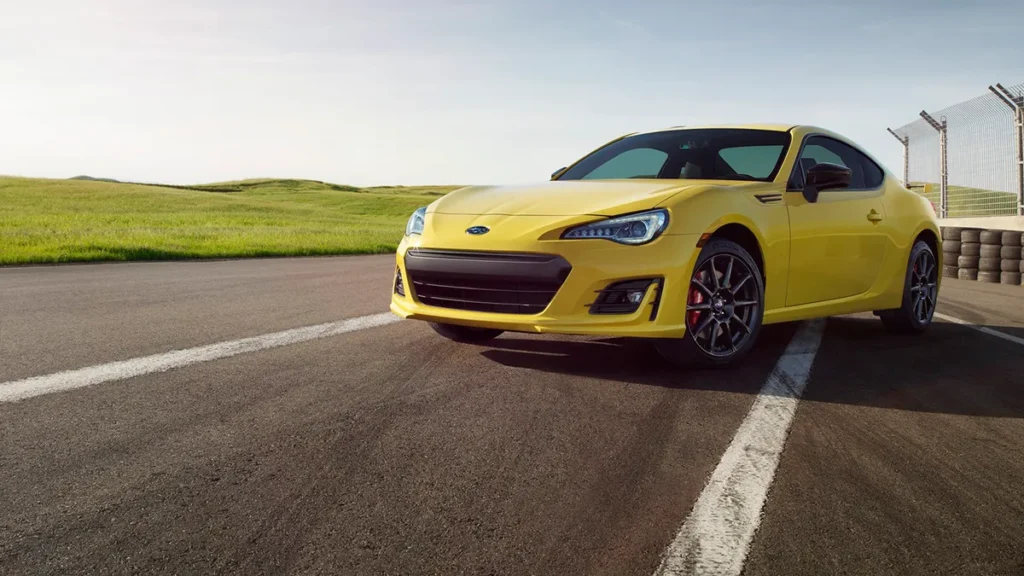
The Subaru BRZ is the other half of the GR86 partnership, mechanically identical beneath different styling and brand identity. Subaru confirmed in their own technical documentation that as of the current generation, the Subaru BRZ does not have auto start-stop technology.
That confirmation, reported by TorqueNews based on information from Subaru dealer technical staff, places the BRZ firmly in the no-start-stop category for 2026 alongside its Toyota twin.
- Starting Price: $37,055 MSRP (Subaru discontinued the entry-level trim for 2026, making Premium the new base)
- Limited Trim: Approximately $38,900–$39,000 MSRP
- Special Edition: Series.Yellow, starting at $40,555
- Engine: 2.4-liter FA24 SUBARU BOXER flat-four, 228 hp / 184 lb-ft
- Transmission: 6-speed manual (standard); 6-speed automatic (available)
- Drivetrain: Rear-wheel drive — all trims
- Fuel Economy: Approximately 21 city / 30 highway
- Start-Stop Status: Not equipped — confirmed by Subaru technical documentation
- Key Features:
- No auto start-stop technology — continuously running engine
- Same FA24 engine and chassis platform as Toyota GR86
- Torsen limited-slip differential on manual transmission models
- Brembo brakes standard
- StarTex water-repellent upholstery on base trim
- 8-inch Apple CarPlay touchscreen
- Subaru EyeSight safety suite on automatic transmission models
The BRZ’s 2026 pricing reflects Subaru’s decision to consolidate the trim structure — the entry-level model was discontinued, making the Premium trim the starting point.
For buyers who want the BRZ specifically, the price starting at $37,055 still positions it competitively against the GR86 with meaningful trim content included.
The confirmation of no start-stop across the BRZ lineup is particularly valuable because Subaru has been actively adding start-stop to other models in their lineup — the Outback, Forester, Crosstrek, Impreza, and Legacy all have it as of 2025-2026. The BRZ and WRX are the holdouts within the Subaru lineup.
4. 2026 Ford Mustang GT
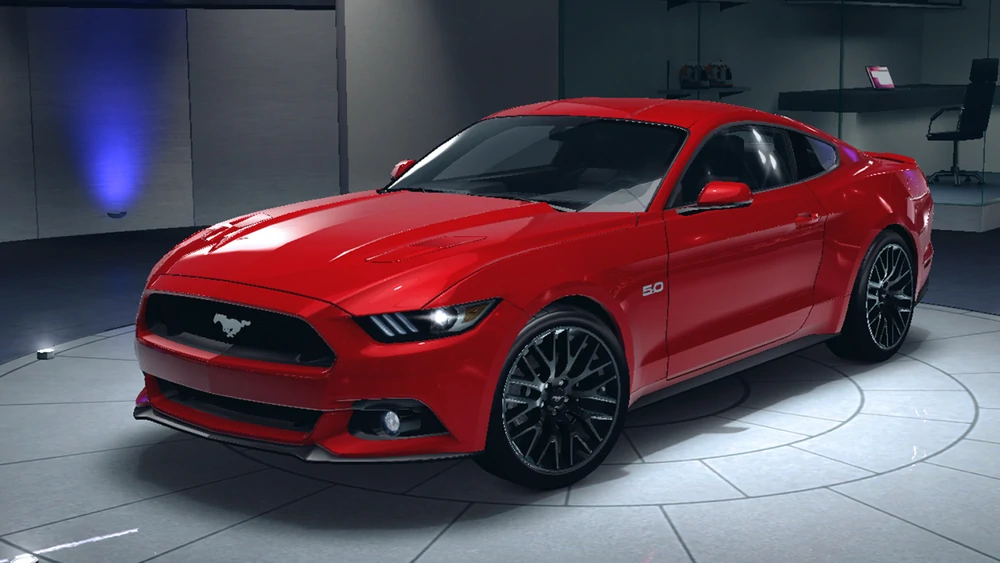
The Ford Mustang GT’s 5.0-liter Coyote V8 is one of the most celebrated naturally aspirated engines in modern American automotive history, producing 480 horsepower with a sound and character that define what an American muscle car is supposed to be.
The GT does not have automatic start-stop, and the Dodge Challenger Forum’s community documentation confirms this has been a consistent characteristic of the Challenger and related V8 muscle cars — no Challengers or Chargers had the stop/start technology. The Ford Mustang GT follows the same tradition.
- Starting Price: $48,555 MSRP (GT Fastback, including destination)
- GT Premium Fastback: Approximately $54,000–$58,000 MSRP depending on options
- Dark Horse: Approximately $63,000+ MSRP
- Engine: 5.0-liter Coyote V8, 480 hp
- Transmission: 6-speed manual (standard on GT); 10-speed SelectShift automatic (optional)
- Drivetrain: Rear-wheel drive — all trims
- Fuel Economy: Approximately 15 city / 24 highway (V8, manual)
- Start-Stop Status: Not equipped on V8 models
- Key Features:
- No auto start-stop on V8 models — engine runs continuously
- 5.0L Coyote V8, 480 horsepower
- 12.4-inch digital cluster and 13.2-inch touchscreen
- Available GT Performance Package with Brembo brakes, Torsen LSD, active exhaust
- Wireless Apple CarPlay and Android Auto standard
- Available magnesium-framed panoramic curved display on higher trims
- Available Track Pack Special Edition (limited 2026 model year)
- FX Package available on Premium trim for 2026 (19-inch Oxford White wheels)
U.S. News confirmed in their 2026 Mustang review that V8 models provide brawny low-end torque with 0-60 coming up quickly. Motor1’s comparison analysis noted that the Mustang GT starting at $48,555 is in a different category from the Miata, BRZ, and GR86 but offers more power than all of them.
For the specific buyer who wants a V8-powered American muscle car without start-stop, the GT is the only new option available in 2026 — Dodge ended production of the gas-powered Challenger and Charger after 2023, leaving Ford as the sole remaining provider of new V8 American muscle without automated engine management intruding on the experience.
5. 2026 Subaru WRX
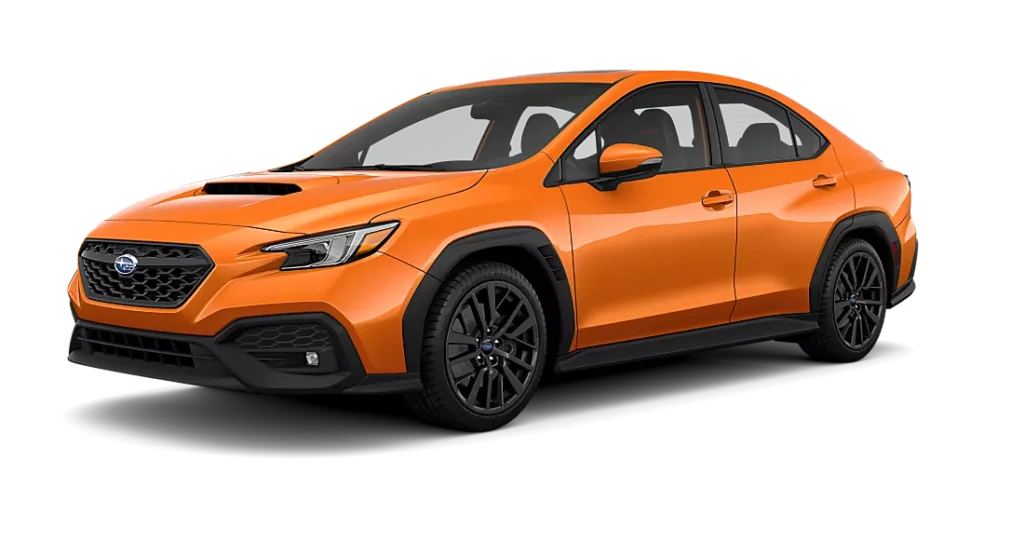
The Subaru WRX is the performance sedan of the group, and TorqueNews confirmed in their Subaru lineup analysis that the Subaru WRX does not have auto start-stop technology.
This places the WRX in a small and increasingly valuable category: an all-wheel-drive turbocharged performance sedan without the engine interruptions that buyers who commute in urban environments particularly object to.
- Starting Price: $32,495 MSRP (Base, manual transmission)
- Premium Trim: $33,995 MSRP
- Limited Trim: $38,995 MSRP
- GT Trim: $44,995 MSRP
- tS Trim: $44,995 MSRP
- Series.Yellow (Limited Edition): $45,995 MSRP — only 350 units
- Engine: 2.4-liter FA24DIT turbocharged SUBARU BOXER, 271 hp / 258 lb-ft
- Transmission: 6-speed manual (standard, most trims); Sport Lineartronic CVT (available on Limited; standard on GT)
- Drivetrain: Symmetrical AWD — all trims
- Fuel Economy: 21 city / 27 highway (manual)
- Start-Stop Status: Not equipped — confirmed by Subaru technical documentation
- Key Features:
- No auto start-stop — engine runs continuously from ignition to shutoff
- Symmetrical AWD standard across all trims
- 271 hp turbocharged BOXER engine
- 11.6-inch Subaru Multimedia Plus System with wireless Apple CarPlay/Android Auto
- Subaru EyeSight standard — automatic emergency braking, lane centering, adaptive cruise
- 5-Star NHTSA Overall Vehicle Score
- STI-tuned dampers and Brembo brakes on tS trim
- Manual transmission option — 6-speed, on most trims
The WRX occupies the most practical position on this list for buyers whose priority is daily usability alongside the absence of start-stop. Unlike the Miata, GR86, and BRZ — which are essentially weekend and enthusiast cars — the WRX is a fully equipped four-door sedan with standard AWD, a practical cargo-carrying trunk, and a technology suite that includes all current driver assistance features.
It happens to also deliver genuine performance from a turbocharged flat-four engine and none of the automated engine management that buyers are actively trying to avoid.
6. 2026 Nissan Z
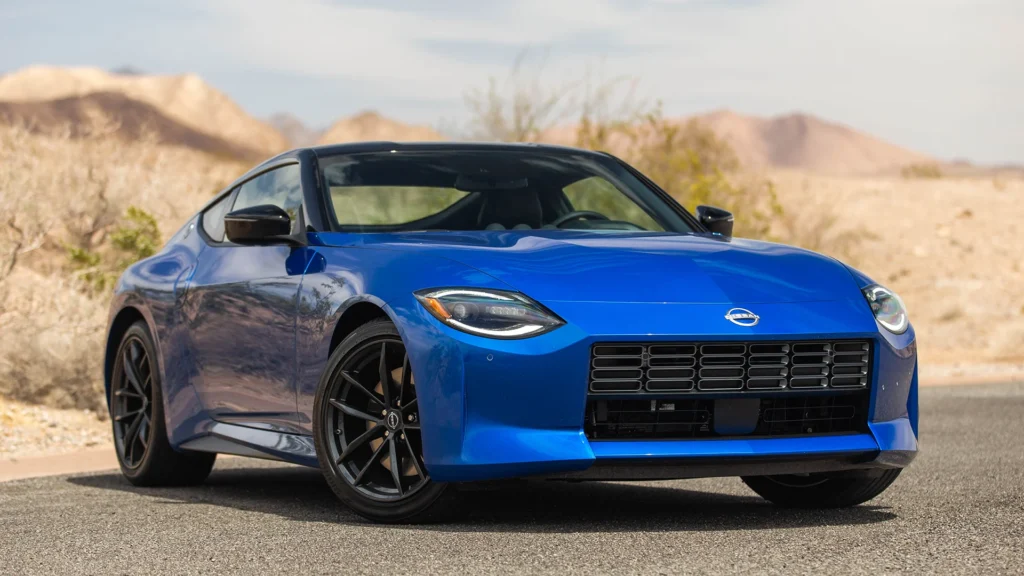
The Nissan Z is a back-to-basics sports car that prioritizes performance character and driver involvement over efficiency gimmicks, and its twin-turbocharged V6 engine runs continuously without start-stop interruption. U.S. News confirmed in their 2026 Z review that the Z has well-weighted, quick steering and delivers consistent power through its rev range without automated systems intervening in the power delivery.
- Starting Price: $44,215 MSRP (Sport trim, Sport trim is base for 2026)
- Performance Trim: Approximately $53,000+ MSRP
- Nismo Trim: Approximately $70,000+ MSRP
- Engine (Standard): 3.0-liter twin-turbocharged V6, 400 hp / 350 lb-ft
- Engine (Nismo): 3.0-liter twin-turbocharged V6, 420 hp / 384 lb-ft
- Transmission: 6-speed manual (standard); 9-speed automatic (available)
- Drivetrain: Rear-wheel drive — all trims
- Fuel Economy: 18 city / 28 highway (automatic, standard engine); 17 city / 26 highway (manual)
- Start-Stop Status: Not equipped
- Key Features:
- No auto start-stop — continuous engine operation
- 400 hp twin-turbocharged V6 — most powerful naturally available at this price
- Manual transmission standard (automatic adds convenience without removing character)
- Brembo brakes standard
- Yellow instrument cluster lighting referencing original Z heritage
- Wireless Apple CarPlay and Android Auto
- Available NISMO-tuned suspension and bodywork
- Two-seat configuration with adequate head and legroom for the segment
The Z is the most powerful no-start-stop car on this list below the Mustang GT, and the only vehicle with a twin-turbocharged V6 in the group. U.S. News noted the car has a lot more power than the GR86 and BRZ while being priced above both — a reasonable trade-off for buyers who want V6 performance in a sports car without the V8 price of the Mustang GT.
2026 No-Start-Stop Cars — Full Reference Table
| Model | Starting MSRP | Engine | Power | Start-Stop | Transmission Available |
| Mazda MX-5 Miata | $31,665 | 2.0L NA 4-cyl | 181 hp | Not equipped | Manual / Automatic |
| Toyota GR86 | $32,395 | 2.4L NA Flat-Four | 228 hp | Not equipped | Manual / Automatic |
| Subaru WRX | $32,495 | 2.4L Turbo Flat-Four | 271 hp | Not equipped | Manual / CVT |
| Subaru BRZ | $37,055 | 2.4L NA Flat-Four | 228 hp | Not equipped | Manual / Automatic |
| Nissan Z | $44,215 | 3.0L Twin-Turbo V6 | 400 hp | Not equipped | Manual / Automatic |
| Ford Mustang GT | $48,555 | 5.0L V8 | 480 hp | Not equipped | Manual / Automatic |
Pricing reflects 2026 MSRP including destination charges where available. Verify current pricing at your local dealer.
Cars With Start-Stop That Can Be Permanently Disabled — Practical Alternatives
For buyers who want a wider selection of vehicles — including practical daily cars, family crossovers, and mainstream sedans — the category of vehicles with start-stop that can be reliably disabled through aftermarket devices deserves honest coverage.
This is not a compromise or a workaround in a negative sense: it is a legitimate solution that many buyers choose and that the aftermarket industry supports with purpose-built products.
How Aftermarket Start-Stop Disablers Work
Plug-and-play start-stop disablers work by remembering the driver’s preference to keep the feature off without requiring the driver to press the dashboard button after every engine start. Most vehicles with auto start-stop have a manual disable button already — the problem is that the setting resets to on with every ignition cycle.
The aftermarket module connects to the car’s OBD-II port or to a specific vehicle interface connector and sends the same signal as the dash button press automatically, every time the car starts, without any driver input required.
Companies including Autostop Eliminator and 4D Tech have developed model-specific devices compatible with Ford, GM, Chrysler/Stellantis, Subaru, Hyundai, and Kia vehicles. Autostop Eliminator’s website lists confirmed installations on the 2026 Chevrolet Traverse and 2026 Ford Explorer ST as recent verified uses — evidence that these devices are current-generation compatible and actively being used. Installation time is typically two minutes or less, and manufacturers confirm no permanent warranty impact from the plug-and-play connection.
For buyers whose ideal vehicle happens to have start-stop — a Hyundai Tucson, Honda CR-V, Toyota RAV4, or similar mainstream crossover — the aftermarket disable option means start-stop need not be a deal-breaker. The device effectively converts a start-stop vehicle into a no-start-stop vehicle for all practical purposes.
Vehicles With Start-Stop That Have Simple Manual Disable
Several 2026 vehicles worth considering for buyers who are not put off by the extra step of pressing a disable button each drive:
2026 Honda CR-V (Starting at $32,315 MSRP): The CR-V’s auto start-stop can be disabled with a single button press and many owners develop the habit quickly. The CR-V’s overall package — low hood line, excellent visibility for shorter drivers, 192 horsepower turbocharged engine, available hybrid at 43 mpg combined — is strong enough that many buyers accept the start-stop button press as a minor inconvenience.
2026 Hyundai Tucson (Starting at $30,155 MSRP): The 2026 Tucson improved its start-stop behavior to maintain air conditioning during stop cycles on upper trims — addressing the most common complaint about the system. A manual disable button is present on all trims. The Tucson Hybrid starting at $34,915 is particularly efficient at 38 mpg combined.
2026 Toyota RAV4 Hybrid (Starting approximately $33,695): The RAV4 hybrid uses a different start-stop mechanism than conventional internal combustion vehicles — the electric motor handles low-speed movement without starting the gasoline engine, which means the start-stop behavior is smoother and less intrusive than on non-hybrid vehicles. Many hybrid owners find the system far less objectionable than the version on conventional gas engines.
What The 2027 Model Year May Bring — Honest Assessment
The February 2026 EPA deregulatory action has generated significant speculation about whether 2027 model year vehicles will begin arriving without start-stop as default equipment. The honest assessment, based on the available evidence and analysis from multiple automotive publications, is that the change will be gradual rather than immediate.
The Autopian’s analysis from February 2026 put the situation clearly: vehicles are designed to be sold in multiple markets, with some rules stricter than others. It probably would not be worth an automaker’s time to rip out a start-stop system specifically for the American market, especially when it can still deliver actual benefits.
That analysis is sound. The regulatory change removes the financial incentive for including start-stop, but it does not create a financial incentive for removing it. Vehicles already engineered with the system will continue to include it unless a manufacturer makes a specific product decision to eliminate it.
Where the change may have its most significant effect is in the design of new vehicle generations. Models currently in development that will arrive as 2027 or 2028 models may go through the early engineering phases without mandatory start-stop inclusion for the first time since 2009. Whether manufacturers take that opportunity to remove it, make it optional, or maintain it for global consistency will vary by brand and platform.
Specific 2027 Expectations By Segment
Sports Cars: The Mazda MX-5 Miata, Toyota GR86, and Subaru BRZ are all expected to continue without start-stop for 2027 based on their current design philosophies. None of these vehicles included the feature before, and nothing in the regulatory change or product planning suggests that will shift.
American Muscle: The Ford Mustang GT V8 will almost certainly remain without start-stop for 2027. The EcoBoost four-cylinder Mustang variants currently operate differently, but the V8 GT’s character has always been built on uninterrupted power delivery.
Subaru WRX and BRZ: Both models are expected to continue without start-stop for 2027 as confirmed by Subaru’s own technical documentation regarding current model year status.
Mainstream Crossovers and Sedans: This is where the most interesting potential changes exist. The elimination of EPA off-cycle credits reduces the compliance-driven motivation for including start-stop in everyday family vehicles. Whether brands like Toyota, Honda, and Hyundai respond by making start-stop optional or reducing it to higher trim levels only remains to be seen in confirmed 2027 product announcements.
How To Verify Start-Stop Status Before Buying Any New Vehicle
The safest approach for any buyer who considers auto start-stop a deal-breaker is to verify the system’s presence — or confirmed absence — before completing any purchase. The vehicle specification sheet is the first resource, but it is not always conclusive because start-stop is sometimes listed under different names by different manufacturers.
Terminology varies significantly across brands. What Ford calls Auto-Start-Stop, Hyundai and Kia call ISG (Idle Stop and Go), Subaru calls ISS (Idle Stop System), Mercedes-Benz uses ECO Start/Stop, and Mazda, in vehicles where it is included, labels it i-stop. When checking specifications, searching for any of these terms under the powertrain or efficiency section of the spec sheet will confirm the system’s presence.
The most reliable verification method is a test drive with the vehicle stopped at a simulated traffic light condition. Ask the salesperson to specifically demonstrate whether the engine shuts down at a stop — and ask that the test be conducted with the stop-start disable button in its default on position rather than being pressed off before the demo begins.
A dealer who is motivated to sell the vehicle may press the disable button before handing over the keys without mentioning it. Watching the dashboard and the tachometer at a stop with the system in default mode provides definitive confirmation.
For used car purchases where the model year predates the 2026 deregulatory change, checking the owner’s manual’s efficiency features section confirms whether the system was included in that specific model year. Owner forums for specific models are also highly reliable sources — the question of whether a car has start-stop and how to disable it is one of the most frequently discussed topics in owner communities for any model that includes the feature.
Full No-Start-Stop Buyer Reference
| Vehicle Type | 2026 Model | Start-Stop Status | Notes |
| Sports Roadster | 2026 Mazda MX-5 Miata | Not equipped | Never equipped — design philosophy |
| Sports Coupe | 2026 Toyota GR86 | Not equipped | Confirmed for 2026 generation |
| Sports Coupe | 2026 Subaru BRZ | Not equipped | Confirmed in Subaru tech documentation |
| Performance Sedan | 2026 Subaru WRX | Not equipped | Confirmed; one of few non-start-stop Subarus |
| Sports Coupe | 2026 Nissan Z | Not equipped | Confirmed for current generation |
| American Muscle | 2026 Ford Mustang GT (V8) | Not equipped | V8 models specifically; EcoBoost may differ |
| Budget Sedan | 2026 Nissan Versa S/SV | Not equipped (verify) | Simpler powertrain; confirm with dealer |
Always verify with a test drive in addition to specification review before purchase.
Why Start-Stop Complaints Go Beyond Convenience
The owner’s frustration with auto start-stop is sometimes dismissed as preference or sensitivity to minor inconvenience. A closer look at the documented concerns reveals that several of them are genuinely substantive rather than merely cosmetic.
The mechanical wear argument has real engineering basis. Every engine start cycle stresses the starter motor, the flywheel ring gear, and the engine’s internal components during the brief period between shutdown and full oil pressure restoration. Conventional engines are designed for a limited number of cold start cycles over their service lives. Start-stop vehicles address this by using enhanced starter systems, reinforced ring gears, and sometimes supplementary oil pressure maintenance — but these modifications add cost, and whether they fully compensate for the additional wear over 100,000-plus miles is a question that has not been conclusively settled with long-term reliability data across large vehicle populations.
The air conditioning interruption is a genuine quality-of-life concern in hot climates. In states like Arizona, Texas, Florida, and Southern California — where temperatures routinely exceed 100°F — air conditioning is not a comfort feature but a safety necessity. An engine that shuts off at a long red light in a Phoenix summer, cutting the compressor and allowing cabin temperature to rise, is not a trivial inconvenience. The solution implemented by Hyundai in the 2026 Palisade — maintaining the compressor during stop cycles — requires additional engineering for the climate control system. Until that solution becomes universal, the complaint is legitimate.
The safety concern raised in some forums — that a brief re-engagement delay could affect response time in certain traffic situations — is the most contested claim. The restarting typically takes 0.3 to 0.5 seconds, which in most traffic contexts is not significant. However, in specific situations involving fast-moving cross traffic or aggressive acceleration requirements from stopped positions, that fraction of a second of delay before full power is available represents a real difference from a continuously running engine.
Frequently Asked Questions
Is automatic start-stop technology now illegal or banned in the USA?
No. The February 2026 EPA deregulatory action did not ban start-stop technology. It eliminated the off-cycle credit program that gave automakers regulatory compliance incentives for including it. Manufacturers are free to include or exclude start-stop in their vehicles as they see fit. The technology is neither mandated nor prohibited under the current regulatory framework. The practical effect is that the financial motivation for including it in vehicles not already designed with it has been removed.
Which 2026 sports cars do not have auto start-stop?
The vehicles confirmed without auto start-stop for 2026 are the Mazda MX-5 Miata, Toyota GR86, Subaru BRZ, Subaru WRX, Nissan Z, and Ford Mustang GT V8. All six of these vehicles operate with continuously running engines from ignition to shutoff. The GR86 and BRZ share the same engine platform and have both been confirmed without the system in their current generation. The Subaru WRX and BRZ status was specifically confirmed by Subaru technical documentation published by TorqueNews.
Will 2027 cars come without start-stop technology?
The consensus among automotive analysts as of early 2026 is that 2027 model year vehicles will not broadly abandon start-stop, because vehicles are engineered for global markets and removing the system specifically for the American market would require additional engineering effort. The change is more likely to affect vehicles currently in early development that will enter production in 2027 or 2028. The Autopian’s analysis specifically cautioned against expecting the feature to disappear for the 2027 model year. Sports cars and performance vehicles that have never included it will continue without it.
Can start-stop be permanently disabled without voiding the car warranty?
The aftermarket plug-and-play disable modules — products from Autostop Eliminator and 4D Tech specifically — do not void factory warranties based on those companies’ stated terms, because they work by sending the same signal as the existing dashboard disable button rather than modifying any vehicle systems. The Magnuson-Moss Warranty Act generally protects consumers from having warranties voided solely due to aftermarket accessory installation, provided the accessory does not directly cause the failure being claimed. However, specific warranty terms vary by manufacturer and situation, and consulting the vehicle’s warranty documentation before installing any aftermarket device is the prudent approach.
Which mainstream non-sports cars are available without start-stop in 2026?
This category is genuinely limited. The Nissan Versa S and SV base trims use a simpler powertrain that has not consistently included start-stop, though this should be verified with the specific dealer and model year specification. The Mitsubishi Mirage historically did not include the system, though its future in the USA market is uncertain. Beyond these, most mainstream sedans, crossovers, and family vehicles in the 2026 lineup include start-stop as standard equipment. Buyers in this category who want to avoid the feature are generally best served by the aftermarket disable module approach, which converts any start-stop vehicle into a continuous-operation one without any vehicle modification.
Does start-stop actually damage car engines over time?
The current available evidence is mixed rather than conclusive. Automakers have engineered enhanced starter systems, strengthened flywheel ring gears, and better oil pressure maintenance systems specifically to address start-stop wear concerns in vehicles equipped with the feature. Long-term reliability studies across large populations of start-stop vehicles have not shown dramatically elevated engine failure rates compared to vehicles without the system. However, the feature is relatively new at scale — widespread adoption began only around 2016–2018 — and the data on very high mileage outcomes (150,000 to 250,000 miles) is still accumulating. The concern is not settled science in either direction.
What is the difference between conventional start-stop and hybrid auto start-stop?
They are functionally different systems with different characteristics. Conventional start-stop in gasoline vehicles physically shuts down the internal combustion engine at stops, relying on an enhanced starter and electrical system to restart quickly. The transition involves the slight delay and vibration that drivers find objectionable. Hybrid auto start-stop uses an electric motor to handle low-speed and stopped operation, with the gasoline engine starting seamlessly when additional power is needed. In a full hybrid like the Toyota RAV4 Hybrid or Honda Accord Hybrid, the engine start is typically smooth enough that many drivers never notice it. For buyers concerned about start-stop annoyance, the hybrid versions of mainstream vehicles frequently offer a meaningfully better experience than their conventional counterparts.