There is a specific kind of satisfaction that comes from buying a car that is faster than people expect it to be. It looks reasonable, parks reasonably, fits in a reasonable garage, and costs a reasonable amount of money — and then surprises everyone, including the driver, at the on-ramp.
That combination of value and capability has made the performance compact sedan one of the most genuinely rewarding segments in the American car market for the past thirty years.
The 2026 model year brings a small but carefully curated roster of new sedans that can be legitimately quick — not just on paper but on actual test tracks, where independent testers record the kind of numbers that tell the truth about how a car behaves at full effort.
The used market, meanwhile, has made some genuinely unexpected vehicles accessible at prices that overlap with base-trim compact crossovers.
After spending considerable time reviewing Edmunds track testing data, Autoblog back-to-back comparisons, KBB cost-of-ownership numbers, and owner accounts from communities that have lived with these cars for 50,000 to 150,000 miles, the picture that emerges is clear: there are real fast sedans available at this budget, and most buyers are shopping the wrong three models to find them.
Note
Pricing, specifications, and 0-60 performance figures referenced throughout this guide are sourced from Edmunds independent track testing, Autoblog back-to-back comparisons, Kelley Blue Book, CarBuzz, and official manufacturer websites including Hyundai USA, Honda USA, and Volkswagen USA.
Used car market pricing reflects current 2026 private party values from KBB and CarGurus.
What Fast Actually Means At This Price Point In 2026
The performance sedan market at this budget ceiling in 2026 has a specific and somewhat uncomfortable reality that most list articles choose to ignore: the most genuinely capable new car in this range crosses the price threshold at the base trim.
The Honda Civic Si starts at $31,495. The Volkswagen Jetta GLI starts at $33,745. These are excellent cars with strong performance credentials — but they both require a conversation about the budget boundary.
The reason this matters is that it shapes the entire discussion about what a buyer can actually get. At a strict budget ceiling in the high-$20,000s on new cars, the realistic new performance sedan options narrow significantly.
The Hyundai Elantra N Line, which starts around $27,450 and delivers 201 horsepower through a seven-speed dual-clutch transmission, is the strongest new-car answer within that window. Stretch just slightly beyond the line, and the Civic Si, Jetta GLI, and Subaru WRX Base all enter the conversation.
The used market, meanwhile, opens dramatically different doors — turbocharged six-cylinder sedans from Genesis and Cadillac that were once out of reach are now appearing at prices that fit this budget comfortably, with performance numbers that shame anything new in this price range.
Why Track-Tested 0-60 Times Tell A Different Story Than Manufacturer Estimates
The single most important thing to understand about performance comparisons in this segment is that the published 0-60 time from the manufacturer and the 0-60 time recorded by Edmunds or Car and Driver on an actual test track are frequently very different numbers.
Manufacturers typically provide either estimated figures or best-case-scenario results achieved under controlled conditions with skilled drivers. Independent testers use consistent methodology with standard traction control settings and driver skill levels that represent typical buyers.
This gap matters enormously when comparing cars. The Civic Si, for example, records 7.2 seconds to 60 mph in Edmunds’ track testing — not the sub-seven figure that some other publications suggest.
The Jetta GLI with the seven-speed DSG records approximately five seconds flat to 60 in independent testing — a full second-plus advantage over the Civic Si that is genuinely noticeable on the road.
The Elantra N Line, at approximately 6.5 seconds in testing, sits between the two. These are the numbers that shape the recommendations below, because they reflect what a typical driver will actually experience rather than a best-case marketing scenario.
The Fastest New Sedans Available At This Budget In 2026
1. 2026 Hyundai Elantra N Line
- Starting Around $27,450
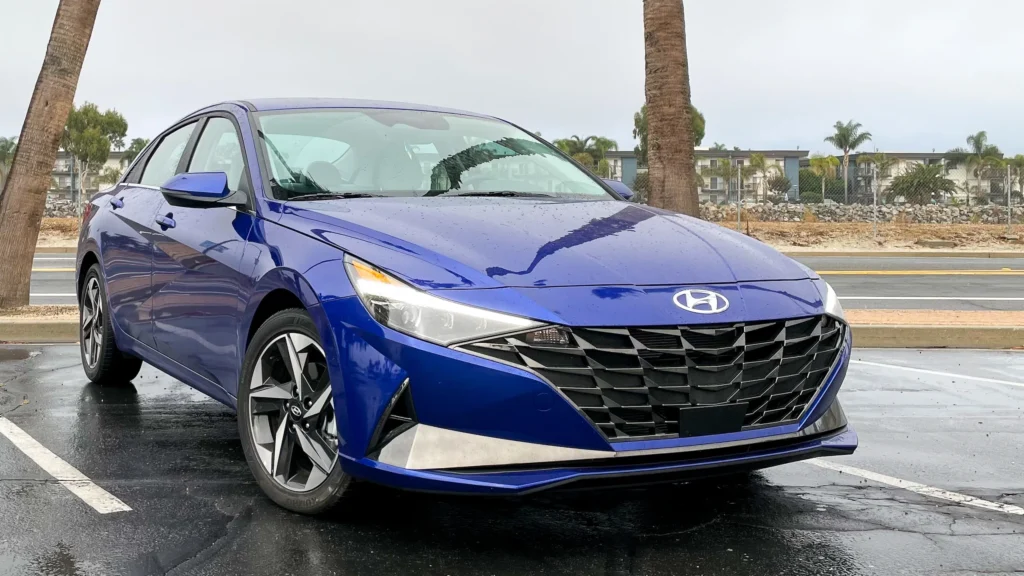
The Elantra N Line occupies the most interesting position in the 2026 new performance sedan market: it is the fastest car available at a starting price that comes in noticeably below the Civic Si and Jetta GLI, and it uses a genuinely sophisticated powertrain to get there.
The 1.6-liter turbocharged engine produces 201 horsepower and 195 lb-ft of torque, paired exclusively with a seven-speed dual-clutch automatic transmission. There is no manual option, which will disappoint three-pedal enthusiasts, but the DCT’s shift speed more than compensates for the absence of a clutch pedal in objective performance terms.
Independent testing puts the N Line at approximately 6.5 seconds to 60 mph — meaningfully quicker than the Civic Si’s Edmunds-recorded 7.2 seconds, and achieved at a starting price roughly $4,000 lower.
The dual-clutch transmission is the key to that advantage: it fires gear changes without the interruption that a torque converter automatic or a driver-operated clutch introduces, making maximum use of the engine’s output at every shift point.
The N Line is explicitly positioned between the standard Elantra and the full Elantra N. It gets the N-inspired exterior treatment — 18-inch alloy wheels, sporty front fascia, dual-tip exhaust, and N-specific interior elements including aluminum pedals and sport seats.
The digital cockpit is impressive for the segment: a 10.25-inch touchscreen infotainment display paired with a 10.25-inch digital driver information display. Hyundai’s warranty package — five years/60,000 miles basic and 10 years/100,000 miles powertrain — is the strongest in the compact car segment and adds a meaningful ownership security layer that neither Honda nor Volkswagen can match.
Where the N Line asks for a concession is interior material quality. After reviewing owner accounts from both KBB and Edmunds communities, one pattern appears consistently: buyers are satisfied with the car’s performance and technology but note the hard plastic surfaces in the cabin create an interior that does not feel as premium as the Jetta GLI at comparable prices.
For buyers prioritizing speed per dollar and warranty coverage, the N Line is the strongest new-car answer at this budget. For buyers who prioritize interior refinement above all, the Jetta GLI is worth the additional cost.
3. 2026 Honda Civic Si
- Starting At $31,495
The Civic Si sits slightly above the price target being discussed here, and the Edmunds review is direct about its market position in 2026: the Si has become more expensive and is now the slowest in its class. At 7.2 seconds to 60 mph in track testing, it trails the Jetta GLI by more than two seconds and the Elantra N Line by approximately 0.7 seconds.
Those are significant gaps at this performance level, where single-tenth differences matter. The Civic Si’s case in 2026 is built on qualities other than outright acceleration numbers.
The argument for the Civic Si comes from the quality of its manual transmission and chassis feedback. Autoblog’s back-to-back comparison with the Jetta GLI concluded that the Civic Si offers a more communicative, engaging experience for drivers who want to feel involved in what the car is doing — the steering weights up naturally with speed, the six-speed manual has some of the best shift quality in the segment, and the helical limited-slip differential provides grip on corner exit that rear-wheel-drive cars with similar power figures struggle to match.
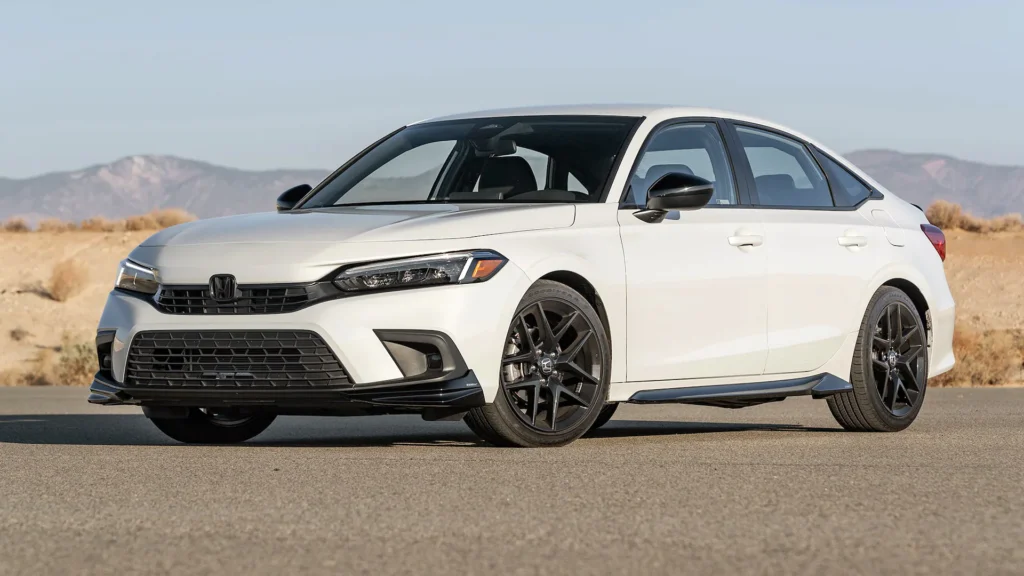
The Si also returns a segment-leading 31 mpg combined per EPA estimate, and Edmunds’ real-world testing returned 34.6 mpg on their mixed-driving evaluation route — numbers that make the fuel cost conversation significantly different from the Jetta GLI or Elantra N.
For a buyer whose priority is the most engaging, tactile manual-transmission sedan available at this price point — and who is willing to accept the lowest outright acceleration figure in the group — the Civic Si remains a legitimate choice. For a buyer who leads with straight-line performance as the primary criterion, the numbers consistently point elsewhere.
3. 2026 Volkswagen Jetta GLI
- Starting At $33,745
The Jetta GLI is the quickest new sedan that can be found at this general price range in 2026, and the margin of that advantage is not trivial. The 2.0-liter turbocharged engine produces 228 horsepower and 258 lb-ft of torque.
The DSG dual-clutch automatic transmission is a full second-plus quicker to 60 mph than the Civic Si in independent testing, and according to Autoblog’s direct comparison, the Jetta GLI is also noticeably more effortless in overtaking maneuvers — the extra torque from the larger engine pulls the car forward without requiring the careful rev management that the Civic Si’s smaller engine demands.
After driving both cars back-to-back, Autoblog’s conclusion was specific: the Jetta GLI is a more pleasant vehicle for the daily commute and it’s more effortlessly powerful.
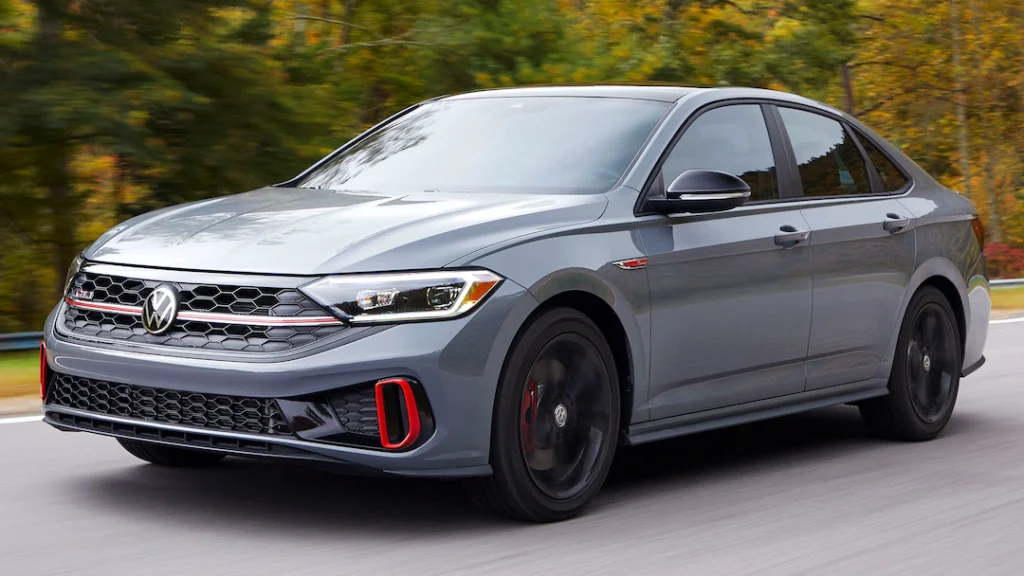
That characterization captures something important about the GLI that raw numbers alone miss — the 2.0-liter engine’s torque is accessible across a broader rev range, making the car feel fast in the mundane situations where most driving actually happens, not just at full throttle on an on-ramp.
The interior quality is also a step above the Elantra N Line, with materials and fit-and-finish that feel more premium and justify the higher starting price for buyers who spend significant time inside the car.
The GLI’s one practical consideration is fuel economy — EPA-estimated at approximately 28 mpg combined for the DSG version, noticeably below the Civic Si.
Over 12,000 annual miles, that difference adds roughly $250 to $350 per year in fuel costs, which is real money over a five-year ownership period but unlikely to be the deciding factor for a buyer who has already accepted the GLI’s starting price.
The 2026 New Sedan Performance Comparison
| Model | Starting MSRP | Engine | Power | Edmunds 0-60 | Transmission | MPG Combined |
| Hyundai Elantra N Line | ~$27,450 | 1.6L Turbo-4 | 201 hp / 195 lb-ft | ~6.5 sec | 7-Speed DCT (only) | ~29 mpg |
| Honda Civic Si | $31,495 | 1.5L Turbo-4 | 200 hp / 192 lb-ft | 7.2 sec | 6-Speed Manual (only) | 31 mpg |
| Volkswagen Jetta GLI | $33,745 | 2.0L Turbo-4 | 228 hp / 258 lb-ft | ~5.0 sec (DSG) | 6-Speed Manual / 7-Speed DSG | ~28 mpg |
0-60 times from Edmunds and Autoblog independent track testing. Pricing is base MSRP before destination and fees.
The Used Market — Where The Real Speed Per Dollar Lives
The used car market in 2026 is where this conversation gets genuinely interesting. Luxury performance sedans that were priced at $45,000 to $55,000 new have depreciated into price ranges that overlap with the new cars above, and the performance engineering they carry is in a completely different category.
1. Used Genesis G70 2.0T
- Approx $20,000–$28,000
The Genesis G70 won the 2019 North American Car of the Year award for reasons that still translate clearly into value in the 2026 used market. The 2.0T variant, with its turbocharged four-cylinder producing 252 horsepower and 260 lb-ft of torque, covers 0-60 mph in approximately 5.5 seconds — meaningfully quicker than the Civic Si and Elantra N Line, at prices that frequently come in well below those new cars on the used market.
The G70 shares its platform with the Kia Stinger and was developed with significant input from BMW-trained engineers, which shows in the multi-link rear suspension geometry, the Brembo front brake hardware, and the precision of the steering calibration.
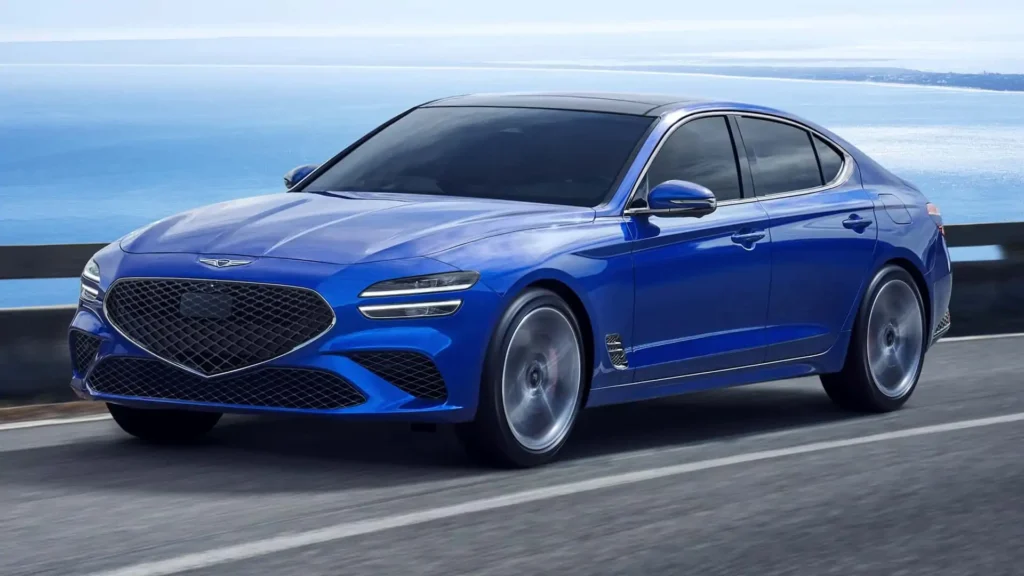
After reviewing owner accounts across Edmunds and G70-specific forums, the consistent finding is that buyers who come to the G70 from mainstream compact cars are genuinely surprised by the quality differential — the interior materials, the damper sophistication, and the overall refinement of the car feel more aligned with European luxury sedans than with Korean mainstream brands. That was always the intent: Genesis positioned the G70 directly against the BMW 3 Series and Mercedes C-Class, and independent reviewers consistently found it competitive with both.
The used purchase consideration specific to the G70 is the service interval. The 2.0T engine requires consistent oil changes at the intervals specified in the manual, and Genesis dealerships are less prevalent than Honda or Toyota dealers in rural areas, which can affect convenience for buyers who prefer manufacturer service.
CPO examples from 2021 and 2022 may still carry remaining powertrain warranty coverage, which significantly reduces the ownership risk calculation.
2. Used Chevrolet SS Sedan (2014–2017)
- Approx $23,000–$30,000
This is the recommendation that most buyers in this price bracket have never considered, and it might be the most remarkable value in the entire used performance sedan market in 2026. The Chevrolet SS looks, at a glance, like a slightly larger and more generic version of the Chevrolet Malibu.
The untrained eye sees an unremarkable American family sedan. What is under the hood is a 6.2-liter naturally aspirated LS3 V8 — the same engine as the C6 Corvette — producing 415 horsepower and 415 lb-ft of torque, sending all of it to the rear wheels and reaching 60 mph in 4.7 seconds. Top speed is 160 mph.
The SS was built in Australia by Holden — the same factory that produced the Pontiac G8 GT — on the Zeta platform developed specifically for rear-wheel-drive performance applications.
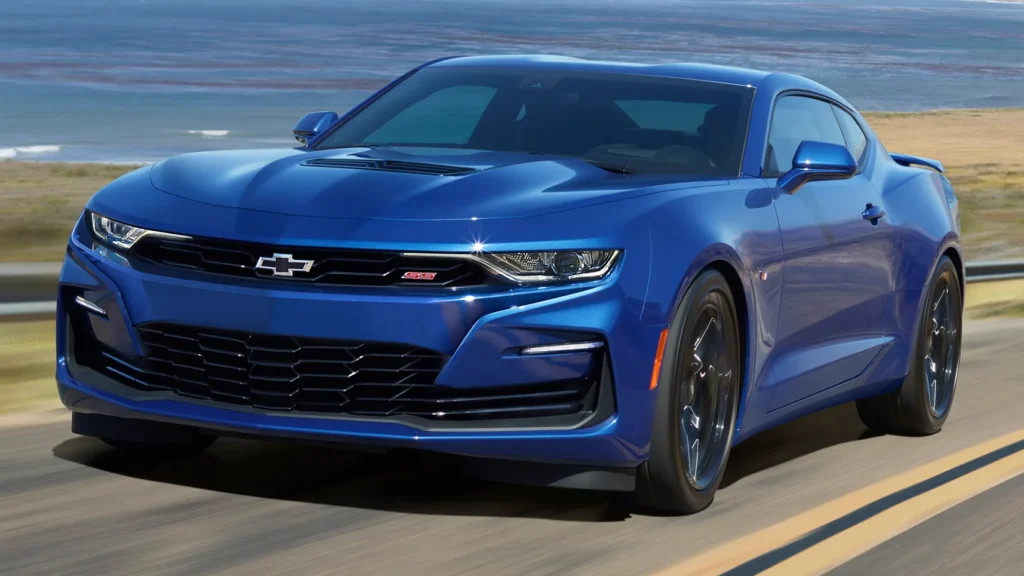
The suspension is fully independent at all four corners with proper sports car geometry, the Brembo brakes are six-piston in front, and the interior — while not matching European luxury standards — is comfortable and functional with the Magnetic Ride Control adaptive damper system that is standard across all trim levels. A six-speed manual transmission was available, which is now exceptionally rare and commands a premium.
Used SS sedans in the $23,000 to $30,000 range in 2026 represent Corvette-engine performance in a four-door sedan body that nobody takes seriously until they see it move.
The main considerations for a used purchase are confirming the specific service history and verifying the Magnetic Ride Control system is functioning correctly, as the shocks in this system are expensive to replace individually. A well-maintained example with documented service history is a genuinely extraordinary value proposition at any price in this range.
3. Used Cadillac CT4-V (2022–2023)
- Approx: $26,000–$32,000
The Cadillac CT4-V is the more accessible sibling of the extreme CT4-V Blackwing, and its used market pricing in 2026 puts the 325-horsepower turbocharged four-cylinder package into a realistic range for buyers shopping this budget.
A 325-horsepower turbo-four paired to a 10-speed automatic pushes the Caddy to 60 in just 4.5 seconds, and unlike many other options, it offers buyers the choice between rear- and all-wheel drive.
The CT4-V’s suspension is specifically tuned for sport use — notably firmer than the base CT4 — and the standard Brembo front brakes provide fade resistance that is a meaningful step above the braking hardware on compact sedans in this price range.
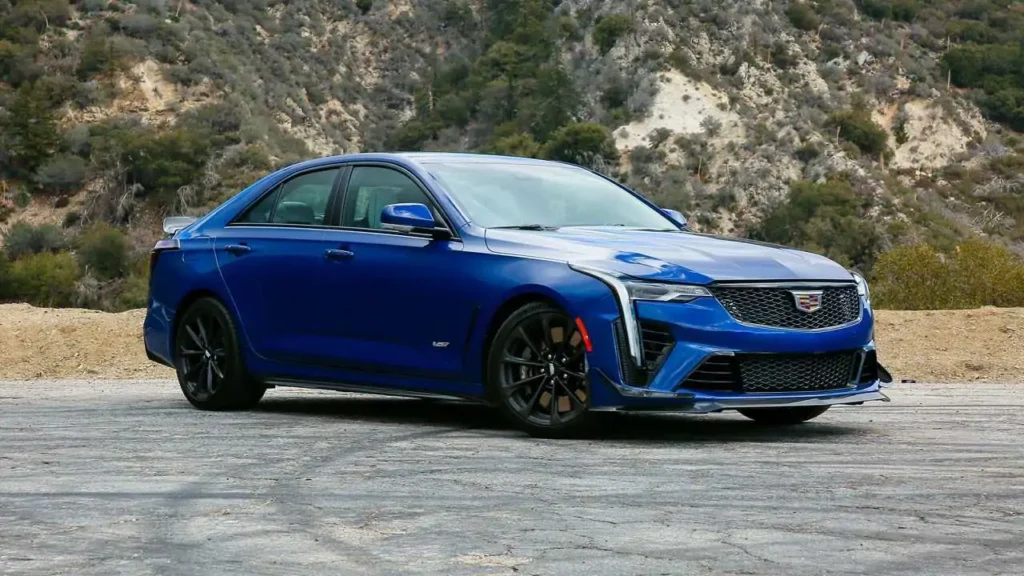
The Cadillac badge commands less residual value retention than European luxury brands, which is exactly the mechanism that makes used CT4-V examples accessible at prices that would otherwise seem impossible for a 325-horsepower American luxury performance sedan.
For the buyer who wants maximum acceleration at this budget level and is comfortable navigating the used market, the CT4-V is one of the most compelling finds of 2026.
Used Vs. New — The Complete Performance And Value Picture
| Model | Type | Approx. Price | Engine | Power | 0-60 mph | Key Advantage |
| Hyundai Elantra N Line | New | ~$27,450 | 1.6L Turbo-4 | 201 hp | ~6.5 sec | Best new-car value, 10-yr warranty, DCT standard |
| Honda Civic Si | New | $31,495 | 1.5L Turbo-4 | 200 hp | 7.2 sec (Edmunds) | Best manual gearbox, 31 mpg combined, most engaging feedback |
| Volkswagen Jetta GLI | New | $33,745 | 2.0L Turbo-4 | 228 hp | ~5.0 sec (DSG) | Quickest new sedan; best interior quality |
| Used Genesis G70 2.0T | Used | $20,000–$28,000 | 2.0L Turbo-4 | 252 hp | ~5.5 sec | Luxury chassis at compact pricing; Brembo brakes |
| Used Chevrolet SS | Used | $23,000–$30,000 | 6.2L LS3 V8 | 415 hp | 4.7 sec | Corvette engine, RWD, ultimate sleeper value |
| Used Cadillac CT4-V | Used | $26,000–$32,000 | 2.7L Turbo-4 | 325 hp | 4.5 sec | 325 hp American luxury; RWD or AWD option |
Why The Used Market Changes The Calculation Entirely
After going through the performance numbers, pricing data, and owner community intelligence for this guide, one conclusion stands out clearly: the decision between a new sport compact and a used luxury performance sedan at this budget is not primarily a question of preference — it is a question of what the buyer values most in the ownership equation.
A new Hyundai Elantra N Line comes with a 10-year/100,000-mile powertrain warranty, current-generation technology including wireless Apple CarPlay and a digital cockpit, and zero unknown history. That combination has real financial and psychological value. The car is a known quantity, and the warranty backstop means that major powertrain repair costs are covered for a decade from purchase.
A used Chevrolet SS or Cadillac CT4-V offers performance that the new cars listed here simply cannot reach. A 4.5-second to 4.7-second 0-60 time is not incrementally better than a 6.5-second time — it is in a categorically different performance tier.
The used car buyer accepts some version of maintenance history uncertainty, older technology, and potentially higher near-term maintenance costs in exchange for that performance.
A pre-purchase inspection eliminates most of the risk from the unknown history, and the service records from a well-maintained Cadillac or Chevrolet narrow the uncertainty further.
The framework for deciding between the two approaches is straightforward. If the buyer needs a primary daily vehicle with maximum warranty coverage and the lowest possible ownership uncertainty, a new Elantra N Line is the strongest answer. If the buyer wants maximum performance at the lowest possible price and is comfortable navigating the used market carefully, the Chevrolet SS and Cadillac CT4-V deliver numbers that nothing new at this budget can approach.
Frequently Asked Questions
What is the fastest new sedan available for around $30,000 in 2026?
The Volkswagen Jetta GLI is the quickest new sedan available at this general budget level in 2026, recording approximately five seconds to 60 mph with the seven-speed DSG transmission in independent testing. It starts at $33,745 before destination charges — slightly above the target ceiling but within the range most buyers in this segment actually spend when factoring in common option packages. If the budget is strictly limited to the high-$20,000 range on new cars, the Hyundai Elantra N Line is the strongest performance option, offering 201 horsepower through a seven-speed dual-clutch transmission at a starting price around $27,450.
Why does the Honda Civic Si trail the Jetta GLI by so much in acceleration testing?
The gap comes down to engine displacement and transmission type. The Jetta GLI uses a 2.0-liter turbocharged engine producing 228 horsepower and 258 lb-ft of torque — meaningfully more torque than the Civic Si’s 1.5-liter producing 200 horsepower and 192 lb-ft. The DSG transmission also fires gear changes faster than any human can operate a clutch pedal, which adds additional acceleration advantage. The Civic Si’s six-speed manual with clutch is engaging and tactile, but every manual shift introduces a brief power interruption that the DSG eliminates entirely. The result is a 7.2-second versus roughly five-second gap in Edmunds’ consistent testing methodology.
Is the used Genesis G70 a smart buy in this price range?
The Genesis G70 2.0T is one of the strongest value propositions in the entire used performance sedan market in 2026. With 252 horsepower, a 0-60 time around 5.5 seconds, Brembo front brakes, multi-link rear suspension, and a premium interior that was engineered to compete with BMW and Mercedes products, it delivers a quality and performance level that no new car at similar prices can match. The key purchase condition is verified service history — the 2.0T engine requires consistent, correctly-timed maintenance for long-term reliability. A pre-purchase inspection and a complete service record review are non-negotiable before committing to any used G70.
What makes the Chevrolet SS such an unusual value in 2026?
The SS carries a 6.2-liter LS3 V8 producing 415 horsepower in a four-door sedan body that does not visually signal its performance capability to anyone who does not recognize the badge. It was built in Australia on a bespoke rear-wheel-drive performance platform, with fully independent suspension, standard Magnetic Ride Control adaptive dampers, and six-piston Brembo front brakes — none of which are typical content for what looks like a mainstream American family sedan. Depreciation, Cadillac brand perception, and limited production numbers have combined to make used examples available in the $23,000 to $30,000 range in 2026. The result is Corvette-engine performance in a four-door, family-usable package at a price that overlaps with turbocharged compact sedans producing a third the power.
Which option is best for a buyer who needs the car for daily commuting and occasional weekend fun?
The Hyundai Elantra N Line is the most practical answer for a buyer who needs both functions from a single vehicle at a new-car price point. It is comfortable enough in normal driving mode for daily commuting, the DCT transmission eliminates clutch fatigue in stop-and-go traffic, and the sport mode engages when the road opens up. The 10-year powertrain warranty provides long-term ownership security that used car alternatives cannot match. Buyers who can stretch to the Jetta GLI’s price point get additional refinement and noticeably quicker acceleration, which makes the daily commute measurably more engaging without the full performance focus of the Elantra N’s track-oriented hardware. For buyers open to the used market, a well-maintained Genesis G70 2.0T delivers similar daily utility with significantly more performance capability for less money than either new car.