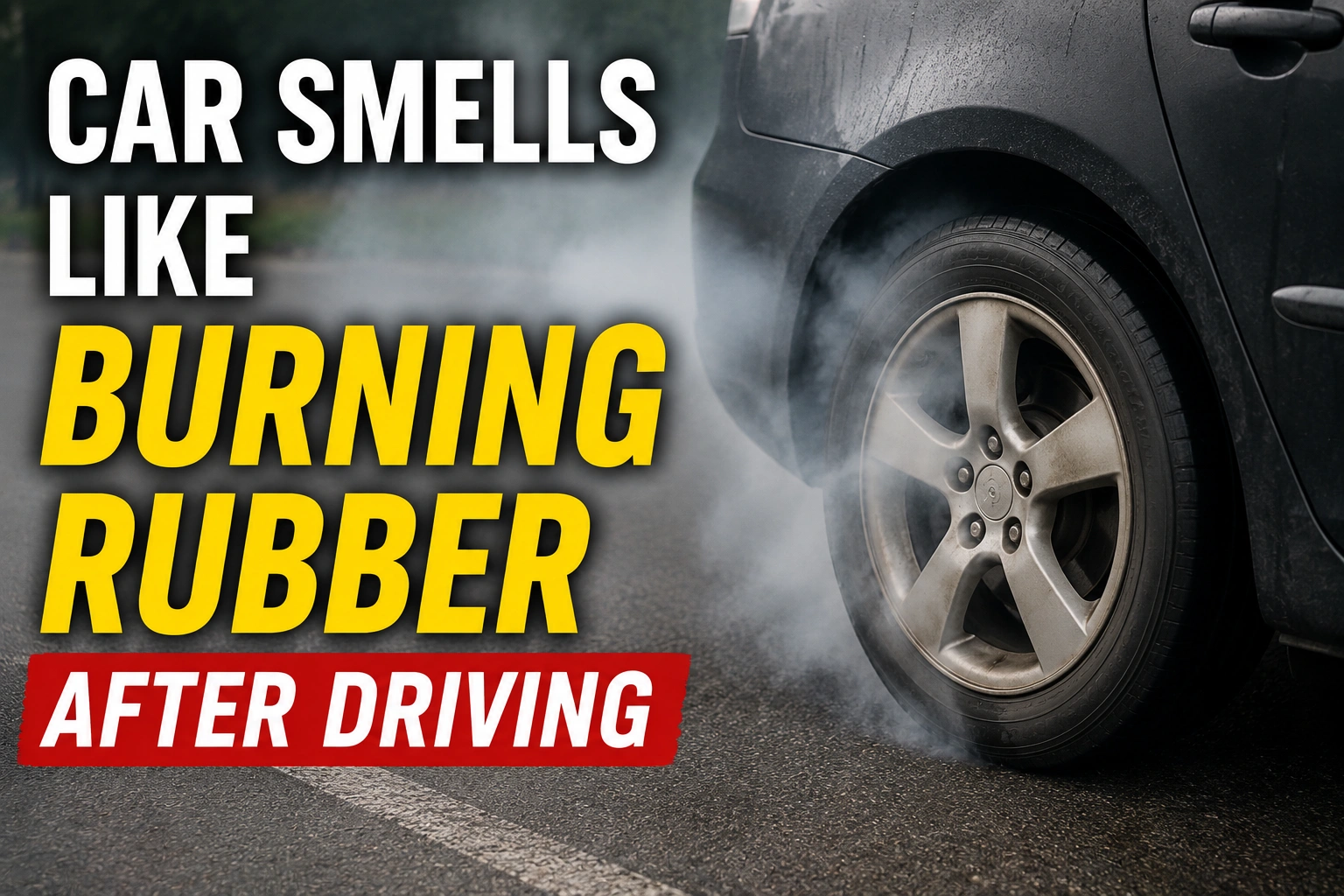
Burning rubber is one of those smells the human nose was apparently designed to find alarming. It is sharp, acrid, and unmistakable — nothing else quite like it comes out of a car under normal circumstances.
Which is exactly why the brain registers it as a warning signal even before the conscious mind has processed what happened. The catch is that the smell itself tells only part of the story.
The burning odor that lingers around the car after a drive is not always rubber. It could be brake pad material, engine oil on a hot exhaust manifold, a slipping serpentine belt, melting wiring insulation, a clutch in distress, or a plastic shopping bag from the highway that found its way onto the exhaust system.
Each of these has a different origin, a different urgency level, and a completely different repair path. Treating them all as the same problem leads to misdiagnosis, wasted money, and occasionally a safety situation that could have been avoided.
After reviewing dozens of owner accounts, mechanic diagnostic threads, and real-world workshop findings — the pattern that emerges most clearly is this: the location of the smell, the timing of when it appears, and the presence of any accompanying symptoms are almost always enough to identify the cause before opening the hood.
The nose, it turns out, is a reasonably good diagnostic tool when the right framework is applied.
Why Burning Rubber Is Not Always Actual Rubber
Most people who smell burning rubber near their car assume a tire is involved. In the vast majority of cases, they are wrong — and understanding why requires a quick look at what materials are actually burning and why they produce the same general odor.
Rubber is a polymer. When it heats past its tolerance threshold, it breaks down through a process called pyrolysis, releasing sulfurous, acrid compounds into the air.
The relevant detail is that many other materials in and around a vehicle are also polymers — synthetic rubber belts, plastic wiring insulation, brake pad bonding resins, clutch facing material, and hose compounds.
When any of these materials are exposed to heat beyond their design limits, they produce pyrolysis byproducts that the human nose interprets as burning rubber, even though no tire is involved.
This explains why the smell can come from so many different sources. A mechanic who has worked with these odors for years can often distinguish between them — the sharp electrical note of melting wiring insulation is different from the more organic, papery smell of an overheating clutch, which is different again from the specifically oily character of engine oil burning on an exhaust manifold.
For most car owners who do not spend their days surrounded by these smells professionally, they all register as burning rubber. The diagnostic value comes not from trying to chemically analyze the odor but from identifying when it appears, where it seems to originate, and what else is happening simultaneously.
The Real Causes — Organized By What The Evidence Actually Shows
A Stuck Brake Caliper — The Cause That Creates The Most Serious Risk
Among all the causes of post-drive burning rubber smell, a seized brake caliper ranks as the one requiring the most urgent response, and after going through dozens of owner forum accounts and mechanic diagnostic threads, it also ranks as one of the most frequently misidentified.
The caliper holds the brake pads against the rotor when the pedal is pressed. When a caliper piston or slide pin seizes, it maintains pressure on the pad even after the pedal is released.
The car then drives with constant friction at that wheel — the brake is perpetually on at that corner, even though nothing feels wrong with the pedal.
The resulting heat is intense. Brake pads contain synthetic resins and bonding compounds that release sharp, acrid fumes when overheated — the same sulfurous compounds that the nose reads as burning rubber.
The tell-tale sign that separates a stuck caliper from most other causes is heat distribution: after a normal drive, one wheel will be significantly hotter than the others. Carefully approaching the wheel and feeling the heat radiating from it — without touching the rotor or caliper, which can cause burns — confirms what the odor suggested.
In some cases the wheel rim itself becomes too hot to touch. A moderate drive to the grocery store and back should not produce a wheel too hot to hold a hand near. When it does, a caliper is the first thing to check.
Road salt in northern states accelerates caliper seizure dramatically by corroding the slide pins that allow the caliper to move freely. Vehicles that see significant winter road salt exposure and have not had their caliper slides cleaned and lubricated in several years are particularly prone to this failure mode.
The repair involves either rebuilding the caliper assembly with new seals and slide pin boots, or replacing the caliper unit entirely — typically $80 to $200 per corner for standard passenger vehicles at an independent shop.
Continuing to drive on a fully seized caliper risks brake fluid boiling from the sustained heat, rotor warping, pad material transfer that creates uneven braking, and in worst cases, structural heat damage to brake line fittings in the immediate area.
Oil Or Fluid Leaking Onto Hot Engine Surfaces — A Fire Risk Many People Underestimate
Engine oil does not smell like burning rubber when it is sitting in the crankcase doing its job. It smells like burning rubber when it escapes through a degraded valve cover gasket, an oil filter that was not fully tightened at the last service, or a rear crankshaft seal, drips onto the exhaust manifold — which can reach temperatures between 1,000°F and 1,200°F — and begins to combust on that surface.
The result is a sharp, oily-acrid smell that the nose registers as burning rubber or melting plastic, often accompanied by light blue-gray smoke drifting from the engine bay after the vehicle is parked and the engine has stopped.
After reviewing the specific failure patterns documented by mechanics working on aging vehicles, the valve cover gasket is far and away the most common source of this type of odor.
The gaskets sit at the very top of the engine, directly above the exhaust system, and when they degrade — from heat cycling, age, or years of oil dilution — the resulting leak drops oil onto the manifold below with remarkable consistency.
The tell-tale visual sign is brown, baked-on oil residue on the top surfaces of the exhaust manifold or on the catalytic converter heat shield, sometimes with active dripping visible when the engine is running.
The risk dimension that most basic guides understate is fire potential. Engine oil ignites at approximately 300°F to 400°F depending on its contamination level. An exhaust manifold running at 1,000°F is not just hot enough to burn the oil — it is hot enough to sustain combustion if the leak rate increases.
Small, slow leaks that produce an intermittent smell are a maintenance issue. Large leaks that produce visible smoking and a persistent strong odor are a genuine fire risk, and the appropriate response to heavy oil smoke from the engine bay is to stop the vehicle, let it cool, and have it towed rather than driving it further.
A Slipping Or Misaligned Serpentine Belt — The Sound-And-Smell Combination
The serpentine belt runs the alternator, power steering pump, air conditioning compressor, and in many vehicles the water pump. It is a single belt in most modern vehicles, looped over multiple pulleys, maintained at correct tension by a spring-loaded tensioner pulley.
When the belt becomes loose from tensioner wear, glazed from age and heat, or contaminated with engine oil from a nearby leak, it begins slipping against the pulley surfaces it should grip cleanly.
Friction between a slipping belt and a fixed pulley surface generates enough heat to begin breaking down the belt’s rubber compound. The result is a sharp, burnt rubber smell that often accompanies a chirping or squealing noise, particularly noticeable on cold starts or when the air conditioning compressor engages.
The smell from a slipping belt is usually most noticeable in the engine bay rather than inside the cabin, and it tends to be most intense in the minutes after the car has been driven and parked rather than during the drive itself — because the heat accumulated in the belt and pulleys radiates more obviously into the still air around a parked vehicle than it does in moving air during driving.
Inspection involves visually examining the belt for glazing — a shiny, smooth surface on the ribbed side indicates slipping against pulleys rather than gripping them — and for cracking, fraying, or chunks missing from the rib profile.
The tensioner pulley should be checked for bearing wear: a worn tensioner bearing allows belt tension to fluctuate, which causes intermittent slipping even when the belt itself is in serviceable condition.
Belt replacement on most modern vehicles is a straightforward independent shop job running $80 to $180 including parts and labor. Neglecting a worn belt to the point of failure means losing power steering, alternator charging, and air conditioning simultaneously — and in vehicles where the serpentine belt also drives the water pump, a broken belt leads to immediate engine overheating.
Foreign Objects On The Exhaust — The Most Common Benign Cause
Among all the causes of post-drive burning rubber smell, the stuck foreign object is simultaneously the least serious and the most frequently overlooked.
Plastic shopping bags, leaves, fast food wrappers, and road debris regularly get caught on exhaust pipes, catalytic converter heat shields, and the underside of the vehicle. When the hot exhaust system contacts a plastic bag during driving, the material begins to melt and pyrolyze, producing a sharp burning smell that can persist for several minutes after parking.
The distinguishing characteristic of this cause is that the smell is transient. It appears during a specific drive, peaks immediately after parking, and dissipates within five to ten minutes as the debris finishes burning off or falls away.
If the burning smell appears only once after a particular drive and does not recur on subsequent trips, a foreign object is the most probable explanation.
The inspection involves waiting until the exhaust system has cooled — at least 30 minutes after parking — and visually checking the underside of the vehicle around the exhaust pipes and catalytic converter for any melted material. A flashlight and a few minutes on a knee confirms or rules out this cause quickly. If material is still attached to the exhaust, it can be carefully scraped away once cool.
The important caveat is that the transient nature of the smell is the critical diagnostic factor. A smell that recurs on every drive, or that persists long after the car has cooled, is not a foreign object. Those patterns point toward brake, belt, fluid, or electrical causes that require proper diagnosis and repair.
Electrical Issues — The Cause That Warrants Immediate Action
Electrical burning has a distinct character that experienced mechanics describe as sharper and more chemical than the organic rubber smell from brakes or belts — but to most car owners, it still registers as burning rubber and is worth covering specifically because its urgency level is genuinely different from the other causes.
When wiring insulation overheats from a short circuit, an overloaded fuse, or a component drawing more current than its circuit was designed for, the plastic coating on the affected wire begins to melt.
The pyrolysis products from burning plastic insulation are acrid, chemical, and often perceived as more suffocating than the smell from overheated brakes or belts. In a vehicle context, electrical burning can come from a failing alternator drawing excess current, a blower motor resistor burning out in the HVAC system — which brings the smell directly into the cabin through the vents — a short in an aftermarket accessory installed with undersized wiring, or degraded wiring in high-heat areas that has reached the end of its insulation life.
The specific pattern to watch for is whether the smell enters the cabin through the vents. A burning smell that comes from the air vents when the heater or air conditioning fan is running is strongly suggestive of a blower motor, blower motor resistor, or cabin wiring issue.
The HVAC fan draws air directly through the heater box, and any heat or odor from components in that airflow path comes directly into the cabin at face level. This specific presentation — burning smell through the vents — should be treated as electrical until confirmed otherwise, and an electrically burning vehicle should not be driven further without diagnosis. Electrical fires in vehicle interiors develop quickly and are difficult to extinguish.
The Burning Smell Diagnostic Table
| When The Smell Appears | Where It Comes From | Most Likely Cause | Urgency Level |
| After every drive, especially near wheels | One specific wheel area is very hot | Stuck brake caliper | High — stop driving, inspect immediately |
| After parking, light smoke from engine bay | Engine bay, oily-acrid character | Oil leak on exhaust manifold | High — fire risk if severe |
| On cold start or when AC turns on, with squealing | Engine bay, rubber-belt character | Slipping serpentine belt | Moderate — schedule repair within days |
| One specific drive, fades within 10 minutes | Underside of vehicle | Foreign object on exhaust | Low — inspect and remove |
| Through the air vents inside the cabin | Directly inside cabin | Electrical/blower issue | High — potential fire risk |
| During and after heavy braking or downhill driving | Around all wheels, hot-metal character | Overheated brake pads | Low if occasional — check for stuck caliper |
| In manual vehicle, during gear changes or stop-go traffic | Engine bay, organic-papery | Clutch slipping or overheating | Moderate to high — clutch wear |
| Sweet-acrid combination, engine temperature rising | Near radiator or top of engine | Coolant leak on hot surfaces | High — overheating risk |
How To Inspect The Car At Home Before Calling A Shop
After reading through the causes and their patterns, a logical sequence emerges for checking a car with a burning rubber smell at home before committing to a repair shop visit. The sequence is designed to start with the safest and most accessible checks and move toward the ones that require more time or access.
Wait until the engine is fully cold before any underhood inspection. A freshly driven engine has surfaces hot enough to cause burns on contact, and a leak that is actively dripping onto a hot manifold presents risk while the engine is warm. Thirty minutes is the minimum cooling time; overnight is better for a thorough inspection.
Begin with the wheels. Walk around the vehicle and carefully hold a hand near each wheel center — not touching the rotor or hub — and compare the heat radiating from each corner.
Significant temperature difference between wheels is the fastest indicator of a brake issue. If all four wheels feel similar, the braking system is probably not the cause.
Open the hood and look for visual evidence of fluid leaks. Baked-on brown residue on the exhaust manifold, fresh wet oil anywhere on the engine exterior, or dried whitish residue from a coolant leak are all visible without any disassembly.
Check the oil level with the dipstick while the hood is open — a low oil level combined with a burning smell is a strong indicator of an active leak.
Inspect the serpentine belt visually. It should have a matte, textured appearance on the ribbed side.
A shiny, glazed surface indicates slipping. Cracks across the ribs are another visual warning. The tension should feel firm when pressed — significant deflection with light finger pressure indicates a worn tensioner.
Check the underside with a flashlight. Melt marks or residue on the exhaust pipes or catalytic converter heat shield are easy to see with adequate light. Foreign object material typically melts and adheres to the hottest sections of the exhaust system directly under the vehicle’s center.
When Pulling Over Immediately Is The Right Decision
Three specific situations during a drive call for stopping the vehicle rather than continuing to the destination. The smell accompanied by visible smoke from the engine bay or from beneath the vehicle.
The smell accompanied by a wheel or brake that feels substantially hotter than others after a short drive. The smell coming through the air vents combined with any electrical behavior change — lights dimming, fans running at wrong speeds, unusual instrument cluster behavior.
In all three cases, continuing to drive risks escalating a manageable mechanical problem into a fire, a collision from reduced brake effectiveness, or an electrical fault that disables critical vehicle systems mid-drive.
Pulling over safely, turning off the engine, and waiting for the vehicle to cool before attempting inspection is the correct response. If smoke is visible from the engine bay, evacuating the vehicle before the smoke intensifies is the right priority.
Common Burning Smells And What They Specifically Indicate
| Smell Character | Typical Origin | Additional Clues |
| Sharp, acrid, slightly sulfurous | Brake pad material or clutch facing | Hot wheel hub after short drive, or clutch slip in manual |
| Oily-acrid, sometimes with faint smoke | Engine oil or fluid on exhaust manifold | Brown baked residue on manifold, oil spots under car |
| Chemical, plastic-like, enters cabin through vents | Electrical wiring or blower motor | Smell strongest when fan is on, possible HVAC behavior change |
| Sharp rubber belt smell, high-pitched squeal | Slipping serpentine belt | Squealing on startup or AC engagement, glazed belt appearance |
| Sweet-acrid combination | Coolant burning on hot surfaces | Rising engine temp gauge, white smoke from engine area |
| Brief, strong, fades in minutes | Melting road debris on exhaust | Single occurrence after specific drive, visible melt marks underneath |
Frequently Asked Questions
Is it safe to keep driving when the car smells like burning rubber?
It depends entirely on which system is producing the smell. A brief smell from road debris on the exhaust that clears within a few minutes carries minimal risk. An ongoing smell from a stuck brake caliper, active oil leak, or electrical fault should prompt immediate stopping, because these conditions worsen progressively and carry fire risk or brake failure risk that increases with continued driving. A useful rule of thumb is this: if the smell is persistent across multiple drives, or if it comes with visible smoke, a hot wheel, or any smell entering through the air vents, stop driving and inspect before the next trip.
What is the difference between a burning rubber smell and a burning oil smell?
The distinction matters for diagnosis. Burning oil has a specifically oily, somewhat fatty character — it smells more like hot cooking oil or motor oil than pure rubber. It often accompanies visible smoke and is strongest in the engine bay rather than around the wheels. A burning rubber or synthetic rubber smell from brakes or belts is sharper and more sulfurous, without the oily fat character of burning engine oil. In practice, both can register as burning rubber to most drivers, which is why location and accompanying symptoms are more reliable diagnostic tools than trying to chemically categorize the specific odor.
Why does the burning smell appear after parking rather than during driving?
Heat accumulated in the brake system, exhaust surfaces, or engine components during driving radiates more noticeably into still air after the vehicle stops than it does while moving air carries it away during the drive. A stuck caliper, for example, generates heat throughout the entire drive, but the smell becomes most concentrated around the vehicle once airflow stops. Similarly, oil that has dripped onto the exhaust manifold during driving burns off on that surface, and the combustion products collect around the parked vehicle more noticeably than during the drive. This pattern — smell strongest immediately after parking — is normal for any heat-related cause and does not indicate the problem is only present when parked.
Can a burning rubber smell come from new brakes?
Yes, and this is one of the most common benign explanations for the smell after a recent brake service. New brake pads contain bonding resins and curing compounds that release a burning smell during the first several hours of use while the pads heat-cure against the rotor surface. Most brake pad manufacturers and shops call this the bedding-in process. The smell typically appears during the first two to five drives after new pads are installed and dissipates once the pads have fully cured. If the burning smell from new brakes persists beyond several days of normal use, or if one wheel is significantly hotter than the others, the installation should be inspected for a caliper or hardware seating issue.
How does a burning clutch smell different from burning brakes?
An overheating clutch has a distinctive organic, slightly papery character that experienced mechanics describe as different from the sharper, more sulfurous character of overheated brake pads. The clutch smell tends to appear specifically during the moments of engagement — accelerating from a stop in stop-and-go traffic, towing on an incline, or any situation where the clutch disc is slipping under load. The smell is usually strongest in the cabin and around the transmission tunnel. Overheated brake pads produce a sharper smell that is more localized to the wheels and typically appears after braking rather than during acceleration. In a manual transmission vehicle, noting when exactly the smell appears — during acceleration from rest versus during braking — is often enough to distinguish between the two.