Three hundred horsepower used to mean serious money. In the 1990s, getting to that number required either a sports car with a six-figure price tag or a supercharged V8 from a brand’s top performance division.
Today, in the 2026 used car market, $10,000 can buy you more horsepower than most new cars sold at full sticker price — if you know exactly where to look. Depreciation is brutal for performance vehicles, and that brutality works entirely in a used-car buyer’s favor.
American muscle, Japanese sports cars, European luxury fast sedans, and even the occasional supercharged oddity all fall within this ceiling once enough years and miles have stacked up.
What follows is a detailed look at which ones are actually worth buying — and which ones are cheap for reasons that should give you pause before writing the check.
Note
Research for these blogs is sourced from top US automotive authorities including Edmunds, Kelley Blue Book, CarBuzz, iSeeCars, U.S. News & World Report, CARFAX, Motor1, AutoEvolution, TopSpeed, and official manufacturer websites.
All pricing, specs, and performance figures are cross-referenced across multiple reputable sources to ensure accuracy and reflect real 2025–2026 market data.
Readers are always encouraged to verify current figures directly with a local dealership or the manufacturer before making any purchase decision.
Why $10,000 Buys More Horsepower In 2026 Than Ever Before
The used car market in the United States is sitting at an interesting inflection point heading into 2026. New car prices remain elevated from post-pandemic demand spikes and persistent supply chain effects.
At the same time, a wave of 2010–2015 performance vehicles has crossed the ten-year depreciation threshold, where resale values bottom out and private sellers become highly motivated.
According to iSeeCars’ 2026 pricing data, high-performance vehicles from this era depreciate 40 to 55 percent of their original value over five years — and the math gets even steeper at the decade mark.
That depreciation works like a performance subsidy for used car buyers. A Cadillac CTS-V that cost $62,000 when new in 2011 can be found for under $10,000 today.
A Dodge Challenger R/T that left the dealership at $34,000 in 2012 lists on CARFAX for $7,000 to $9,500 in 2026. The horsepower doesn’t go anywhere — the 426-horsepower LS3 V8 in a 2011 Camaro SS is the same engine it was the day it rolled off the assembly line.
The dollars, however, disappear with time, mileage, and the relentless march of new model releases. There is one honest caveat that needs to be stated upfront before looking at specific models: buying a performance car within this range requires more due diligence than buying a reliable economy car in the same price range.
High-horsepower engines, performance transmissions, and sport-tuned suspensions all cost more to repair when they fail — and they are more likely to have been driven hard by previous owners.
A pre-purchase inspection from an independent mechanic is not optional in this price range. It costs $100 to $150 and can save you from a $3,000 surprise within the first six months of ownership.
With that context established, here are the specific cars that deliver the best combination of power, reliability, and value in the 2026 used market under your budget.
The Cars That Actually Deliver 300+ HP With $10K Range
Not every performance car ages the same way. Some deliver remarkable value in the used market because their powertrains were genuinely overbuilt from the factory.
Others look like deals on paper until you factor in parts costs, known reliability issues, and the reality that cheap performance cars often carry higher insurance premiums.
The cars below have been selected based on real market pricing, documented horsepower output, and long-term ownership patterns that suggest they can survive the used-car gauntlet without destroying your bank account.
1. Ford Mustang GT (2005–2012)
The fifth-generation Mustang GT, known among enthusiasts as the S197 generation, is the most straightforward answer to the question of finding 300 horsepower with a range of $10,000 in the current US market.
The 2005–2010 models carry a 4.6-liter Modular V8 producing exactly 300 horsepower, while the 2011–2012 generation stepped up significantly to a 5.0-liter Coyote V8 pumping out 412 horsepower — a figure that thoroughly embarrassed cars costing twice as much when it debuted.
Both engine families have extensive aftermarket support, well-documented maintenance patterns, and communities of owners who have pushed these motors past 200,000 miles with proper care.
In the 2026 used market, Kelley Blue Book places clean examples of the 2010 Mustang GT in private party transactions at $7,500 to $9,800 depending on mileage and condition.
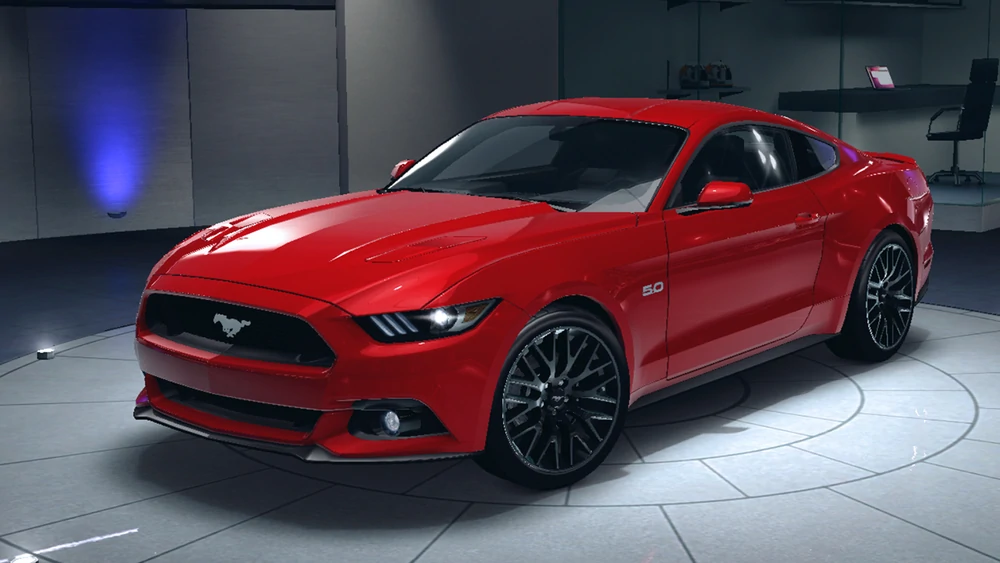
The 2011–2012 Coyote-powered cars run slightly higher, with good examples landing between $9,500 and $12,000 — so the Coyote sits right at the upper edge of the your target price, but patient buyers watching private-party listings regularly find within budget with moderate mileage. The 4.6-liter cars are more reliable under the ceiling and still deliver a genuine V8 experience.
What makes the S197 Mustang GT particularly compelling from a value standpoint is its parts ecosystem. Ford sold this generation in massive volumes across seven model years, which means replacement parts — everything from clutch kits to exhaust components to brake calipers — are affordable and readily available at every parts retailer in the country.
The live rear axle that enthusiasts criticized when the car was new actually simplifies maintenance compared to independent rear suspension setups on competing European sports cars at similar used prices.
TopSpeed called the S197 Mustang GT “a great value for money,” noting that its Ford Modular V8 “is known to be capable of a lot more power” for those interested in eventual modifications.
2. Dodge Challenger R/T (2009–2014)
The Dodge Challenger R/T carries the 5.7-liter HEMI V8 producing 375 horsepower — a figure that puts it at the upper end of the power spectrum in this price range.
CARFAX listings in 2026 show used Challenger R/T models from 2009 to 2014 priced between $7,800 and $9,997, with dozens of accident-free, one-owner examples available nationally. The 2011–2014 cars received a refreshed interior and HEMI revisions that improved reliability and fuel economy slightly compared to the earliest production years.
The Challenger’s appeal in this price bracket goes beyond raw horsepower. It’s one of the few cars that offers genuine rear-seat room for adults, a large trunk, and the kind of commanding road presence that draws attention everywhere it goes.
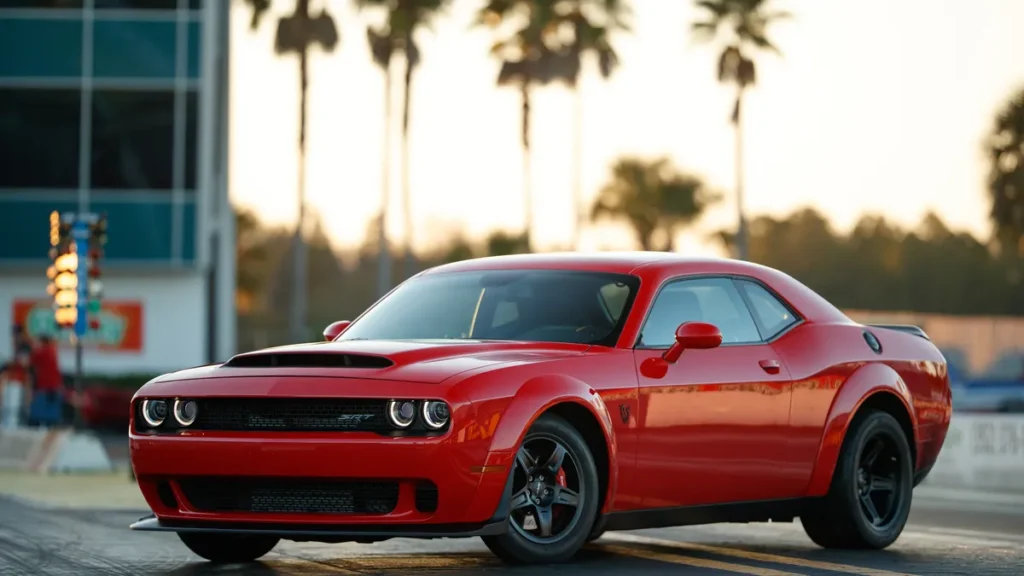
Owner reviews on CARFAX in 2026 consistently describe the 5.7 HEMI as smooth, reliable, and genuinely satisfying in daily use — with one reviewer noting “305 hp, regular gas, excellent safety” and another calling it “naturally aspirated, sounds like a monster.”
These are not isolated opinions. The 5.7 HEMI has earned a reputation as one of the more durable performance V8s of its era, particularly in the Challenger’s relatively mild state of tune.
Insurance is worth factoring in before finalizing any purchase decision here. The Challenger carries a performance coupe body designation that results in higher premiums than an equivalent-horsepower sedan for most US buyers.
The R/T designation also carries weight with insurance actuaries regardless of how conservatively a specific driver operates. Getting quotes from multiple carriers before buying will confirm whether the total cost of ownership fits comfortably within a budget.
3. Chevrolet Camaro V6 LS (2011–2015)
The fifth-generation Camaro in V6 LS trim is one of the most overlooked performance values in the current used market, and that oversight works in a buyer’s favor.
The 3.6-liter V6 engine produces 312 horsepower — more than the equivalent V6 Mustang of the same era, which was rated at 305 horsepower. More importantly, as AutoEvolution noted, “a 2011 model in LS trim for just under $10,000 is staggering” value, especially given the dramatic improvement in chassis quality and exterior design that the fifth generation represented over its predecessor.
The fifth-gen Camaro was built on GM’s Zeta platform, which gave it genuinely sports-car handling characteristics that the previous generation lacked entirely. The suspension tuning was co-developed with Holden in Australia, and the result is a car that handles direction changes with a precision well beyond what its muscle car positioning suggests.
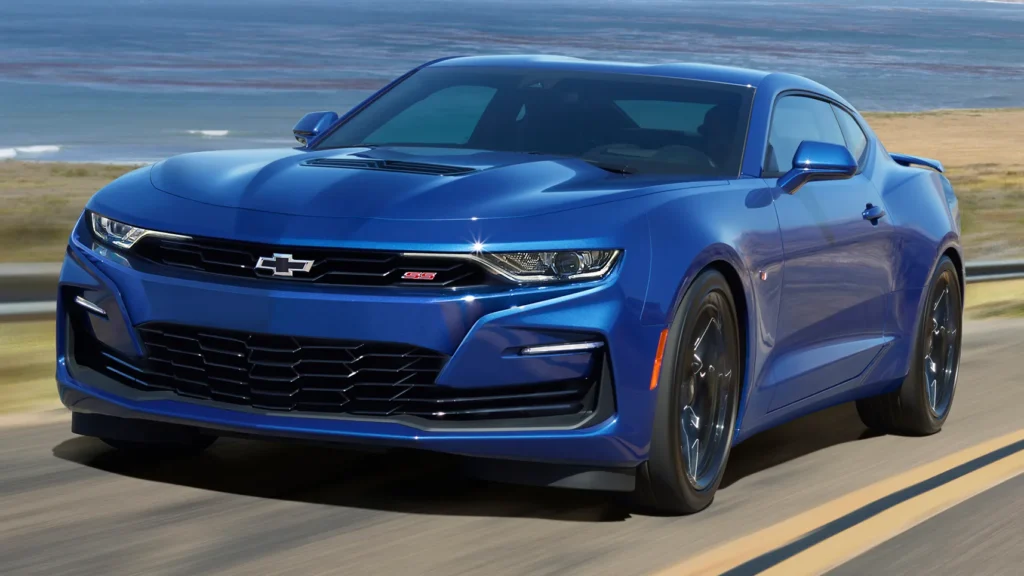
Both six-speed manual and automatic transmission options are available across the used market, and the manual cars in particular reward drivers who want mechanical engagement at a price that leaves money in the bank for maintenance.
One honest limitation of the V6 Camaro is its rearward visibility, which is notoriously poor due to the thick C-pillars and small rear window. This was a universal criticism when the car was new and it hasn’t improved with age.
Blind spot monitoring was not standard on base trim levels, so backing and lane-changing require extra attention. For buyers who can accept that trade-off and don’t require a V8 badge on the fender, the V6 Camaro LS delivers genuine performance car credentials for $7,000 to $9,500 in the 2026 private market.
4. Cadillac CTS-V (2004–2007)
The first-generation Cadillac CTS-V is the most extreme value proposition on this entire list. At its best, it’s a four-door luxury performance sedan with a 5.7-liter LS6 V8 producing 400 horsepower, mated to a six-speed manual transmission, with a 0-60 time under five seconds — all for under your budget in today’s market.
That powertrain was shared with the Corvette Z06 of the same era, and the CTS-V was legitimately competitive with BMW M5s and Mercedes-Benz E55 AMGs that cost significantly more when new.
The reason the first-gen CTS-V can be found for under $10,000 is a combination of age, mileage, and the brand’s reputation challenges in this era. These cars are now 19–22 years old, which means any example you find in the budget range has likely crossed 100,000 miles.
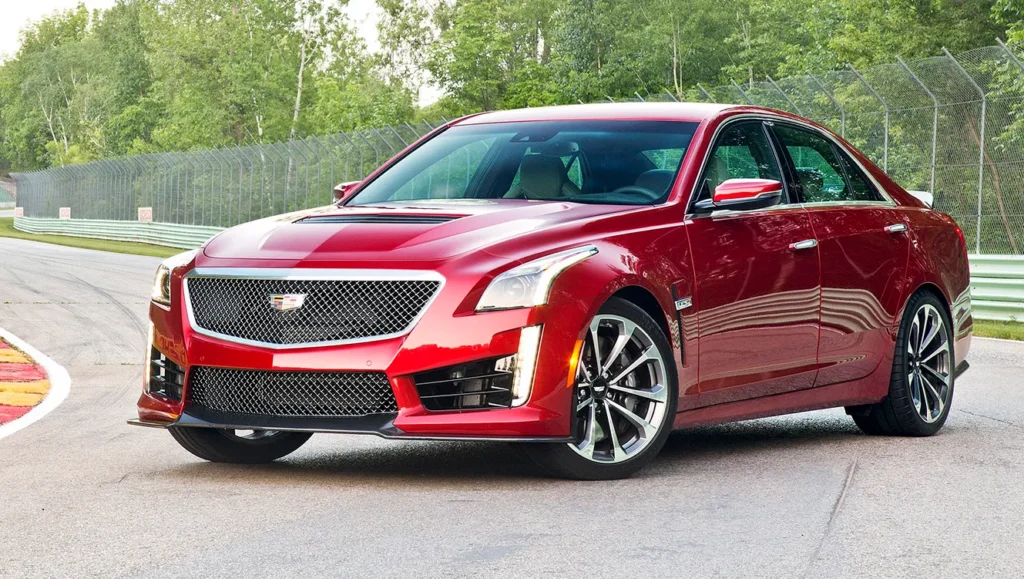
The LS6 V8 is a robust engine with a track record of surviving well beyond that mileage when maintained correctly, but the rest of the car — suspension components, interior electronics, cooling systems — requires more scrutiny at this age than a more recent purchase. This is not a car to buy without a professional inspection and a realistic budget for deferred maintenance.
For the mechanically confident buyer who understands what they’re getting into, the CTS-V Gen 1 represents what Motor Junkie called “an incredible deal for you.”
The interior is genuinely refined for its era, the handling is sharp, and 400 horsepower at any price remains a serious number. Just budget $1,000 to $2,000 in initial maintenance to address whatever the previous owner ignored, and consider it the cost of admission to driving a $60,000 car for $9,000.
5. Infiniti G37 (2008–2013)
The Infiniti G37 occupies a unique position in the sub-performance car market. It delivers 328 horsepower from a naturally aspirated 3.7-liter V6 — the same engine architecture found in the Nissan 370Z — packaged inside a proper four-door luxury sedan with rear-wheel drive as standard, and available in coupe form as well.
Motor1 noted that the base G37 “can be found for well under $10,000,” with the sportier S model — featuring bigger brakes, larger wheels, a six-speed manual transmission, and uprated suspension — available depending on mileage.
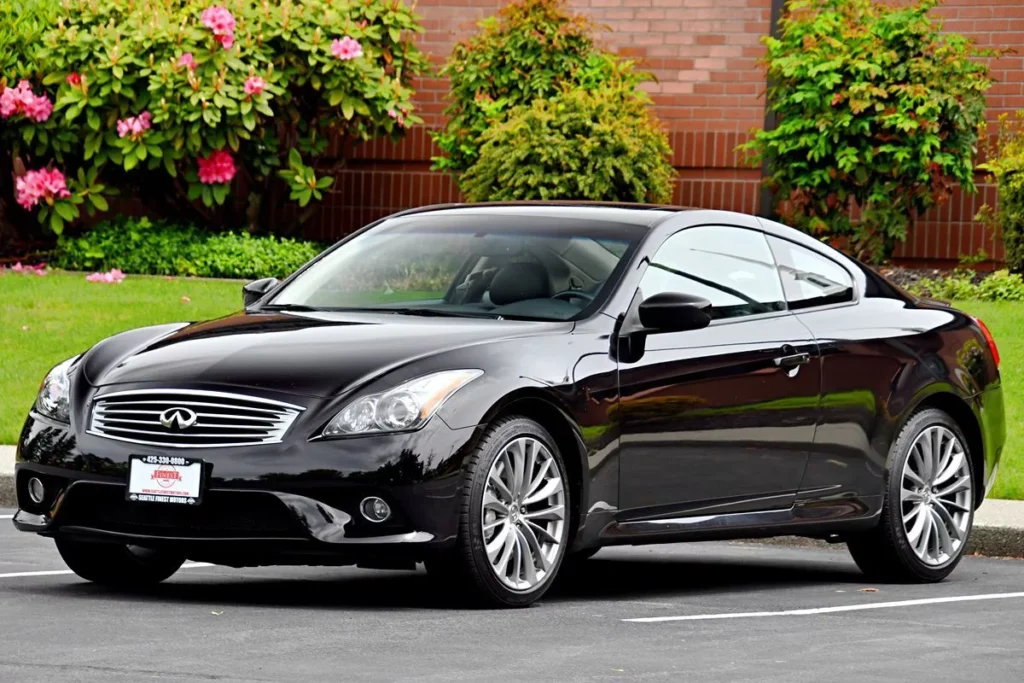
The VQ37VHR engine in the G37 is one of the most celebrated V6 units of the past twenty years. It appeared on Ward’s 10 Best Engines list multiple times, was known for exceptional smoothness at high rpm, and has demonstrated a strong ability to accumulate high mileage without major failures when oil changes are kept current.
The Infiniti badge brought interior quality that was genuinely competitive with BMW and Audi at its launch, and that quality holds up in used examples with good history — leather seats, wood and metal trim accents, and a driver-focused cockpit that still feels purposeful in 2026.
The G37’s primary maintenance vulnerability is the timing chain, which can develop rattle on very high-mileage examples if oil changes have been neglected.
A cold-start rattle that disappears within thirty seconds is a warning sign to investigate further before purchase. Examples with documented maintenance history and service records from dealerships or reputable shops are significantly lower risk than those with gaps in the service record.
6. Chrysler 300 SRT8 (2006–2010)
The Chrysler 300 SRT8 is perhaps the most surprising car on this list — a large, comfortable, full-size American sedan that hides a 6.1-liter HEMI V8 producing 425 horsepower under a hood that most people would never suspect.
Motor-Junkie described it as “a competitor to the BMW M5 or Mercedes E-Class AMG” in its day, which sounds like an overstatement until you check the 0-60 time, which lands around 4.9 seconds — legitimately quick by any standard. In the 2026 used market, examples from 2006 to 2010 can be found between $7,500 and $9,800 depending on condition and mileage.
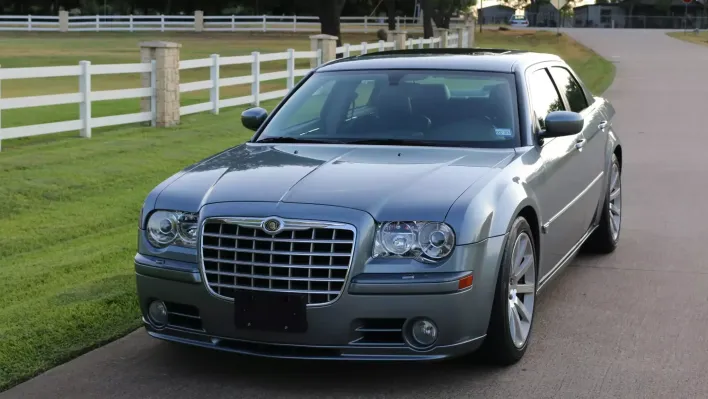
What the 300 SRT8 adds to this list that no other car here offers is genuine family-car practicality alongside the performance credentials.
The rear seat accommodates three adults comfortably, the trunk is massive, and the ride quality in normal driving is controlled and compliant in a way that dedicated sports cars cannot match.
For a buyer who needs a single vehicle to serve as a daily commuter, a family hauler, and a weekend performance machine, the 300 SRT8 is the most versatile package available under $10,000.
The 6.1-liter HEMI is generally regarded as a durable unit, but the SRT8’s performance tune and likely enthusiast ownership history mean that these cars have often been driven hard.
A full mechanical inspection, including brake condition and suspension wear assessment, is particularly important for this model. Brembo brakes were standard on the SRT8, and replacement rotors and pads carry premium pricing compared to standard Chrysler 300 components.
What To Know Before Buying Any Used 300 HP Car
Buying a high-powered used car at this price point rewards preparation and penalizes impulsiveness. The single most important step before any transaction is an independent pre-purchase inspection.
Taking the car to a mechanic who has no financial stake in the sale — not the seller’s recommended shop — for a full once-over costs $100 to $150 and creates a clear picture of what maintenance is needed immediately versus what can wait.
For any car producing 300-plus horsepower that has been owned by performance-minded individuals, the inspection findings are often illuminating.
| Model | Engine | Horsepower | Approx. Used Price (2026) | 0-60 MPH |
| Ford Mustang GT (2005–2010) | 4.6L V8 | 300 hp | $7,500–$9,800 | ~5.8 sec |
| Ford Mustang GT (2011–2012) | 5.0L Coyote V8 | 412 hp | $9,500–$11,000 | ~4.9 sec |
| Dodge Challenger R/T (2009–2014) | 5.7L HEMI V8 | 375 hp | $7,800–$9,997 | ~5.6 sec |
| Chevy Camaro V6 LS (2011–2015) | 3.6L V6 | 312 hp | $7,000–$9,500 | ~6.0 sec |
| Cadillac CTS-V Gen 1 (2004–2007) | 5.7L LS6 V8 | 400 hp | $8,000–$10,000 | ~4.8 sec |
| Infiniti G37 (2008–2013) | 3.7L V6 | 328–330 hp | $7,500–$10,000 | ~5.5 sec |
| Chrysler 300 SRT8 (2006–2010) | 6.1L HEMI V8 | 425 hp | $7,500–$9,800 | ~4.9 sec |
Insurance, Fuel, And The Real Monthly Cost
Monthly fuel cost is something buyers frequently underestimate when purchasing a V8 performance car. The 5.7-liter HEMI in the Dodge Challenger R/T returns approximately 14 mpg in city driving and 23 mpg on the highway according to EPA figures for the 2009–2014 model years.
At current national average gasoline prices of around $3.30 per gallon in 2026, a driver logging 1,200 miles per month in primarily city conditions will spend roughly $280 monthly on fuel — a figure that doesn’t appear in the purchase price but shows up consistently in a monthly budget.
Insurance premiums for performance vehicles vary significantly by state, driving record, age, and coverage levels, but V8 muscle cars generally carry higher rates than equivalent-displacement sedans due to their statistical association with higher-speed incidents and theft frequency.
The Dodge Challenger in particular has appeared on theft frequency lists in some markets. Comprehensive coverage on a $9,000 vehicle is worth carrying regardless, since replacing any of these cars at today’s used prices would cost more than saving the premium — but getting quotes from four or five carriers before purchasing will reveal meaningful price differences that matter over a full year of ownership.
The Pre-Purchase Inspection Checklist
For any 300+ horsepower vehicle purchased, the following points deserve specific attention during an inspection:
The engine oil should be checked both on the dipstick and by a mechanic who can evaluate its condition and look for signs of coolant contamination — which appears as a milky or foamy residue on the cap and dipstick, and indicates potential head gasket issues that are expensive on any high-displacement engine.
The transmission should shift cleanly through all gears under both light and moderate throttle, with no slippage, delay, or unusual noises. Manual transmissions should engage each gear without grinding, and the clutch pedal should not feel spongy or excessively heavy.
Brake rotor condition matters significantly on performance cars that may have been tracked or driven aggressively.
Scoring, heavy lip buildup around the rotor edge, and vibration under hard braking all suggest rotors that need replacement soon — and on cars with Brembo or performance-spec brake hardware, the replacement cost is higher than a standard economy car. Suspension bushings, ball joints, and tie rods should all be checked for wear, play, and deterioration, particularly on cars over 80,000 miles.
Maintenance Budget Planning By Model
Keeping it running reliably over three to five years requires honest budgeting for regular maintenance and the occasional larger repair.
The table below gives a realistic sense of what annual maintenance costs look like for each model based on owner-reported data and parts pricing in the 2026 US market:
| Model | Annual Maintenance Est. | Known High-Cost Items |
| Ford Mustang GT (S197) | $600–$1,100 | Clutch replacement ($800–$1,200), differential service |
| Dodge Challenger R/T | $700–$1,200 | HEMI tick (lifter replacement on some), transmission service |
| Camaro V6 LS (Gen 5) | $500–$900 | Timing chain (rare, high mileage), wheel bearing |
| Cadillac CTS-V Gen 1 | $1,200–$2,500 | Differential, suspension bushings, electronics |
| Infiniti G37 | $800–$1,400 | Timing chain (high mileage), rear differential fluid |
| Chrysler 300 SRT8 | $900–$1,600 | Brembo brake service, rear suspension components |
The Cadillac CTS-V Gen 1 carries the highest estimated maintenance cost because of its age and the complexity of its drivetrain components.
The Camaro V6 and early Mustang GT are generally the lowest-cost to maintain of the group, benefitting from extensive parts availability and straightforward mechanical designs.
Frequently Asked Questions
Can you really find 300 hp cars within the range of $10k in the 2026 used market?
Yes, with realistic expectations about mileage and age. The cars in this guide are primarily from model years 2005–2014, and most examples will show between 80,000 and 140,000 miles. The powertrains in these vehicles were designed to exceed those mileage figures with proper maintenance, but condition varies significantly by owner history.
Which 300 hp car under $10,000 is the most reliable long-term?
The Ford Mustang GT with the 4.6-liter or 5.0-liter V8 and the Infiniti G37 with the VQ37VHR V6 both have strong reputations for durability at high mileage. Parts availability for the Mustang GT is exceptional given the volume of S197-generation cars sold, which keeps both repair costs and wait times low.
What is the cheapest way to get 400+ horsepower for under $10,000?
The Cadillac CTS-V Gen 1 (2004–2007) with its 400-horsepower LS6 V8 and the Chrysler 300 SRT8 with 425 horsepower are both regularly available under $10,000. Both carry higher maintenance costs and require more thorough pre-purchase inspection than the other cars on this list.
Are V8 muscle cars under $10k expensive to insure?
They carry higher premiums than economy cars, but the amount varies widely by state, driving history, and coverage level. Getting quotes from multiple carriers before purchasing is essential. Comprehensive and collision coverage is worth carrying on any car in this price range since replacement cost in today’s used market is significant.
What should I look for when buying a high-horsepower used car?
Prioritize maintenance history documentation, oil condition, transmission behavior under throttle, and brake rotor condition. A pre-purchase inspection from an independent mechanic costs $100–$150 and should be considered mandatory for any performance vehicle purchase in this price range. Avoid any car where the seller is reluctant to allow an inspection.
Is a Dodge Challenger R/T under $10k a good daily driver?
The Challenger R/T is one of the more practical options in this category because of its comfortable interior, large trunk, and decent ride quality on the 5.7-liter HEMI’s relatively mild state of tune. Fuel economy in city traffic — around 14 mpg — is the most significant practical compromise versus a more efficient vehicle.
How do I verify actual horsepower on a used car?
Factory horsepower ratings are published by the manufacturer and do not change regardless of mileage, assuming the engine is in good mechanical condition. A car’s actual output can decrease slightly with age and wear, but a well-maintained Mustang GT V8 from 2009 still produces close to its rated output. If concerns exist, a chassis dynamometer test at a performance shop — typically $75–$150 — will measure actual rear-wheel horsepower.
Is the Infiniti G37 or the Dodge Challenger a better buy now?
They serve different priorities. The G37 is the better choice for someone who wants a four-door car with daily usability, luxury interior quality, and excellent high-rpm performance. The Challenger R/T delivers more torque, a V8 soundtrack, and more visual presence, but comes as a two-door and carries higher insurance costs. Both are legitimate picks in this price range depending on what matters most to the buyer.
Do any of these cars hold their value after purchase?
Performance vehicles at the bottom of their depreciation curve tend to stabilize rather than lose additional significant value. iSeeCars data shows that the Challenger nameplate retains relative interest among enthusiast buyers, especially with the nameplate now discontinued in new form as of the 2023 model year — which has created incremental used-market demand for clean examples at all price levels.